






Dragonfly Partner: BTC is a Generational Wealth Asset, Firmly Bullish on ETH and SOL


- Core Thesis: Despite recent downturns in the crypto industry, maintaining long-term conviction, avoiding recency bias, and believing in its exponential growth potential are the keys to success. Cryptocurrency is fundamentally a technology; its value derives from growth narratives and generational wealth transfer, not current cash flow.
- Key Elements:
- Market sentiment is influenced by recency bias. The pessimism surrounding the current downturn may be overstated. Unlike the prolonged slump following the FTX collapse, the industry is still in a "building and expansion" phase.
- The exponential growth logic of cryptocurrency holds true long-term. Believing that the ecosystem will be significantly larger a decade from now, the lock-up mechanism in venture capital helps overcome the instinct to sell short-term and represents a high-quality investment approach.
- Institutional adoption of cryptocurrency is still in its early stages (e.g., Morgan Stanley has just allowed recommendations). It is also generational, with younger demographics showing a stronger propensity to hold, driving the long-term development of assets like Bitcoin.
- Bitcoin is fundamentally an independent digital asset that does not rely on cash flow. Its value is driven by societal consensus and generational inheritance, similar to gold but irreplaceable and with a fixed supply.
- Assets like Ethereum and Solana are currently priced by the market based on a "growth narrative." They react weakly to cash flow metrics but are highly sensitive to future scale potential, historically similar to assets during the internet bubble era.
- Hyperliquid is a prime example, combining a growth narrative with substantial cash flow. Its explosive potential comes from expanding the derivatives market. This dual advantage is rare in the crypto space.
- The flow of talent and capital towards AI is a normal capital reallocation. Cryptocurrency has moved past its "Wild West" phase. It is now suitable for "settlers" who choose to build persistently, rather than "pioneers" seeking extreme uncertainty.
Original link: If You Want To Get Rich, Hold Bitcoin
Compiled by: CryptoLeo (@LeoAndCrypto)
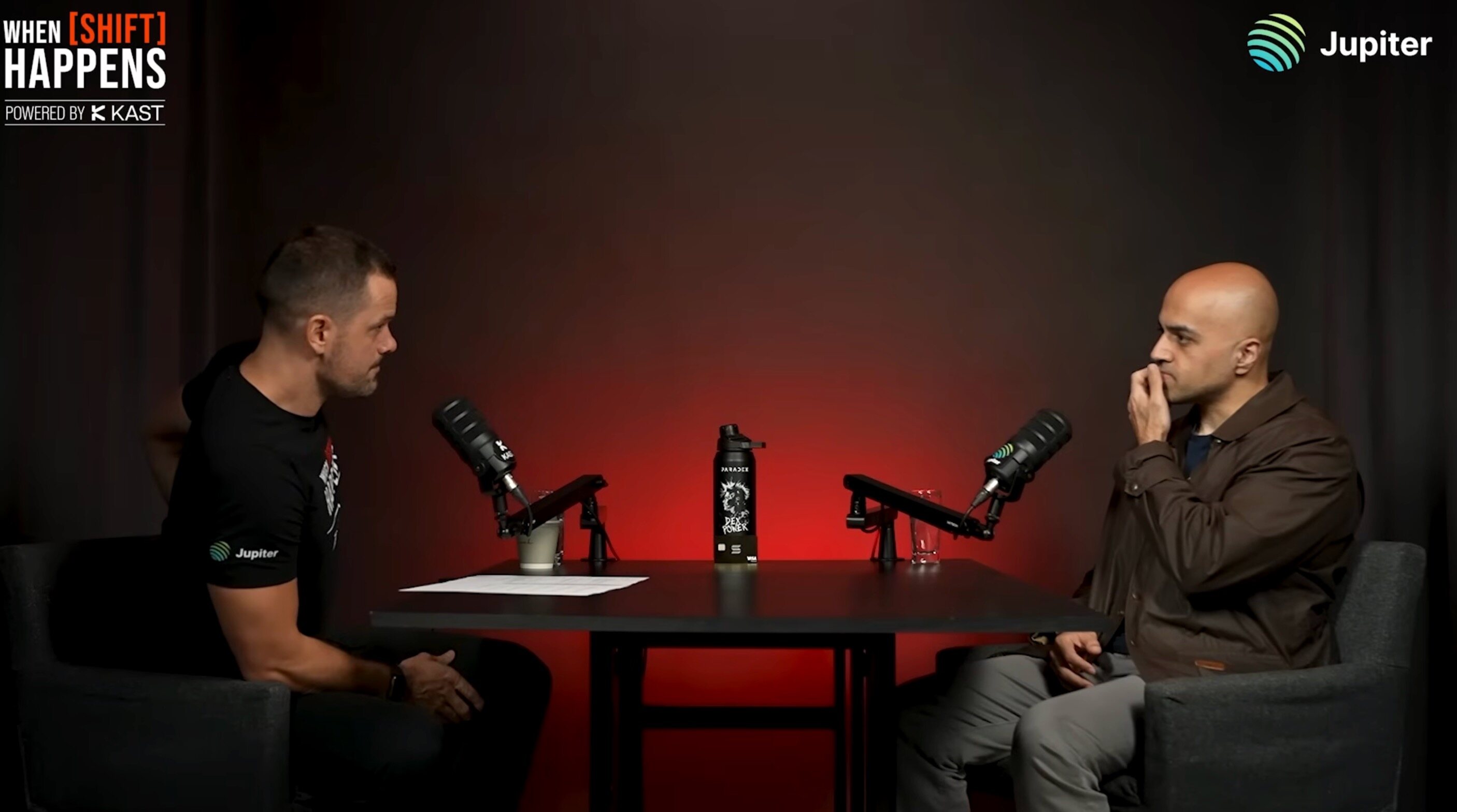
Editor's Note: As the crypto industry once again hits a low point and many early OG figures choose to exit, Dragonfly Capital partner Haseeb Qureshi discussed the current state of crypto and his phased understanding of the industry in a recent interview. From talent flow, Silicon Valley culture, and industry recency bias, to the growth narratives of ETH and SOL, and the explosive potential of Hyperliquid, Haseeb also explained the meaning of persisting as a crypto "Settler" in an era where AI is absorbing capital. This is still an article that boosts confidence. Given the frequent dialogue between the two, this article is presented in the first person. Odaily has compiled and translated the interview content as follows:
Some crypto OGs are leaving; it's normal. I still insist on being a Settler!
I feel tired, very tired. A lot has happened recently – market declines and internal company issues.
I chatted with friends a while ago, and they all agreed that being a VC is a very respectable job. Most VCs just choose good investments and wait, enjoying leisure time, but that's not the case, at least not at Dragonfly. We work harder than they do.
Someone just told me that compared to other VCs, I react very quickly. I often communicate work matters on the phone and keep working all the time. That's how we operate at Dragonfly. That's the secret to why we profit in many investments – because we work harder than others. Not everyone can do this, especially after many years.
Many people are exiting now, like Kyle Samani leaving Multicoin, and many other OGs leaving the crypto space.
But don't exaggerate this. People always exit crypto. I've experienced 4 or 5 different people telling me their feelings this week, believing the current market sentiment is worse than after the FTX crash. I think this is purely recency bias. The downturn is happening now, so it feels worse. (Odaily Note: Recency bias is a cognitive bias where people overemphasize recent events when making decisions or forming impressions, neglecting long-term data or historical patterns.)
Why do I say this? After the FTX crash back then, even more people left crypto. Many lost a lot; their pursuits like the metaverse and blockchain gaming never materialized, so they left.
The idea that people leave crypto seems unique. Every time prices drop, people exit. Another point is that there is a normal tenure in one's career. If someone has been in a field for 10 years, it's normal for them to choose to leave. Especially for someone like Kyle, a very successful venture capitalist who knows how much he's made. For him, money is no longer important; proving his worth is. Multicoin was one of FTX's largest investors. When FTX collapsed and SOL plummeted from over $200 to $8, everyone thought Multicoin was wrong. But they weathered the storm, proving themselves as one of the best investors in the field – the ultimate career achievement. Kyle's exit doesn't mean he is completely disillusioned with crypto.
Another point: There is a big difference between pioneers and settlers. It's a human pattern. Those who strive westward to find California and open up new worlds are not the ones who eventually build the towns. Similarly, in startups, the psychology of the first 10 employees is completely different from the 50th, 100th, or 1000th. The people who built Google from scratch are not the same ones who later managed Google Shopping or Google Drive. They are entirely different types of builders.
Getting back to recency bias, for an investor, the most insidious bias is status quo bias. People tend to believe the current state will persist because if it weren't resilient, it wouldn't be the status quo. But the tech industry is full of change now, especially AI, making people think, "Wow, everything could change."
A few years ago, people were discussing the "Great Stagnation." Peter Thiel wrote a famous article about abundant innovation in the digital/software world, but stagnation in the physical/real world. Now, seeing progress in lifespan extension, CRISPR-Cas9 gene editing, AI, drones, quantum technology, and nuclear reactors, we suddenly have forward momentum again, which is very beneficial for society.
For investors, the most common failure mode is still not believing the status quo will change much.
The Silicon Valley Model is Unique, Enabling Trust and Transmission Across Companies
Talking about what I learned in Silicon Valley is hard to describe. It's more of an operational style, a way of thinking unique to Silicon Valley. Many cities around the world say, "We want to be the next Silicon Valley." I want to laugh every time I hear that.
I think the Silicon Valley model has only been replicated in two places: China and Israel. Few other places have figured out how to build this model.
The most important aspect of the Silicon Valley model is celebrating failure. In Silicon Valley, failure is normal; it doesn't humiliate you. Failure gives you a chance for a comeback, which is nearly impossible elsewhere. Other places say, "Failure is okay," but treat you like a loser. If you quit a big company to start a business and fail, people will ask why you left Deutsche Bank or SK Telecom, giving up a good job for a startup. Failure becomes a lifelong stain. This mentality is wrong.
Another key is extremely high trust in Silicon Valley. This is rare elsewhere. Although America loves lawsuits, Silicon Valley rarely sues each other. It's an extreme melting pot of ideas; people inevitably borrow from others, but everyone is more willing to act quickly and share. Even if ideas are occasionally borrowed, it's okay. Everyone should strive in the same direction, focus on building the whole, and not get bogged down in trivial details. If you have an idea, act fast, and you must trust others, trust the right direction, and trust that the people around you won't harm you.
There is an extremely strong kinship within Silicon Valley, often overlooked. In California, non-compete agreements are unenforceable, allowing free talent flow. Elsewhere, it's the opposite; non-compete clauses lock people into companies. Many companies don't want trade secrets leaked, don't want employees transferring information. Silicon Valley looks at the holistic view: "This is good for all companies, even if someone might take knowledge from my company elsewhere, potentially harming us. High information transfer efficiency is good for society."
Because of this, knowledge flows incredibly fast in Silicon Valley. AI Labs are almost all in Silicon Valley. Everyone "leaks" secrets and communicates, resulting in all top AI Labs having similar levels, and models are mostly free. This is impossible elsewhere. This is the real power of Silicon Valley: sharing, not hoarding.
Crypto is Technology; We Must Learn "Long-Term Greed" from the Flow of Money
Crypto is essentially technology. Bitcoin is software people run on computers; everything we build is software.
Its operating methods aren't necessarily the same as software companies. There are clear differences between Microsoft, Bitcoin, Ethereum, or Aave. But we can learn a vast number of lessons from the tech industry: understanding the characteristics of efficient teams, how technology is adopted, and what growth curves and retention curves need to look like for sustainability. These directly apply to the crypto space.
But crypto is also about money, society, and governance. To truly understand crypto comprehensively, people need to learn a lot from these other fields too.
It's not just a technical issue. We experienced the dot-com bubble and its burst. Both were tied to excessive expectations and finance, involving money and capital flows. We also know crypto is closely tied to money and capital. If you don't understand financial elements, you can't see the whole picture.
Technology provides extremely rich information, but not all crypto participants have this perspective, especially pure traders who might lack it.
In an article by Bankless co-founder David Hoffman, there was a profound line: "The point of crypto isn't to make you rich; it's to make you free."
There's nothing wrong with wanting to make money. Everyone wants to make money, including me. Freedom and liberation certainly include the freedom to make money, the freedom to do things in your self-interest. No industry or market has ever required people to act against their own interests.
People often blame greed when problems arise in crypto. 'Binance got greedy, Wintermute got greedy, entrepreneurs got greedy, VCs got greedy; someone's greed caused the price drop.' This view is too superficial. No market requires people not to be greedy. As long as you're creating value, building the right things, and doing it sustainably, it's fine.
Former Goldman Sachs partner Gus Levy famously said: "We’re greedy, but we’re long-term greedy." In contrast, short-term greed is actually very foolish, like King Midas in the story. Drug dealing is an example of short-term greed, but not viable long-term. Pure traders aren't wrong, nor are long-term holders. Let's see who ends up on top.
Crypto's Exponential Growth Ultimately Made Me Choose and Stick with the Industry
I entered crypto full-time in 2017, the heyday of ICOs. I started in venture capital in early 2018, just as the ICO bubble began to burst.
When I started investing, everything was bleak. 2018 was probably the worst sentiment I've seen in crypto, worse than the FTX crash. When FTX collapsed, at least people felt there was a reason – SBF deceived everyone, causing the industry's decline. But in 2018, there was nothing to blame. Bitcoin dropped from $19,000 to $4,000. Ethereum plunged below $100. We all had a strong feeling: we were deceiving ourselves; everything in crypto was a collective illusion.
But I held a strong belief inside that made me choose and stick with the industry, becoming a VC in it.
From 2018 until before the COVID-19 outbreak, everything was quiet. The crypto industry saw no recovery, remaining in darkness. But we could see DeFi taking shape, with Maker DAO and Compound beginning to gain traction. Their momentum wasn't big, but they were slowly influencing the industry.
I believed in crypto's exponential growth and that something much grander and more important than what we were seeing would happen in the future. This technology would impact far more than 100,000 people (the number using blockchain back then was less than that).
You have to believe the industry's scale will grow exponentially. Telling someone back then that I thought the U.S. government would buy Bitcoin would have been outlandish. After FTX, we genuinely worried the U.S. might ban crypto.
So, after all this, having experienced dark moments in this industry time and again, I often look inward and ask myself why I believe in it. I used to be a poker player. The most important lesson I learned in poker is strategy. You can't guarantee winning every hand, but you need a correct strategy to outplay your opponents. For me, my strategy is believing in crypto's exponential growth, and that the scale of crypto in 10 years will vastly exceed today. Just as the scale of crypto 10 years ago vastly exceeded its scale at Bitcoin's birth in 2008.
That's why I believe it's crucial to trust in the power of exponential growth and view current events from a broader perspective, rather than being limited to the appearance of any specific moment.
Bitcoin is Also a Generational Wealth Transfer; That's One Reason I Believe in It
Furthermore, my continued support for crypto and Bitcoin is also due to institutional and governmental entry. Very few institutions actually hold crypto. We manage massive assets, mostly from institutional partners who gain crypto exposure through us, but these account for less than 1% of their portfolios. Institutional and asset management adoption of crypto is still early – Morgan Stanley recently began allowing high-net-worth clients to be recommended digital assets. Vanguard Group only approved Bitcoin ETFs recently.
Another thing to understand is that crypto is largely generational. Remember the FIT21 Act, the predecessor of the Clarity Act? It initially passed the House. If you look back to when Trump was elected president the second time and observe the U.S. Congress, you'd know the biggest predictor of voting for this bill was age.
The older generation doesn't know what crypto is; they've only heard about it in the news. Their children are the ones using crypto. This is a generational shift. Baby boomers are aging, and they are passing BTC to the next generation.
When I was in college, the concept of Bitcoin was quite novel. Now, people entering college don't remember a time before Bitcoin. Bitcoin has been around for 18 years.
Changing people's first impressions of something is very difficult, especially if they refuse to try it themselves. You can see this clearly in the U.S. Congress; these lawmakers don't really understand what crypto is. They've heard about it, read reports, and their children have told them a bit. That's the extent of crypto's exposure in Congress.
Future Gold Supply Might Increase, But Bitcoin Remains Forever Independent and Irreplaceable
Speaking of Bitcoin and gold, people have a deep attachment to gold. "Gold has thousands of years of history; you can never replace it; it has too much Lindy effect." Thinking of my mom and grandma, their affection for gold is unwavering. But for younger people, what they value is already digital. Why would a stone meticulously mined from somewhere on Earth be more valuable than something digital?
Regarding mining, for example: SpaceX has explicitly stated that one of its intended profit methods is mining rare minerals from asteroids. IPO brought asteroid mining closer. If you could get an asteroid containing gold, Earth's gold supply might double. There isn't that much gold in the world. All the gold in the world wouldn't fill a cube smaller than a football field. If gold were discovered on an asteroid, it would completely change the global gold market, and the impact would be permanent.
You won't find Bitcoin on an asteroid. Bitcoin is software. I believe it's logical that for a software civilization, our currency should also be software-based.
Personally, I've had some investments at various times, but most of my assets are self-held. Sometimes I need to sell assets for taxes or other reasons, but mostly, my personal finances are very simple. I invest heavily in all our funds. As a general partner, I must put my own money into all our future funds. Then I personally hold some crypto, ETFs – that's about it.
For me personally, although I hold Bitcoin, I wouldn't invest in it because it's not a risk asset. I believe the core of Bitcoin is decentralization. It relies entirely on consensus – not the consensus in the PoW sense, but a societal consensus that Bitcoin will be our future way of measuring non-sovereign wealth. Perhaps this is inevitable.
Because Bitcoin's performance varies, people complain when it drops. But the reality is, Bitcoin and crypto are generally very volatile. They change form and correlate with different assets at different times: sometimes correlated with gold, sometimes with the Nasdaq, sometimes uncorrelated with anything. It just operates on its own cycle, switching between these different states.
If you look at Bitcoin's history, it's very clear its performance isn't always consistent. So there are two competing views:
One view is that it should behave like gold – when gold rises, Bitcoin rises.
The other view is that Bitcoin is an asset uncorrelated with anything else.
If Bitcoin behaves like gold, why buy Bitcoin? Just hold gold.
The reality is, if you compare Bitcoin to gold/the Nasdaq, the charts look very close. The correlation was very high before October 11. After October 11, the correlation disappeared. If you look back historically, Bitcoin's performance is different from any other asset. In some periods, it resembles others, but in most cases, it's clearly unique. Bitcoin is an independent asset with its own cycle.
I think, over the next 10 years, people will constantly talk, complain, and ask, "Why isn't Bitcoin rising that much?" This won't stop until Bitcoin's adoption curve truly reaches saturation, and that will take a long time.
I know many people who entered crypto at the same time as me but didn't make money. How could you enter this industry during Bitcoin's and crypto's low points and still not make money? The answer is simple: you just didn't stay in the market. If you stick with it, you make money.
In a sense, this is one of the advantages of venture capital. Being a VC forces you to hold. It forces you to stay; you can't sell your venture investments. For many of our partners, they invested in us. Even if they think, "Crypto is terrible," they have to hold on. The only thing preventing them from making a mistake is the fact that they are locked in.
The beauty of VC is that it overcomes many of humanity's worst instincts. A major advantage you get in this market is that you are never forced to sell. I think this is why VC is such a direct and


