蘋果,站在 AI 繁榮的另一面:完美財報,為何換來近 10% 暴跌?


- 核心觀點:蘋果2026財年Q3財報強勁但股價暴跌近10%,主因是管理層對未來營收和毛利率指引不及預期,並警示AI導致的記憶體與先進製程供應約束正從資料中心向消費電子傳導,引發市場對其增長可持續性與成本壓力的重新定價。
- 關鍵要素:
- 財報數據:Q3營收1094.2億美元(年增+16%),每股盈餘2.02美元(超預期),毛利率50.1%創紀錄,但其中約2個百分點來自政府關稅退款,剔除此一次性因素後實際毛利率約48.1%。
- 業績指引:預計9月季度營收增速9%-11%,低於市場約12%的一致預期;毛利率指引回落至47%-48%,直接觸發股價大跌。
- 供應約束:庫克稱面臨「前所未有的」供應限制,AI相關記憶體(HBM、伺服器DRAM)正搶佔全球DRAM約20%等效晶圓產能(TrendForce估算),擠壓LPDDR等消費電子記憶體供應,且先進製程產能亦限制A/M系列晶片生產。
- 應對措施:蘋果庫存從57.2億美元激增至110.9億美元(零部件庫存從21.2億升至76.5億)以提前鎖料,但分析師郭明錤預計A20晶片拉貨量或較原目標低10%-20%;正評估長鑫存儲等新供應源,但短期難以取代三星、SK海力士與美光。
- 產業鏈分化:存儲廠商(美光營收年增+350%)雙重受益於AI需求與供給收縮;台積電因橫跨消費電子與AI晶片需求,2026年Q2收入402億美元(年增+33.7%),毛利率67.7%,成資源重估中最大受益者。
- AI商業化未證:服務收入307.4億美元(年增+12.1%)不及預期,Apple Intelligence在中國、歐盟等關鍵市場尚未全面落地,Siri AI初期依賴Google Gemini,輕資產路徑(資本開支不到經營現金流6%)雖具優勢,但核心模型能力受制於外部夥伴。
A nearly flawless earnings report was met with a 10% stock price plunge.
On July 30, Apple reported revenue of $109.42 billion for the third quarter of fiscal 2026, up 16% year-over-year, setting a record for the strongest June quarter in its history. Diluted earnings per share reached $2.02, up 29% year-over-year, significantly beating market expectations of $1.89, while overall gross margin hit 50.1%, an absolute all-time high.
From revenue and profit to core product sales, nearly every key metric exceeded Wall Street expectations. Considering this was the last earnings call led by Tim Cook before stepping down as CEO, it should have been a dignified farewell.
But the capital markets responded in the exact opposite manner.
Following the earnings release, Apple's stock fell about 5.5% in after-hours trading, then dropped nearly 10% during the next trading session, erasing close to $500 billion in market value. The problem wasn't the quarter that just ended, but Apple's description of the future—management guided September quarter revenue growth of 9% to 11% year-over-year, below the Wall Street consensus of approximately 12%, while gross margin guidance also retreated to 47% to 48%.
Cook also explicitly stated that the company is facing very significant supply constraints, with little flexibility left in the supply chain. This also reveals that the AI-driven global competition for semiconductor resources is now transmitting from data centers to consumer electronics, and even Apple, with the world's strongest supply chain management capabilities, cannot remain immune.
Understanding this thread is the starting point for understanding Apple's next-phase cost, product, and valuation issues.
1. AI Becomes a "Memory Black Hole," Apple Drawn into Resource Competition
Over the past two years, the market has been accustomed to understanding AI infrastructure through GPUs, optical modules, network equipment, and power systems, while relatively overlooking another rapidly unfolding change: AI data centers don't just consume computing power—they are also rapidly consuming the world's best memory production capacity.
Large AI accelerators require substantial amounts of HBM, while training and inference servers also need server DRAM, enterprise SSDs, and larger-scale data storage. Because HBM has higher stacking layers and more complex manufacturing processes, the wafers and manufacturing resources consumed per unit are also significantly higher than for standard memory.
This doesn't mean HBM and the LPDDR used in smartphones share the same final packaging line, but upstream memory manufacturers will reallocate wafer capacity, capital expenditures, and engineering resources based on profitability and customer certainty.
Therefore, as more resources flow toward HBM, server DRAM, and enterprise storage, the supply of traditional DRAM and LPDDR for phones, PCs, and other consumer electronics naturally gets squeezed. According to TrendForce industry estimates, on an equivalent wafer consumption basis, AI-related memory could absorb nearly 20% of global DRAM capacity in 2026.
So the so-called "AI taking away iPhone memory" isn't about Nvidia directly taking a batch of LPDDR that Apple already ordered, but rather AI customers, with higher margins, longer procurement cycles, and stronger prepayment capabilities, changing the resource allocation patterns of the entire memory industry.
And in this resource repricing, different segments of the supply chain face vastly different outcomes.
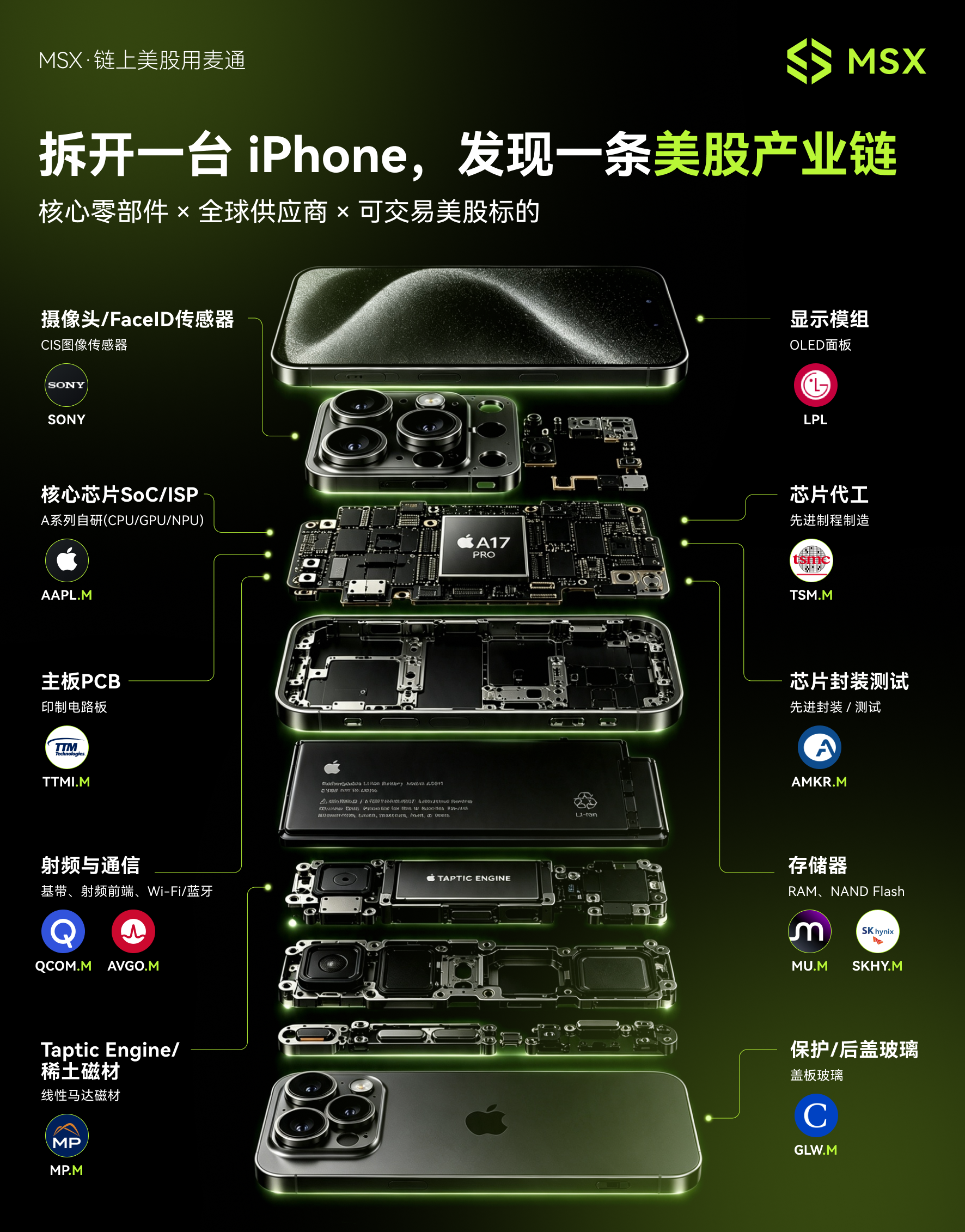
1. Memory Manufacturers: From Cyclical Price Hikes to Resource Scarcity
The most direct beneficiaries are DRAM manufacturers like SK Hynix, Samsung Electronics, and Micron.
AI customers provide higher unit prices, longer order visibility, and stronger prepayment capabilities for HBM. Meanwhile, as memory makers shift more capacity and investment toward AI products, they further tighten supply of traditional DRAM and LPDDR.
Micron's most recent fiscal quarter revenue reached approximately $41.46 billion, up nearly 350% year-over-year—more than four times the same period last year. Its growth came simultaneously from multiple product lines, including HBM, DRAM, and NAND.
Memory makers are thus enjoying a double dividend: on one end, high-value products like HBM and server DRAM are ramping up quickly; on the other, tightening consumer electronics memory supply is driving up prices for traditional products.
Micron's most recent fiscal quarter revenue reached approximately $41.46 billion, up nearly 350% year-over-year, more than four times the same period last year, with growth coming simultaneously from HBM, DRAM, NAND, and other product lines.
This is what makes the current memory cycle so unique. Past memory bull markets typically relied on recovering demand from traditional end-markets like phones and PCs, but this rally is simultaneously driven by AI demand expansion and traditional capacity contraction.
Data centers keep increasing memory configurations per server, while consumer electronics makers must pay higher prices for the limited remaining capacity. Demand expansion and supply contraction occurring simultaneously gives memory makers far greater profit elasticity than a typical cyclical recovery.
Of course, distinctions must still be made among different memory companies. Micron, SK Hynix, and Samsung are direct participants in the DRAM, LPDDR, and HBM logic; NAND makers like SanDisk benefit more from enterprise SSDs, data storage demand, and NAND price increases.
They all belong to the memory theme, but they don't share the same business logic, nor can they simply be viewed as direct beneficiaries of Apple's LPDDR shortage.
2. Apple and Downstream Suppliers: Who Ultimately Bears the Cost Pressure?
For Apple, memory shortages mean three possible responses: raise prices, compress margins, or adjust the shipment mix across products and configurations.
Theoretically, when component costs keep rising, Apple is more likely to prioritize high-margin, high-price products, tilting limited supply toward the Pro series and higher-capacity variants.
But it must be emphasized that there isn't sufficient official information at this stage to prove Apple has already massively cut production of a basic model by one-third due to memory shortages. Some supply chain reports mention adjustments to standard iPhone 17 orders, but these may also include normal product cycle factors, demand changes, and inventory clearing ahead of new product launches.
Therefore, a more prudent way to observe is to look at which layer of the value chain a supplier sits at:
- Assembly, PCB, connector, and general component makers that rely on overall shipment volume and low-value-added orders are more sensitive to Apple cutting production;
- Suppliers with scarce technologies like image sensors, high-end displays, advanced packaging, and core chips hold relatively stronger bargaining power;
However, stronger bargaining power doesn't mean complete immunity.
If Apple's overall shipments decline, nearly every supply chain segment will be affected—the difference lies only in the magnitude of order declines and whether higher per-device value can offset lower shipment volumes.
Ming-Chi Kuo estimates that due to tight LPDDR supply, Apple's actual early pull-in of A20 chips from the second half of 2026 through the first quarter of 2027 could be 10% to 20% lower than originally targeted. But part of that difference may also come from Apple's overbooking to lock in capacity earlier.
Apple is also evaluating additional memory supply sources, bringing CXMT (ChangXin Memory Technologies) into the market's view. However, this path remains constrained by product validation, supply scale, and U.S. regulatory policy, making it difficult to fully replace Samsung, SK Hynix, and Micron in the short term.
3. TSMC: The True "Toll Booth" Spanning Both Demand Streams
TSMC occupies the most unique position in this resource repricing.
Apple needs TSMC to produce its A-series and M-series chips, while Nvidia, AMD, and cloud vendors' custom AI chips also rely on TSMC's advanced process and packaging capabilities. Therefore, whether capital flows toward consumer electronics or AI data centers, TSMC benefits either way.
But Apple and Nvidia aren't simply competing for exactly the same production lines.
Apple's main constraints are more concentrated in advanced wafer processes like N3 and N2; AI accelerators, beyond needing advanced wafer processes, also heavily depend on advanced packaging capacity like CoWoS and HBM integration.
The bottlenecks of the two intersect but don't fully overlap.
What truly matters is that simultaneously strong AI and consumer electronics demand keeps TSMC's advanced processes, packaging capabilities, and customer scheduling value at elevated levels. TSMC's Q2 2026 revenue reached $40.2 billion, up 33.7% year-over-year, with gross margin at 67.7%; the 2-nanometer process already contributes about 3% of wafer revenue.
When Apple's product cycle is strong, TSMC benefits; when AI chip demand continues expanding, TSMC benefits as well.
When both happen simultaneously, TSMC gains not just higher capacity utilization, but also the opportunity to reprice the scarcity of advanced manufacturing.
2. The Strongest June Quarter Exposes the Biggest Concern
Understanding how industrial resources are being reallocated makes it easier to understand why Apple's stronger earnings report actually worried the market more.
After all, on the surface, Apple's Q3 profitability was almost abnormally strong.
Overall gross margin reached 50.1%, continuing to improve from the prior quarter, though about two percentage points came from tariff refunds paid by the U.S. government. The tariff refund also contributed approximately $0.11 to earnings per share. Excluding this one-time factor, Apple's actual gross margin was approximately 48.1%.
That figure is still respectable, but far less impressive than the surface-level 50.1%.
In other words, the high gross margin in this report doesn't fully represent a structural improvement in Apple's product mix and pricing power. A portion of the profit is merely a phased return of previously paid tariff costs, while pressure from rising memory, chip, and other key component prices continues to accumulate.
Apple has already passed some costs to consumers by raising prices on certain Mac and iPad products; but as the highest-volume and most competitively contested core product, iPhone price adjustments are clearly more sensitive.
This also explains why the stronger iPhone sales this quarter made investors more worried about the next quarter.
With memory and advanced chip supply remaining tight, some consumers may be purchasing current products ahead of price increases. Q3's strong demand may therefore simultaneously include normal replacement demand, product cycle dividends, and pull-forward purchases driven by expected price hikes.
If new products are priced higher, Apple needs to verify whether consumers will maintain the same upgrade cadence; if not, it must absorb higher component costs itself, or protect profits by adjusting product mix, configurations, and shipment volumes.
Whichever path Apple chooses, it faces an unfamiliar situation: the pace of supply chain cost increases is approaching the limits of what Apple's traditional pricing, inventory, and product mix tools can absorb.
More notably, the "supply constraints" in the earnings report don't come only from memory.
Cook said one of the main bottlenecks in the quarter that just ended was insufficient advanced process capacity for producing Apple Silicon, particularly affecting supply of Mac products. At the same time, Apple expects memory costs to continue rising next quarter.
Therefore, Apple is facing two different types of shortages occurring simultaneously: on one end, rising DRAM and LPDDR memory prices directly push up device material costs; on the other, tight advanced process capacity limits how many A-series and M-series chips Apple can produce.
Cook described the current memory market as a "once-in-a-hundred-years flood" unlike anything he's seen in his career, with Apple's response being to build inventory early. As of end of June 2026, Apple's inventory reached $11.09 billion, nearly doubling from $5.72 billion at the end of fiscal 2025. Component inventory alone rose from approximately $2.12 billion to $7.65 billion, showing Apple is locking in key components as far ahead as possible.
But inventory can only smooth costs—it cannot create new capacity.
Especially for a company whose valuation is already at historical highs, this state of "able to sell, but not necessarily able to produce; able to produce, but not necessarily maintain original profits" is enough to trigger market repricing.
3. The AI Narrative Is Shifting Gears—Where Is Apple Headed?
Worth noting: right before the earnings-driven plunge, Apple had just achieved a symbolically significant market cap overtake.
On July 28, Apple's market value briefly broke through $5 trillion for the first time, becoming the second company globally to reach that milestone after Nvidia. As of that day, Apple was up approximately 25% year-to-date and briefly reclaimed the title of world's most valuable company.
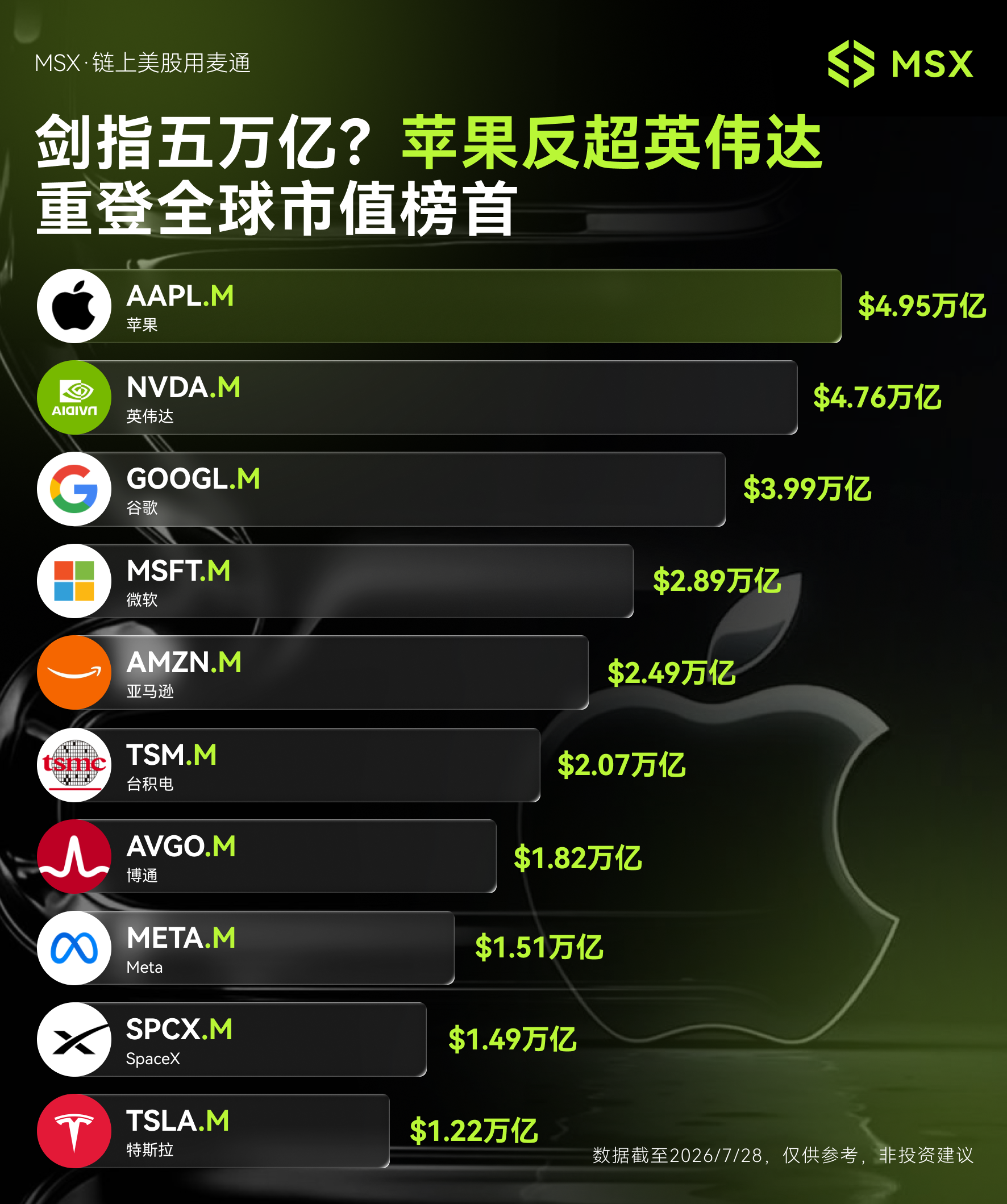
Apple's rise doesn't mean the market believes it already has the best large models.
Quite the opposite—Apple has been widely considered behind OpenAI, Google, and Anthropic in foundational model capability, cloud computing reserves, and AI product launch speed.
The market repricing of Apple reflects a shift in the AI narrative.
In the first phase of AI investment, the market rewarded model capability and technological breakthroughs; in the second phase, it rewarded infrastructure providers like GPU, networking, memory, and data centers. As capital expenditures continue to balloon, the third phase question becomes: how much revenue, profit, and free cash flow can all this computing ultimately generate?
In this phase, Apple's advantage isn't training the largest-parameter model, but owning one of the world's largest high-value consumer device gateways.
By early 2026, Apple's active installed base exceeded 2.5 billion devices; meanwhile, Apple's services business had over 1.5 billion paid subscriptions. Apple can embed AI capabilities into phones, computers, headphones, watches, and operating systems, then monetize through hardware upgrades, iCloud+ subscriptions, and the services ecosystem.
It doesn't need to first prove that hundreds of billions in data center investment can generate sufficient capital returns like cloud giants do—it only needs to prove that AI can increase upgrade intent, services attach rates, and user stickiness.
This "device distribution + subscription services" path is precisely why Apple is being repriced amid escalating AI capital expenditure debates. For the first nine months of fiscal 2026, Apple generated $116.996 billion in operating cash flow, while capital expenditures on fixed assets were approximately $6.799 billion. Apple maintains its vast device and services ecosystem with less than 6% of operating cash flow going to fixed asset investment.
Compared to tech giants massively building AI data centers, this business model is clearly far more asset-light.
But "asset-light" doesn't mean without cost. Apple is currently pursuing a hybrid AI route: on-device models and Private Cloud Compute run Apple's own models, while some more complex Siri capabilities rely on Google's Gemini technology.
This route reduces early infrastructure investment, but it also means Apple depends on external partners for core model capabilities, inference costs, and product cadence.
If Siri AI usage grows rapidly in the future, Apple could still face higher cloud inference costs and be forced to increase its own computing investment. Apple may have skipped the most aggressive capital expenditure race of the first phase, but it hasn't permanently escaped AI infrastructure costs.
The more immediate problem is that Apple's AI commercialization has yet to be proven by financial data.
Services revenue grew 12.1% year-over-year to $30.74 billion this quarter, but missed the market expectation of $31.22 billion. App Store gaming revenue is also affected by regulatory changes and the opening of external payment channels. Apple Intelligence in China still awaits regulatory approval; in the EU, the new Siri AI won't be fully available on iPhone, iPad, and Apple Watch initially.
This means Apple holds a massive device gateway, yet cannot simultaneously unleash AI capabilities across all key markets.
The analyst divergence after earnings stems precisely from this.
Bulls argue that Apple has user gateway, hardware ecosystem, and cash flow capabilities that other AI companies can't easily replicate, and the next iPhone cycle will mark the starting point of AI commercialization. Bears argue that Apple's current valuation has already priced in AI-driven replacement and subscription growth that hasn't actually materialized yet.
Following the earnings report, at least four institutions cut their Apple price targets while three raised theirs, with the median target adjusting to approximately $330.
The questions Apple needs to answer next aren't just "how many iPhones will the next generation sell," but two deeper questions:
- First, with memory and advanced process costs continuing to rise, can Apple simultaneously defend sales volume, pricing, and margins?
- Second, can Apple Intelligence and Siri AI genuinely convert from product features into replacement demand, subscription revenue, and higher customer lifetime value?
Final Thoughts: AI's Boom Has Another Balance Sheet
Over the past two years, the mainstream AI industry story has been Nvidia selling more GPUs, cloud vendors building more data centers, and memory makers getting higher prices.
Apple's earnings report shows the other side of this boom.
As AI infrastructure absorbs more memory, advanced processes, and engineering resources, consumer electronics companies must pay higher costs, suppliers must reallocate orders, and consumers may face higher prices.
Apple stands on both the pressure side and the opportunity side.
Its hardware business is absorbing AI's squeeze on global semiconductor resources, while its services and ecosystem business could become one of the most important distribution gateways as AI transitions from infrastructure investment to commercialization.
So will the most valuable company of the future be the one with the most computing power, or the one best able to turn computing power into user payments?
Apple