OUSD的「百人大名單」竟是「意向書」?借名行銷引發信任危機


- 核心觀點:Open Standard 推出的穩定幣 Open USD (OUSD) 因宣稱擁有超過140家巨頭合作夥伴,引發市場震動,導致 Circle 股價暴跌17.55%,但隨後遭多家合作夥伴否認,被指採用「借用合法性」行銷手段,引發對項目可信度的廣泛質疑。
- 關鍵要素:
- OUSD 宣稱鑄造與贖回免費、收益分享及共同治理,旨在解決穩定幣分發痛點,並號稱擁有超過140家合作夥伴,包括 Western Union、Ripple、MetaMask、Aave 等。
- 三星電子、Dunamu、新韓金融等公司澄清,並未正式協商或同意加入 OUSD 聯盟,表示僅進行初步探討或完全不知情,名單具誤導性。
- Circle 執行長 Jeremy Allaire 質疑 OUSD 模式:免費鑄造難以持續,收益全部分享會「餓死」基礎設施,多家公司共同治理的歷史表現糟糕,強調穩定幣是贏家通吃的長期生意。
- Stripe 和 Coinbase 明確支持 OUSD:Stripe 將其設為預設穩定幣,Coinbase 計劃整合至 Base 鏈,預計2026年推出;Visa、Aave 等表達支持但無具體合作。
- 分析師指出此行銷為「合法性借用」行為,透過借用知名實體背書快速提升可信度,但缺乏正式授權,損害了 OUSD 的初始信任。
Original Author: Eric, Foresight News
On the evening of June 30, Beijing time, a new stablecoin once again shook up the stablecoin landscape.
A company called Open Standard announced the launch of a stablecoin, Open USD, featuring free minting and redemption, reserve asset yield sharing, and collaborative partner governance. These open-design principles directly target pain points in stablecoin distribution and appear highly attractive.
What surprised the market most was that Open Standard had already "secured" over 140 partners before the stablecoin's launch.
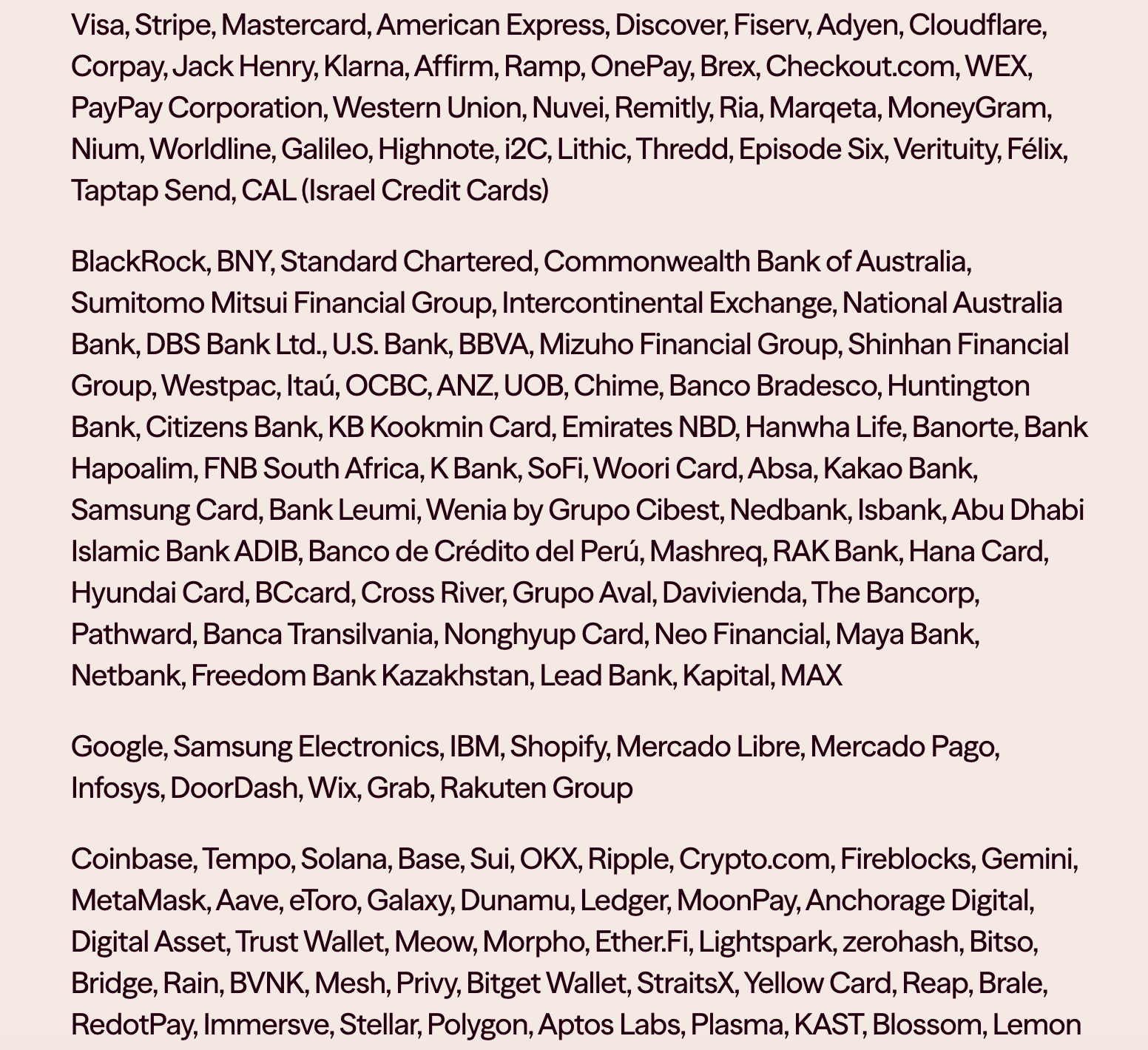
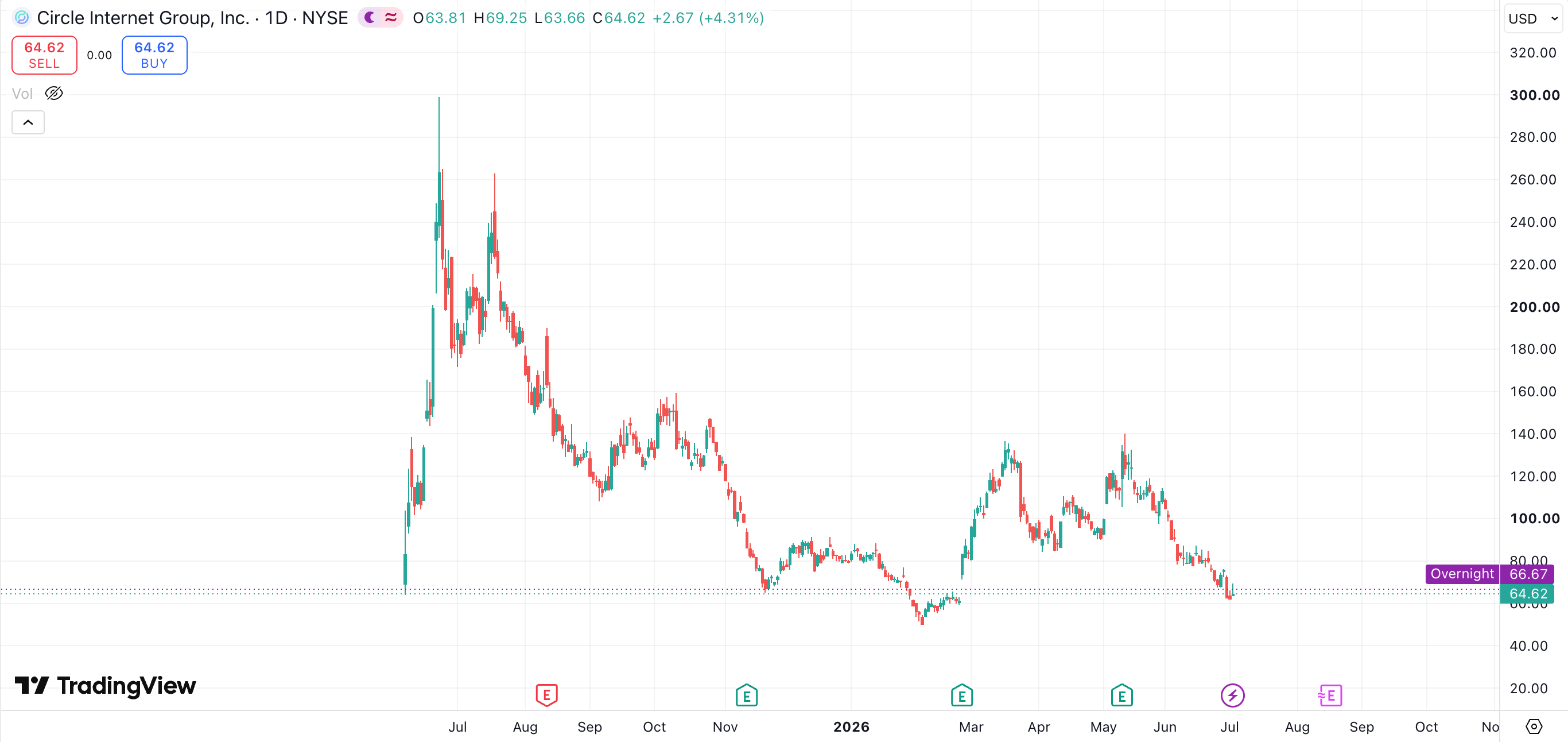
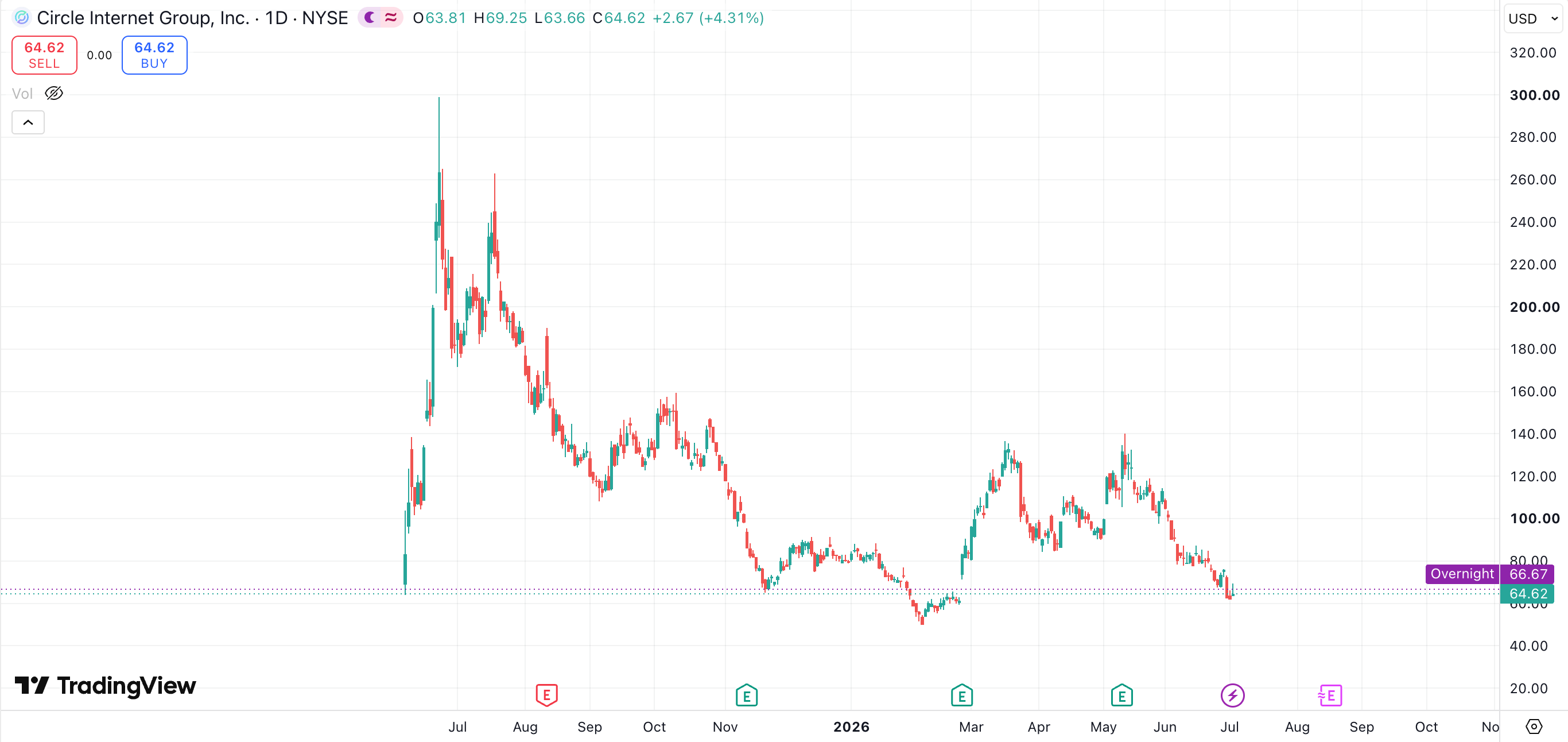
This list includes several companies that have already issued their own stablecoins, such as Western Union, Ripple, MetaMask, and Aave. Gathering signatures from so many giants in both the Web3 and traditional finance sectors before the stablecoin's issuance has filled the market with both surprise and high expectations for Open USD's future. The best reflection of this expectation was that the stock price of Circle, the leader in the stablecoin space, plummeted 17.55% on the same day, leaving only a 20% margin before hitting a new low.
However, this explosive announcement was soon contradicted.
On July 3, according to a report by The Chosun Ilbo, companies like Samsung Electronics, Dunamu (Upbit's parent company), Shinhan Financial Group, and K Bank stated they had never discussed matters related to Open USD (OUSD). A Samsung Electronics representative said, "There were no official negotiations, and we don't know what role we would play." Shinhan Financial Group, Dunamu, and K Bank also indicated that Open Standard had inquired about their willingness to participate in OUSD, and they only replied they would "have a simple discussion," yet their names were listed as alliance members.
Tony Chung, Head of Business Development at Korean Web3 media Blockmedia, added that a representative from one Korean company said they learned of their inclusion on the list through Korean media reports and were very confused, as they had only casually replied, "If it's feasible, we'll consider it."
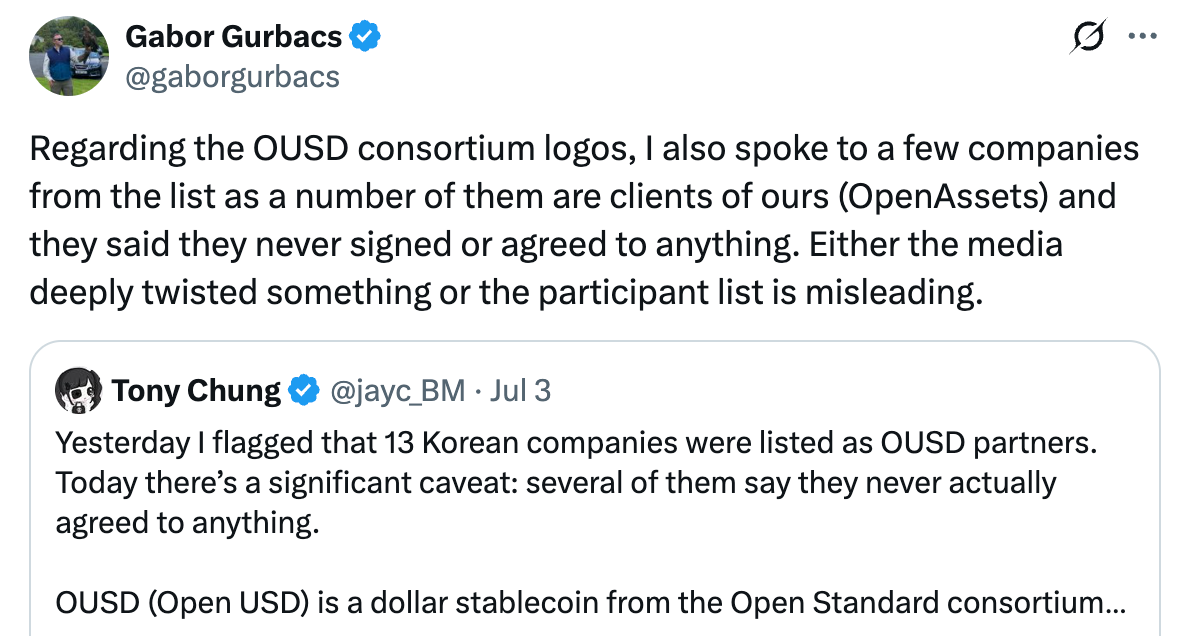
Gabor Gurbacs, Founder and CEO of OpenAssets, retweeted Tony Chung's post and stated that Korean companies weren't the only ones misled. By contacting some of OpenAssets' clients on the list, Gurbacs received replies saying, "They said they never signed or agreed to any agreements. Either the media severely distorted the facts, or the participant list is misleading."
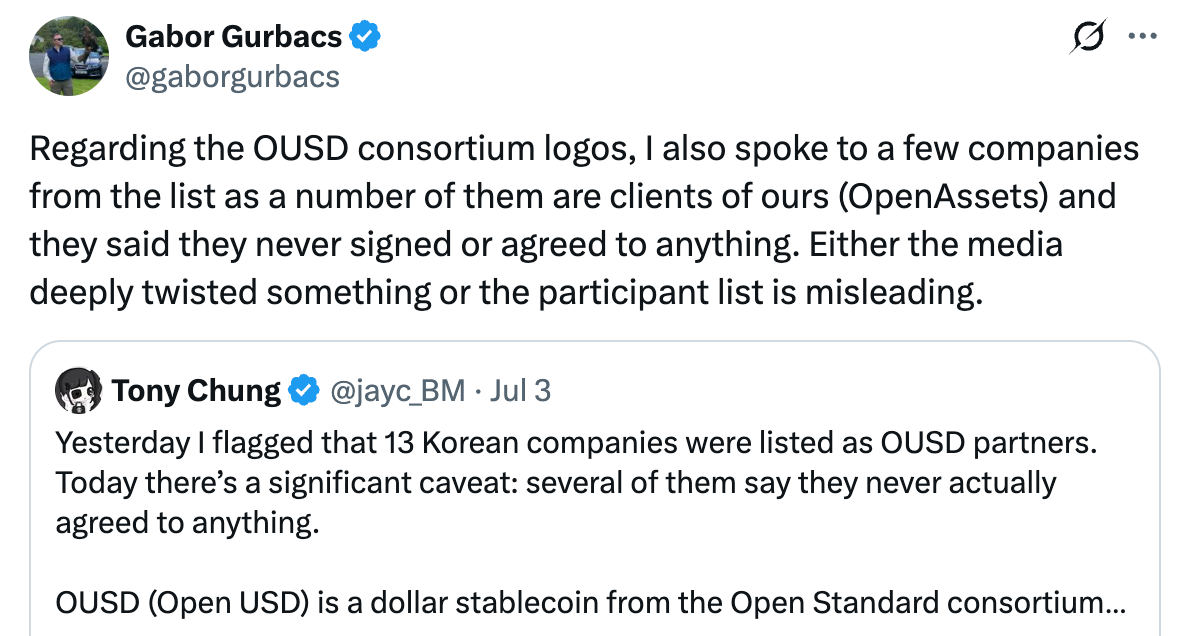
It seems, therefore, that Open Standard's "100+ list" might include some companies that were merely contacted. In the original announcement, Open Standard stated, "Businesses across industries have signed up to use Open USD." Perhaps in Open Standard's view, not explicitly refusing equates to "agreeing" to use Open USD. However, agreeing to use it doesn't mean they are "required to use it."
This is a classic marketing tactic of courting controversy for attention, and it did achieve some effect, although it borders on trampling on business ethics.
Facing such aggressive tactics and an "unruly" opponent, Circle Co-founder and CEO Jeremy Allaire published a lengthy post on X questioning the "three major features" of Open USD:
Free Minting and Redemption: Attractive in the short term, but potentially unsustainable at scale, leading to a lack of funds for maintaining bank relationships, regulatory licenses, and technical infrastructure. Circle offers preferential terms to large partners through contracts rather than being completely free.
Sharing Most Yield with Partners: This could "starve" the infrastructure, leading to systemic underinvestment and limiting the platform's scale. Circle itself already shares the majority of its revenue with distribution partners.
Alliance/Multi-Company Governance: Circle previously co-founded the Centre Consortium with Coinbase but later consolidated issuance under Circle alone. He believes the historical record for scaling products under multi-company governance is "very poor" (slow coordination, difficult decision-making).
Jeremy expressed a welcoming attitude towards OUSD joining the "stablecoin family," but the subtext of his post conveyed a key point: the stablecoin business is one built over time, leading to a winner-takes-all scenario. Simple modifications to a few mechanisms aren't enough to "earn a seat at the table."
Beyond these negative controversies, some companies on the list explicitly stated their support for Open USD's development. Stripe indicated it would set OUSD as the default stablecoin for businesses using stablecoins on Stripe. Coinbase also stated it would integrate OUSD onto Base and other chains, with plans to launch later in 2026 to expand use cases in on-chain transactions, payments, and DeFi.
Major payment networks like Visa and Mastercard, financial institutions like BlackRock and BNY Mellon, and crypto-native projects like Aave, Solana, and Ripple also expressed support, but without specifying concrete cooperation methods yet.
According to the announcement, the founding CEO of Open Standard is the CEO of Bridge. This Bridge is a fiat on/off-ramp solutions provider that was previously involved in a dispute with multiple competitors over the issuance rights for Hyperliquid's native stablecoin, USDH, and later acquired by Stripe, which is also controversially developing its own stablecoin chain, Tempo. Stripe also confirmed its partnership promptly after Open Standard's announcement, suggesting a relatively close connection between the two.
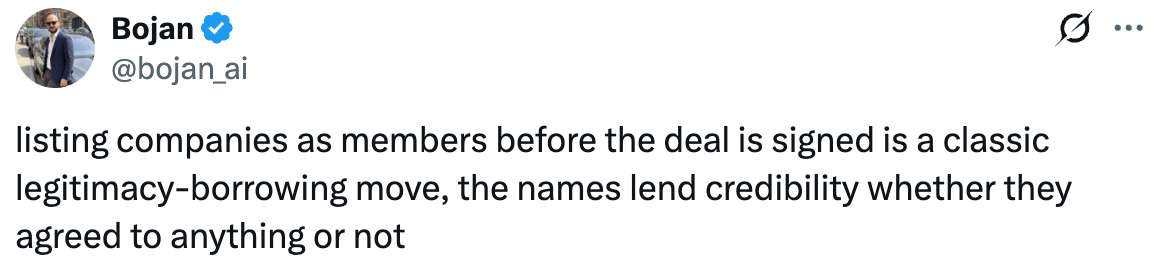
A user named Bojan on X commented that Open Standard's promotion is a typical case of "legitimacy-borrowing"—using the reputation or endorsement of well-known, reliable entities to quickly boost its own legitimacy and credibility, without actually having received deep recognition or formal authorization from them. For the stablecoin track, which relies heavily on trust, OUSD seems to have already made a negative first impression before even launching. Article by Eric, Foresight News
On the evening of June 30, Beijing time, a new stablecoin once again shook up the stablecoin landscape.
A company called Open Standard announced the launch of a stablecoin, Open USD, featuring free minting and redemption, reserve asset yield sharing, and collaborative partner governance. These open-design principles directly target pain points in stablecoin distribution and appear highly attractive.
What surprised the market most was that Open Standard had already "secured" over 140 partners before the stablecoin's launch.
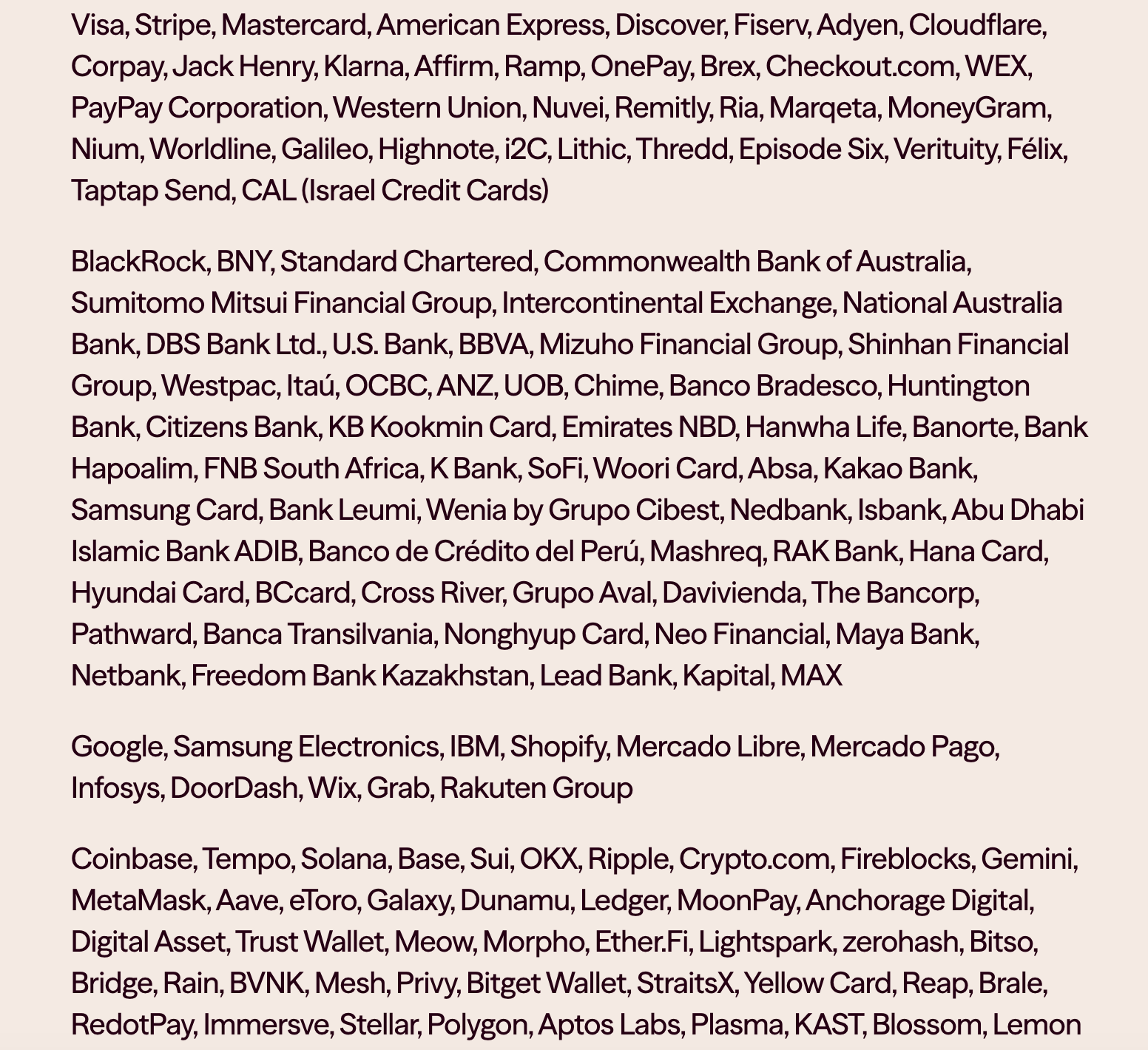
This list includes several companies that have already issued their own stablecoins, such as Western Union, Ripple, MetaMask, and Aave. Gathering signatures from so many giants in both the Web3 and traditional finance sectors before the stablecoin's issuance has filled the market with both surprise and high expectations for Open USD's future. The best reflection of this expectation was that the stock price of Circle, the leader in the stablecoin space, plummeted 17.55% on the same day, leaving only a 20% margin before hitting a new low.
However, this explosive announcement was soon contradicted.
On July 3, according to a report by The Chosun Ilbo, companies like Samsung Electronics, Dunamu (Upbit's parent company), Shinhan Financial Group, and K Bank stated they had never discussed matters related to Open USD (OUSD). A Samsung Electronics representative said, "There were no official negotiations, and we don't know what role we would play." Shinhan Financial Group, Dunamu, and K Bank also indicated that Open Standard had inquired about their willingness to participate in OUSD, and they only replied they would "have a simple discussion," yet their names were listed as alliance members.
Tony Chung, Head of Business Development at Korean Web3 media Blockmedia, added that a representative from one Korean company said they learned of their inclusion on the list through Korean media reports and were very confused, as they had only casually replied, "If it's feasible, we'll consider it."
Gabor Gurbacs, Founder and CEO of OpenAssets, retweeted Tony Chung's post and stated that Korean companies weren't the only ones misled. By contacting some of OpenAssets' clients on the list, Gurbacs received replies saying, "They said they never signed or agreed to any agreements. Either the media severely distorted the facts, or the participant list is misleading."
It seems, therefore, that Open Standard's "100+ list" might include some companies that were merely contacted. In the original announcement, Open Standard stated, "Businesses across industries have signed up to use Open USD." Perhaps in Open Standard's view, not explicitly refusing equates to "agreeing" to use Open USD. However, agreeing to use it doesn't mean they are "required to use it."
This is a classic marketing tactic of courting controversy for attention, and it did achieve some effect, although it borders on trampling on business ethics.
Facing such aggressive tactics and an "unruly" opponent, Circle Co-founder and CEO Jeremy Allaire published a lengthy post on X questioning the "three major features" of Open USD:
Free Minting and Redemption: Attractive in the short term, but potentially unsustainable at scale, leading to a lack of funds for maintaining bank relationships, regulatory licenses, and technical infrastructure. Circle offers preferential terms to large partners through contracts rather than being completely free.
Sharing Most Yield with Partners: This could "starve" the infrastructure, leading to systemic underinvestment and limiting the platform's scale. Circle itself already shares the majority of its revenue with distribution partners.
Alliance/Multi-Company Governance: Circle previously co-founded the Centre Consortium with Coinbase but later consolidated issuance under Circle alone. He believes the historical record for scaling products under multi-company governance is "very poor" (slow coordination, difficult decision-making).
Jeremy expressed a welcoming attitude towards OUSD joining the "stablecoin family," but the subtext of his post conveyed a key point: the stablecoin business is one built over time, leading to a winner-takes-all scenario. Simple modifications to a few mechanisms aren't enough to "earn a seat at the table."
Beyond these negative controversies, some companies on the list explicitly stated their support for Open USD's development. Stripe indicated it would set OUSD as the default stablecoin for businesses using stablecoins on Stripe. Coinbase also stated it would integrate OUSD onto Base and other chains, with plans to launch later in 2026 to expand use cases in on-chain transactions, payments, and DeFi.
Major payment networks like Visa and Mastercard, financial institutions like BlackRock and BNY Mellon, and crypto-native projects like Aave, Solana, and Ripple also expressed support, but without specifying concrete cooperation methods yet.
According to the announcement, the founding CEO of Open Standard is the CEO of Bridge. This Bridge is a fiat on/off-ramp solutions provider that was previously involved in a dispute with multiple competitors over the issuance rights for Hyperliquid's native stablecoin, USDH, and later acquired by Stripe, which is also controversially developing its own stablecoin chain, Tempo. Stripe also confirmed its partnership promptly after Open Standard's announcement, suggesting a relatively close connection between the two.
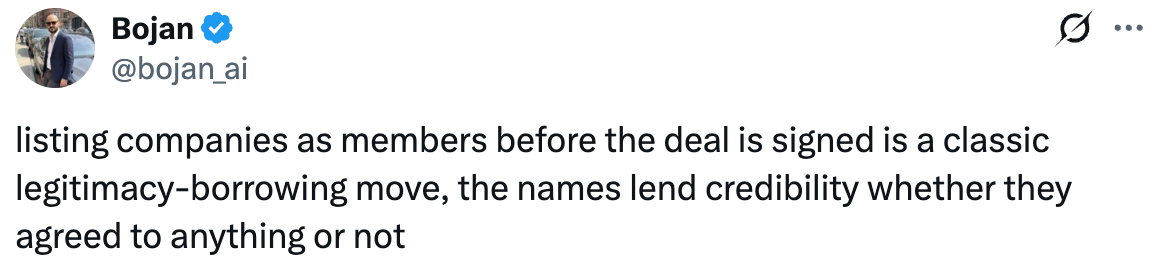
A user named Bojan on X commented that Open Standard's promotion is a typical case of "legitimacy-borrowing"—using the reputation or endorsement of well-known, reliable entities to quickly boost its own legitimacy and credibility, without actually having received deep recognition or formal authorization from them. For the stablecoin track, which relies heavily on trust, OUSD seems to have already made a negative first impression before even launching.