






Public sale buyers haven't received their tokens yet, but the price has already dropped 97%: Space crashes on launch


- Core Viewpoint: The Solana leveraged prediction market project Space (token SPC) saw its market cap plummet over 97% from a peak of $83 million after trading began on April 29th. Public sale participants were unable to take action as the project team did not distribute tokens on time, leading to accusations of a "soft rug pull."
- Key Elements:
- SPC's market cap hit a peak of $83 million at the open but dropped to $2.13 million the same day, a decline of over 97%. As of April 30th, the market cap sits at approximately $5.5 million.
- Public sale participants reported that exchanges began trading the token before distribution, leaving them unable to sell during the price crash and locking them in at high prices.
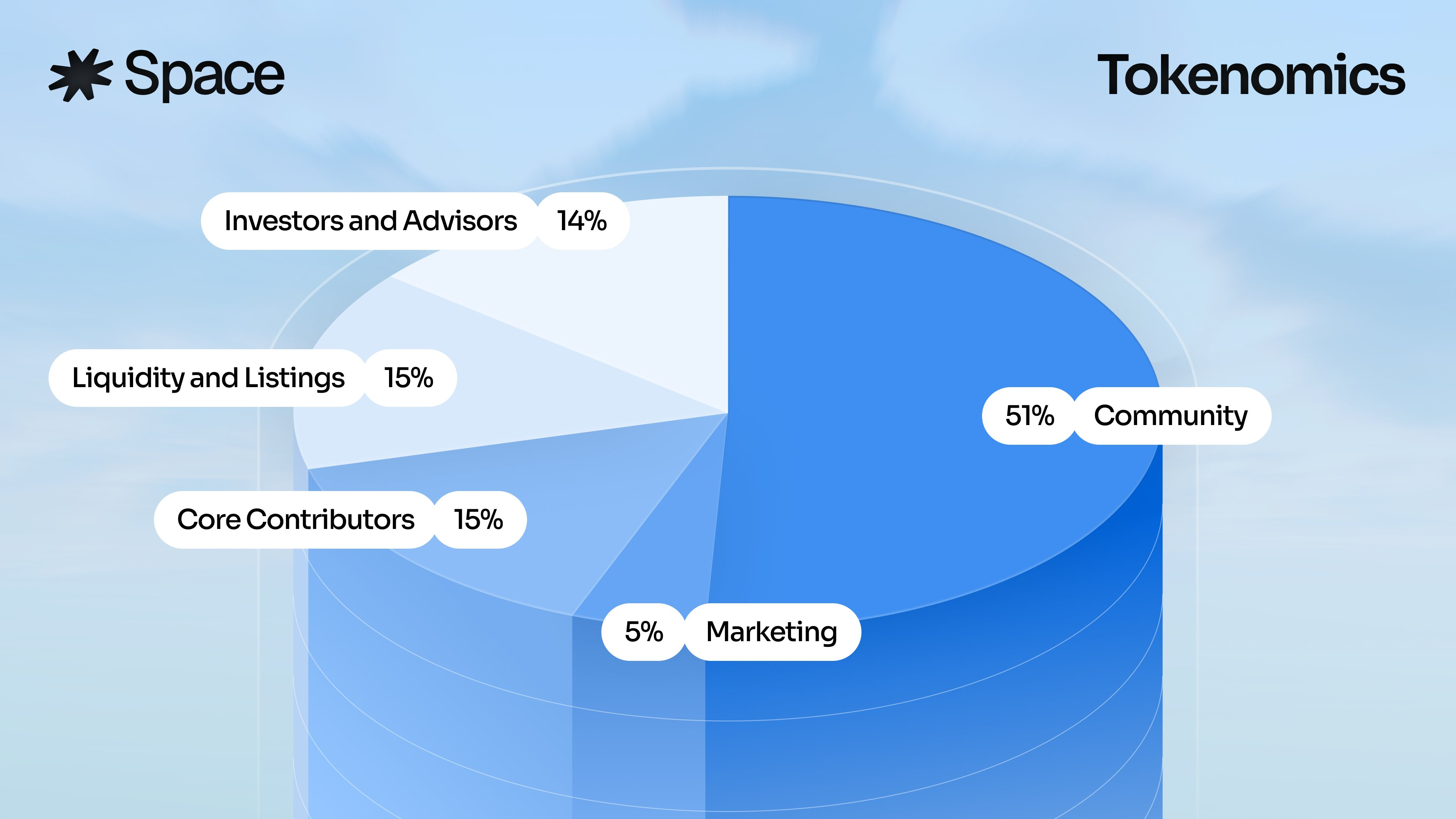
- With a total supply of 1 billion SPC tokens, 51% was allocated to the community pool. However, the selling pressure at launch primarily came from insiders, market makers, or other groups who received tokens early.
- The project previously completed a $3 million seed round, positioning itself as a prediction market on Solana supporting 10x leverage, with 50% of protocol revenue used for buybacks and burns.
- The public sale originally aimed to raise $2.5 million but was oversubscribed to $20 million, sparking controversy over the undisclosed oversubscription and differential treatment of refund allocation favoring large investors.
- The Token Generation Event (TGE) was postponed from January 2026 to late April, with opaque information updates during the period. The community also questioned the project's predecessor as a near-dead gaming project, UFO Gaming, and noted the lack of a product launch.
Original author: ChandlerZ, Foresight News
On April 29, the Solana-based leveraged prediction market project Space (token SPC) officially went live for trading, simultaneously listing on five exchanges: Kraken, KuCoin, MEXC, BitMart, and Bitpanda. Its market cap peaked at approximately $83 million after the opening, then entered a downward trend, hitting a low of $2.13 million on the same day, a drop of over 97%.
As of April 30, the market cap of SPC was around $5.5 million, still down over 93% from its opening high.
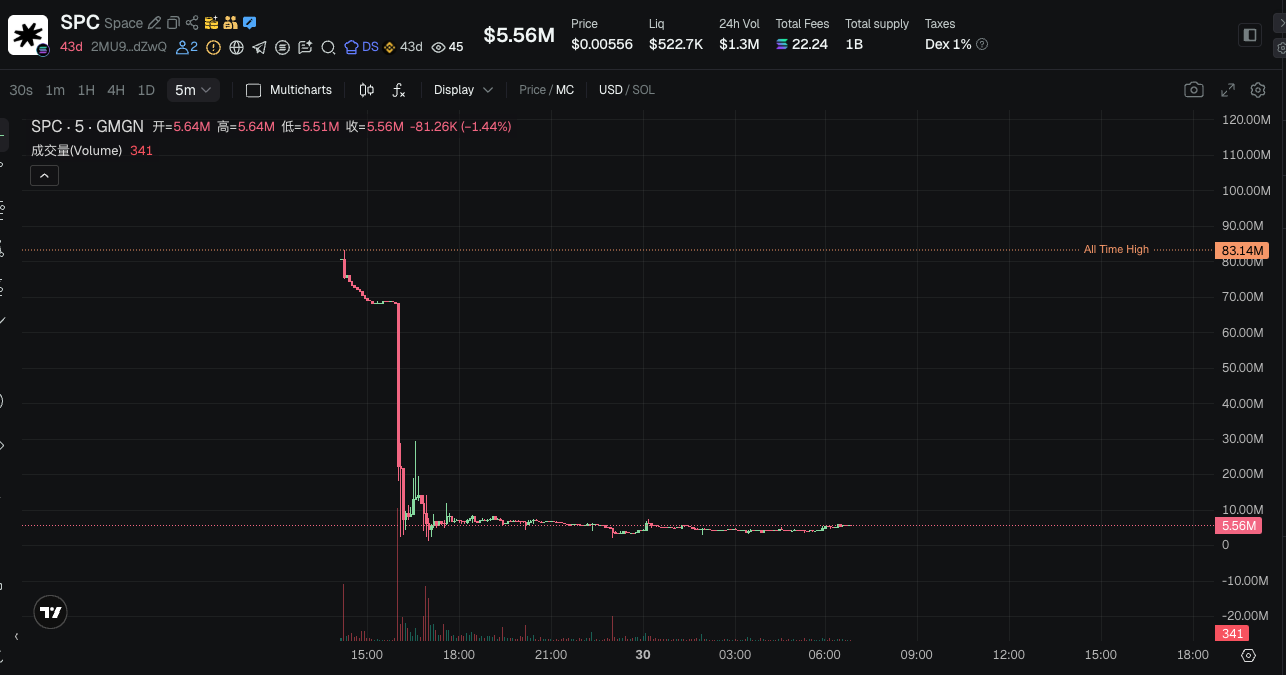
Concurrent with the crash, many public sale users reported on X that the project team had not yet distributed tokens to public sale buyers, while trading had already begun on exchanges, causing the price to plummet before they received their tokens. This effectively locked public sale participants into a high price point, watching the price drop from $0.08 to $0.005 without having any tokens to trade.
Some users directly accused the Space project of “taking $15 million,” with the FDV crashing from $70 million to below $8 million. Another user wrote: "Another day another scam... Down 90% in the first hour. Presale buyers couldn't even claim."
Who was selling heavily at the opening? If public sale buyers hadn't received their tokens, then those selling on the exchange could only be insiders, market makers, or other groups who received tokens early. Their selling directly triggered the price collapse. Ordinary public sale participants, without receiving their tokens, effectively became passive holders with no exit route.
What is Space?
Space is positioned as the first prediction market platform on Solana supporting 10x leverage. Users can engage in YES/NO leveraged trading on events related to cryptocurrency, politics, sports, etc. The platform promises 0% Maker fees, with 50% of protocol revenue used to buy back and burn SPC tokens. In December 2025, Space announced the completion of a $3 million seed round, with participants including Morningstar Ventures and Arctic Digital. Additionally, Space received investment from the echo community. The public sale was subsequently initiated.
Regarding token distribution, SPC has a total supply of 1 billion tokens, with 51% allocated to the community pool.
Oversubscribed by 8x, Refund Disputes Started in January
Space initiated its token public sale on December 18, 2025, accepting USDC, USDT, and SOL. Initially, tokens worth $2.5 million were to be sold at a fixed FDV of $50 million. After reaching this target, sales would continue, but the FDV would increase linearly to $99 million. After the public sale, each participant would purchase tokens at a calculated uniform price.
On January 21, Space outlined the public sale allocation process, stating that over $20 million had been raised in total. Of this, $14 million had been allocated, and $6 million would be returned to participants on January 21. For participants who were (partially) allocated, tokens would be distributed at a clearing price of $0.069 (equivalent to a $69 million FDV), with partial refunds returned to designated wallet addresses on January 21.
However, the project subsequently faced community质疑 over the fundraising scale and the team's historical background. Several community members suggested the team was previously behind the gaming project UFO Gaming, whose token price had crashed nearly 95% from its all-time high.
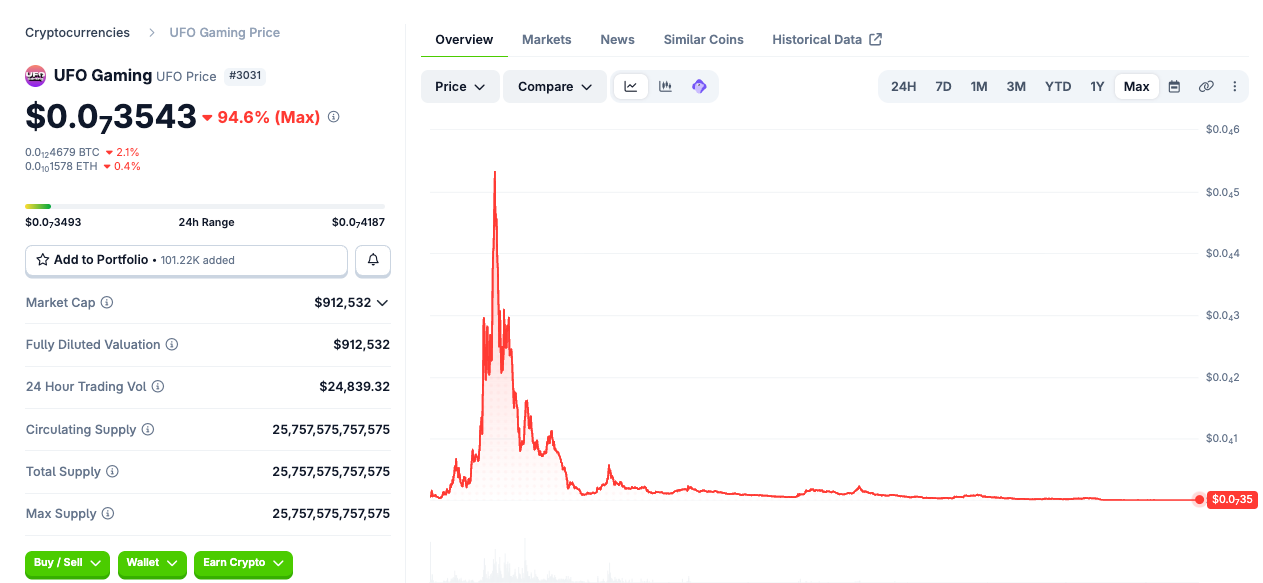
The community accused Space of pivoting to a prediction market after the old project failed to gain traction, without releasing any public or beta version, while instead prioritizing the development of Hyperliquid perpetual contract code, raising suspicions of a cash grab. Furthermore, the community expressed dissatisfaction that the project increased the public offering cap without prior notice after oversubscription, and pointed out that some large refund addresses were newly created with no transaction history.
According to the official explanation, the project decided to refund over $7.3 million in excess funds, explaining that some refund address changes were due to security considerations. The raised funds would primarily be used for the leverage pool, initial liquidity construction, security audits, team expansion, and CEX listing fees. Regarding the fundraising controversy, Space explained that the previously mentioned $2.5 million was a soft cap, not a hard cap, and that expanding the fundraising scale was intended to support leverage market liquidity and multi-year R&D to ensure the project's long-term competitiveness.
However, the community's doubts did not subside, focusing on whether the possibility of oversubscription was not fully disclosed in advance and whether large holders and retail investors were treated differently during the refund process. Some users considered this to be a "soft rug."
Four Months of Waiting, Ending in a Crash
According to the earliest official information, the TGE for Space's token SPC was originally planned for around January 2026, but it was actually delayed to the end of April. Over three months of waiting eroded the community's patience. From the oversubscription controversy in January to the TGE in late April, buyers experienced a complete chain of opaque refunds, repeated schedule delays, and insufficient information updates. When the token went live for trading on April 29, but many public sale buyers found they hadn't received their tokens, months of accumulated distrust erupted. This coincided with the selling pressure right after the opening, causing the price to spiral out of control within hours.
As of press time, the project team has not issued an official statement regarding the price crash on April 29 and the undelivered tokens.


