






AI tổng kết 200 tập podcast: Đặt cược vào Micron tăng 180%, nhưng bỏ lỡ thương vụ mua lại Cursor trị giá 6 tỷ đô la


- Quan điểm cốt lõi: Bằng cách đưa kịch bản của 200 tập podcast vào phân tích AI, chương trình đã xác thực logic đầu tư vào sức mạnh tính toán và bộ nhớ, đồng thời tiết lộ sự chuyển dịch trọng tâm của ngành từ các khái niệm vĩ mô (như AGI) sang các ứng dụng thực tế (như triển khai theo chiều dọc và nút thắt năng lượng).
- Các yếu tố then chốt:
- Nhận định ban đầu "sức mạnh tính toán là an ninh quốc gia" đã được chứng minh, cổ phiếu Micron tăng 180%, SK Hynix trở thành công ty có vốn hóa lớn nhất Hàn Quốc, lợi nhuận của Samsung vượt qua Nvidia.
- Các nhà sản xuất bộ nhớ đạt lợi nhuận trung bình 153%, các gã khổng lồ như SK Hynix và Samsung liên tục vượt mặt nhau trong cuộc chạy đua vũ trang AI.
- Số lần đề cập đến "siêu trí tuệ" và "AGI" trong podcast giảm lần lượt 90% và 54%, trong khi tần suất nhắc đến Anthropic lại vượt qua OpenAI.
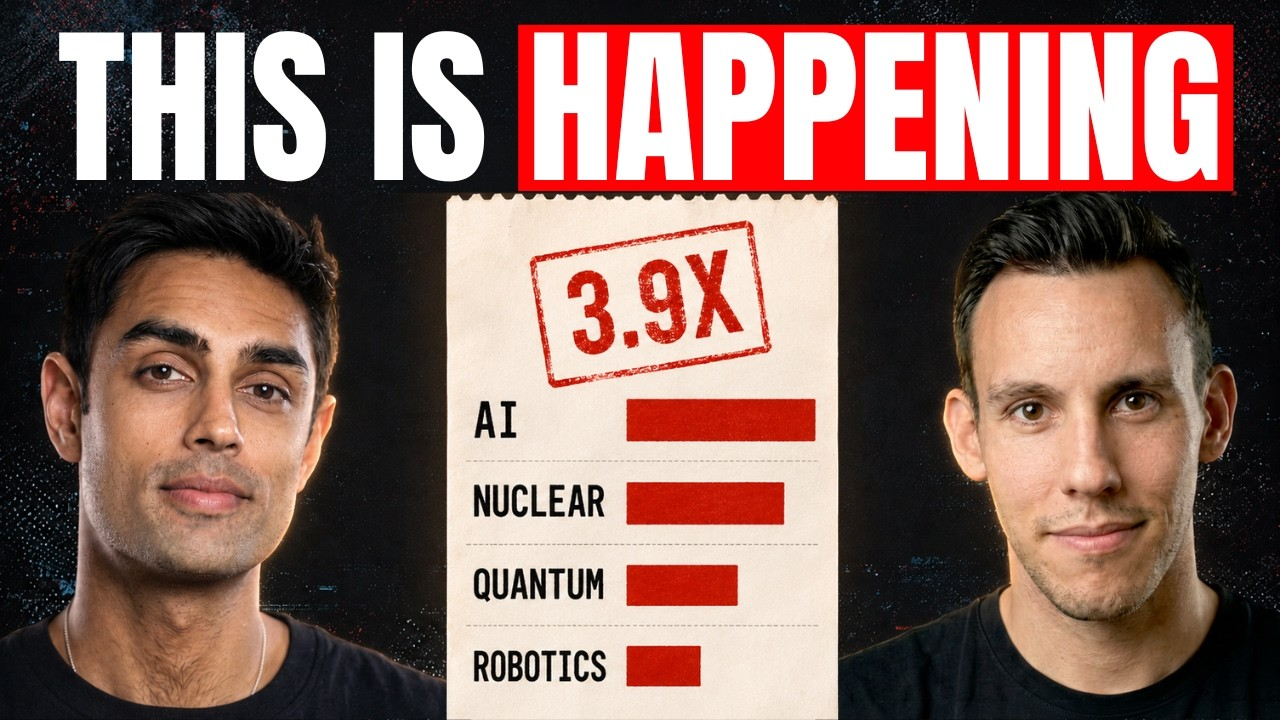
- Lợi nhuận đầu tư mô phỏng tốt nhất đạt 4 lần, Valor Atomics đạt lợi nhuận 13 lần nhờ giải quyết vấn đề thiếu hụt năng lượng cho trung tâm dữ liệu.
- Chi phí cho các mô hình tiên tiến rất cao (ví dụ Fable 5 tính phí 50 đô la cho mỗi triệu token đầu ra), khiến Uber và Meta phải cắt giảm chi tiêu AI.
- Ba xu hướng tương lai: Huấn luyện mô hình trong không gian, AI theo chiều dọc (tài chính và khoa học sinh học), và các mô hình cục bộ tại biên.
- Tỷ lệ quan điểm lạc quan và bi quan là 2,8:1, phản ánh thái độ cực kỳ lạc quan về khả năng thúc đẩy kinh tế và công nghệ của AI trong tương lai.
Compiled & Edited by: Shenchao TechFlow
Guests: EJ and Josh, Hosts of the Limitless Podcast
Podcast Source: Limitless Podcast
Original Title: AI Found the Trades We Missed
Air Date: July 8, 2026
Key Takeaways
The Limitless Podcast has reached its 200th episode. The two hosts did something slightly dangerous: they fed the transcripts of all 200 episodes to Claude and ChatGPT, asking the AI to help them uncover hidden investment themes they might have missed, review the predictions they made over the past year, and forecast AI's next destination. When they hit record for the first episode 14 months ago, SpaceX was still a private company valued at $350 billion, Anthropic was worth $61 billion, OpenAI was valued at $300 billion, and GPT-4o was the flagship model. Now, SpaceX has gone public with a market cap exceeding $2 trillion, Anthropic is approaching a trillion, and ChatGPT's user count has more than doubled.
The show unfolds along two lines. One is a review: when they first declared "compute is national security," SanDisk had surged 35x; when they bet on memory chips, Micron was up 180%, SK Hynix became the most valuable company in South Korea, and Samsung's profits surpassed Nvidia's. They even mentioned wanting to buy Cursor stock just three months ago, and then Cursor was acquired by SpaceX for $60 billion. If they had created a portfolio of companies founded by their guests, the return over one year would be roughly 4x, with the best performer, Valor Atomics, achieving 13x. The other line is forward-looking: mentions of big words like Superintelligence and AGI on the show have plummeted by 90%, while mentions of Anthropic have quadrupled, overtaking OpenAI. Their three most bullish directions next are space-based training models, AI implementation in vertical domains, and small-scale edge models.
Highlight Reel
On Compute and Memory Validation
- "We said early on that compute is a national security issue. Whoever owns the watts, chips, energy, and cooling owns the rest of the economy. Looking back after 200 episodes, that's even more true now than it was then."
- "The average return for memory manufacturers is 153%. If you bought Micron at the end of last year, you're up 180%. SK Hynix became the most valuable company in South Korea, pushing Samsung aside. Samsung just became the most profitable company globally, surpassing Nvidia."
- "Three months ago, we said we wished we could buy OpenAI stock, but there was a company that could ride that wave, called Cursor. Three months later, Cursor was acquired by SpaceX for $60 billion."
On the Limitless Portfolio
- "If you take a portfolio of all the founder companies we interviewed on the show, and invested from the day of the interview until today, the total return would be about 4x. The best was Valor Atomics at 13x."
- "Valor Atomics CEO Isaiah Taylor had just finished his seed round when he came on the show. Now the company is valued at $2 billion. His logic was simple: data centers need power, so he builds small modular nuclear reactors."
- "Boom Supersonic was originally building supersonic planes. Now they've also started manufacturing gas turbines for AI data centers."
On Trend Shifts
- "The word 'Superintelligence' was mentioned 60 times last year, only 6 times this year. 'AGI' dropped 54%, 'Robotics' dropped 60%. Crypto is essentially zero."
- "Anthropic mentions were only a quarter of OpenAI's last year. This year they've quadrupled and overtaken OpenAI: 806 to 758. A year ago, we thought Claude 3.7 wasn't great and ChatGPT was king. This company has completely turned things around this year."
- "The AI company we mentioned the most isn't OpenAI or Anthropic; it's Google. But Google's momentum has clearly slowed down."
On the Next Bets
- "Fable 5 costs $10 per million tokens for input and $50 for output. If you're burning through millions of tokens a week, that cost structure is painful. Uber and Meta are already cutting their AI token expenses."
- "Most companies and ordinary people haven't really started using these AI tools yet. The models are ridiculously powerful, but the dispersion of implementation is still very small. The core question for the next 200 episodes is: how does the world extract value from these tools."
- "Whoever solves the energy problem will be one of the most powerful companies on Earth. Whether AI continues or not, energy is the ceiling for everything."
Episode 200: Feeding the Full Transcript to AI
EJ: Welcome to episode 200. We've spoken 1.4 million words on this show, 99.9% of which are Josh and I arguing over who has more compute, which model is better, and which AI company is worth investing in the most. Before recording this episode, we did something slightly dangerous: we gave the transcripts of all 200 episodes to Claude and ChatGPT. We asked it to help us find hidden investment themes we might have missed, review the things we said and the predictions we made over the past year, and figure out AI's next destination.
Thinking back to when we recorded the first episode 14 months ago, the world was completely different. SpaceX was a private company valued at $350 billion. Now it's public with a market cap over $2 trillion. Anthropic was valued at $61 billion then; now it's approaching a trillion. OpenAI was valued at $300 billion then, ChatGPT had about 500 million users; now it's more than doubled. The model landscape was even more interesting: GPT-4o was the flagship, Claude was at 3.7, Gemini at 2.5. The most unbelievable part? When we recorded that first episode, almost all the code in the world was still being written by hand. Now it's the opposite.
So what we're going to do today is review what actually happened over the past year, and then look forward based on these trends. Let's start with the predictions we got right.
Compute is King: An Early Bet Validated
EJ: Josh, do you remember episode 4? June 5, 2025. Our exact words were: Compute is now a national security issue. Whoever owns the watts, chips, energy, and cooling owns the rest of the economy. Our meaning was straightforward—compute is king. Whoever owns the GPUs and can power them will build the best models.
Looking back after 200 episodes, this is even more true. Anthropic has signed four new compute contracts in the past few months. OpenAI is scaling production aggressively, and their aggressive bet on acquiring compute has proven to be absolutely correct. They haven't placed any limits on any users, and this precisely supports the core need for inference, allowing AI agents to run 24/7. Compute is king; it was one of our earliest judgments.
Josh: I just checked. When we said that, SanDisk was up 3500%. A 35x return. If you told someone in June 2025 that the federal government would invest in companies like Intel, and these stocks would increase this much, we might have invested too, but we'd also be surprised that this compute race had become so important.The most scarce resource in the world right now is the energy and memory to power GPUs. It's really remarkable that we noticed this so early. I really wish we had actually invested.
Memory Chips: 153% Average Return
EJ: Another asymmetric bet was AI chips, especially memory. When we did the predictions episode at the end of last year, our core logic was: memory is expensive, it's a major component of the entire AI system. For GPUs to run, you need to remember the entire context of conversations with ChatGPT and Claude. Memory prices will likely go up, and the stock prices of memory manufacturers will follow.
Guess what the average return of these three top memory manufacturers is?
Josh: Infinite. This was probably the best single investment you could have made in the past year.
EJ: Not that exaggerated, but close. 153%. If you bought Micron at the end of last year, you're up 180%. If you could have bought SK Hynix, it became the most valuable company in South Korea, pushing aside Samsung, which had dominated for decades. Samsung just became the most profitable company globally, surpassing Nvidia.
This is a full-scale arms race, and these companies are constantly surpassing each other.
Cursor: Acquired by SpaceX for $60 Billion
EJ: In March 2026, not long ago, we said this was an asymmetric bet: I really wish I could buy OpenAI stock, but there's a company that can ride that wave, called Cursor.
Three months later, Cursor was acquired by SpaceX for $60 billion.
Josh, should we start managing a fund?
Josh: We need a fund. Anyone want to invest in us?
EJ: If we had turned these predictions into actual investments, the returns would have been quite substantial.
The Limitless Portfolio: 4x Return in One Year
EJ: In the early days of the show, we interviewed many founders building cutting-edge technology. These companies were carefully selected by us; we saw immense potential in them. We got exclusive interviews with CEOs and founders.If we had invested our money on the day of the interview, the total return until today would be about 4x, in just over a year.
The best was Valor Atomics, up 13x. In episode 10, we had CEO Isaiah Taylor on. He builds small modular nuclear reactors. The logic was straightforward: data centers need power, he solves that problem. He had just finished his seed round when he came on the show; now the company is valued at $2 billion.
Same with OpenRouter. Founder Alex Atallah was valued at $500 million when he came on, now it's $1.3 billion. OpenRouter's logic is something we've talked about repeatedly: companies won't just use one model; they'll use different models for different scenarios. This is also why Cursor was well-regarded, and why SpaceX spent $60 billion to buy it. OpenRouter gets early access to models before they are officially released—Claude, ChatGPT, Chinese models, all of them. Developers can use various models without limits. The aggregated user intent data they have is incredibly rich, and they can use this data to figure out what models to build next.
Zipline is also very interesting. They do drone delivery. When they came on the show, they were still showing early prototypes. Now they are operational in several major cities. Perplexity went from $18 billion to $21 billion, mainly because Samsung set its product as the default AI agent on all their phones.
Boom Supersonic is a special case. Originally building supersonic planes, they've now started making gas turbines for AI data centers too.
Josh: A 400% return is already crazy compared to the broader market. If only we could have actually invested.
EJ: I'd be in too. But this simulated portfolio tells us that several clear trends have formed over the past year: energy is the bottleneck, and nuclear is one solution; the model routing layer is a real need; the implementation of AI on mobile devices has already begun.
Trend Shifts: Superintelligence Exits, Anthropic Rises
EJ: The topics we've discussed have changed significantly over the past 14 months. After using AI to analyze the transcripts of all 200 episodes, the trend shifts are very clear.
The word 'Superintelligence' was mentioned 60 times last year, only 6 times this year—a 90% drop. Crypto has essentially gone to zero; it's a winter now. Robotics dropped 60%, AGI dropped 54%. We're mentioning these big words less, probably because they feel within reach, the boundaries are getting blurry. When you see these Mythos-level models, you feel like this might be AGI. Robotics is interesting; we seem to be in a middle ground: many companies are building them, but haven't officially released them yet. A new version of Optimus is coming but hasn't been unveiled yet, Figure is working on new robots but hasn't made them public. I suspect there will be a wave of releases later this year, and the robotics topic will explode again.
The most astonishing is Anthropic. Last year, we mentioned them about a quarter as often as OpenAI and ChatGPT.This year, mentions have quadrupled, overtaking OpenAI: 806 to 758. A year ago, we were looking at Claude 3.7 Opus, thinking it wasn't great, and ChatGPT was king. This company has completely turned things around this year. Claude Code has only been around for a little over a year; almost no one was using it at the end of last year. Now everyone is using it.
Another interesting finding: the AI company we mentioned the most on the show isn't OpenAI or Anthropic; it's Google. But Google's momentum has clearly slowed down. In the first few months, their product iteration speed was incredibly fast, almost weekly releases of new stuff, and it was all good. But they've slowed down recently. Now the two real heavyweights are OpenAI and Anthropic, and I don't see that changing in the short term. Maybe Grok can be the comeback player of the year; SpaceX's AI team is pushing hard.
The Next 100 Episodes: Three Tracks to Watch
EJ: If I had to pick the three most important trends going forward, the first is space-based training models. We first mentioned StarCloud, a Y Combinator startup that sent H100 GPUs into space to start training models. Now the entire strategy of SpaceX AI is to launch a large number of satellites to train models in space, likely Grok and others. This trend will only get stronger, and SpaceX will be the leader.
The second is the implementation of AI models in vertical domains. General large models are great for chatbots, but they struggle when applied to specialized, niche fields requiring deep knowledge.Anthropic and OpenAI have been forming joint ventures over the past few months, raising billions of dollars, sending engineers into these fields to find


