






Mỹ CFTC tiến hành điều tra sâu rộng đối với Polymarket, mùa tiệc tùng của thị trường dự đoán sắp nguội lạnh?


- Quan điểm cốt lõi: Cuộc điều tra chính thức của CFTC Hoa Kỳ đối với các nền tảng thị trường dự đoán như Polymarket đánh dấu sự kết thúc của giai đoạn mở rộng man rộng của ngành, quản lý sẽ bước vào vùng nước sâu, đồng thời phơi bày những xung đột sâu sắc về quyền quản lý và lợi ích giữa liên bang và tiểu bang, giữa quan chức và giới tư bản.
- Các yếu tố then chốt:
- CFTC chính thức điều tra Polymarket, trọng tâm liên quan đến hành vi tiếp thị sai lệch có trả phí của người có ảnh hưởng (KOL) trên nền tảng, hành động này được kích hoạt bởi một lá thư có chữ ký của các thượng nghị sĩ.
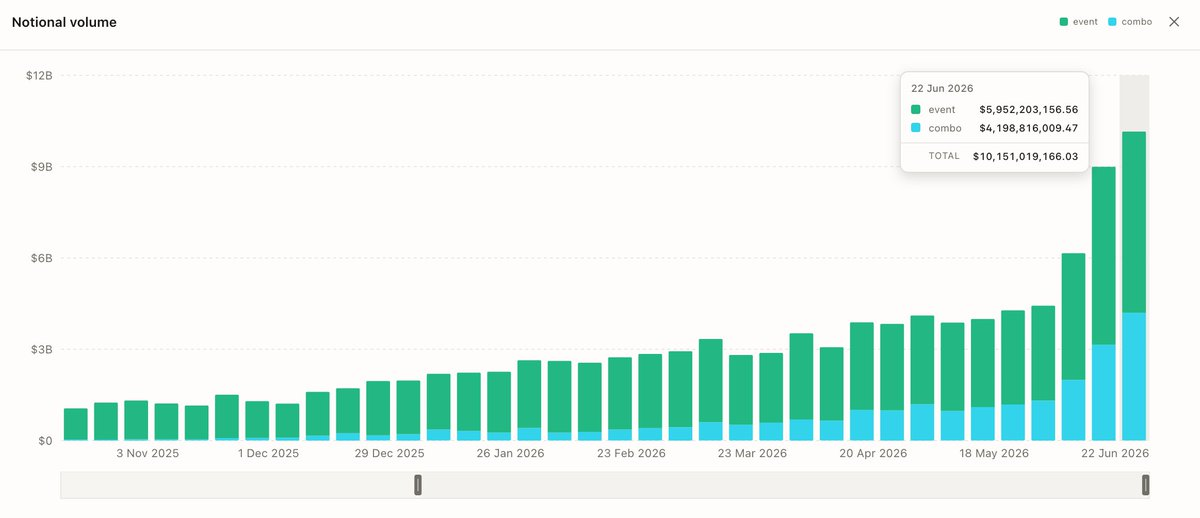
- Khối lượng giao dịch của thị trường dự đoán bùng nổ: Khối lượng giao dịch hàng tuần của toàn thị trường từng đạt 14,4 tỷ USD, dữ liệu của các nền tảng như Kalshi và Polymarket đều ghi nhận mức cao kỷ lục.
- Các ông lớn như Meta quan tâm đến lĩnh vực này, Mark Zuckerberg đã thúc đẩy công ty khám phá khả năng hợp tác với các nền tảng như Polymarket và phát triển ứng dụng riêng mang tên Arena.
- CFTC kiện 9 tiểu bang bao gồm Kentucky, khẳng định có "thẩm quyền riêng biệt" đối với các hợp đồng sự kiện trên thị trường dự đoán, nhằm đối phó với việc các tiểu bang xử lý nền tảng này dưới danh nghĩa cờ bạc bất hợp pháp.
- Sàn giao dịch hàng hóa Chicago CME kiện CFTC, phản đối việc cơ quan này chấp thuận cho Kalshi ra mắt hợp đồng tương lai vĩnh viễn Bitcoin, cho rằng hành động này vi phạm Đạo luật Giao dịch Hàng hóa (Commodity Exchange Act) và xâm phạm thị trường.
- Chú Trump nhỏ giữ chức vụ hoặc đầu tư tại cả Kalshi lẫn Polymarket, mạng lưới vốn gia đình của ông trở thành "chất bôi trơn" kết nối liên bang, địa phương và các cơ quan quản lý.
Original|Odaily Planet Daily (@OdailyChina)
Author|Wenser (@wenser2010 )

Polymarket's deceptive marketing has finally drawn the attention of regulatory authorities.
Recently, the U.S. Commodity Futures Trading Commission (CFTC) launched a broad investigation into prediction market platform Polymarket, covering its business operations including social media activities. Previously, U.S. Republican Senator John Curtis and Democratic Senator Adam Schiff jointly sent a letter to CFTC Chairman Mike Selig, urging an investigation into Polymarket's paid influencer deceptive marketing and use of fraudulent marketing tactics to promote gambling-like products to U.S. audiences.
At a time when the World Cup is driving prediction market trading volumes to new highs, this move could pour cold water on the sector's development. More importantly, the CFTC's investigation into Polymarket brings to light conflicts of interest between the U.S. federal government and states, as well as between officials and capital. (Recommended reading: "WSJ: Fake Websites, Fake Trades, Real Promotion: Polymarket's Traffic Scam").
End of the Wild West Era for Prediction Market Marketing, Regulation Enters Deeper Waters
If Polymarket's previous incidents—such as using college students to post fake profitable trading videos and paying influencers to exaggerate prediction earnings—were the wild attempts of early prediction market expansion, then the CFTC's formal investigation marks the end of that era.
Prediction Market Platforms See Explosive Data Growth, Traditional Tech Giants Take Notice
As of June 2026, with the official start of the World Cup, prediction markets have received unprecedented attention, with trading volumes climbing steadily.
a16z crypto data shows that prediction market trading volume has hit record highs for the third consecutive week. Total market volume reached $14.4 billion two weeks ago, a significant increase from the approximately $5-$6 billion at the beginning of the year. The previous all-time high of around $10 billion was set just one week prior. From a platform perspective, data also saw substantial growth:
- Latest data shows that Kalshi's weekly notional trading volume exceeded $10 billion for the first time.
- Polymarket officially stated that its annualized revenue has significantly exceeded $1 billion, a milestone reached just six weeks after its U.S. trading platform removed the waiting list. Data shows that U.S. platform daily trading volume grew from approximately $50 million in mid-May to over $200 million on June 20 (based on Dune Analytics data).
- Robinhood's prediction market platform business is growing rapidly, with annualized revenue reaching $500 million. In Q2, as of June 25, Robinhood processed approximately 12.3 billion event contracts. At a standard rate of $0.01 per contract, the prediction market revenue for the quarter is estimated to be at least $123 million. Its recently launched Rothera prediction market platform achieved over 900 million contracts in its first week, contributing nearly 60% of Robinhood's event contract trading volume growth.
These impressive figures have also attracted the attention of tech giant Meta. According to media reports, Meta CEO Mark Zuckerberg has urged the company to explore partnerships with prediction markets Polymarket and Kalshi. Simultaneously, Meta is developing its own prediction market application called Arena.
All signs indicate that prediction markets have evolved from a niche sector a few years ago into a hot industry experiencing exponential growth. Facing this trend, regulators will certainly not stand idly by. Polymarket's recent deceptive marketing scandal serves as a convenient "soft weapon," providing an opportunity for regulatory intervention. The author believes that regulators will gradually clarify the boundaries of supervision over prediction market platforms in areas like marketing, event contract content, and transaction fees, aiming to strengthen investor protection and draw a clear line with traditional gambling businesses.
Meanwhile, as the investigation deepens, the power struggle between federal regulators like the CFTC and state-level regulatory authorities is also coming to the surface.
When the U.S. CFTC Clashes with Nine States: The Battle for Prediction Market Regulatory Power
Last Tuesday, the U.S. CFTC formally sued the state of Kentucky, seeking to reaffirm the agency's jurisdiction over prediction market platforms.
In its complaint filed with the U.S. District Court for the Eastern District of Kentucky, the CFTC argued that Kentucky's attempt to shut down federally regulated designated contract markets interferes with the federal regulatory system established by Congress for the national swaps market. The CFTC asserted "exclusive jurisdiction" over related event contracts and prediction market products.
Previously, Kentucky sued platforms like Kalshi and Polymarket, accusing them of operating unlicensed and illegal sports betting and gambling businesses within the state. As of June, over 12 U.S. states, including Kentucky and New York, have taken legal action against Polymarket and Kalshi, alleging they operate illegal sports betting. Kentucky has become the ninth state sued by the CFTC in the dispute over prediction market regulation.
This action highlights the escalating conflict between federal derivatives regulation and state gambling regulation.
There are two main reasons behind the dispute:
- First, the tangible interests of state and local gambling tax revenue. Traditional sports betting generates significant tax revenue for many areas (e.g., high-tax online gambling). If prediction markets completely replace the gambling industry, states could potentially lose billions of dollars in tax revenue annually (some estimates put the figure around $600 million).
- Second, the need to define the regulatory boundaries between the gambling industry and prediction markets as an emerging sector. The CFTC aims to classify "event contracts" within the scope of commodity derivatives, futures, or swaps, enforcing federal preemption.
The final outcome may depend on the interpretation and rulings of state courts, and ultimately the U.S. Supreme Court, regarding the Commodity Exchange Act (CEA).
Furthermore, conflict has also ignited between exchanges and the CFTC. Previously, the CFTC approved Kalshi's perpetual futures trading application, leading the Chicago Mercantile Exchange (CME) to sue the commission—
Reportedly, CME has sued the CFTC and its Chairman Michael Selig in the U.S. District Court for the District of Columbia. Regarding the CFTC's May 29 approval for prediction market platform Kalshi to launch perpetual futures contracts linked to Bitcoin's spot price, CME argues that the CFTC treated "futures" with expiration dates as "swaps," violating Congressional directives and the CEA, and requests the court to vacate the related perpetual futures actions. CME also claims Selig acted unilaterally without a full panel of five commissioners.
A CFTC spokesperson responded that CME is engaging in a "legal battle" against the agency and government crypto policy, calling the lawsuit "extremely reckless." (It's almost like saying "your case is far too frivolous" right on their forehead).
Of course, CME's strong reaction is understandable. By allowing Kalshi's crypto perpetual contracts, the CFTC has essentially let prediction market platforms like Kalshi, alongside crypto exchanges like Coinbase and Kraken, encroach upon CME's "trading territory." The driving force behind this might also be related to the Trump family.
The Trump Family's "Two-Sided Bet" in Prediction Markets: Don Jr. Bets on Kalshi and Polymarket
Recently, Kalshi was reported to be in talks for a new funding round at a valuation of approximately $40 billion, with a deal potentially closing as early as Q3. After completing a $1 billion fundraising round in May (with investors including Sequoia Capital, Andreessen Horowitz, Coatue, and Morgan Stanley), Kalshi's valuation jumped from $12 billion to $22 billion. Now, that figure is poised to double.
Kalshi CEO Tarek Mansour stated the company is considering an IPO no earlier than late 2027 or 2028. Kalshi officially stated that as of April 2026, its annualized trading volume reached $178 billion, a 32-fold increase year-over-year.
It's hard to imagine such impressive market data and strong capital market enthusiasm are unrelated to Donald Trump Jr., one of the prominent figures of the Trump family.
It is understood that Trump Jr. is essentially "covering both sides" in the prediction market track:
On one hand, he began serving as a paid strategic advisor at Kalshi in early 2025, receiving approximately $300,000 in company equity. At that time, Kalshi's valuation was under $2 billion, meaning this investment alone has already yielded over a 10x return.
On the other hand, he serves as an advisor to Polymarket and has made a strategic investment in the latter through his venture capital firm, 1789 Capital, where he is a partner.
Adding to this, Trump has repeatedly emphasized the federal government's regulatory authority over prediction markets and has mentioned: "Kalshi and Polymarket will thrive under his leadership."
To a certain extent, the conflict of interest between capital and official regulators has been mediated; the Trump family acts as the "optimal lubricant" in this contradictory event.
Thus, a network of interests connecting federal regulators like the U.S. CFTC, various U.S. states, and Trump family investment entities is gradually taking shape.
As for the CFTC's investigation into Polymarket, it may simply be a necessary step in regulating the prediction market industry.
The "Spring of Prediction Markets," characterized by wild growth, is coming to an end, while the "Prosperous Summer" for the industry is slowly arriving.


