






Rebirth from a Breakthrough: An Overview of the Solana DeFi Ecosystem in 2023


Original title: What is Dead May Never Die: The Solana DeFi Ecosystem Overview 2023
Original source: blocmates
Original compilation: West, Luccy, BlockBeats
Soylana, SBF chain, Sam coin, NEO in this cycle, ghost chain, VC chain, etc... If you have persisted in your belief in Solana in the past 18 months and survived, I pay tribute to you. .
In general, and on Twitter in particular, people have a tendency to like to follow, obey, and not say anything that goes against popular opinion. Just like in a cosmopolitan medieval town, residents were ostracized because they had different views or believed in the wrong god. Its not my god, so its the wrong god.
Tensions are particularly high when capital is at stake and many of the villages idiots are anonymous. Those who shout the loudest tend to attract believers who agree with their every word.
This is why narrative is especially important in the world of cryptocurrencies. Things can take up and hold on without having to. But often, the more powerful the narrative, the farther away it is from the truth.
We saw in the last cycle that there were cult-like icons who guided their followers toward inevitable failure. Theyll be back this time, maybe in a different form, but human nature and the herd mentality will accept some of these charismatic leaders. Put a token on them and the situation can quickly become complicated.
I think extremism of any kind is stupid at best and deceitful at worst. Exacerbating this now in an extremely young and naive field, ever-changing technologies and paradigms will definitely not be static in the next 5-10 years. Theres still a lot we have to learn, solve, and even imagine, yet... some of us think about anything outside the echo chamber of our own algorithmically induced self-affirming beliefs.
When things start to get out of hand, it becomes very easy to fight Solanas point of view. Whether you look at it from an investment perspective, a user perspective, a builder or a general market participant perspective, the past 18 months have definitely tested your resolve.
We saw that from that infamous $3 tweet, the price of SOL started to rise dramatically, all the way to $259. At that time, Ethereum became difficult to use, and gas fees were consistently above $100, sometimes as high as 4-digit Gwei. Alternative Layer 1 is developing rapidly for good reason. Solana, BSC, Avalanche, Luna (RIP), Fantom, and others attract users who want to participate in DeFi but want to be able to afford gas fees.
In all of this, toxicity begins to creep in. Somehow, Polygon has largely avoided the vilification of Ethereum extremism. This may be because they are trying to make people believe they are connected to Ethereum while being an unusable sidechain that still has reorganization issues.
However, Solana has been the target of major attacks. Bankless continues to invite Anatoly and other L1 blockchain founders to further their own agenda without giving the founders any meaningful speaking time. Even when they offer speaking time, it is done in an extremely arrogant tone.
To think there are other ways of doing things that dont benefit from Ethereum in some way is sacrilege. The fact that it performed so well makes it even worse...
I will say that even as someone who tries everything possible, this is nothing like anything Ive tried before. Some aspects are better, some aspects are worse. But overall, its still impressive so far.
After a few outages, things started to get a bit murky. This only intensified the sentiments of those who expressed displeasure with Solana. Another aspect I noticed early on is that DeFi projects on Solana are not up to their standards compared to their EVM counterparts.
There is a complete lack of thinking about token economy, value accumulation, stickiness and user retention. As someone who works in the DeFi space almost every day, some things just dont make sense.
Any Token Generation Event (TGE) is immediately shut down or severely compromised. It feels like every project launched on Solana has the same name on all the funding agencies, and Alameda seems to control everything related to this.
Now, I dont know if what Im about to say is true, but enough things happen that this is more than just a coincidence.
Here’s what I and others discovered: How to issue tokens on Solana in 2021.
· Has Alameda and other familiar Solana investors on the investor list
· The circulation of tokens is very low and the unlocking timetable should be very long
· Private placement round allocations offer seed investors very low prices
· Tokens that follow this blueprint are eligible to be listed on FTX
· If Alameda made an investment, the Perps for that token will be listed
· When Perps comes online, investors can go short to hedge their positions that are still locked.
· The interests of retail investors will be damaged
This is not the way to build a strong community or user base. If you want users to stay, you have to give them a chance to make money. This doesnt work when your only counterparties are low-cost venture capital investors.
Anyway, but judging by the way FTX/Alameda prices its investment project assets at current market prices, such as MAPS, OXY, SRM, etc., even if their assets may not be in circulation in the next few years, I think my point stand up.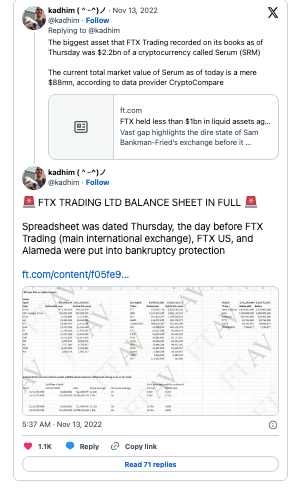
Perhaps by this they are trying to inflate their actual holdings to show they are fully solvent, but they are not.
Anyway, then FTX collapsed, and naturally, the Solana-related trial happened. This is yet another test of faith for holders, users, developers and backers, but also presents an excellent opportunity to purchase SOL for $8. Hats off to those who made a purchase.
All in all, in the nine months since then, it seems the dust has settled and those who had hoped for Solanas demise are now licking their wounds as it is the best performing asset in the top 50 crypto assets so far this year. Dealing with the situation has proven to be an excellent booster.
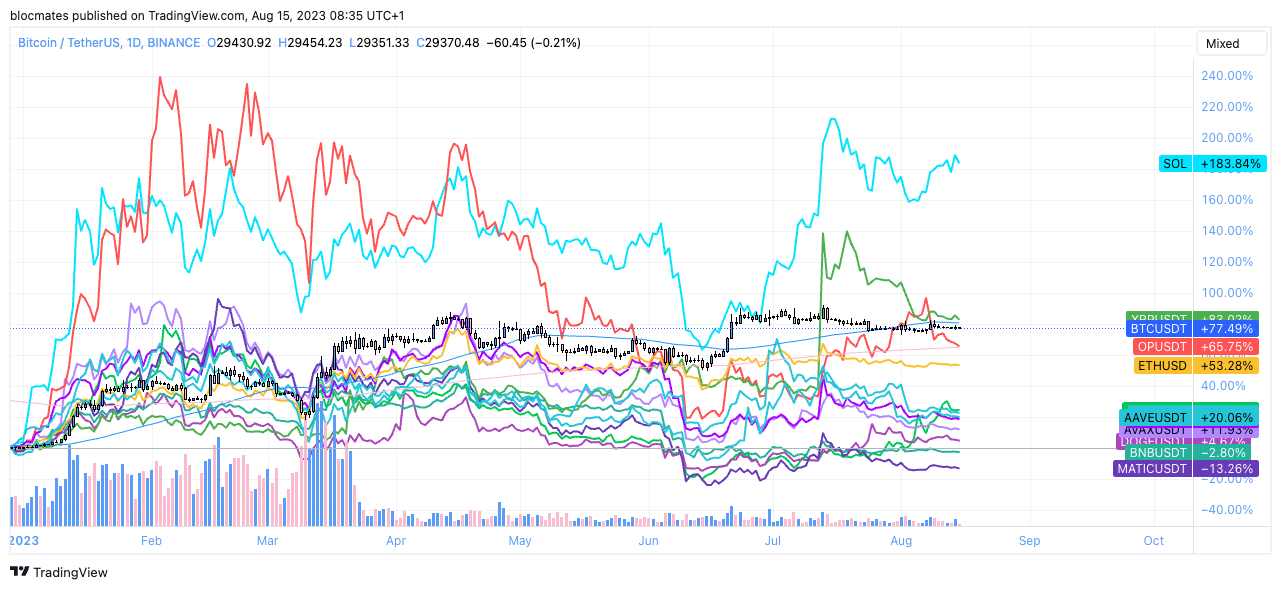 So what exactly has changed?
Solana outages - The last outage occurred in February and was attributed to cluster instability. In the six months since then, everything has gone according to plan.
Backpack (a new wallet on Solana) hosted their xNFT launch: Madlads. A huge test for the Solana network. xNFT has a novel design and is in high demand, making it very popular.
xNFT, or executable non-fungible token, is a new type of NFT that can run code. X stands for eXecutable, tokenized code that gives the owner execution rights.
However, due to Solanas extremely low fees and high throughput, many Solana NFT issuances have been attacked by bots trying to spam the contracts to ensure they have a higher chance of minting than regular users.
The team had to delay minting by around 24 hours due to the high volume of transactions flooding the network and minting contracts.
Heres what the founders of Backpack and Madlads had to say about the first attempt.
https://twitter.com/armaniferrante/status/1649226410903437314?s=20
Now, it would be foolish to even suggest that something similar could happen on other chains, because of things like throughput, fees, and latency, it wouldnt be cost-effective to do so in the first place. Having said that, there was no downtime on the network, although there were a few RPC crashes, but overall it performed extremely well given the enormous demands and pressure on the network.
The most impressive thing for me personally was seeing the local fee market in action. Ill try to keep it simple and not go into too much detail because I dont want to bore you, but thats actually how it works.
On Ethereum or most other EVM chains, transactions are sent to a mempool, where they are ordered and committed into blocks. Seekers and builders see these transactions and propose the highest value blocks to validators, which are usually confirmed and committed to the blockchain.
Anyone caught in the middle by Jared is to blame for this mechanism, as they suffered significant slippage on their own altcoin purchases. By raising the price of fuel, Jared will buy before you and sell before you. If you used automatic slippage or forgot to reset it to normal slippage tolerance, you will buy at a higher price and then he will continue to sell on the next trade.
These gas competitions are absolutely insane, and if you look back at the last cycle, even if you didnt know that somewhere on Ethereum was issuing NFTs, you would always be able to detect it. Users will try to pay high gas fees in order to prioritize blocks to confirm their issuance transactions.
So, what happens when that happens and at the same time Aave has to liquidate the borrowing? Well, as gas fees soar, but Aave must liquidate collateral quickly to get the best price, the protocol may incur bad debt as the cost of liquidating collateral increases.
Now for the fun part... what if you were able to separate the fees so that the NFT issuance that is happening is independent of the collateral being liquidated on Aave? This is the problem Solana successfully solves with segregated fee markets.
Gas wars may be taking place on NFT issuance, while users in the DEX and /Token markets are unaware.
This is also because of some recent upgrades:
· Priority Fee - This allows users to express their desire to have their transactions prioritized. This fee is at the discretion of the user and will be added on top of the base fee. · QUIC This is a new implementation that allows validators to effectively limit spammy transactions sent from specific IPs.
Someone described it as switching from an open mailbox where anyone could send you letters and spam, to a secretary who would tell you who was calling you before you answered the phone.
Of course, this reduces spam from a single source and prevents the extreme levels of transactions surrounding anticipated NFT launches.
Stake Weighted Connections This is a method that allows those with greater SOL weight to have more connections to the leader, the validator who is deterministically chosen to submit the next block.
So, this means that when you have greater weight, you can establish more connections with validators. Of course, the reverse is also true. Spammers who wish to have more connections and increase the chances of their transactions being included in a block will need to purchase SOL and stake it. This creates an additional financial barrier that will disincentivize traders who want to bombard the network.
The simplest explanation for isolated fee markets is that at any given time, a particular contract can include a certain amount of data in a block.
How and why the Madlads ended up being successful:
Take the Madlads NFT issuance as an example... Each time a user attempts to mint an NFT by sending a transaction, Solanas base fee will remain the same, although users can pay additional priority fees to increase their chances of minting.
If this happened on Ethereum and everyone was increasing gas fees to try to queue up, and at the same time a large account was liquidated on Aave, then the people liquidating bad collateral on Aave would have to compete with those using priority gas fees People compete and may not be included in the block. This can lead to the accumulation of bad debt in the protocol, which we saw during market crashes like LUNA and UST.
Solana’s segregated fee market allocates a certain amount of space in the next block to a specific contract, so once the limit is reached, availability is still available for other important transactions. Now, protocols, users, and applications dont need to compete with unrelated gas priorities that are happening elsewhere on the network.
Additionally, with the implementation of QUIC, bots spamming specific contracts will be limited by the number of transactions they can actually send. Usually, this high transaction volume caused some headaches for validators, causing network downtime in the past.
All in all, Solana has implemented some great throughput, infrastructure, user experience, and overall stability upgrades over the past few months.
Honeypot Project BITCH
The team also cunningly deployed a honeypot minting contract that absorbed approximately $250,000 in SOL. Bots spam the network, trying to pass their transactions and mint NFTs that dont exist... The founders return the proceeds to those who tried to mint fake NFTs. I support this approach.
Anyway, heres a brief history of how we got to where we are with Solana. Now, lets get to the fun rebirth part that all degens have been waiting for: the new Solana ecosystem assessment.
Solana Ecosystem Assessment
Ill try to explain it in as simple and actionable a way as possible. I may miss something, but I will try to keep this article up to date to provide you with information.
Getting Started with Solana - Wallet
Solana does not currently support Metamask. There are currently two main wallets.
Phantom
 The Phantom is my go-to wallet, mostly because its a really good product and its been used for the last cycle. Its been doing a rebrand recently, and I think its brilliant, and the Chrome extension and mobile app are excellent. The Chrome Store has been downloaded by more than 2 million users and recently added support for Ethereum and Polygon, allowing users to manage everything in one application. Looking forward to adding custom RPC support for other L2 ecosystems in the future.
Backpack
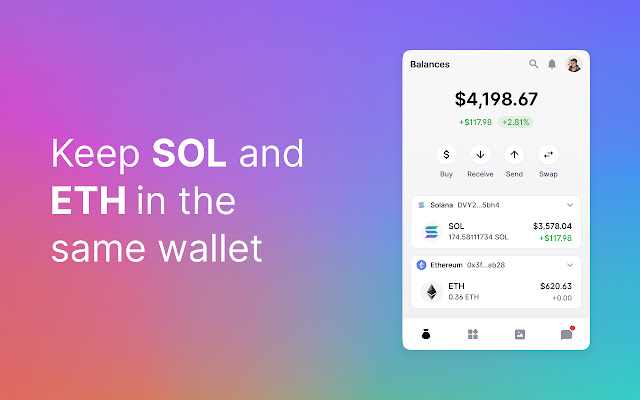 This is the wallet I mentioned in my very long and protracted introduction. Ive used it and bought some Madlads on the Tensor marketplace. Backpack is great to use, the wallet supports xNFTs, very much looking forward to seeing more and more innovations emerge from this team. Backpack also supports Ethereum, allowing you to keep everything in one app. It is very difficult to choose between the two, and it is recommended to try both.
Getting Started Guide to the Solana Ecosystem in 2023 - In/Out Channels and Bridging
Any well-known centralized trading platform will support Solanas deposit/withdrawal channels. Its as simple as buying SOL or USDC on the exchange and having it sent to your Phantom or Backpack address. If this is your first time using it, there are still some minor gas fees (SOL) required on the chain. Therefore, it is better to purchase SOL in order to bridge deposits from centralized exchanges. A bit trickier is the EVM-Solana bridge. If you are an EVM supporter and all your assets are on Ethereum or L2, how do you choose?
Mayan Finance
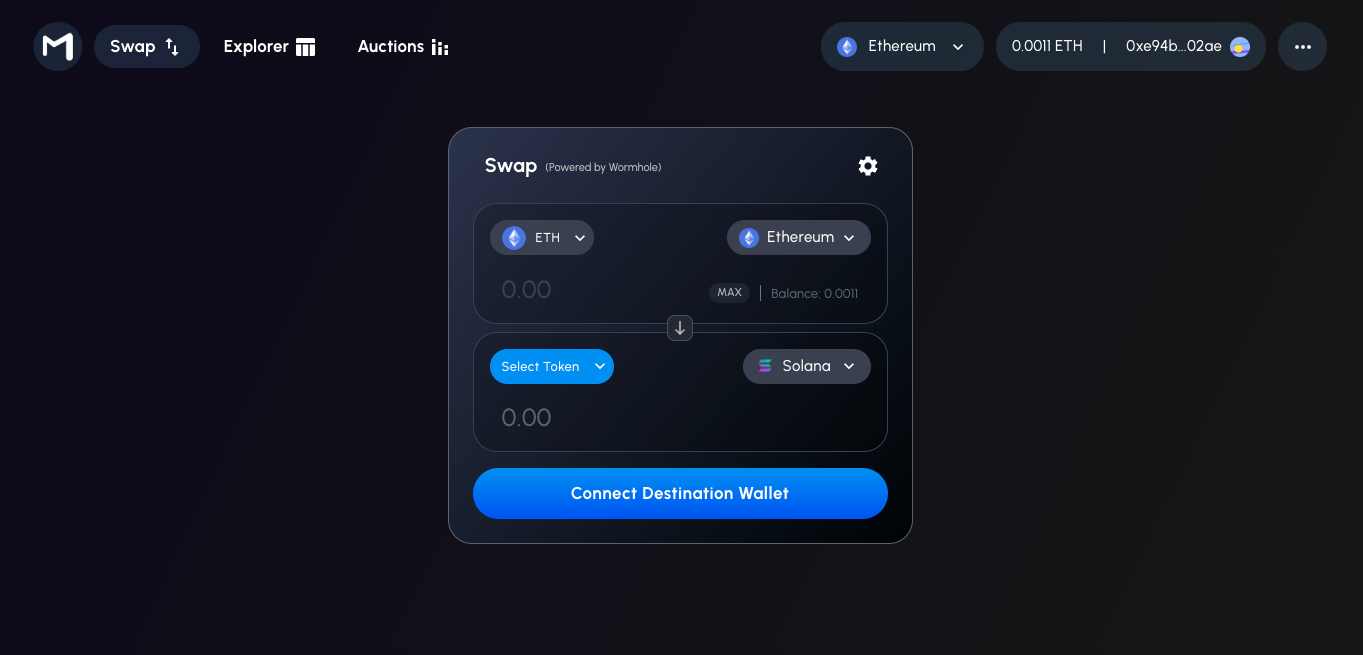 This is a Wormhole product that allows you to bridge between Solana, BSC, Avalanche, Ethereum and Arbitrum. Users only need to connect a wallet, such as Metamask (Ethereum), then connect the target wallet, such as Phantom, and select the asset you want to bridge. The advantage is that the operation is really simple. It only took about 1 minute to transfer money from Solana to Arbitrum. The downside is that transferring money in the other direction can take up to 18 minutes, and switching from a centralized exchange to whatever asset you want and then bridging can take quite a while, especially if youre waiting for confirmation from Arbitrum. Havent tried BSC, Avalanche or Ethereum yet. Deposit times from these chains to Solana may be faster.
deBridge
I have not used deBridge yet. The project recently integrated EVM-Solana and the user reviews are very good. The deBridge bridge from Avalanche to Solana appears to be very fast (since both chains have ultra-fast finality). Anyway, if youre looking for a quick, easy and cheap bridge, then this is the place to try deBridge.
Solana Best Decentralized Exchange (DEX) in 2023
Ok, get acquainted with the best asset trading platform on Solana. I will cover a few, but for me, there is one product that stands out.
Raydium
Raydium is a true Solana DeFi pioneer. In the past, if the liquidity of any token I wanted was here, I would choose to trade here. It is an AMM trading platform, and if you have used Uniswap, you will be familiar with Raydium. For those looking to provide liquidity, you can also check out the Raydium centralized AMM, which seems to be making a lot of headway lately.
Smol alpha: SOL-USDC LP currently has an annual interest rate of approximately 30%, while stSOL-SOL LP has an annual interest rate of 17.28%.
Orca
Ive always liked Orca and its very user-friendly interface. The text transaction function on the taskbar on the interface is also cool. Orca received huge volume and LP fees on BONK and RLB transactions a few weeks ago.
Jupiter
Jupiter is the best in my opinion. No matter which chain I am on, I will always use the Jupiter aggregator, Solana DEX is the leader. I always go straight to Jupiter to trade, and recently added on-chain cap orders. You can even use the DCA strategy to set time limits for valid buys or sells.
Solana’s Best Lending Borrowing Market in 2023
Another typical DeFi product is the lending market, which is the borrowing and lending agreement. Aave, Compound, and the upcoming Tapioca will be the blue chips everyone is familiar with on the EVM chain.
On Solana, its basically similar to the ones you know and love, so lets take a look at a few.
Solend
Solend was one of the first protocols to offer multiple assets for depositing and borrowing. They also provide permissionless pools where users and/or protocols can set their own parameters and baskets of assets. This kind of reminds me of Rari. In the case of FTX, they did have some problems, which caused nearly $100 million worth of loans backed by SOL to drop to liquidation prices without any steps being taken to repay the loans. In this case, a temporary governance vote was held to allow the team to take over its position, which resulted in only 1.3% voting in favor and 0.3% voting against. However, the team deserves credit for continuing to build through the bear market and Solanas trough.
Marginfi
This is one of the projects I mentioned when I talked about the revival of Solana, which is currently running a rewards program where users can deposit and borrow to earn points. Points will be calculated and redeemed for airdrop rewards, and given the detailed nature of the protocol, I imagine there must be some good token design behind it, which is an advantage weve seen with Solana. Later in the LST section, I will introduce a strategy using marginfi.
Solana’s Best Yield Optimization Protocols of 2023
Francium
Francium is a very good product, reaching over $425 million in total locked value at the peak of the last cycle. The agreement provides lending products, and also provides opportunities for leveraged income farming on specific unilateral assets and LP asset pairs. The launch of these new products on Solana will provide some great money making opportunities.
Hubble Protocol
Hubble is a product aimed at Ethereum enthusiasts, similar to Abracadabras CDP protocol, where users can deposit various assets and mint their USDH stablecoin products. Hubble has an active USDC-USDH LP pool managed by Kamino.
Kamino
Kamino is a centralized liquidity management protocol, similar to Arrakis, where anyone can deposit funds into their vaults on Orca and Raydium.
Liquid staking projects on Solana in 2023
Liquid collateralized derivatives are clearly the biggest theme in 2023, following the Shapella upgrade that took place on Ethereum a few months ago. Users can now withdraw their ETH from the Beacon Chain, causing protocols like Lido, Rocketpool, and even Coinbase to drastically increase their staked ETH market share. What about liquid pledged derivatives on Solana? Lido has supported stSOL for a long time, and many people may expect Lido to become the market leader on Solana as well.
Marinade Finance
Marinade Finance is the #1 DeFi app on Solana with over $162 million in total locked value. His mSOL products have stood the test of time and been implemented on multiple occasions. Like stSOL on Ethereum, mSOL can be deposited into many of the protocols mentioned above.
Jito
If I were a betting man, Id bet that Jito will overtake either Lido or Marinade within the next 12 months. Jito is a great product made by a great team.
What these teams are offering is a liquid staking product that also captures liquid MEV on Solana, generating greater returns for its depositors.
Alpha: If you can get your timing right, you can deposit SOL into Jito, get jitoSOL, and go to marginfi to deposit jitoSOL. Both projects have yet to issue native tokens, which are expected to be released in the near future, during which time you can hold SOL long-term and receive staking, lending, and MEV rewards.
BlazeStake
Another emerging liquid staking product is BlazeStake, which uses bSOL. Again, this is an emerging liquid staking derivative of SOL that enables users to earn Solana staking rewards.
Derivatives
Hxro Network acts as a liquidity layer on Solana, allowing users deposits to be used across all applications built by Hxro.
Derivatives built on Hxro:
The Hxro ecosystem is developing rapidly, and new projects start to be built every week, including perpetual contracts, options, expiring futures, hedging betting, gambling, trading robots, etc. Anything you can think of can be built, so Im fully invested and locked up as much money as possible. For an in-depth look at Solana and Hxro in particular, watch our interview with Hxro Labs founder Gunny.
https://www.youtube.com/watch?v=Gc_KGPn3oVk
Pepper DEX
Pepper DEX is a decentralized trading platform for perpetual contracts and expiration futures built on the Hxro Network, benefiting from the token circulation mechanism of PEP and HXRO stakers. Solana introduces option tokens, such as oPEP, for the first time. Its token design seems to be very thoughtful, which is a choice for farmers and DeFi enthusiasts.
Flowmatic
Flowmatic One of the coolest things Ive seen recently, and only possible on Solana, with its rich set of tools, APIs, and trading terminals, will be a tollbooth for almost every project on the Hxro Network.
NoloBot
In addition to LSDs, chat trading bots on Telegram and Discord have become the biggest new trend in 2023. A lot of people think this stuff is just a temporary meta-trend, but I think its an antithetical solution to cryptocurrency onboarding and user experience problems.
Account abstraction, smart contract wallets, and mobile-first apps are high on my watch list for 2024, and those who solve the UX problems of cryptocurrencies will win in the future. I think in the next 12-24 months there will be huge improvements to get the next batch of users on-chain. Therefore, Base is attracting Coinbases 100 million+ verified users. Chatbots are another solution to this problem, they bring transactional bots where the end user is and give them a great product that should be around for a long time.
NoloBot is a trading bot running on Discord that offers perpetual contracts, spot and options trading, all powered by the Hxro Network and settled on Solana, but the liquidity of NOLO tokens is held on Ethereum. We set up the bot on our Discord server, and its so easy to use, the developers are still building.
SpedX
This project popped up recently and is expected to launch soon. SpedX is a perpetual contract CLOB-AMM hybrid DEX that utilizes the liquidity of Hxro Network through Dexterity. Its really impressive to see again how many projects are being built on this infrastructure/liquidity layer of Solana. We enable you to trade without worrying about unexpected price movements - SpedX landing page.
There are many other projects being built on Hxro, and we may write separate articles about them on blocmates.com.
Cypher
On August 8th Cypher was attacked. Having said that, Cypher has a very bright product and I hope it resolves all issues as I know a lot of people locked up SOL for the expected airdrop opportunity. Cypher offers cross-margin trading and allows users to deposit funds into the trading platform for users to use as leverage.
Other interesting agreements:
Ellipsis Labsand Pheonix
I cant find much information on Ellipsis Labs and their product Pheonix, only that it will be a CLOB DEX on Solana.
The document states: “High-throughput blockchains have enabled the creation of new financial primitives. Ellipsis Labs is building Phoenix, a fully blockchain-based, non-custodial A decentralized limit order book.”
Still, the departure of Serum (now OpenBook) seems to have left a big void, and a clear advantage of Solana is that it can build a true central limit order book with instant settlement.
In terms of AMM DEX innovation, especially Uni V4, Trader Joe, Maverick and Ambient Finance on Ethereum, I would love to see a true on-chain order book in action.
Phoenix is also quite appropriate for a revived name of some sort.
Tensor
Tensor is an excellent NFT marketplace for regular users in Lite mode and for professional NFT traders in Pro mode. I can only think of good things about Tensor, and hope to see it succeed, the official just released their Tensorians NFT series, there may be some valuable information.
Neon EVM
Ive been following NEON Labs since 2021 when Solana is booming, offering a fully EVM compliant environment, but only running on Solana. Therefore, Dapps that have been built on Ethereum or other EVM chains can now be deployed and scaled and enjoy the benefits of Solana. This is a very cool product and I look forward to seeing projects built on Neon.
Solana L2s
Besides having one of the best sites in the cryptocurrency space, Eclipse also allows users to build blockchains their own way, enabling users to build a Roll-Up that uses Solana, Ethereum, Cosmos, or whatever technology you want. This is part of the Roll-Ups as a Service (RaaS) concept that is starting to emerge.
https://www.youtube.com/watch?v=Y8MKq7IuOn0&t=4s
If you are a DeFi enthusiast, these teams may be worthy of your attention.
Nitro
Their website sums it up like a Solana virtual machine for Cosmos, and Sei Network recently made an announcement about how Nitro can support Cosmos-based applications and Solanas execution time, throughput, and cost advantages.
I won’t go into it here, but here’s a link to their post if you’re interested.
If heavy Ethereum supporters weren’t excited enough, Anatoly previously mentioned in a series of tweets that Ethereum could act as a second layer for Solana.
Presumably Bitcoin SV is more likely to get Satoshis return and endorsement than this scenario, but its an interesting thought experiment, if only to whet Anthony Sassanos nerves.
Ottr Finance
Ottr Finance effectively leverages Solana and mobile apps to look like a fintech banking app. It also has an in-app staking feature to earn the current SOL staking reward rate. When some social elements are incorporated into it, it can become very powerful.
Fire Dancer
If you think Solanas performance is good enough, you probably dont have much in common with the folks at Jump Trading. Fire Dancer is Solana’s second validator client, making Solana the only chain besides Ethereum to have another client.
So, how much more can it be optimized?
During the Breakpoint event, the team showed they could handle over 600,000 tps (transactions per second) with off-the-shelf hardware, which is pretty amazing.
It is understood that both clients will still run concurrently for additional security, as the original Solana client can be run after it to verify that Fire Dancer transactions are confirmed. This also increases the reliability of Solana, because if a transaction cannot be processed on one client, it is much less likely to fail on another client, which is expected to be applied in the actual working environment in early 2024.
Token 2022
A new token plan is currently under review, which may override the current existing SPL token standard, in fact similar to Ethereum changing the ERC-20 standard, the reason for this is that the current SPL format is coded on Solana. There are some limitations in terms of coin functionality.
Additional use cases and extensions to these Tokens 2022 will bring unprecedented dynamics to DeFi.
Some of these use cases include:
· Compress, decompress and recompress NFT
· Confidential transfer
· Staking and liquidity pool expansion with interest (similar to rebasing tokens)
· Enforcement of transfers by memo (similar to bank transactions)
· CPI protection where tokens must be verified by a representative
If you want to learn more about Token 2022 and when it will be used in the DeFi space, you can watch this short presentation from Breakpoint.
https://www.youtube.com/watch?v=Gr0cSdqIjD4
Summarize
I hope this helps shed some light on whats actually going on with Solana. I think people lose sight of the big picture and only scratch the surface. In fact, I have been accumulating SOL tokens and now I have finally finished accumulating them and am ready for the next round. In my opinion, $8 SOL is like $80 ETH during the last bear market cycle.





