After DRV hit a new high, what other early interaction opportunities are there in on-chain options and perpetuals newcomers?


- Core Viewpoint: The on-chain options sector is officially taking off. Retail-facing front-end applications such as Dreaming and HEAT leverage Derive's infrastructure and RFQ pricing mechanisms to lower trading barriers, while PaperTrade enters the PerpDEX competition with a perpetual contract design featuring zero funding rates and up to 1000x leverage.
- Key Elements:
- DRV hit an all-time high of around $0.56, with on-chain options trading entry points continuing to increase.
- Dreaming offers options on BTC, ETH, SOL, as well as assets like HYPE and PUMP; V3 adopts a self-built RFQ system where multiple institutional market makers compete to quote.
- Dreaming points program: 500,000 Genesis Points were distributed during the closed beta phase, and Dream Points will be issued every Friday starting October 16.
- HEAT visualizes options on price charts, supporting structures such as calls, puts, spreads, and straddles, with multi-leg combinations quoted as a whole and either filled simultaneously or not at all.
- PaperTrade reads Hyperliquid prices and settles against a public liquidity pool, with zero funding rates, no slippage, and costs concentrated in profit sharing.
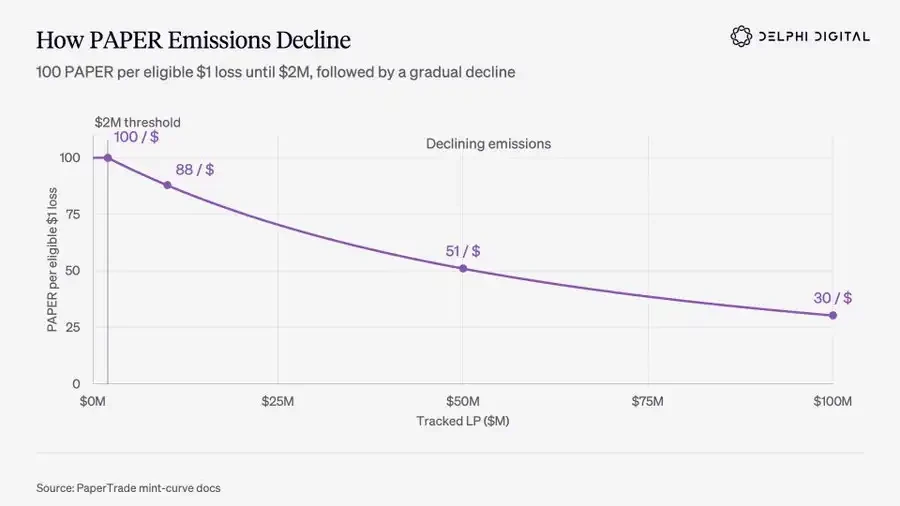
- The PAPER token starts from zero supply and is minted through real losses; when LP is below $2 million, every $1 of loss corresponds to 100 PAPER, and it is non-transferable in the initial launch phase.
- Delphi Digital estimates: under a 100x leveraged long-short hedge, a net cost of approximately $7.69 can yield about 4,900 PAPER, equivalent to roughly $16 per 10,000 tokens.
DRV has hit a new all-time high again, pushing its price to around $0.56.
The on-chain options sector is officially gaining momentum, and trading entry points are increasing along with it. Professional traders can use Derive directly, while new applications built around retail user experience are beginning to offer simpler interfaces and early incentives.
Dreaming
Robinhood brought zero-day options to US retail investors, and Dreaming wants to do the same in Crypto. Users select an asset in the Dreaming app, choose whether they think the price will go up or down, then pick a strike price and expiry date to complete a trade. Beyond BTC, ETH, and SOL, it also offers options on assets like HYPE, PUMP, and LIT, attempting to cover the speculative demand that crypto traders are more familiar with.
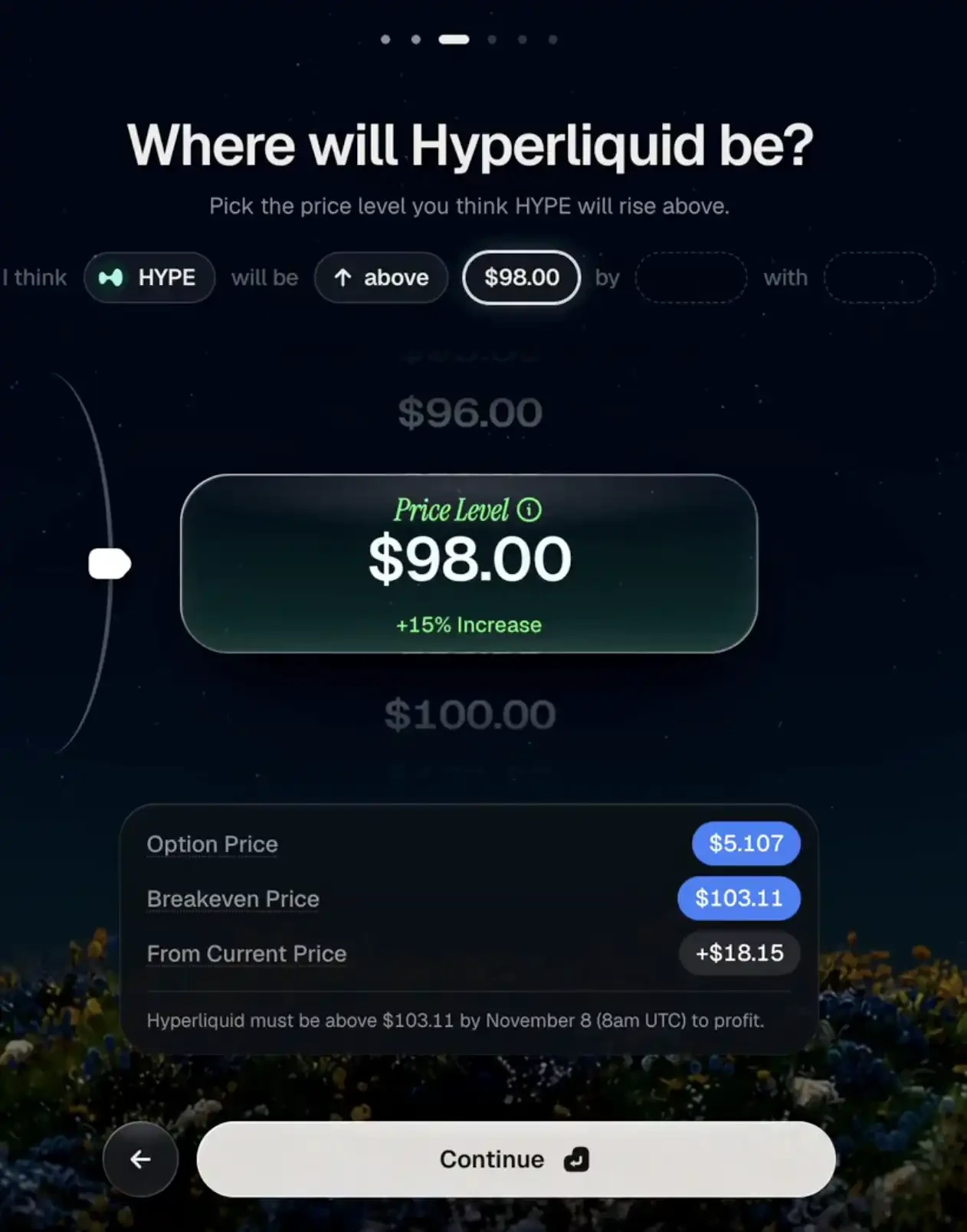
Its underlying infrastructure has also changed. Dreaming V2 uses Derive's infrastructure, while V3 adopts a self-built RFQ (Request for Quote) system that sends orders to institutional market makers, with multiple institutions competing to quote.
This step addresses the long-standing problem of options liquidity. For the same BTC, the spot market only needs to concentrate buy and sell orders around a single trading pair; in the options market, different strike prices and different expiry dates each create their own order book. The more assets there are and the shorter the timeframes, the more dispersed the quotes that market makers need to maintain. RFQ allows market makers to quote specifically for the contract a trader wants to buy or sell, and large orders can be quoted in their entirety, reducing the impact of eating through the order book level by level.
Interacting with the platform earns Dream Points. According to the official points announcement, traders who participated in the closed beta from January 14 to July 15 have been allocated 500,000 Genesis Points, and traders from September 25 to October 6 received an additional 100,000. Starting from October 16, Dream Points will be distributed every Friday.
HEAT, Derive's Trading Frontend
Dreaming chose to build its own RFQ system, while HEAT continues to build a trading terminal around Derive.
Its distinguishing feature is plotting options directly on price charts. Strike prices, break-even points, expiry dates, and profit zones can all be seen directly, and traders can drag lines to adjust the price and timeframe they wish to bet on. Traditional options chains require readers to search through rows of options contracts for what they want; HEAT tries to let traders first express their view on the chart, then turn that view into a specific trade.
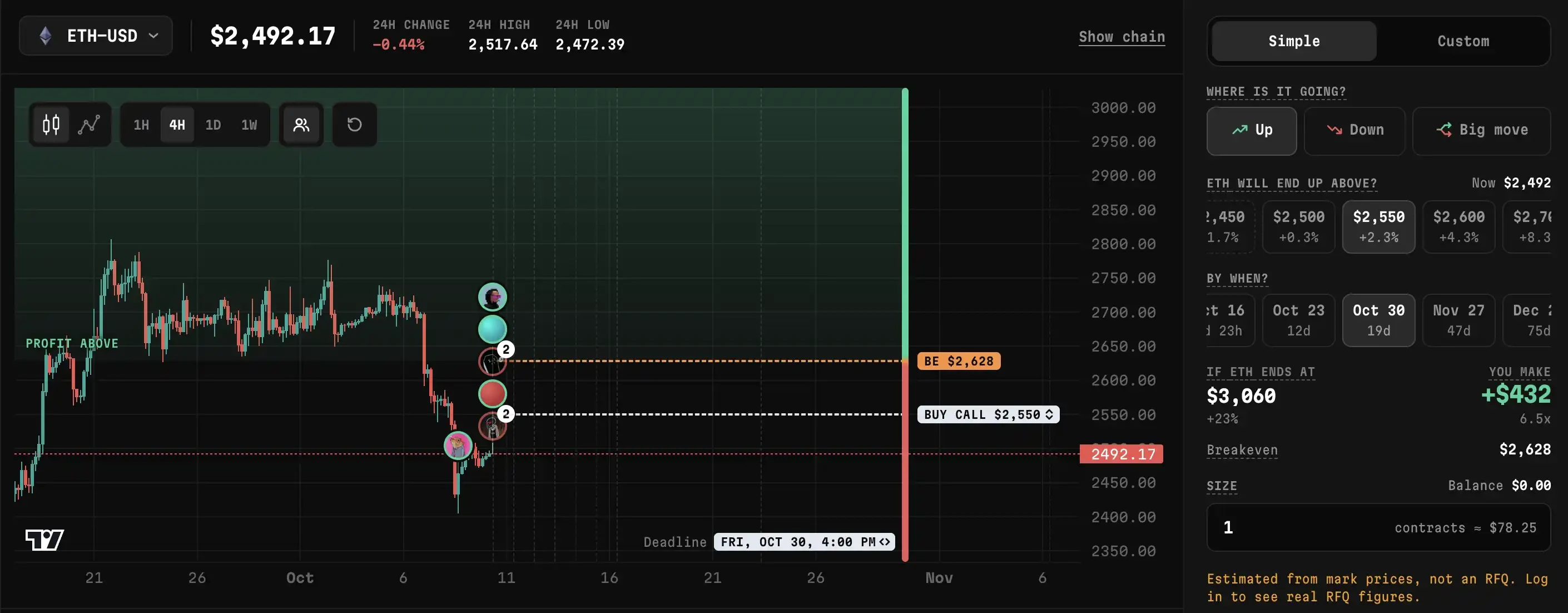
This user-friendly interface is especially suited to answering a common question: I think the price will go up — which option should I actually buy?
Even for the same bullish view on BTC, expecting a rise tomorrow versus expecting a rise next month requires different contracts; expecting a small gain versus expecting a large gain calls for different trade structures. By placing break-even points and expiry dates together, traders can at least see under what conditions their thesis needs to play out.
HEAT offers four ways to trade. You can drag directly on the chart, or choose up, down, or large move in quick mode and fill in a target and investment amount; those familiar with options can select contracts from the options chain, or build multi-leg strategies in custom mode. All these methods share the same trade information, and the chart and trading panel update in sync.
Initially supported structures include calls, puts, call spreads, put spreads, straddles, and strangles. The latter two allow traders to express a view on large price movements without betting on just one direction. Custom mode requests quotes from market makers through Derive, quoting multiple legs as a single combination with all-or-nothing execution, preventing a combination from being only partially filled.
HEAT also plans features for observing trader performance, following, and copying trades. In options trading, knowing which asset someone is bullish on only tells you part of the story; knowing what timeframe, strike price, and structure they chose is what explains the actual conditions their trade is betting on.
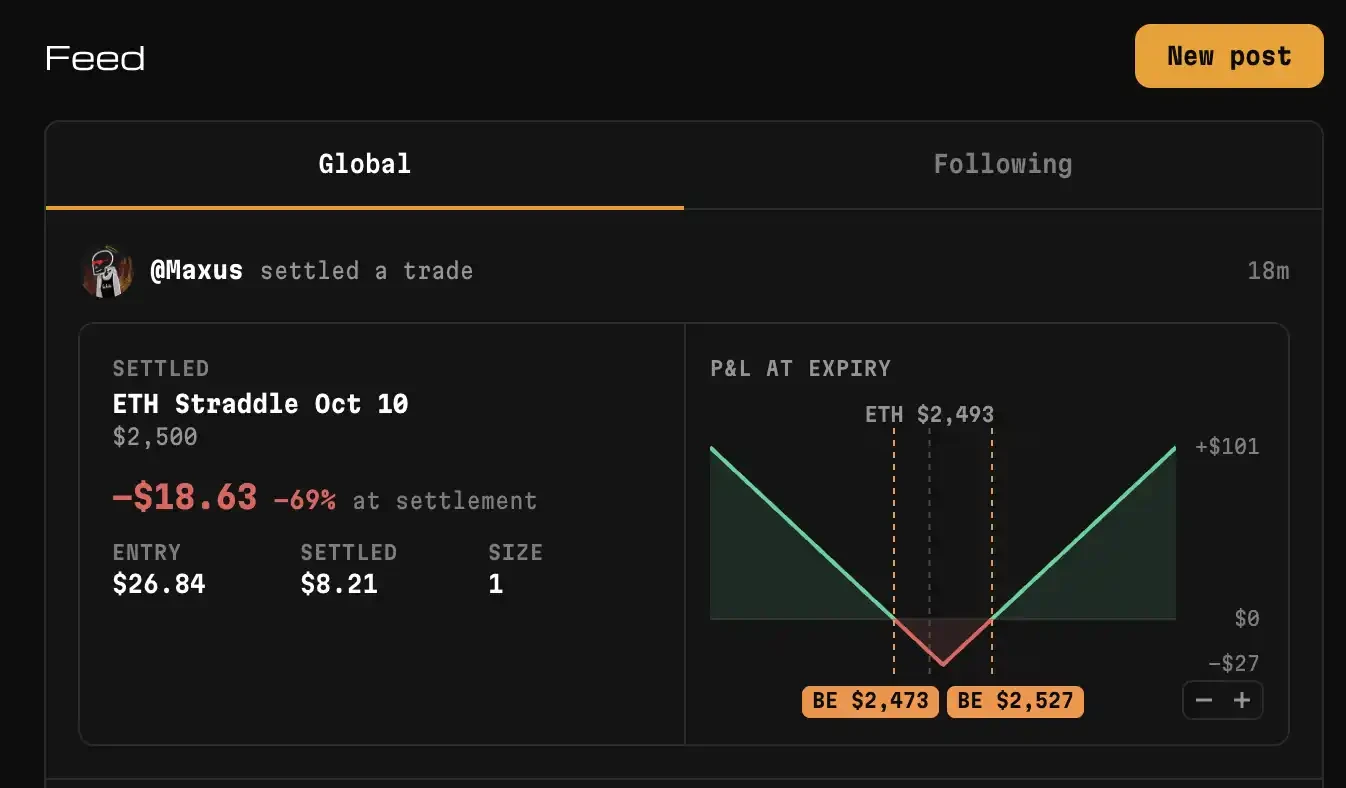
HEAT has launched in sync with Derive V3, and there are currently no confirmable points or airdrop commitments.
PaperTrade
Moving from options to perpetual contracts, the PerpDEX that has recently attracted attention is undoubtedly PaperTrade.
PaperTrade has already opened pre-deposits. According to the official launch announcement, formal trading is expected to begin approximately one hour after the HyperEVM network upgrade on October 11. Depositing earlier during the pre-deposit phase offers no additional advantage; pre-funding is mainly to avoid account creation and deposit congestion when formal trading begins.
We previously covered its mechanism in "Zero Funding Rate? The New HyperEVM Contract Design Everyone's Talking About". PaperTrade reads prices from Hyperliquid, allowing traders to settle profits and losses directly against a public liquidity pool.
As a result, it can offer up to 1000x leverage, with no funding rate and no slippage from traditional order book trading. Traders' positions exist in PaperTrade's smart contracts, reading Hyperliquid's price in real time when opening and closing positions, then settling based on the difference.
PaperTrade's trading costs are concentrated in a cut of profitable trades. According to the official settlement rules, profitable trades are subject to a percentage deduction, and the smaller the price change from entry to exit, the higher the percentage deducted from profits.
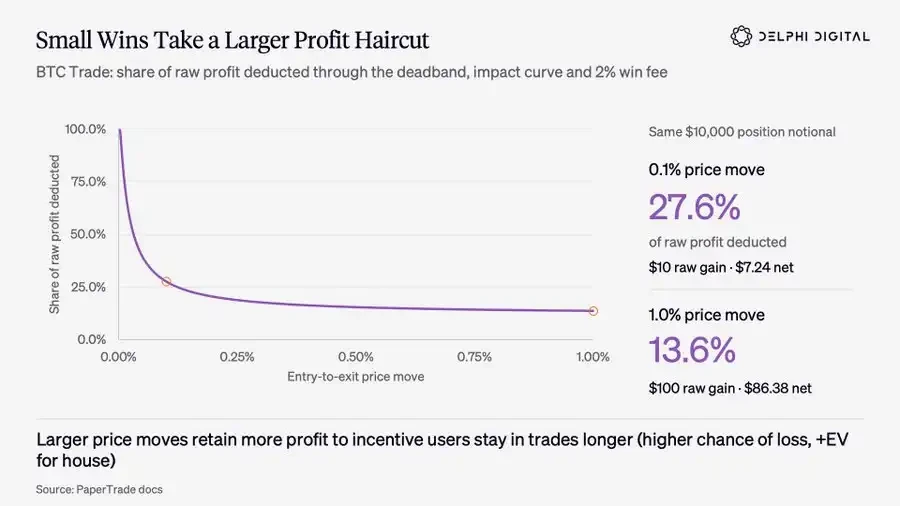
PaperTrade relies on traders' losses to accumulate its liquidity pool. Profitable traders take profits from the pool; when the pool is insufficient to pay, unpaid profits enter a first-in-first-out queue, waiting for subsequent capital to replenish it.
The PAPER token provides incentives for this bootstrapping process.
The token starts from zero supply and is minted through qualifying real losses. According to the official issuance rules, when the protocol-recorded LP size is below $2 million, every $1 of qualifying losses corresponds to 100 PAPER; after exceeding this threshold, the issuance rate gradually decreases.
Once you have PAPER, you can stake it to share proportionally in USDC revenue distribution. Part comes from protocol fees, and another part comes from excess returns after the protocol-recorded LP size exceeds $5 million. Revenue distribution is also subject to payment order constraints: queued winners have priority, and the protocol must first be able to pay them before distributing fees to stakers. PAPER cannot be transferred in the early launch period — only staked and unstaked.
What's worth calculating here is the cost of acquiring each PAPER.
Delphi Digital's analytical model provides an example: simultaneously opening equal-notional long and short positions on PaperTrade, putting $100 in margin on each side, using 100x leverage, and closing both after BTC moves 0.5%. One side loses $50, while the other earns about $42.31 after deductions and fees, for a net cost of about $7.69, yielding approximately 4,900 PAPER — equivalent to spending about $16 per 10,000 PAPER acquired.
But this is only an estimate under assumptions such as matched execution. The actual entry and exit prices on both sides, profit reduction, execution delays, and the liquidity pool's ability to pay will all affect the final cost of acquiring PAPER tokens.