Trading volume decline, tightened regulations, Coinbase urgently seeks alternative routes


Under the cloud of crypto winter, the days of exchanges are not easy. With the sharp drop in transaction volume, revenue continued to drop sharply.
A listed company like Coinbase has to be accountable to shareholders.
The recently released Coinbase Q2 financial report shows that Coinbase’s transaction volume in the second quarter of 2023 dropped by 37% compared with the previous quarter, and trading revenue also declined, and was surpassed by the revenue source of “subscriptions and services” for the first time, which means that crypto Exchange revenue structures are shifting, which could redefine the current cryptocurrency landscape.
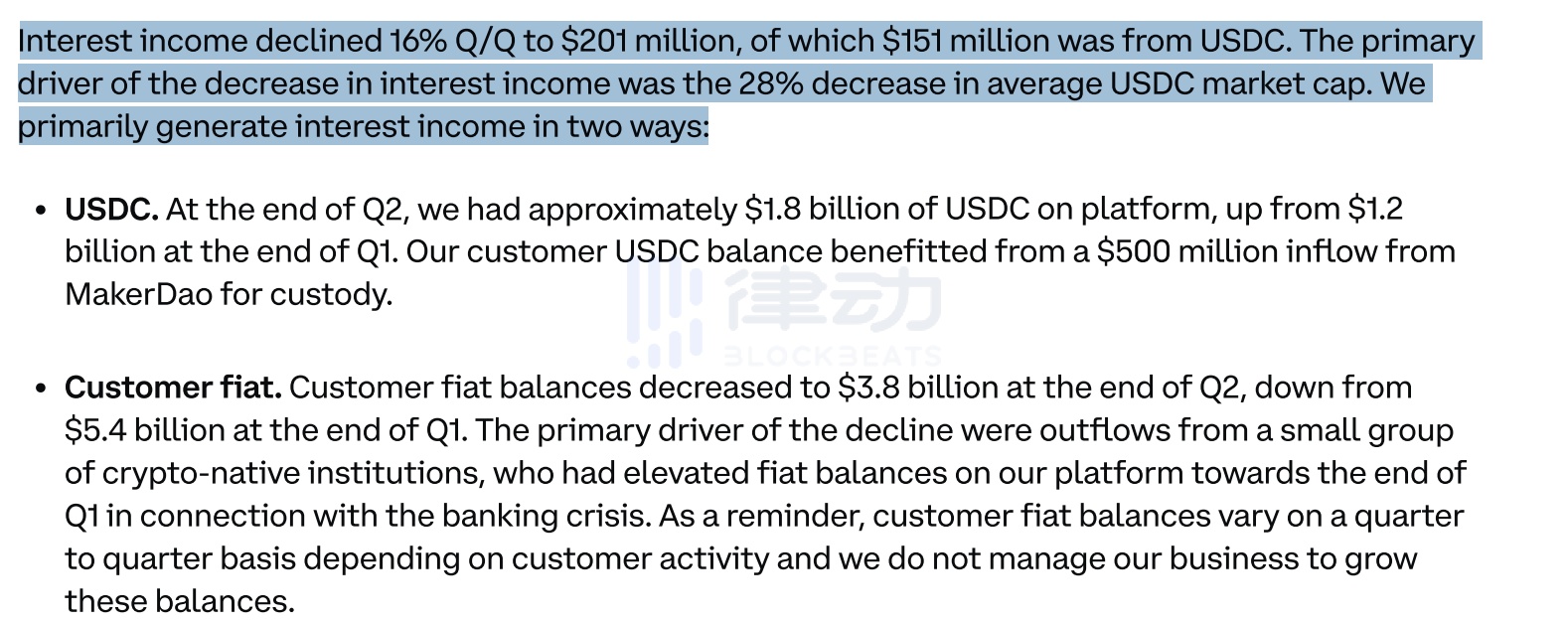
Further analysis revealed that in the income source category of “subscriptions and services”, interest income (interest income), which accounts for the largest proportion, has US$151 million in income from its holdings of USDC, accounting for 75% of the total income. Needham Company analyst John Todaro believes that Coinbases USDC interest income has largely benefited from the revenue sharing agreement previously reached with Circle and Center for the USDC stable currency reserve. Although the decline in USDCs market value has led to a decline in Coinbases interest income, The gains from the Feds interest rate hikes can offset some of the losses.
Although Coinbase Q2 revenue fell, it exceeded expectations. In addition, the net loss also narrowed and exceeded analysts expectations. After the Q2 earnings results were released, the stock briefly touched $97 in after-hours trading from $90.75 on August 6 (the closing price of Thursdays trading session) and has now fallen back to $81. Since BlackRock submitted a spot Bitcoin ETF application to the U.S. SEC in mid-June and Coinbase was identified as its custodian, Coinbases stock price has surged more than 60%.
Q2 revenue performance and pressure have been temporarily relieved. However, as the crypto winter continues and regulations tighten, Coinbase will face greater challenges, which will force it to actively adjust its business direction and explore new revenue sources. .
Trading is no longer the main source of income
Coinbase (COIN) released its second quarter financial report on Thursday, August 4. The financial report showed that both transaction volume and revenue of Coinbase Q2 declined compared with Q1. Among them, the total transaction volume of Coinbase in Q2 dropped from 1 in the first quarter. , $45 billion to $92 billion. The decline in cryptocurrency trading volume partly contributed to the decline in Coinbase’s trading revenue, from approximately $375 million to $327 million.
As the largest cryptocurrency exchange in the United States, Coinbases business model relies heavily on trading revenue. As early as April 2021, when Coinbase was listed on Nasdaq, its filings with the U.S. Securities and Exchange Commission (SEC) showed that in the first quarter of 2021, Coinbase earned a huge revenue of $1.5 billion from transactions, accounting for Thats 86% of total revenue at the time of $1.8 billion.
As digital asset prices continue to fall, Coinbases trading revenue has also declined. In the first quarter of this year, Coinbases trading revenue fell to $375 million, accounting for only 46% of its total revenue of $773 million.
The share of Coinbase’s Q2 transaction revenue was further reduced and was surpassed by the “subscriptions and services” revenue category for the first time. The Q2 financial report shows that Q2 subscription and service revenue is approximately US$335 million, which comes from USDC interest income, pledge and custody fees, accounting for 51% of net income, exceeding 49% of transaction fee income.
This marks an important shift for Coinbase. Transaction fees may no longer be the main source of revenue, but will be replaced by another revenue source, subscription and service revenue.
The decline in trading volume has put tremendous revenue pressure on Coinbase, which means that Coinbase needs to actively look for other sources of revenue instead of just relying on the ups and downs and fluctuations of the crypto market, such as subscriptions and services and staking services.
U.S. bond yields are impressive
The financial report shows that in the revenue source of subscription and service revenue, Coinbase earned a total of US$335 million in the second quarter, exceeding transaction revenue of US$327 million for the first time. This figure increased 1.3 times from US$147 million in the same period a year ago. .
In the revenue source category of Coinbase Q2 subscriptions and services, the largest proportion is interest income (interest income), which is US$201 million, while the income from blockchain rewards is only US$87.6 million (although compared with That revenue still rose slightly last quarter, from $74 million in Q1 to about $87.6 million this quarter.)
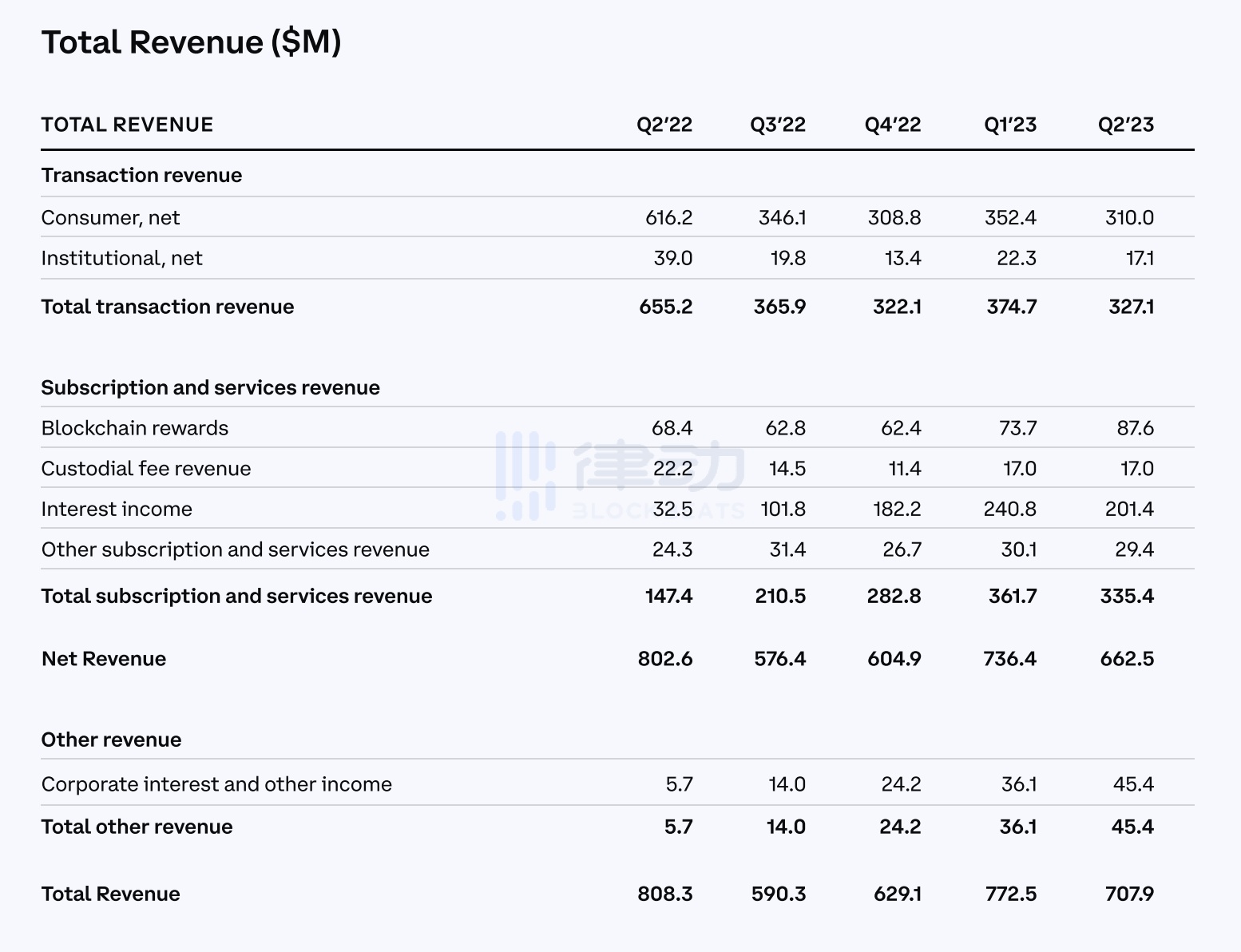
Although the proportion has increased, interest income is still declining compared to the previous quarter, from US$240.8 million in Q1 to US$201.4 million in Q2. The main reason is that the market value of USDC, which is the main asset source of interest income, continues to decline. It is worth noting that of the interest income in the second quarter, $151 million came from its USDC holdings.
Needham Company analyst John Todaro said that Coinbases interest income is largely due to Coinbases relationship with Circle and the USD Coin issuance and manager Center. As a founding member of the alliance, as early as 2018 when USDC was launched, Coinbase Some sort of revenue-sharing agreement with Circle for the USDC stablecoin reserve.
Stablecoins are tokens that are pegged to the price of a sovereign currency such as the U.S. dollar and are typically backed by cash and government-issued treasuries, such as bonds, whose yields continue to rise as the Federal Reserve attempts to combat high inflation by raising interest rates sharply.
When the yield of government bonds continues to rise, Coinbase can obtain a large amount of interest income from it. With a market capitalization of $26.1 billion, USDC is the sixth-largest cryptocurrency by market capitalization, according to data from CoinGecko. Despite this, the market value of USDC has still fallen by 19% from US$32.5 billion at the beginning of the second quarter. This was mainly caused by the collapse of Silicon Valley Bank in March, which triggered the collapse of USDC and its unanchoring.
Since then, the Federal Reserve has adjusted interest rates to the highest level in 22 years, theoretically increasing Coinbase’s revenue on USDC reserves, although this may offset some of the gains given the decline in USDC’s market value.
The Feds interest rate hike is good for Coinbases business and can offset most of the decline caused by the decline in USDCs market value. However, since the revenue-sharing agreement between Coinbase and Circle on USDC has not been made public, it is impossible to know the exact revenue breakdown.
Redemption! New directions Coinbase is exploring
Although the trading volume of Coinbase dropped sharply in Q2, the overall revenue performance exceeded market consensus expectations. This is largely due to interest income and staking income.
However, both lines of business also face no risk in the future. On the one hand, the market value of USDC, the main source of interest income, continues to decline, resulting in a 25% month-on-month decline in USDC interest income. On the other hand, Coinbases pledge business line also faces regulatory challenges.
Faced with declining trading volumes and tightening regulatory pressure in the bear market, Coinbase needs to actively seek other ways out.
This may be why Coinbase has been seeking to diversify its business and revenue sources, including actively promoting the research and development of proto-dank sharding (EIP 4844) for decentralized infrastructure construction, launching the Ethereum second-layer super chain Base and the new Wallet products, and Onchain Summer, which is in full swing.
Ethereum second-layer chain Base and Onchain Summer
On August 10, Coinbase announced that the Layer 2 network Base will open the mainnet to all users, officially launching the summer of the chain to attract more users.
Base is Coinbases investment in blockchain infrastructure. As a second-layer Ethereum solution, Base can reduce transaction costs and increase transaction speed. Coinbase hopes Base will expand crypto use cases beyond trading and bring more consumer users on-chain.
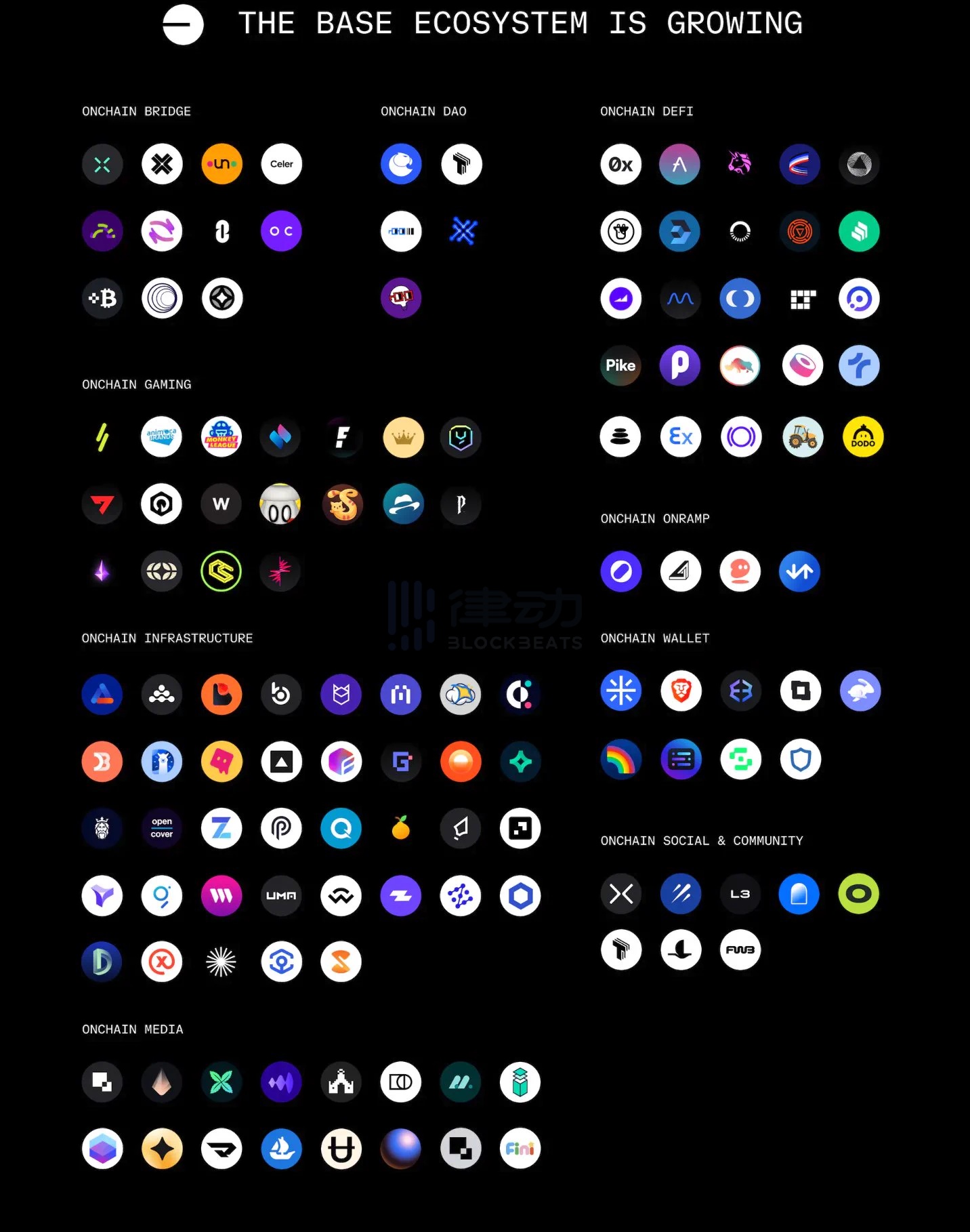
Under the name of the Summer on Chain event, Base invited more than 50 crypto and non-crypto brands, including Coca-Cola and Atari, to join the second-layer network. During the event, users can mint a variety of NFT designs and artworks and explore the network. Additional rewards for the DeFi ecosystem celebrate the event, reframing the cryptocurrency narrative into “something fun and engaging” through real-world usage by getting users accustomed to a crypto-native spending experience.
With the opening of the Base mainnet, the applications deployed on the Base network continue to grow, and the first atypical encryption native application friend.tech was born. It is atypical because this application is neither DeFi nor Meme, but It is an encrypted native application with social attributes, which was launched in less than a week.This popular application has contributed 6,599 ETH to Base, and the number of transactions has exceeded 210,000. So far,The total value of Base’s bridging assets exceeded US$200 million, with more than 8 million transactions in 30 days.
It can be seen that due to regulatory pressure and facing continued uncertainty in the cryptocurrency market, Coinbase urgently needs to find other ways to shift from a single revenue structure to more diversified revenue sources, especially those that are not dependent on the rise and fall of the cryptocurrency market. Volatile new revenue streams. Building an Ethereum second-layer chain like Base may add a potential revenue source for Coinbase.
Remaining ambition: become a decentralized super application
Coinbase’s ambitions go far beyond simply “relieving temporary revenue pressure.” In fact, Coinbase CEO Brian Armstrong’s positioning of Coinbase isBecome a super application comparable to WeChat or Alipay。
Applications like WeChat have penetrated into every aspect of peoples lives. The services they provide include instant messaging, shopping, payment, loans, banking, and food ordering. They cover all aspects of clothing, food, housing, transportation, and entertainment. They can be well-deservedly praised. for super applications.
Coinbase also hopes to build a super application, but unlike WeChat, Coinbase’s goal is a decentralized super application, which means that not only the assets are decentralized, but also decentralized social networking, decentralized communication, Merchants that accept NFT, as well as some simple DeFi interfaces, etc. are not limited to national borders and are universally applicable.
Coinbase has not officially announced any relevant plans, butIt can be seen that Coinbase recently added encrypted communication functions to its wallets, Coinbase’s prelude to developing a decentralized super application has begun.
The built-in conversational chat function of Coinbase Wallet, this encrypted native wallet, is not only not limited to national boundaries and is universal, but also not limited to applications. This means that Coinbase wallet users can chat with friends across applications in real time. In addition to registered users of the wallet itself, You can also chat, trade and send assets with users outside the app.
This kind of chat/payment, which is equivalent to opening up WeChat and Alipay accounts, is also a new native function endowed by the changes in the underlying technology and architecture of the blockchain, and will inevitably bring about the evolution of new business logic.
This is a new field that has not been explored before, and there are no reference samples. This exploration process may not be easy, or even very difficult. In this regard, Brian Armstrong gave a deadline of - within the next five to It took seven years to achieve.
But obviously, whether it is the long-term narrative of bringing the next million builders and billions of users onto the chain or building decentralized super applications, it is stillCut expenses by 50%The actual moves to explore new sources of income and diversify business strategies are enough to see Coinbase’s sincerity—trying to prove to regulators that “in addition to trading and speculation, there are more use cases for cryptocurrencies, and Coinbase is working hard to realize it.” . The advantage of doing this is that it can not only relax supervision, but also win the favor of shareholders. After all, the market needs such good stories in the face of capital winter.