Dragonfly 合夥人:BTC 是世代財富,堅定看好 ETH 和 SOL


- 核心觀點:儘管加密行業近期下跌,但堅持長期信念、避免近因偏誤,並相信其指數級增長潛力,是成功的關鍵。加密貨幣本質上是科技,其價值來自增長敘事和世代財富轉移,而非當前現金流。
- 關鍵要素:
- 市場情緒受近因偏誤影響,當前下跌的悲觀程度可能被高估,與 FTX 暴雷後的長期低迷不同,行業依然處於「建設與擴張」階段。
- 加密貨幣的指數級增長邏輯長期成立,相信 10 年後規模遠超今天,創投的鎖倉機制幫助克服短期拋售本能,是優質的投資方式。
- 機構對加密貨幣的接納處於早期階段(如摩根士丹利剛允許推薦),且具有世代性,年輕一代持有意願更強,推動比特幣等資產長期發展。
- 比特幣本質是獨立的數位資產,不依賴現金流,其價值由社會共識和世代傳承驅動,類似黃金但不可替代且供應固定。
- 以太坊和 Solana 等資產當前被市場以「增長敘事」定價,對現金流指標反應弱,但對未來規模潛力高度敏感,歷史上類似網路泡沫時期的資產。
- Hyperliquid 是典型案例,兼具增長敘事和可觀現金流,透過擴展衍生性商品市場實現爆發力,這種雙重優勢在加密領域罕見。
- 人才和資金流向 AI 是正常資本重新分配,加密貨幣已過「狂野西部」階段,適合選擇堅持構建的「定居者」,而非追求極致不確定性的「先驅者」。
Original link: If You Want To Get Rich, Hold Bitcoin
Compiled by: CryptoLeo (@LeoAndCrypto)
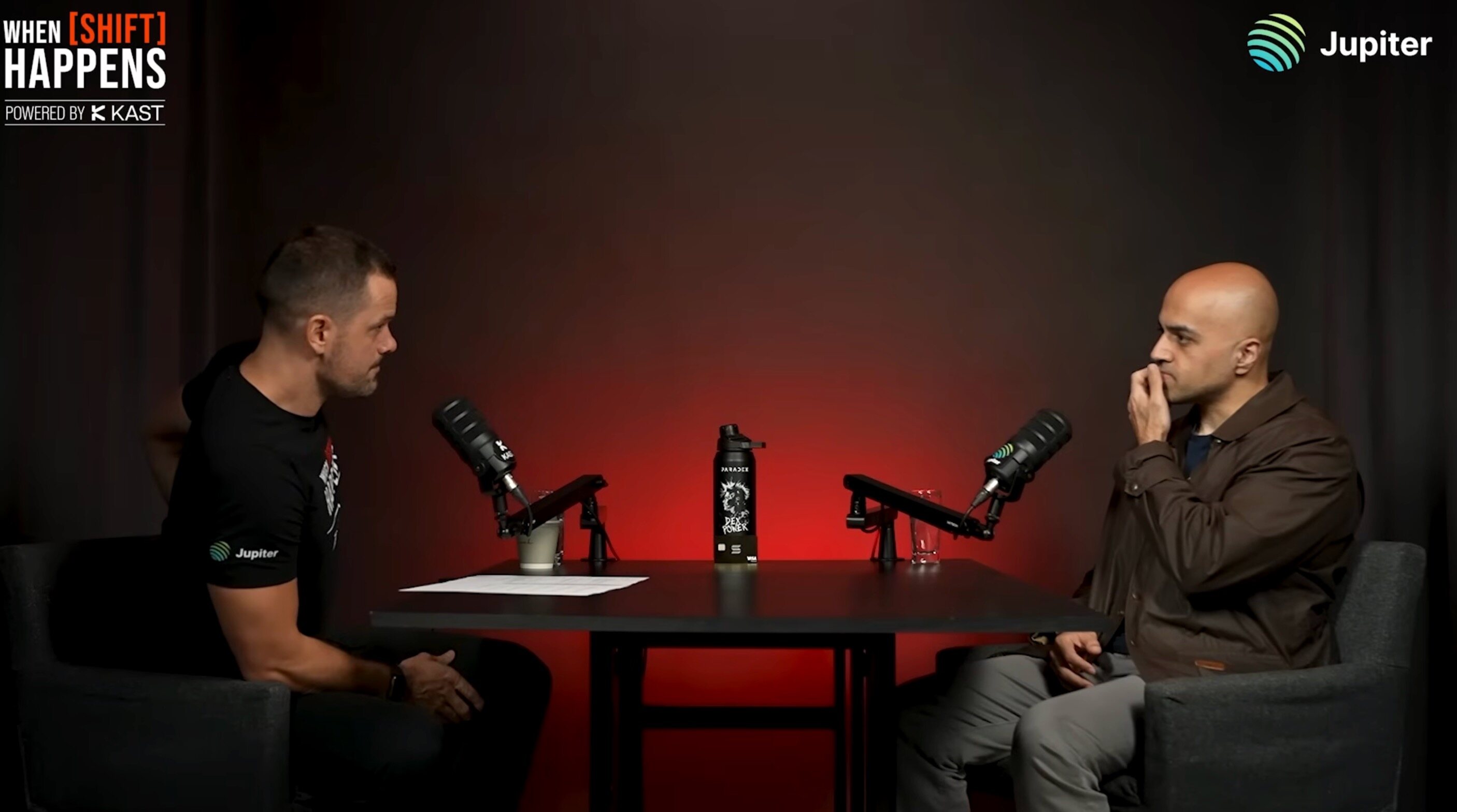
Editor's Note: As the cryptocurrency industry once again hits a low point and many early OGs choose to exit, Dragonfly Capital partner Haseeb Qureshi recently discussed the current state of crypto and his understanding of the industry in an interview. From talent flow, Silicon Valley culture, and industry recency bias, to the growth narratives of ETH and SOL, and the explosive potential of Hyperliquid, Haseeb also explains the significance of persisting as a crypto "Settler" in an era where AI is absorbing capital. It remains an article that boosts confidence. Given the conversational nature of the dialogue, this article is written in the first person. Odaily compiled and translated the interview as follows:
Some Crypto OGs Are Leaving; It's Normal. I Still Choose to Be a Settler!
I feel tired, very tired. A lot has happened recently — market downturns, internal company issues.
Not long ago, I chatted with friends who unanimously agreed that being a VC is a very decent job. Most VCs just pick their investments and wait, enjoying leisure time, but that's not the reality — at least not for us at Dragonfly. We work harder than they do.
Someone just told me that compared to other VCs, I respond very quickly. I often handle work matters over the phone, always doing things. That's how we operate at Dragonfly. That's the secret to our profits in many investments — because we work harder than others. Not everyone can sustain this, especially over many years.
Many people are currently exiting, like Kyle Samani stepping back from Multicoin, and many other OGs leaving the crypto space.
But don't overstate this. People always leave crypto. This week alone, I've experienced 4 or 5 different people telling me their feelings, believing that current market sentiment is worse than post-FTX. I think this is purely recency bias — the downturn is happening now, so it feels worse.
Why do I say this? More people left crypto after the FTX collapse back then. They lost so much, and their pursuits of metaverse, blockchain games, etc., never materialized, so they all left.
The idea of people leaving crypto seems unique. Every time prices drop, people exit. Another point is that there's a normal tenure in one's career. If someone has been in a field for 10 years, it's normal for them to choose to leave. Especially for someone like Kyle, a very successful venture capitalist — who knows how much he's earned. For him, money is no longer important; proving his own value is. Multicoin was one of FTX's largest investors. When FTX collapsed and SOL dropped from over $200 to $8, everyone thought Multicoin was wrong, but they persevered, proving themselves among the best investors in the field. That's a career pinnacle. Kyle's exit doesn't mean he's completely disappointed with crypto.
Another point: There's a big difference between pioneers and settlers. It's a human nature law — those who struggled westward to find California and open up new worlds aren't necessarily the ones who will eventually build the towns. Similarly, in startups, the psychological state of the first 10 employees is completely different from the 50th, 100th, or 1000th. The people who first joined Google and built from scratch are not the same as those who later ran Google Shopping or Google Drive. They are entirely different types of builders.
Back to recency bias. As an investor, the most insidious bias is the status quo bias: people tend to believe the current state will persist because if it weren't resilient, it wouldn't be the status quo. But the tech industry is full of change now, especially with AI making everyone think, "Wow, everything could change."
A few years ago, people discussed "the Great Stagnation." Peter Thiel wrote a famous article about massive innovation in the digital/software world and stagnant innovation in the physical/real world. Now, with advances in life extension, CRISPR-Cas9 gene editing, AI, drones, quantum tech, and nuclear reactors, we suddenly have forward momentum again. This is very beneficial for society.
For investors, the most common failure mode is still not believing that the status quo will change significantly.
The Silicon Valley Model is Unique; It Enables Cross-Company Trust and Transfer
Speaking of what I learned in Silicon Valley, it's hard to describe. It's more like an operational method, a unique way of thinking. Many cities around the world say, "We want to be the next Silicon Valley," and I can't help but laugh every time I hear that.
I think the Silicon Valley model has only been replicated in two places: one is China, and the other is Israel. Few other places have figured out how to build this model.
The most important aspect of the Silicon Valley model is celebrating failure. In Silicon Valley, failure is normal; it doesn't bring shame. Failure gives you a chance for a comeback — almost impossible elsewhere. Elsewhere, they say "failure is okay" but treat you like a loser. If you quit a big company to start up and fail, people ask why you left Deutsche Bank or SK Telecom, gave up a good job, and chose entrepreneurship. Failure becomes a lifelong stain. This mindset is wrong.
Another key in Silicon Valley is extremely high trust. This is rare elsewhere. Although America loves lawsuits, Silicon Valley rarely sues each other. Silicon Valley is an intense melting pot of ideas; people inevitably borrow from each other, but everyone is more willing to act quickly and share. Even if ideas are occasionally borrowed, it's fine. Everyone should work in the same direction, focus on building the whole, and not get bogged down in trivial details. If you have an idea, act fast, trust others, trust the right direction, and trust that people around you won't harm you.
Silicon Valley has strong kinship ties, often overlooked. In California, non-compete agreements are unenforceable, allowing free talent flow. Elsewhere, non-competes lock people into companies. Many companies don't want trade secrets leaked or employees transferring information. Silicon Valley takes a holistic view: "This benefits all companies. Even if someone steals knowledge from my company and takes it elsewhere, harming my interests, the high efficiency of information transfer is good for society."
This is why knowledge flows extremely fast in Silicon Valley. AI labs are almost all here. People "leak" and exchange information, resulting in all top AI labs being closely matched, with most models being free. This would be impossible elsewhere. That's the true power of Silicon Valley: sharing, not hoarding.
Crypto is Technology; We Must Learn "Long-Term Greed" from Capital Flows
Crypto is essentially technology. Bitcoin is software people run on computers; everything we build is software.
Its operation doesn't necessarily mirror software companies. There are obvious differences between Microsoft, Bitcoin, Ethereum, or Aave. But we can learn a wealth of lessons from the tech industry: understanding characteristics of efficient teams, how technology is adopted, and what growth and retention curves must look like for sustainability. These directly apply to crypto.
But crypto is also about money, about society, about governance. To truly and comprehensively understand crypto, people need to learn a lot from these other fields.
It's not just a technical issue. We've experienced internet bubbles and their bursts, both linked to excessive expectations, finance, and capital flows. We know crypto is deeply intertwined with capital. If you don't understand financial elements, you can't see the whole picture.
Tech provides extremely rich information, but not all crypto practitioners have this perspective — especially pure traders who may lack it.
David Hoffman, co-founder of Bankless, once wrote a profound line: "The point of crypto isn't to make you rich; it's to make you free."
Wanting to make money isn't wrong. Everyone wants to make money, myself included. Freedom and liberation certainly include the freedom to make money, the freedom to act in one's own interest. No industry or market has ever required people to act against their own interests.
People often blame greed when problems arise in crypto. "Binance got greedy, Wintermute got greedy, entrepreneurs got greedy, VCs got greedy — someone's greed caused the price to drop." This perspective is too shallow. No market demands people not be greedy. As long as you're creating value, building the right things, and doing it sustainably, it's fine.
Former Goldman Sachs partner Gus Levy famously said, "We’re greedy, but we’re long-term greedy." In contrast, short-term greed is actually foolish, like King Midas in the story. Drug trafficking is short-term greed — not viable long-term. Pure traders aren't wrong; long-term holders aren't wrong either. Let's see who makes it to the end.
Crypto's Exponential Growth Made Me Ultimately Choose and Stick with the Industry
I went full-time into crypto in 2017, during the ICO heyday. I started in venture capital in early 2018, as the ICO bubble began to burst.
When I started investing, everything was bleak. 2018 might have been the worst sentiment I've seen in crypto, worse than the FTX crash. When FTX collapsed, at least people felt there was a reason — SBF deceived everyone and caused the decline. In 2018, there was nothing to blame. Bitcoin dropped from $19,000 to $4,000. Ethereum plummeted below $100. We all had a strong feeling: we were deluding ourselves; everything about crypto was a collective hallucination.
But I had a strong conviction that made me choose and stick with crypto, becoming an industry VC.
The period from 2018 until before the COVID-19 outbreak was very quiet. No recovery in crypto; it was dark. But we could see DeFi taking shape, with Maker DAO and Compound starting to grow. Their momentum wasn't huge, but they were slowly impacting the industry.
Back then, I believed in crypto's exponential growth, believing that something far grander and more important than what we saw was coming. This technology would impact far more than 100,000 people (the number using blockchain at the time was under 100,000).
You have to believe that the industry's scale will grow exponentially. Telling someone back then that I thought the U.S. government would buy Bitcoin would have been like a fairy tale. After FTX, we were genuinely worried about whether the U.S. would ban crypto.
So, after all this, I've experienced one dark moment after another in this industry. I often look inward and ask myself why I believe in this industry. I used to be a poker player. The most important thing I learned from poker is strategy. You can't guarantee winning every hand, but you need a correct strategy to beat opponents. In my view, my strategy is to believe in crypto's exponential growth and to build on the notion that crypto's scale 10 years from now will far exceed today. Just like 10 years ago, crypto's scale far exceeded what it was when Bitcoin was born in 2008.
This is why I think believing in the power of exponential growth and viewing current events from a macro perspective, rather than being limited to any specific moment's appearance, is crucial.
Bitcoin is Also Generational Wealth; That's Another Reason I Believe in Bitcoin
Additionally, I'm still bullish on crypto and Bitcoin also because of institutional and governmental entry. Very few institutions actually hold crypto. We manage substantial assets, mainly from institutional partners who gain crypto exposure through us, but this accounts for less than 1% of their portfolios. Institutional and asset management adoption of crypto is still early — Morgan Stanley only recently began allowing recommendations of digital assets to high-net-worth clients. Vanguard Group only recently approved Bitcoin ETFs.
Another thing to understand is that crypto is largely generational. Remember the FIT21 Act? The predecessor to the Clarity Act, which initially passed the House. If you look back at when Trump was elected president a second time and observe the U.S. Congress, you'll know that the biggest predictor of voting for this bill was age.
The older generation doesn't know what crypto is; they only hear about it in the news. Their children are the ones using crypto. It's a generational inheritance. Baby boomers are aging, passing down BTC to the next generation.
When I was in college, the concept of Bitcoin was quite novel. Now, people entering college don't remember a time before Bitcoin. Bitcoin has been around for 18 years.
It's very difficult to change people's first impressions of things, especially when they resist trying. You can see this clearly in the U.S. Congress. These lawmakers don't really understand what crypto is. They hear about it, read reports, and their children tell them about it. That's the extent of crypto's exposure in Congress.
In the Future, Gold Supply Might Increase; Bitcoin Will Forever Be Independent and Irreplaceable
Speaking of Bitcoin and gold, people have a deep attachment to gold. "Gold has thousands of years of history; you can never replace it; it has too much Lindy effect." Think of my mom, my grandma — their fondness for gold is unwavering. But for younger people, what they consider valuable is already digital. Why would a stone carefully mined from a distant part of the Earth be more valuable than something digital?
Speaking of mining: SpaceX has explicitly stated that one of its intended profit methods is mining rare minerals from asteroids. Asteroid mining has come closer after the IPO. If you can get an asteroid containing gold, the global gold supply could double. There isn't that much gold in the world. All the gold ever mined could fit into a cube smaller than a football field. If gold were truly discovered on an asteroid, it would completely reshape the global gold market, and the impact would be permanent.
You won't find Bitcoin on an asteroid; Bitcoin is software. I think it's logical that for a software civilization, our currency should also be software-based.
Personally, I've had some investments at different times, but most of my assets are things I hold. Sometimes I need to sell for taxes or other reasons, but generally, my personal finances are very simple. I'm heavily invested in all our funds. As a general partner, I must put my own money into all our future funds. Then I personally hold some crypto, ETFs — that's about it.
For me, I hold Bitcoin but don't invest in it, because it's not a risk asset. I believe Bitcoin's core is decentralization. It relies entirely on consensus — not the PoW kind, but a societal consensus that Bitcoin will become our future method of measuring non-sovereign wealth. This might be inevitable.
People complain about Bitcoin's drops, but the reality is that Bitcoin and crypto are often very changeable. They change form, correlating with different assets at different times: sometimes with gold, sometimes with the Nasdaq, sometimes uncorrelated. It just operates in its own way, switching between these states.
If you look at Bitcoin's history, it's very clear that its performance isn't always consistent. So there are two competing views:
One view is that it should behave like gold — gold goes up, Bitcoin goes up;
Another view is that Bitcoin is an asset uncorrelated with anything else.
If Bitcoin behaves like gold, why buy Bitcoin? Just hold gold.
Reality is, if you compare Bitcoin only to gold/Nasdaq, you'll see their charts are very close. Their correlation was very high before October 11. After October 11, the correlation disappeared. If you look back at history, you'll see Bitcoin behaves differently from any other asset. In some periods, its performance resembles others, but in most cases, it's clearly unique. Bitcoin is an independent asset with its own cycles.
I think, in the next 10 years, people will constantly talk, complain, and question, "Why isn't Bitcoin rising more?" This won't stop until Bitcoin's adoption curve truly saturates, and that will take a long time.
I know many people who entered crypto at the same time as me but didn't make money. During crypto and Bitcoin lows, how could you enter this industry and still not make money? The answer is simple: you just didn't stay in the market. If you persist, you make money.
In a way, this is one of the advantages of being a VC. VC forces you to hold on, forces you to hold. You can't sell venture capital. For many of our partners, they invested with us, and even if they think "crypto is trash," they have to continue holding. The only thing preventing them from making mistakes is the fact that they are locked up.
The beauty of venture capital is its ability to overcome many of humanity's worst instincts. A major advantage you can gain in this market is never being forced to sell. I think this is why venture capital is such a direct and simple way for investors to gain exposure to crypto, compared to direct investment.
I'm Still Bullish on ETH and SOL; The Market is Pricing Them with a "Growth Narrative"
Many people are losing confidence in ETH and SOL. They