






链上Pre-IPO全解析:为什么SpaceX、OpenAI的定价权正在上链?


Collation & Translation: Shenchao TechFlow
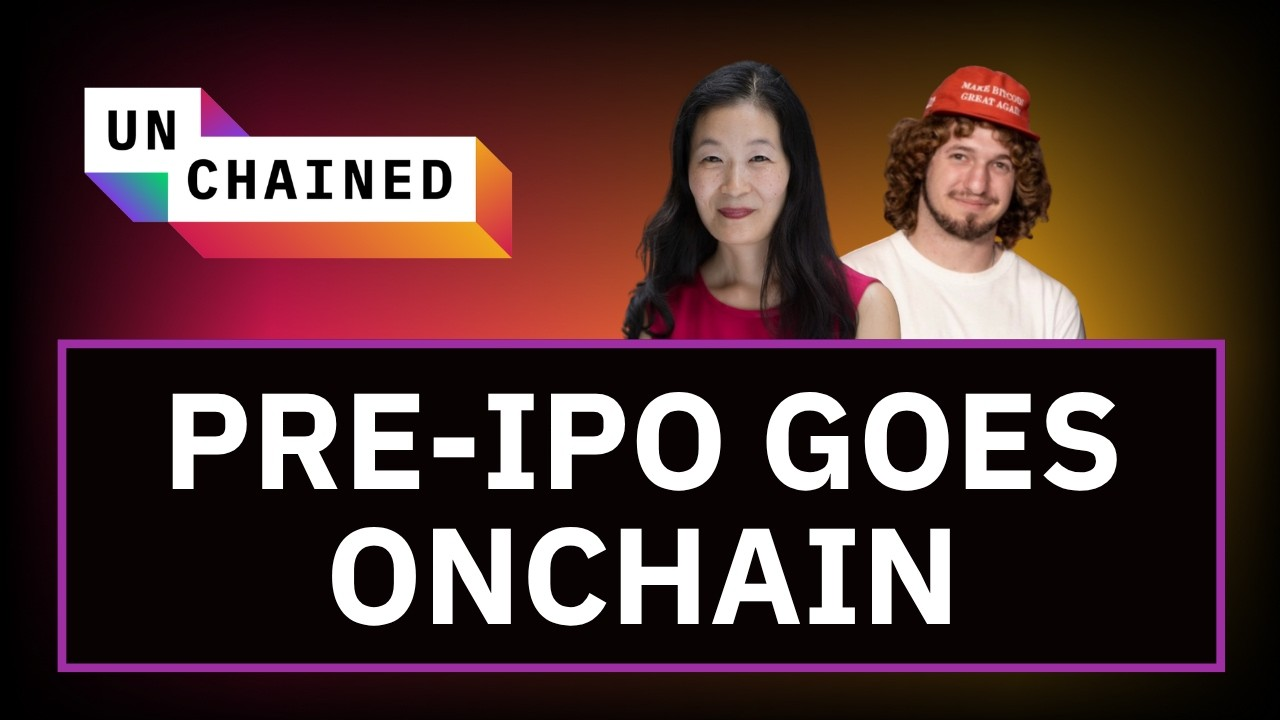
Guest: Dio Casares, Founder of Patagon
Host: Laura Shin
Podcast Source: Unchained
Original Title: Why SpaceX, OpenAI and Anthropic Now Trade Onchain
Air Date: May 22, 2026
Key Takeaways
In the latest episode, Dio Casares and Laura Shin delve into how pre-IPO price discovery is migrating to the blockchain. From the newly launched SpaceX pre-IPO perpetual contract on Hyperliquid, to secondary market trading of Anthropic and OpenAI shares, they analyze this trend in depth. They also discuss the new partnership between Nasdaq Private Market and Polymarket, and its potential impact on the future of private equity.
Key Insights
Why On-Chain Pre-IPO Markets are Suddenly Heating Up
- "For the crypto audience, a good way to understand pre-IPO perpetuals is to think of them as pre-markets in crypto. Many people might remember that Hyperliquid was once very aggressive with pre-markets for many altcoins. Then these markets started attracting a lot of volume and gradually became the place where most pre-market trading happens."
- "These pre-IPO perpetuals launch shortly before a planned IPO or key event. … Because they launch so close to the event, they attract more volume and more willing participants. You can think of it as a futures contract that is about to settle, unlike something like Ventuals, which has a longer duration and lacks clarity on when exactly these perpetual futures will ultimately settle."
Why OpenAI and Anthropic are Denying Secondary Trades
- "First, they want to create a genuine fear that discourages people from investing in the secondary market. Because the essence of secondary market trading is that someone is buying shares, but the company or employees don't receive capital from it. And these AI companies, to put it bluntly, are high capital consumers. They absorb huge amounts of cash and then burn through billions of dollars."
- "Any impediment to these high capital consumption companies (so-called 'cash furnaces') raising funds, especially right before they enter a hyper-competitive IPO phase, is seen as a major issue. … They are all trying to absorb as much capital as possible. So, for them, limiting the secondary market right before an IPO is a crucial step, as it channels more supply and demand towards their own primary rounds."
- "The second reason is liability. Usually, when a company deems a trade credible or approves it, it also becomes responsible for executing that trade. … When these SPVs start liquidating and closing around the IPO, a bunch of waterfall issues emerge. For these companies, whether due to legal liability or just not wanting to deal with the hassle, they want nothing to do with it. Nobody wants to handle 1000 different cases."
What Problem Does Going On-Chain Actually Solve?
- "In crypto, the derivatives market makes more sense than the spot market, primarily due to US regulation. In the US, these private shares typically require a holding period of about 6 months. … If you don't have a system to enforce this 6-month holding period, you risk breaking the regulatory exemptions these shares rely on, leading to fines and other issues."
- "A lot of spot market volume might actually be against the interests of these companies because it competes with their primary fundraising rounds. They don't want price discovery to happen this way because it could lead to adverse selection when they raise funds. Companies might say, 'We know you're going to tokenize this, so we won't work with you.'"
- "In tokenized products, if the SPV messes up, or there are any legal issues, or the fund structure is flawed, the consequences can be catastrophic. Derivatives have risks too, like ADL or price wicks, but it's more like a market risk, not a situation where someone screws up the contract and everyone loses their money. That's why I favor the perp side."
Are Private Giants Already Trading Like Public Companies?
- "To some extent, I agree: these companies do have record participation. If you break down the capital invested in these companies pre-IPO, the number of participants could be in the tens of thousands, or hundreds of thousands. That's not typical for a private company."
- "But as far as I know, they haven't really promoted the secondary market, meaning they haven't encouraged people to continue buying and selling after their initial investment. Instead, they've consistently tried to tell investors very clearly: 'If you invest, you should hold until the IPO or a similar liquidity event.'"
Ways and Risks of Getting In Before the IPO
- "These are late-stage companies. Once you enter second or third-tier structures, you're playing a dangerous legal 'hot potato' with those shares, and most people should probably avoid that."
- "There's a real risk: many banks and brokers might say, 'We don't know if this trade is valid, so we can't allow you to sell these shares.' … If an SPV's main bank account is with JP Morgan, and JP Morgan says 'We can't help you sell these shares,' they're suddenly in a race against time: set up a new account, which isn't easy; then transfer the shares from the old account to another broker. That's a process risk."
- "Another scenario is someone saying, 'I did agree to sell these to you and deliver them, but now the trades are deemed invalid, so I'll just refund your money.' This will most likely lead to a lawsuit. That person might eventually lose, but you still have to sue them. So, depending on the tools and structures, many different risks emerge."
Legal Boundaries of Robinhood, FTX, and Different Structures
- "As for whether they violate securities laws, and whether companies like OpenAI can actually stop firms like Robinhood from offering these products, it's still a legal gray area. Regardless, these products haven't gained massive traction yet. The main reason is that these products aren't truly liquid assets."
- "The batch of Anthropic shares held by FTX, and many other shares and assets held by FTX, were typically sold without any encumbrance. That means Anthropic's right of first refusal (ROFR) was completely waived, transfer restrictions were waived, and other limitations were also lifted."
- "If you hold Anthropic shares related to the FTX claim, the batch FTX bought, you are probably among the safest, alongside the company's approved direct investors, because it carries a different legal status."
The Landscape of Players in the Private Secondary Market
- "On the perpetual side, there's Trade.xyz, which is HIP-3; Ventuals, which is an earlier protocol, also HIP-3; and some new projects, like a friend of mine doing Entropy, which will also be HIP-3. They'll offer some pre-market slightly earlier than Trade.xyz. You'll see these markets largely clustered around Hyperliquid."
- "I think Solana is more retail-oriented, and for some reason, people are more willing to experiment there. There's also a significant overlap between crypto and AI… There are many people willing to take high risks, with a lot of capital, who are already used to operating on Solana. They prefer to invest in these projects without having to open bank accounts, go through tedious procedures in traditional finance, or rely on personal connections to get direct share allocations."
Patagon's Positioning and the On-Chain Boundary
- "We previously looked at perpetuals in the private market to see if we should tell some clients, if they are considering hedging pre-IPO, even though it's a bit of a gray area, maybe they could use perpetuals instead of an IBKR-style setup. … We don't want to anger the companies we're on the shareholder register for. Launching tokenized versions of their stock, or pre-IPO markets, especially very early ones, is an easy way to really upset them."
Why Pre-IPO Perpetuals Might Continue to Expand
- "Many world-changing and market-moving events now happen on weekends, which is a huge advantage for RWA perpetuals that can trade 24/7. The same goes for pre-IPO perpetuals. Once they convert, they become regular RWA perpetuals."
- "I'm not sure exactly how the pre-IPO market will develop, but this year we have a historic number of IPOs. SpaceX, Anthropic, and OpenAI are all trying to reach trillion-dollar-plus valuations, which has never happened before. … Now is a really good time for pre-IPO perpetuals to start gaining more attention."
Why On-Chain Pre-IPO Markets are Suddenly Heating Up
Host Laura Shin: This week, or more accurately the past few weeks, there's been a lot of action in the pre-IPO market, especially on-chain. This week, a very large new product launched on Hyperliquid – the SpaceX pre-IPO perpetual. Around the same time, Polymarket announced a new class of event contracts where users can bet on unicorn valuations, IPO dates, secondary market pricing, etc., in partnership with Nasdaq Private Market. Last week, Anthropic and OpenAI announced they were voiding a batch of secondary market share transactions, causing a big stir.
According to Allium Research, volume for this type of pre-IPO activity on Hyperliquid was only about $3 million in February, but reached $44 million a few days ago. What's your take? Why is all this activity emerging now?
Dio Casares:
I think a big part is that the timing is very strategic. For the crypto audience, a good way to understand pre-IPO perpetuals is to think of them as pre-markets in crypto. Many people might remember that Hyperliquid was once very aggressive with pre-markets for many altcoins. Then these markets started attracting a lot of volume and gradually became the place where most pre-market trading happens.
When those tokens officially launched, the opening price was usually quite close to the price discovered in the pre-market. And after they became regular perpetuals with normal oracles, Hyperliquid managed to retain most of that volume.
So what we're seeing with Cerebras and now SpaceX is that these pre-IPO perpetuals launch shortly before a planned IPO or key event. I believe the relevant milestone for SpaceX is around the 17th of next month – only about three or four weeks away. Because they launch so close to the event, they attract more volume and more willing participants. You can think of it as a futures contract that is about to settle, unlike something like Ventuals, which has a longer duration and lacks clarity on when exactly these perpetual futures will ultimately settle.
Why OpenAI and Anthropic are Denying Secondary Trades
Host Laura Shin: In my opening question, I actually mentioned several different types of activities: the SpaceX pre-IPO perpetual, the Polymarket news, and the Anthropic/OpenAI incident, some happening off-chain, some on-chain. They represent different segments or stages of this pre-IPO market. How would you summarize what each of these news items represents?
Dio Casares:
There are roughly two layers of reasons why OpenAI and Anthropic came out and said "we won't recognize these trades."
First, they want to create a genuine fear that discourages people from investing in the secondary market. Because the essence of secondary market trading is that someone is buying shares, but the company or employees don't receive capital from it. And these AI companies, to put it bluntly, are high capital consumers. They absorb huge amounts of cash and then burn through billions of dollars.
Any impediment to these high capital consumption companies (so-called 'cash furnaces') raising funds, especially right before they enter a hyper-competitive IPO phase, is seen as a major issue. Currently, it's expected that SpaceX will go public first, followed by Anthropic, then OpenAI. These companies are trying to bring in as much capital as possible. Therefore, for them, limiting the secondary market right before an IPO is a crucial step, as it channels more supply and demand towards their own primary rounds.
The second reason is liability. Usually, when a company deems a trade credible or approves it, it also becomes responsible for executing that trade. Meaning, on the company's cap table, they have to ensure that the person buying the shares actually gets them at or before the IPO.
You can imagine, there might be hundreds or even thousands of SPVs (Special Purpose Vehicles) and other entities in the market, potentially leading to litigation and very complex structures. When these SPVs start liquidating and closing around the IPO, a bunch of waterfall issues emerge. For these companies, whether due to legal liability or just not wanting to deal with the hassle, they want nothing to do with it. Nobody wants to handle 1000 different cases.
So now they are very publicly saying: "This is not our problem. If you're not in an approved block, we can't help you." They are choosing to make this loud and clear before the IPO goes wrong. In summary, it's both about maximizing the cash they can raise and minimizing their legal liability.
What Problem Does Going On-Chain Actually Solve?
Host Laura Shin: We've touched on the various problems in this market and why some think going on-chain solves them. Can you specifically list what problems buyers and sellers are trying to solve by going on-chain?
Dio Casares:
Going on-chain can be broken down into two markets: the derivatives market and the spot market. The derivatives market has many advantages. Like the nature of most derivatives, it's primarily a hedging tool. Many people I know who use this market do so as a way to hedge their existing spot positions or direct investments.
I believe that in crypto, the derivatives market makes more sense than the spot market, primarily due to US regulation. In the US, these private shares typically require a holding period of about 6 months. There might be workarounds, but roughly 6 months. If you don't have a system to enforce this 6-month holding period, you risk breaking the regulatory exemptions these shares rely on, leading to fines and other issues.
So once you tokenize something, as long as it represents some form of ownership interest in these companies, US regulators can easily say it violates relevant rules. I think this is a huge hurdle for many tokenization products.
Another problem goes back to our previous topic: a lot of


