






«Lời nguyền hết hạn cổ phiếu giảm giá» không còn hiệu nghiệm? Cặp song sinh mô hình lớn bùng nổ, Zhipu tăng 19%, các ngân hàng đầu tư Phố Wall tiếp tục lạc quan


- Quan điểm cốt lõi: Mảng mô hình AI lớn tại Hong Kong bùng nổ ngược chiều thị trường, Zhipu và MiniMax đã tăng giá mạnh sau khi cổ phiếu hạn chế hết hạn, phá vỡ quy luật thông thường "hết hạn là giảm". Các nhà đầu tư tổ chức cốt lõi đồng loạt tuyên bố nắm giữ dài hạn, đồng thời nhận được đánh giá tích cực và nâng giá mục tiêu từ nhiều ngân hàng đầu tư quốc tế, cho thấy dòng vốn chủ đạo từ Phố Wall đang dần hình thành sự công nhận mang tính hệ thống đối với các công ty mô hình AI Trung Quốc.
- Yếu tố then chốt:
- Cổ phiếu Zhipu tăng vọt hơn 19% trong ngày hết hạn cổ phiếu hạn chế, MiniMax cũng tăng mạnh khoảng 17%. Các nhà đầu tư tổ chức cốt lõi như JSC International, WT Asset Management tuyên bố nắm giữ dài hạn, đội ngũ sáng lập tự nguyện cam kết không bán cổ phiếu trong 12 tháng, giải tỏa hiệu quả lo ngại về tình trạng bán tháo thanh khoản.
- JPMorgan Chase nâng giá mục tiêu của Zhipu từ 1800 HKD lên 2000 HKD, duy trì xếp hạng "tăng tỷ trọng". Lý do cốt lõi là mô hình GLM-5.2 đã củng cố giá trị thương mại hóa mã nguồn mở, thị trường về cơ bản đã định giá xong mức hướng dẫn ARR 1 tỷ USD vào cuối năm.
- Ba ngân hàng đầu tư Goldman Sachs, Bank of America và Citigroup đồng loạt xếp hạng "mua vào" cho MiniMax, với giá mục tiêu của Goldman Sachs là 860 HKD. Họ lưu ý rằng DeepSeek V4 đưa ra mức giá khác biệt, đánh dấu cuộc chiến giá đang tiến tới hợp lý hóa, có lợi cho MiniMax duy trì tỷ suất lợi nhuận gộp cao nhờ kiến trúc hiệu quả.
- Báo cáo của Bank of America tiết lộ sự thay đổi trong cơ cấu doanh thu của MiniMax, mảng doanh nghiệp và API đám mây được nâng cao ưu tiên chiến lược. Tỷ suất lợi nhuận suy luận của mô hình tiền nhiệm M2.7 vượt quá 40%, dự kiến tỷ suất lợi nhuận dài hạn sẽ ổn định. Citigroup cho rằng cổ phiếu có tiềm năng tăng hơn 50%, mô hình video thế hệ mới có thể thúc đẩy tâm lý thị trường.Nhóm cổ phiếu công nghệ Hong Kong nhìn chung tăng mạnh, chỉ số Hang Seng Tech tăng gần 5%. Alibaba, Hua Hong Semiconductor, Lenovo Group và các cổ phiếu khác tăng đáng kể. Các yếu tố thúc đẩy bao gồm định giá thấp của thị trường Hong Kong, dòng vốn chảy ra khỏi mảng chip lưu trữ toàn cầu và phát biểu của Thống đốc Ngân hàng Trung ương Trung Quốc ủng hộ sự thịnh vượng của thị trường vốn Hong Kong.
Original author: Dong Jing
Original source: Wall Street CN
China's AI large model sector staged a contrarian rally on the Hong Kong stock market.
Zhipu AI experienced its first lock-up period share expiration since listing, and the market's usual logic of "falling on lock-up expiration" was completely invalidated—its share price surged over 19% on the day, while MiniMax rose approximately 17% simultaneously. Analysts indicate that there was no liquidity crunch despite the large-scale unlock, as core institutional investors collectively declared long-term holdings, signaling that mainstream Wall Street capital is systematically recognizing Chinese AI model companies.
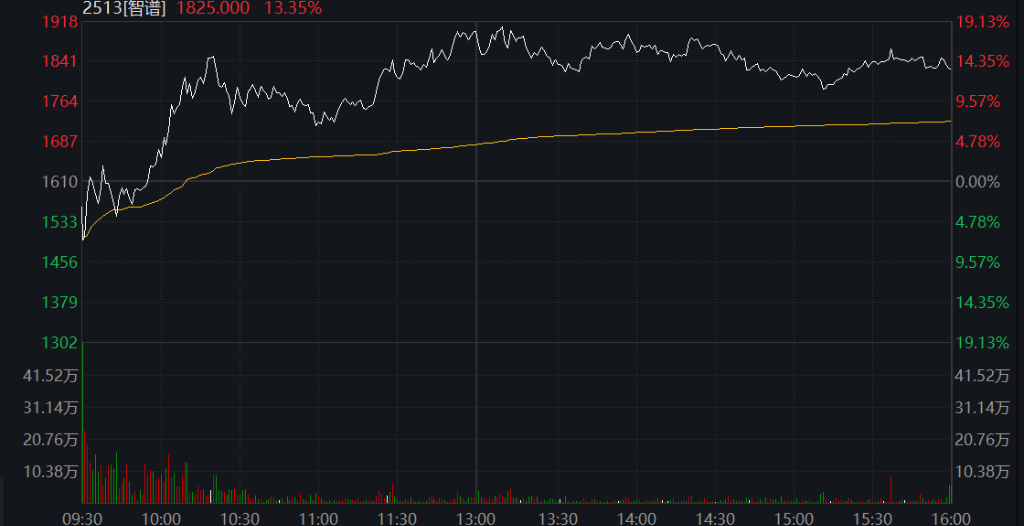
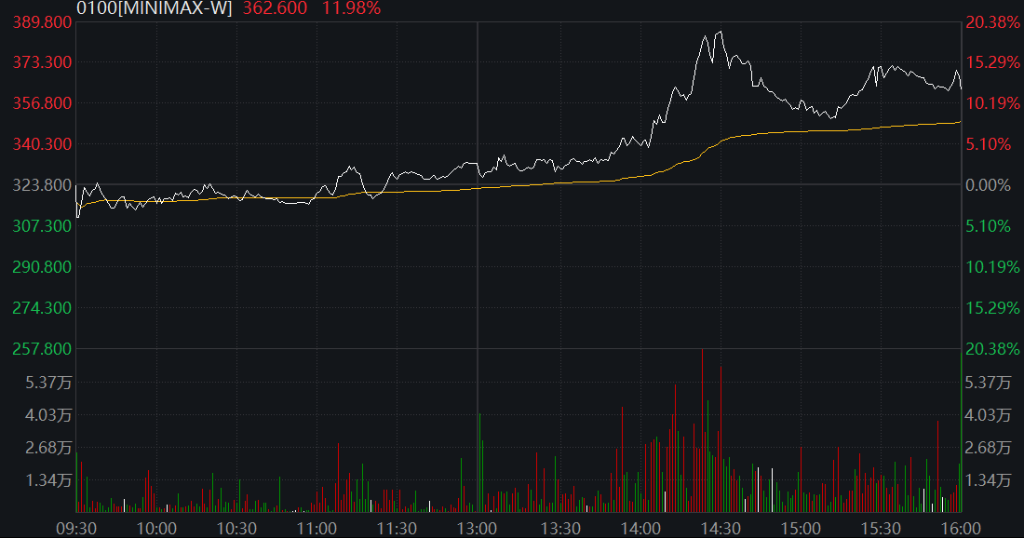
Meanwhile, as reported by Wall Street CN, JPMorgan raised its target price for Zhipu AI from HKD 1,800 to HKD 2,000, maintaining an "Overweight" rating; Goldman Sachs, Bank of America, and Citigroup all issued "Buy" ratings for MiniMax within the same period.
The strong performance of these two major AI model companies is a microcosm of the overall surge in Hong Kong's tech sector. Today, the Hang Seng Tech Index opened high and continued to climb, surging nearly 5%. Alibaba rose over 12%, Hua Hong Semiconductor gained over 10%, Lenovo Group rose over 9%, SMIC and Kuaishou both increased over 8%, and Tencent Holdings briefly spiked over 4%.
According to Securities China, analysts believe this rally in Hong Kong stocks is driven by two factors: First, Hong Kong stocks have relatively low valuations, making them attractive; second, the global memory chip sector has been consistently hit hard, with funds flowing out of those sectors into Hong Kong stocks. Additionally, Pan Gongsheng, Governor of the People's Bank of China, delivered a speech at the "Hong Kong Fixed Income and Currency Summit and Bond Connect Forum," outlining deployments in four key areas: deepening financial market connectivity, supporting the prosperity of Hong Kong's capital market, consolidating Hong Kong's status as an offshore Renminbi hub, and maintaining Hong Kong's financial stability, which also provided policy-level support for market sentiment.
Lock-Up Expiration Curse Broken: Institutions Declare Support, Market Revalues
The market performance of Zhipu AI's lock-up expiration has shattered the long-standing expectation in A-shares and Hong Kong stocks that "prices fall on lock-up expiration."
The total number of Zhipu AI restricted shares unlocked this time was 25.6816 million shares. JSC International Investment Fund SPC, under Beijing Financial Holding Group; investment firm WT Asset Management; Optimas Capital Limited; as well as early shareholder and cornerstone investor LUSTER LightTech Co., Ltd., have all expressed their intention for long-term holdings.
On the MiniMax side, its largest strategic shareholder, Alibaba, and miHoYo clearly expressed long-term optimism in late June. MiniMax's founding team voluntarily set a 12-month lock-up period, exceeding the industry standard of 6 months, and the first unlock did not involve founding team or employee shares.
From a market perspective, the surge was not merely driven by short-term trading sentiment but rather a concentrated release following the market's revaluation of the company's long-term value and clear capital stance. Multiple core institutional investors publicly declared their intention to continue holding rather than cashing out around the lock-up expiration, effectively dispelling market concerns about a liquidity crunch.
JPMorgan's rating upgrade provided crucial fundamental support for this market movement. As reported by Wall Street CN, JPMorgan raised its target price for Zhipu AI from HKD 1,800 to HKD 2,000 by December 2026, maintaining an "Overweight" rating. The core logic is that GLM-5.2 reinforces the thesis that "commercializing open-weight models can create significant option value for leading model providers."
JPMorgan also pointed out that based on current valuations, the market has largely priced in Zhipu AI's year-end ARR guidance of USD 1 billion. The remaining upside potential depends on whether its powerful open-weight model can achieve scale through external infrastructure and distribution channels.
On the MiniMax front, Goldman Sachs, Bank of America, and Citigroup all issued "Buy" ratings within the same period, a rare occurrence in the current environment of increasing divergence in the AI sector.
Goldman Sachs set a target price of HKD 860 per share, with its report focusing on changes in the pricing environment of China's AI industry. Goldman Sachs noted that DeepSeek V4 will introduce differentiated pricing for peak hours, with API prices during peak times being double those during off-peak times. This is an early signal that the aggressive price war in the industry, ongoing since late April 2026, is moving towards rationalization. In this context, MiniMax's M3 model, with its higher proportion of self-built optimized computing power and more efficient architecture with fewer activated parameters, boasts gross margins significantly higher than its peers.
Bank of America set a target price of HKD 500 per share, revealing a significant shift in MiniMax's revenue structure: revenue has shifted from roughly 70% from consumer-side products last year to a growing proportion from enterprise-side and cloud API businesses, with enterprise/cloud API prioritized as a higher strategic focus. On the profitability front, the previous generation model M2.7 ultimately achieved an inference profit margin exceeding 40%. Bank of America expects that by continuously improving infrastructure efficiency, long-term profit margins will remain stable. Regarding computing power acquisition, MiniMax serves overseas users with local computing resources through partnerships with global cloud service providers and emerging cloud vendors, and can currently still stably access computing power.
Citigroup set a target price of HKD 533 per share, indicating an expected 53.8% upside from the current price and predicting that MiniMax's revenue growth rate will remain high. Citigroup also noted that the upcoming release of a new generation video model could be a key catalyst to reverse market sentiment.


