






释放1亿美元流动性?Pump.fun新政测试5分钟拉盘术


- 核心观点:Pump.fun推出BOOST模式,将原锁定于流动性池(LP)中约20%的“死流动性”资金,在代币迁移后前5分钟内通过TWAP买入并销毁,以制造短期买盘并减少流通供应,旨在改善代币发射后的短期表现,提升用户留存。
- 关键要素:
- BOOST模式机制:代币从联合曲线毕业迁移至PumpSwap流动性池时,平台截留约20%资金(SOL交易对17.6枚SOL),在5分钟内通过TWAP方式持续买入该代币并销毁。
- 解决“死流动性”问题:原机制下约20%流动性永久锁在LP中形成沉没成本,平台估算每年超1亿美元流动性因此损耗。BOOST模式将这部分资金转化为实际买盘。
- 自动启用与范围:自北京时间2025年7月21日22:23后迁移的Pump.fun代币自动启用BOOST模式,此前已迁移或通过Mayhem模式发射的代币不适用。
- 平台收入与代币价格:当前Pump.fun年化收入约3.4254亿美元,总回购价值约4.1127亿美元,但代币价格距高点0.008美元仍有较大差距,表明大规模回购效果有限。
- 潜在风险:额外买压可能降低低质量代币的启动门槛,导致更激进的发射行为。5分钟TWAP窗口较短,买盘停止后若遇大单抛售,代币价格可能以更高滑点崩盘。
Original author: Ma He, Foresight News
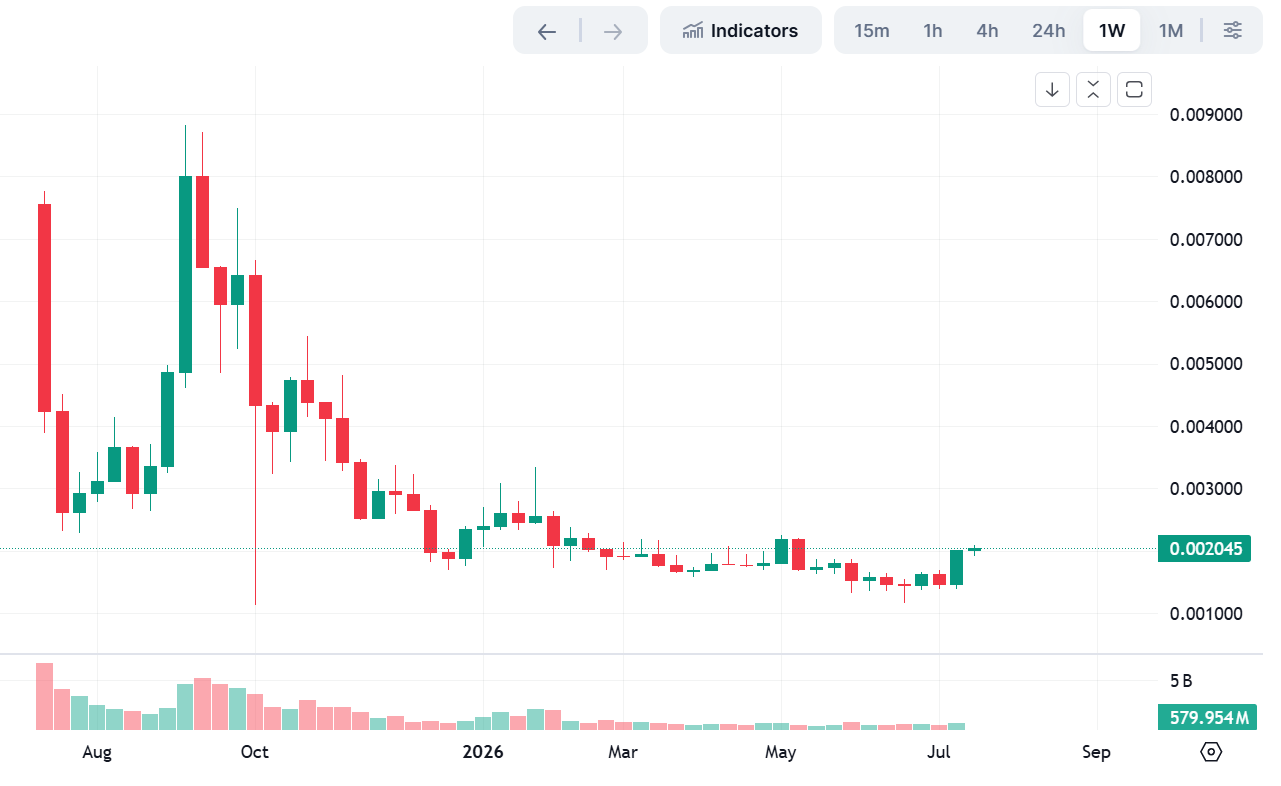
On July 21, Pump.fun officially launched the BOOST mode and set it as the standard default launch mechanism for new tokens. After the announcement, the price of the PUMP token continued to fluctuate around $0.002.
According to official data, historically, when a token graduates from the bonding curve and migrates to a liquidity pool, approximately 20% of the liquidity becomes "dead liquidity." Even if all holders sell their tokens, this portion of funds remains permanently locked in the LP, never to be utilized effectively. The platform estimates that this mechanism results in over $100 million in permanent liquidity loss annually.
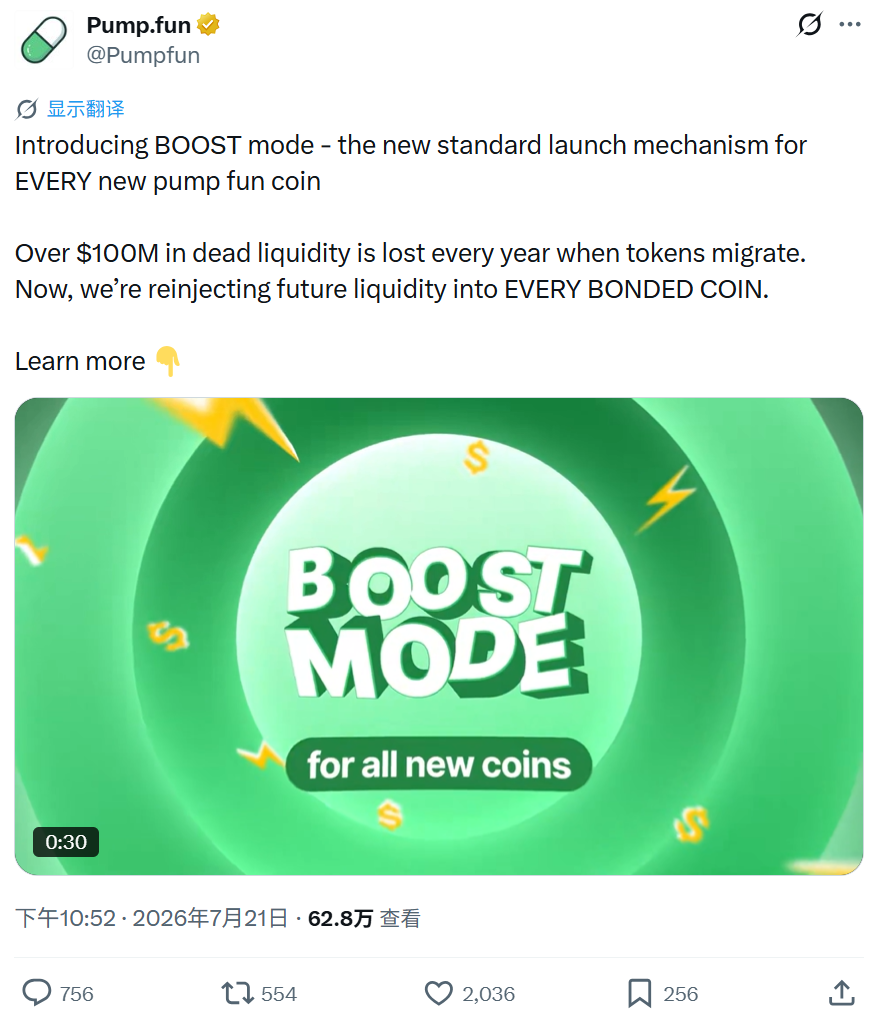
The core action of the BOOST mode is straightforward: it takes these otherwise wasted funds and, within the first 5 minutes after the token migration, continuously buys the token using a TWAP (Time-Weighted Average Price) strategy, immediately burning all purchased tokens. Upon token graduation, Pump.fun forcibly retains approximately 20% of the funds. Based on fixed migration rules, this means retaining 17.6 SOL for SOL trading pairs and roughly $2,516 for USDC pairs.
All these funds come from the portion of liquidity "sacrificed" during previous migrations, not from new platform subsidies. After the purchase is completed, the corresponding tokens are directly burned, creating short-term buying pressure and permanently reducing the circulating supply.
Using Reserves to Provide 5 Minutes of Buying Pressure for Tokens
Pump.fun's classic process is: users create a token with one click, trade it on the bonding curve, and once the token reaches a certain market cap threshold, it automatically migrates to the PumpSwap liquidity pool. During migration, the platform locks a portion of the liquidity into the LP according to a predetermined ratio to ensure subsequent trading depth.
The problem is that this locked portion is relatively high. Even if the token's price eventually goes to zero and everyone clears their positions, there will still be "dead money" left in the LP. This money can neither be withdrawn nor reallocated to other active assets, resulting in systemic capital waste. The official estimate is "over $100 million annually."
BOOST mode does not change the trading experience on the bonding curve, nor does it adjust the graduation threshold itself. BOOST mode does not create or release any external liquidity out of thin air. Its essence is to extract the 20% settlement funds originally destined for the LP, use them to buy tokens on the secondary market via TWAP within 5 minutes, and then burn them directly.
The official statement clarifies that Pump.fun tokens migrating after 22:23 Beijing time on July 21 will automatically have the BOOST configuration enabled. Tokens migrated before this time, as well as those launched via the Mayhem (AI Agent Lab) mode, are not subject to this mechanism.
Fireworks in the First 5 Minutes
As of July 22, Pump.fun's annualized revenue is approximately $342.54 million, and the total value of repurchased tokens is about $411.27 million. However, the token price is still far from its all-time high of $0.008. Relying solely on large-scale buybacks is no longer effective in boosting price expectations.
The essence of BOOST is not to add another round of buybacks for PUMP, but to address the product issues of the launchpad itself.
The logic behind this might be: if graduated meme coins have slightly thicker order books and slightly better short-term performance, trader retention and repurchase willingness will be higher. Most players in PvP don't care about a meme coin's fate three days later; they care about whether it will "moon" at the moment of graduation. Pump.fun officials may have realized this: instead of locking 20% of the funds defensively in the LP pool, it's better to turn this money into "fireworks" for the first 5 minutes.
The platform's true moat is not "high volume of token issuance," but "a certain percentage of issued tokens can continuously generate trading volume." Only when the latter is stable can protocol revenue be truly sustainable. If revenue stabilizes or grows, buybacks have continuous ammunition, rather than increasingly resembling an attempt to "prop up the price with existing revenue."
Of course, some traders also worry that the additional buying pressure will lower the actual difficulty of project launches, potentially allowing more low-quality coins to "appear successful" more easily, thereby encouraging more aggressive launch behaviors. Others point out that the 5-minute TWAP buying window is still relatively short. Once buying stops after 5 minutes and faces large sell orders, the token price could crash with even more severe slippage than before. Essentially, this trades extremely high post-dump risk for the illusion of a pump in the first 5 minutes.


