






「Unlock-to-Dump Curse」Broken? AI Model Duo Surges, Zhipu Up 19%, Wall Street Banks Remain Bullish


- Core Viewpoint: The Hong Kong-listed AI model sector rebounded against the trend, with Zhipu and MiniMax posting significant price gains after their lockup share expirations, breaking the usual "unlock-to-dump" pattern. Core institutional investors collectively declared long-term holdings, while multiple international investment banks expressed optimism and raised target prices, indicating that Wall Street mainstream capital is forming a systematic recognition of Chinese AI model companies.
- Key Elements:
- On the unlock day, Zhipu's share price surged over 19%, with MiniMax likewise jumping approximately 17%. Core institutional investors such as JSC International and WT Asset Management have stated their intention for long-term holdings, and the founding team voluntarily agreed to a 12-month lockup, effectively alleviating market concerns about a liquidity-driven sell-off.
- JPMorgan raised its target price for Zhipu from HKD 1,800 to HKD 2,000, maintaining an "Overweight" rating. The core logic is that the GLM-5.2 model strengthens the value of open-weight commercialization, with the market having largely priced in the year-end ARR guidance of USD 1 billion.
- Three investment banks — Goldman Sachs, Bank of America, and Citigroup — simultaneously gave MiniMax a "Buy" rating. Goldman Sachs set a target price of HKD 860, noting that DeepSeek V4's introduction of differentiated pricing signals a rationalization of the price war, which is favorable for MiniMax to maintain higher gross margins through its efficient architecture.
- A Bank of America report disclosed a shift in MiniMax's revenue structure, with enterprise and cloud API business strategies being elevated in priority. The inference profit margin for the previous-generation model M2.7 exceeded 40%, and long-term profit margins are expected to stabilize. Citigroup believes the current stock price has over 50% upside potential, and a new generation of video models could boost market sentiment.
- The Hong Kong-listed tech sector generally strengthened, with the Hang Seng Tech Index surging nearly 5%. Alibaba, Hua Hong Semiconductor, Lenovo Group, and others posted significant gains. Driving factors include the relatively low valuation of Hong Kong stocks, capital outflows from the global memory chip sector, and the Governor of the People's Bank of China expressing support for the prosperity of the Hong Kong capital market.
Original Author: Dong Jing
Original Source: Wall Street CN
China's AI large model sector staged a contrarian rally on the Hong Kong stock market.
Zhipu faced its first post-IPO lock-up expiry, and the usual market logic of "falling on lock-up expiry" completely failed—its share price surged over 19% on the day, while MiniMax also jumped approximately 17%. Analysts noted that large-scale unlocking did not trigger a liquidity crunch, with core institutional investors collectively stating their intention to hold long-term, indicating a systemic endorsement of Chinese AI model companies by mainstream Wall Street capital is taking shape.
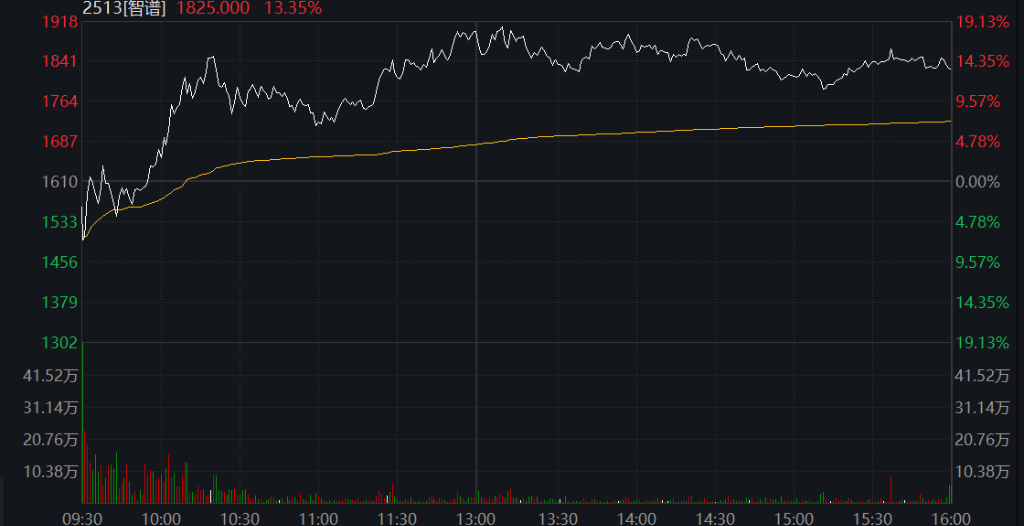
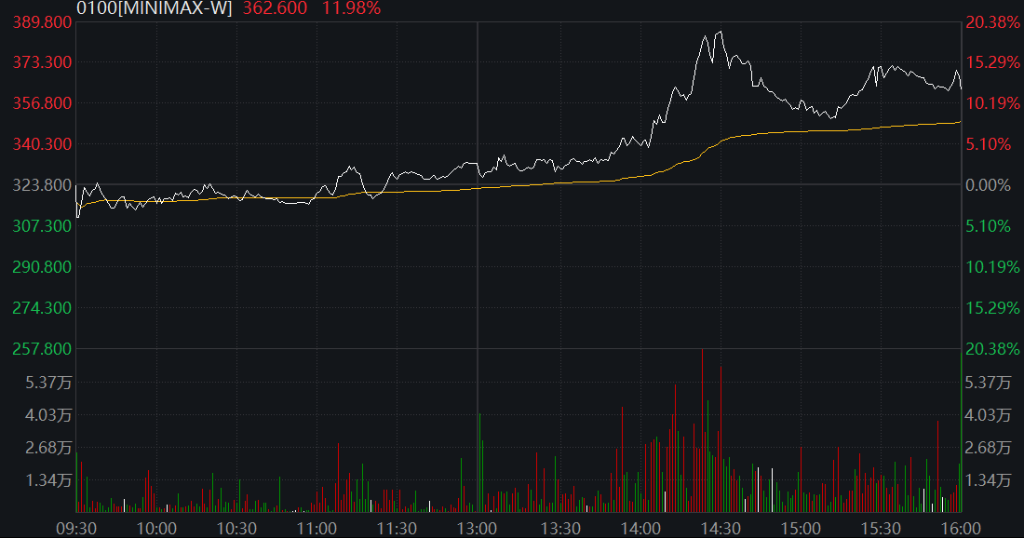
Concurrently, as reported in a Wall Street CN article, J.P. Morgan raised its target price for Zhipu from HKD 1,800 to HKD 2,000, maintaining an "Overweight" rating; Goldman Sachs, Bank of America, and Citigroup, three international investment banks, issued "Buy" ratings for MiniMax during the same period.
The strong performance of the two leading AI models epitomizes the broader surge in Hong Kong's tech sector. Today, the Hang Seng Tech Index opened high and continued to climb, closing nearly 5% higher. Alibaba gained over 12%, Hua Hong Semiconductor rose over 10%, Lenovo Group added over 9%, SMIC and Kuaishou increased over 8%, and Tencent Holdings briefly surged over 4%.
According to Securities China, analysts believe this strong show in Hong Kong stocks is driven by two factors: Firstly, Hong Kong stocks have relatively low valuations, making them attractive; secondly, global memory chip stocks have been hit hard, with funds flowing out of those sectors and into Hong Kong stocks. Meanwhile, Pan Gongsheng, Governor of the People's Bank of China, delivered a speech at the "Hong Kong Fixed Income & Currency Summit and Bond Connect Forum," outlining deployments in four areas: deepening financial market connectivity, supporting the prosperity of Hong Kong's capital market, consolidating its status as an offshore RMB hub, and maintaining Hong Kong's financial stability, which also provided policy-level support for market sentiment.
The Lock-up Expiry Curse Broken: Institutions Show Commitment, Market Revaluation Underway
Zhipu's market performance after its lock-up expiry shattered the long-held expectation in both A-shares and Hong Kong stocks that "stocks always fall upon lock-up expiry."
The total number of Zhipu shares unlocked this time was 25.6816 million shares. JSC International Investment Fund SPC under Beijing Financial Holding Group, investment firm WT Asset Management, Optimas Capital Limited, as well as early shareholder and cornerstone investor, Luster LightTech Co., Ltd., have all expressed their intention to hold long-term.
For MiniMax, its largest strategic shareholder Alibaba and miHoYo clearly stated their long-term bullish outlook in late June. MiniMax's founding team voluntarily set a 12-month lock-up period, exceeding the industry standard of 6 months, with this first unlocking event not involving the founding team or employee shares.
From a market perspective, the surge on that day was not merely driven by short-term speculative sentiment but represented a concentrated release following the market's revaluation of the company's long-term value and a clearer understanding of capital's stance. Several core institutional investors publicly stated their intention to continue holding rather than cashing out before and after the lock-up expiry, effectively alleviating market concerns about a liquidity crunch.
J.P. Morgan's rating upgrade provided crucial fundamental support for this market movement. As noted in the Wall Street CN article, J.P. Morgan raised its target price for Zhipu from HKD 1,800 to HKD 2,000 for December 2026, maintaining an "Overweight" rating. The core logic is that GLM-5.2 reinforces the thesis that "commercializing open-weight models can create significant optionality value for leading model providers."
J.P. Morgan also pointed out that based on current valuations, the market has largely priced in Zhipu's year-end ARR guidance of USD 1 billion. The remaining upside potential depends on whether its powerful open-weight model can achieve scale through external infrastructure and distribution channels.
Regarding MiniMax, Goldman Sachs, Bank of America, and Citigroup simultaneously issued "Buy" ratings, a relatively rare occurrence in the current environment of increased divergence within the AI sector.
Goldman Sachs set a target price of HKD 860 per share, with its report focusing on changes in the pricing environment for China's AI industry. Goldman noted that DeepSeek V4 is about to introduce peak-time differentiated pricing, with API prices during peak hours being double those during off-peak hours. This is an early sign of the industry moving away from the aggressive price war that has been ongoing since late April 2026. In this context, MiniMax's M3 model, with its higher proportion of self-built, optimized computing power and a more efficient architecture with smaller activated parameters, boasts gross margins significantly higher than its peers.
Bank of America set a target price of HKD 500 per share. Its report revealed a significant shift in MiniMax's revenue structure: the company's revenue, which last year was about 70% from consumer-facing products, has shifted towards enterprise and cloud API businesses, which are now listed as a higher strategic priority. On the profitability front, the previous generation M2.7 model ultimately achieved an inference profit margin of over 40%. BofA expects long-term profit margins to remain stable through continuous improvements in infrastructure efficiency. Regarding computing power acquisition, MiniMax serves overseas users with local computing resources by partnering with global cloud service providers and new-age cloud firms, and it continues to secure computing power stably.
Citigroup set a target price of HKD 533 per share, noting that the current stock price implies a potential upside of 53.8%. It expects MiniMax's revenue growth to remain high, with the upcoming release of a new-generation video model potentially serving as a key catalyst to reverse market sentiment.


