宇树科技IPO时间表确定,上市日期、估值与投资者需要知道的一切


- 核心观点:宇树科技于7月30日启动科创板IPO程序,计划募资42亿元,隐含估值约420亿元。该公司2025年营收17.08亿元、扣非净利润6亿元,但2026年上半年利润预计同比下滑,同时美国进口限制关闭其最大海外市场之一,为上市后前景增添重大变量。
- 关键要素:
- 发行安排:初步询价8月5日,定价8月6日,申购8月10日,发行结果8月14日公布,行业预期挂牌在8月19日前后,最终以上交所公告为准,中信证券任保荐机构。
- 审核速度:从上交所3月20日受理到证监会7月初批准注册仅用104天,创科创板最快全流程审核纪录,凸显监管层对战略AI与机器人企业的加速准入意图。
- 财务表现:2025年营收17.08亿元(同比+335%),毛利率60.27%,扣非净利润6.001亿元,人形机器人出货超5,500台、全球份额32.4%居首;但2026年上半年扣非净利润预计同比下降6%至22%,因研发与销售费用大增。
- 外部变量:长鑫存储7月27日上市首日暴涨466%点燃打新热情;美国在发行启动前两天将外国制造人形与四足机器人纳入进口限制清单,实质关闭宇树最大出口市场之一。
- 定价与竞争:人形机器人均价从59万元降至16.64万元,以价换量策略明显,60%毛利率能否维持为核心悬念;本次仅发行10%新股,流通盘偏小,可能加剧首日波动。
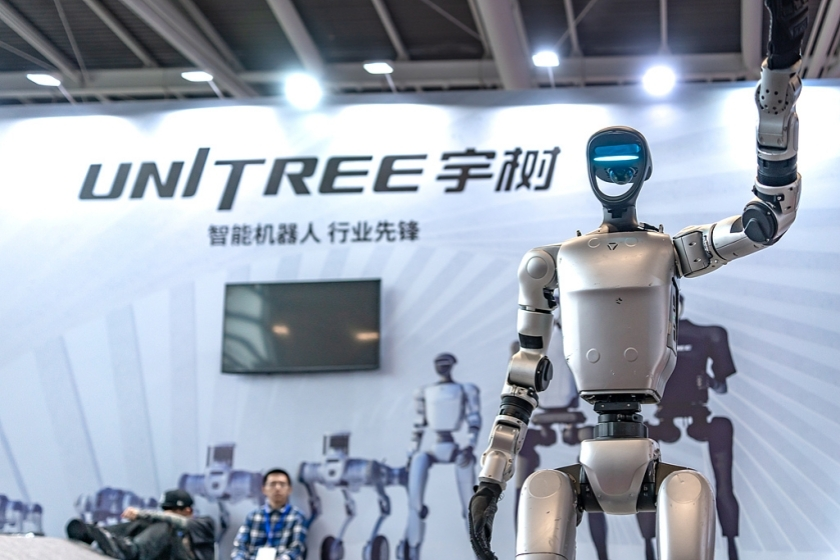
The suspense over when Unitree Robotics will go public has entered its final countdown. The Hangzhou-based robotics company officially launched its STAR Market listing process on the evening of July 30, with preliminary price inquiries scheduled for August 5, online and offline subscriptions both taking place on August 10, and issuance results to be announced on August 14. According to industry expectations cited by local media including 21st Century Business Herald, the actual listing may occur around August 19, though the official listing date remains subject to the final announcement from the Shanghai Stock Exchange. The offering plans to raise approximately RMB 4.2 billion (about USD 620 million), with a post-issuance base valuation of approximately RMB 42 billion, making Unitree the first humanoid robotics stock on the A-share market. Market attention on this IPO far exceeds that of an ordinary offering—it gives global investors the first publicly priced, already-profitable humanoid robotics target, and its timing is extremely delicate. ChangXin Memory Technologies surged 466% on its STAR Market debut on July 27, igniting subscription enthusiasm, while the United States announced import restrictions on foreign-made robots just two days before the offering launch, effectively closing one of Unitree's largest overseas markets.
Key Points
Unitree officially initiated its STAR Market IPO process on July 30, with preliminary price inquiries on August 5, the offering price confirmed on August 6, online and offline subscriptions opening simultaneously on August 10, payment deadline on August 12, and issuance results announced on August 14. According to industry expectations from local media, the actual listing may occur around August 19, with the official date pending confirmation from the Shanghai Stock Exchange.
The offering consists of 40,446,400 new shares, representing 10% of total post-issuance share capital, all new shares with no sell-down of existing shares. The plan targets raising approximately RMB 4.2 billion, with post-issuance base valuation of approximately RMB 42 billion (about USD 6.2 billion). CITIC Securities serves as the sponsor and lead underwriter.
The China Securities Regulatory Commission approved the registration in early July. From the Shanghai Stock Exchange's acceptance of the application on March 20 to registration approval took only 104 days, setting the fastest full-process review record in STAR Market history.
According to the prospectus, Unitree's 2025 revenue was RMB 1.708 billion, up 335% year-over-year, with a gross margin of 60.27% and non-GAAP net profit of RMB 600.1 million. In 2025, the company shipped over 5,500 humanoid robots, ranking first globally with a 32.4% market share.
Growth is decelerating. H1 2026 projected revenue is RMB 1.052 billion to RMB 1.128 billion, representing year-over-year growth of approximately 35.6% to 45.4% (compared to 332% growth in the same period last year). Non-GAAP net profit is expected to decline approximately 6% to 22% year-over-year, primarily due to significantly higher R&D and sales expenses.
Two days before the offering launch, the United States announced the inclusion of foreign-made humanoid and quadruped robots on its import restriction list, effectively closing one of Unitree's largest addressable export markets and adding uncertainty to post-listing order prospects.
From Filing to Issuance in Just 104 Days
The speed of Unitree's listing itself is a signal. According to Caixin's report, the company officially launched its STAR Market IPO on Thursday, July 30, targeting RMB 4.2 billion in fundraising with an implied valuation of approximately RMB 42 billion. The record-breaking 104-day review process highlights regulators' intent to accelerate capital market access for strategic AI and robotics companies. For comparison, similar high-profile applications previously took approximately 148 days, while the full cycle for ordinary A-share IPOs can take six to twelve months.
The timeline details are now fully clear. According to Gasgoo's report, preliminary price inquiries take place on August 5, with offline and online subscriptions launching simultaneously on August 10 and payment deadline on August 12. South China Morning Post's report adds two key milestones: the offering price will be confirmed on August 6, and final issuance results will be announced on August 14.
When Will the Listing Date Be Revealed?
It is important to clarify for readers that while the subscription dates have been officially confirmed, the listing date has not yet been formally announced. According to Seoul Economic Daily, citing 21st Century Business Herald, the industry widely expects the actual listing to occur around August 19. Following STAR Market convention, listings typically occur within several trading days after issuance results are announced, making mid-to-late August a reasonable estimate—but the exact date must be confirmed by official announcements from the Shanghai Stock Exchange and the company.
Two Unitrees in the Prospectus
The prospectus simultaneously presents a company growing at high speed and one whose growth is decelerating. Understanding this contrast is the key to evaluating this IPO.
The High-Growth Side
According to Tech Market Briefs' review of the prospectus, Unitree's 2025 revenue was RMB 1.708 billion, up 335% year-over-year, with a remarkably high gross margin of 60.27% and non-GAAP net profit of RMB 600.1 million. The company has maintained profitability continuously since 2020—extremely rare in the generally cash-burning humanoid robotics industry. Shipment figures are equally striking: over 5,500 humanoid robots shipped in 2025, ranking first globally with a 32.4% share, while quadruped robots hold a market share exceeding 60%. Humanoid robot business revenue has risen from 27.6% of total revenue in 2024 to over half, completing the transformation from a "robot dog company" to a humanoid platform.
The Decelerating Side
According to BigGo Finance's analysis of the latest disclosures, H1 2026 projected revenue of RMB 1.052 billion to RMB 1.128 billion represents year-over-year growth of approximately 35.6% to 45.4%, compared to 332% in the same period last year. Non-GAAP net profit is expected to decline approximately 6% to 22% year-over-year. Audited Q1 data is even more direct: revenue of RMB 423 million grew 68.49%, but net profit attributable to shareholders of RMB 50.01 million declined 47.69% year-over-year. The company attributes the profit decline primarily to significant increases in R&D and sales expenses—Q1 R&D expenses rose by RMB 38.33 million year-over-year—and the company also conducted large-scale brand promotion leveraging platforms such as CCTV's Spring Festival Gala. Additionally, the average selling price of humanoid robots has dropped from RMB 590,000 to RMB 166,400, clearly demonstrating a strategy of trading price for volume. The prospectus itself also cautions that as the revenue base expands and competition intensifies, future growth rates may decelerate.
Two Major Variables at the Listing Timing
The ChangXin Memory Effect: An Amplifier for Subscription Enthusiasm
The market environment for Unitree's debut has been fundamentally reshaped by a precedent. According to TechTimes' analysis, China's largest DRAM manufacturer ChangXin Memory Technologies listed on the STAR Market on July 27, surging 466% on its first day, with the closing price of RMB 49 multiplying several times over the RMB 8.66 offering price and market capitalization briefly reaching approximately USD 490 billion. The retail subscription frenzy ignited by this feast is expected to generate extremely high demand for Unitree's offering. Secondary market valuation expectations have already been pushed well above the RMB 42 billion issuance benchmark, with some market discussions anchoring at over RMB 100 billion—though such expectations reflect market sentiment rather than any official guidance.
US Import Restrictions: The Sudden Closure of an Export Market
Another variable points in the exact opposite direction. Two days before the offering launch, the United States announced the inclusion of foreign-made humanoid and quadruped robots on the FCC restricted list, effectively banning new imports. Unitree's G1 humanoid robot and Go2 robot dog previously had substantial sales in overseas markets, including the United States. This restriction directly closes one of its largest addressable export markets. In post-listing quarterly disclosures, changes in overseas orders will serve as the first-hand evidence verifying the actual impact of this shock. On the policy front, "embodied intelligence" has been written into China's 2025 Government Work Report and the 15th Five-Year Plan proposal, meaning Unitree's listing simultaneously carries dual narratives of industrial policy and geopolitical competition.
What It Means for Investors
For global investors unable to participate in A-share subscription offerings, the significance of this IPO lies in the birth of a pricing benchmark. Humanoid robotics valuations previously derived entirely from the primary market—US-based Figure AI was rumored to be valued at up to USD 39 billion without meaningful revenue—whereas Unitree provides a comparable public yardstick backed by real revenue, profits, and shipment volumes. After listing, Unitree's price-to-sales and price-to-earnings ratios will become the reference framework for repricing the entire sector, including US-listed robotics concept stocks and related ETFs.
For crypto market participants, the connection is more direct than it appears. Robotics and embodied intelligence represent an extension of the AI narrative, and the correlation between AI-sector tokens and tech equity risk appetite has been repeatedly demonstrated in this cycle. Meanwhile, some trading platforms have begun offering derivatives products around popular pre-IPO or newly listed companies. MEXC has listed USDT-settled futures contracts related to Unitree, allowing users within crypto account ecosystems to track changes in price expectations for this target. Such products are highly volatile, and participants should fully understand contract mechanics and risks before engaging.
Follow-up Points and Potential Risks
Four Milestones on the Timeline
August 5 for price inquiry, August 6 for pricing, August 10 for subscription, August 14 for issuance results announcement—followed by the official listing date awaiting confirmation from the Shanghai Stock Exchange (industry expectation: around August 19). The pricing stage deserves particular attention: where the offering price sits relative to the RMB 42 billion base valuation will determine the flexibility for first-day price movements.
Risks That Demand Clear-Eyed Recognition
First is valuation risk. If the first-day performance replicates a ChangXin-style surge, the stock price will detach significantly from fundamentals, and the fact that Unitree's H1 non-GAAP net profit declined year-over-year will be repeatedly scrutinized in every subsequent earnings season. Second is export risk: the actual impact of US import restrictions will gradually emerge in post-listing order data, and if the overseas revenue share visibly contracts, the growth model will need reassessment. Third is competition risk: the average selling price of humanoid robots falling from RMB 590,000 to RMB 166,400 shows that a price war has already begun, and whether the 60% gross margin can be defended is the core question. Fourth is liquidity structure risk: with only 10% new shares issued, the actual free float is relatively small, and combined with subscription enthusiasm, early share price volatility could be extreme in both directions—neither side of the risk should be underestimated.
James Mitchell's Exclusive View
What truly matters about this IPO is not another Chinese tech company going public, but that the humanoid robotics sector is receiving its first anchor of sustained public market pricing. Before this, the industry's valuation system was entirely built on primary market financing rumors. The massive gap between Figure AI's USD 39 billion valuation and Unitree's RMB 42 billion issuance valuation itself demonstrates how distorted private market pricing has become. After listing, Unitree's quarterly shipment volumes, average prices, and gross margins will all become public data, and valuation discipline across the sector will be forcibly established.
There are two areas where the market may misread the situation. First, treating ChangXin's 466% first-day surge as a template for Unitree. The industry logics are completely different—ChangXin benefits from the certainty narrative of memory supply tightness extending to 2028, while Unitree faces the reality of early-stage commercialization with growth decelerating from 332% to 40% and average prices repeatedly halved. Substituting subscription sentiment for fundamental analysis is particularly dangerous under a structure with only 10% free float. Second, underestimating the long-term impact of US import restrictions. In the short term, domestic policy orders (the deployment directive for 10,000 humanoid robots) can fill the gap, but a hardware company cut off from its largest overseas market should rationally carry a geopolitical discount in its valuation—and current market discussion barely reflects this.
The three data sets investors should most closely watch for cross-validation are: first, the premium of the final offering price announced on August 6 relative to the RMB 42 billion benchmark—this is institutions expressing their judgment with real money during the inquiry process; second, the change in overseas revenue share in the first quarterly report after listing, directly verifying the actual damage from import restrictions; and third, the trend in average humanoid robot pricing—price stability is the premise for gross margin and business model viability.
The takeaway for cross-asset investors is that Unitree's listing completes the full pricing chain of the "AI narrative"—from chips (NVIDIA, ChangXin Memory) and cloud (Microsoft Azure) to embodied terminals. Sharp valuation changes at any link in this chain will transmit through risk appetite to adjacent links, including AI- and robotics-related tokens in the crypto market. When a sector transitions from private to public pricing, volatility typically rises first and then falls. Early participants need position discipline far stricter than usual to navigate this transition period.
FAQ
When will Unitree go public?
The subscription timeline has been officially confirmed: preliminary price inquiries on August 5, offering price confirmed on August 6, online and offline subscriptions opening simultaneously on August 10, payment deadline on August 12, and issuance results announced on August 14. The official listing date has not yet been announced. According to industry expectations from local media including 21st Century Business Herald, the actual listing may occur around August 19, with the exact date subject to official announcements from the Shanghai Stock Exchange and the company.
What are the issuance size and valuation of Unitree's IPO?
The offering consists of 40,446,400 new shares, representing 10% of post-issuance total share capital, all new shares with no sell-down of existing shares, bringing post-issuance total share capital to approximately 404 million shares. The plan targets raising approximately RMB 4.2 billion (about USD 620 million), corresponding to a post-issuance base valuation of approximately RMB 42 billion (about USD 6.2 billion). Approximately 85% of proceeds will be directed to R&D, including robot AI model research, body development, new product design, and intelligent manufacturing base construction. CITIC Securities serves as sponsor and lead underwriter.
What is Unitree's financial condition?
Unitree is one of the rare profitable companies in the humanoid robotics industry, maintaining profitability continuously since 2020. 2025 revenue was RMB 1.708 billion, up 335% year-over-year, with a gross margin of 60.27% and non-GAAP net profit of RMB 600.1 million, with humanoid robot shipments exceeding 5,500 units ranking first globally. However, growth is decelerating: H1 2026 projected revenue growth is approximately 35.6% to 45.4% year-over-year, with non-GAAP net profit expected to decline approximately 6% to 22%, primarily due to significantly higher R&D and sales expenses. The average price of humanoid robots has also fallen from RMB 590,000 to RMB 166,400.
Can ordinary investors participate in Unitree's subscription offering?
Domestic A-share investors with STAR Market trading access can participate in the subscription offering through online subscription, with August 10 as the subscription date. STAR Market subscription offerings require investors to meet the threshold of RMB 500,000 in assets and 24 months of trading experience. Overseas investors cannot directly participate in A-share subscription offerings but may participate indirectly after listing through qualified channels such as Stock Connect (if included in the eligible scope), or through derivatives products offered by certain platforms—though such derivatives are highly volatile and participants should