






Hassabis steps down, Jeff Dean leaves to start a venture—Google's morale is faltering


- Core Insight: Google's AI leadership is undergoing major upheaval. DeepMind founder Hassabis has stepped back from the front lines, legendary engineer Jeff Dean has left to start his own company, and combined with delays to the Gemini model and a brain drain of key talent, Alphabet's stock has suffered four major declines in six weeks, shaking market confidence in Google's AI competitiveness.
- Key Factors:
- On August 5, Hassabis transitioned to Chief Scientist at Alphabet, while former CTO Koray Kavukcuoglu took over Gemini R&D, reporting directly to Pichai. DeepMind's management chain has been shortened, marking the end of the founder era.
- Jeff Dean departed with three senior researchers (Ghemawat, Vinyals, and Quoc Le) to found Discovery Loop, focused on AI-automated scientific research workflows. Google invested in the venture and serves as its cloud provider, signaling a new model for handling talent attrition.
- On the day of the leadership change, Alphabet's stock dropped over 5% intraday and closed down 3.8%, erasing roughly $175 billion in market value. Over the past six weeks, the stock has been hit four times due to talent departures, delays to Gemini 3.5 Pro, and negative Q2 free cash flow.
- In June, Gemini's technical co-lead Noam Shazeer joined OpenAI; subsequently, Nobel Chemistry laureate John Jumper joined Anthropic. Losing two core researchers within two days triggered a strong market reaction.
- Alphabet's Q2 capital expenditures reached $44.9 billion, doubling year-over-year, but free cash flow turned negative for the first time. The market is questioning whether the massive investment has translated into a model leadership advantage, especially as flagship product deliveries continue to slip.
- The article draws an analogy to the talent diffusion pattern of Bell Labs, arguing that while DeepMind still retains scale and a user base, core talent is choosing to leave large organizations to pursue more radical research, signaling a potential structural drain of internal creativity at Google.
On August 5, Google DeepMind CEO Demis Hassabis stepped down from his day-to-day management role, transitioning to Chairman of DeepMind and assuming the position of Chief Scientist at Alphabet. He remains responsible for long-term AI research and continues to lead the drug discovery company Isomorphic Labs. While the title carries more prestige than before, this is effectively a promotion in name but a demotion in practice, with his actual management authority reduced.
Gemini's development and delivery will now be overseen by Koray Kavukcuoglu, former CTO of DeepMind, who will report directly to Pichai. Hassabis remains Google AI's scientific figurehead, continuing to contribute to AGI direction-setting, but no longer controls DeepMind's day-to-day operations. Following this restructuring, the management chain between DeepMind and Alphabet headquarters has been further shortened, and Pichai will have more direct visibility into Gemini's development progress.
On the same day, Jeff Dean announced his departure from Google.
He took with him Sanjay Ghemawat, Oriol Vinyals, and Quoc Le to found a company called Discovery Loop, aiming to use AI to automate the entire scientific research process of posing questions, designing experiments, executing them, and evaluating results. Google participated in the founding investment, will serve as its cloud provider, and will provide the first year of compute resources.
Google did not forcefully retain this team but instead chose to maintain capital, cloud service, and research collaboration relationships. For a group of top researchers who had already decided to start a company, this counts as a graceful arrangement.
The market nevertheless responded swiftly. Alphabet's share price fell more than 5% intraday, closing down nearly 4%. For a company of this scale, a 3.8% decline corresponds to roughly $175 billion in market capitalization, and at the peak of the intraday decline, the evaporation approached $260 billion.
Over the past six weeks, this marks the fourth time Alphabet has been penalized by the market over AI.
Jeff Dean and Hassabis: Two Traditions of Google AI
Jeff Dean is difficult to categorize as a conventional technology executive.
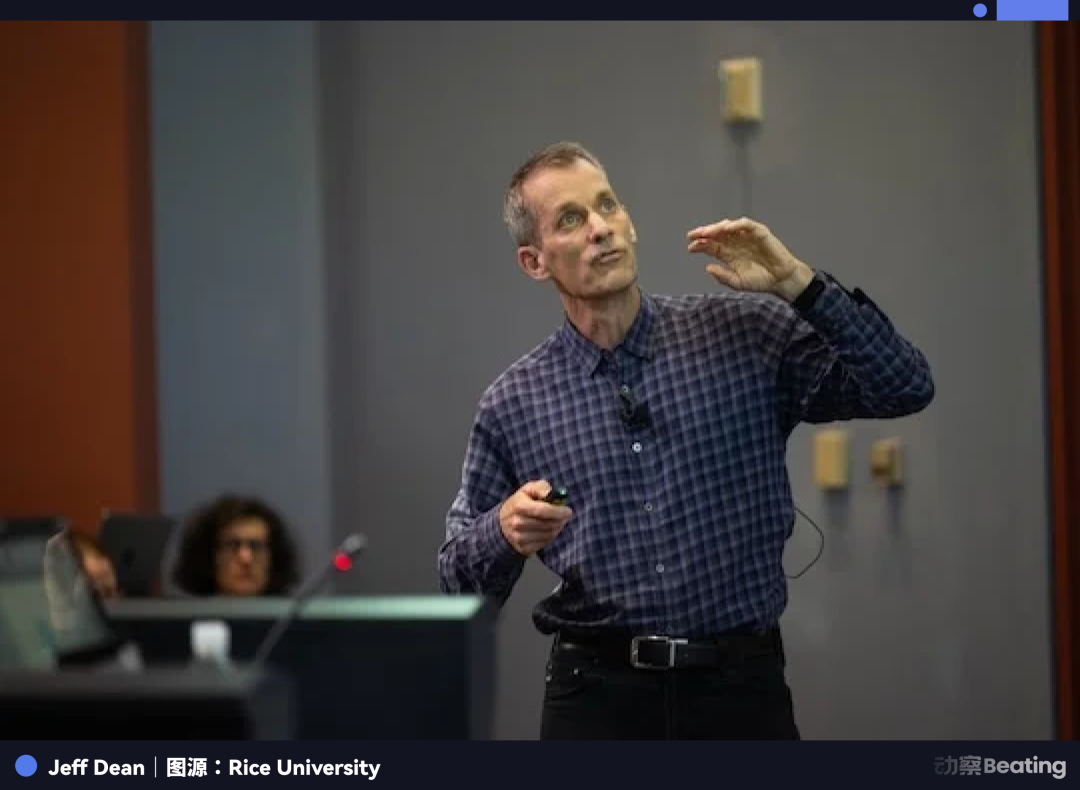
When he joined Google in 1999, he was the company's 30th employee. Over the nearly three decades since, he has been present for virtually every major technological transformation Google underwent.
In the early days, when search and advertising systems needed to handle rapidly expanding data, he and Ghemawat built MapReduce and Bigtable. These systems later became the foundation of large-scale distributed computing, with influence extending far beyond Google. He was also involved in the creation of Google Brain, TensorFlow, and the TPU. By the Gemini era, he had become one of the technical co-leads for the model.
Google's ability today to train large models, run them on custom chips, and integrate them into Search, Cloud, and various consumer products all traces back to the infrastructure he helped build.
Hassabis represents a different kind of capability.
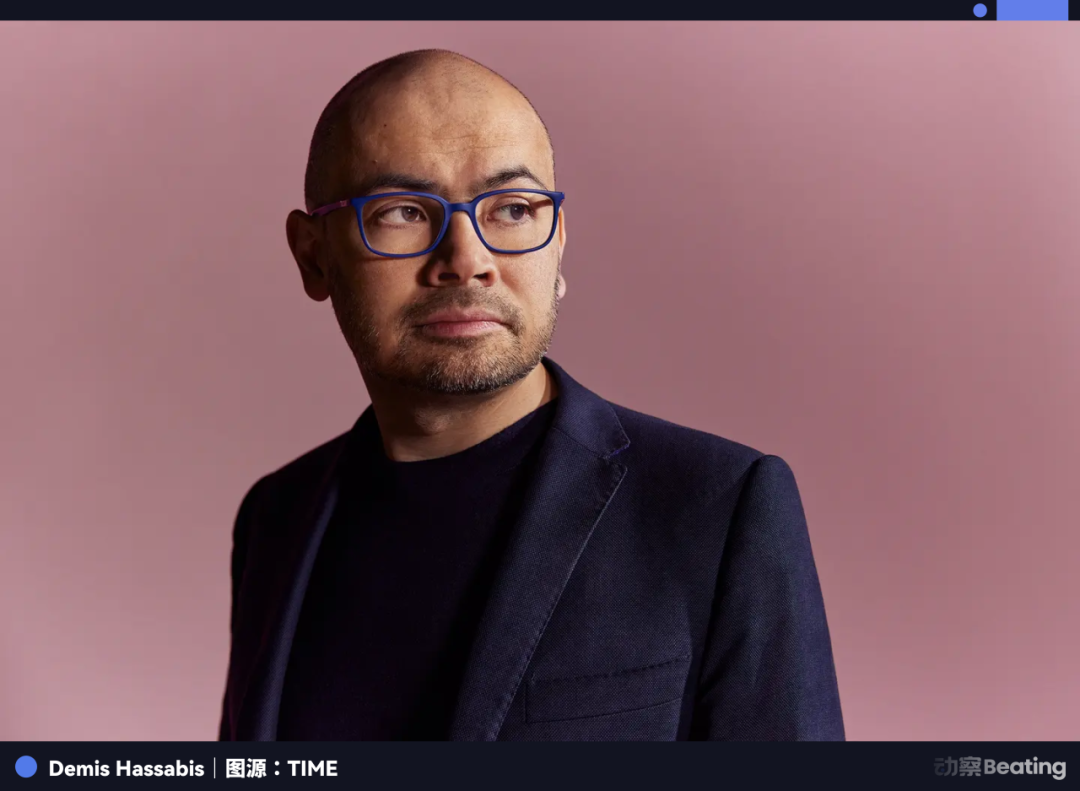
In 2010, he founded DeepMind in London. In 2014, Google completed the acquisition. Two years later, AlphaGo defeated Lee Sedol, bringing artificial intelligence into global public consciousness in a way never seen before. In 2024, he was awarded the Nobel Prize in Chemistry alongside John Jumper for AlphaFold.
In 2023, Google Brain and DeepMind merged, and Hassabis took charge of the combined Google DeepMind. He was both the leader of the Gemini project and Google's most important figure in articulating the future of AI externally.
Dean and Hassabis respectively anchored Google AI's engineering tradition and scientific tradition. Now, Dean has left the company, and Hassabis has stepped back from the front lines.
Four Plunges in Six Weeks
The intensity of the market reaction to this restructuring also stems from the fact that it comes on the heels of a series of AI setbacks for Google.
In June, Noam Shazeer, one of the authors of the Transformer paper and technical co-lead for Gemini, left Google to join OpenAI. In 2024, Google had just brought him back from Character.AI through a special deal worth approximately $2.7 billion and placed him on Gemini's core team. Two years later, Shazeer left again.
Shortly thereafter, John Jumper, the head of AlphaFold and winner of the 2024 Nobel Prize in Chemistry, joined Anthropic.
Within two days, Google lost two highly influential researchers. On June 22, Alphabet's share price fell more than 7% intraday, erasing over $200 billion in market value.
On July 16, news emerged that Gemini 3.5 Pro had been delayed. The flagship model was originally scheduled for release in June but had slipped by several months because metrics such as coding capability had not met expectations. Following the announcement, Alphabet's share price again dropped more than 3% intraday.
In late July, the pressure shifted to the financial statements.
Alphabet's second-quarter capital expenditure reached $44.9 billion, doubling year-over-year, with full-year capex guidance raised to between $195 billion and $205 billion. During the same period, the company's free cash flow turned negative at minus $5.9 billion—the first time in Alphabet's history that quarterly free cash flow was negative. On the first trading day after the earnings release, the share price fell more than 7% intraday.
Google is pouring in ever more resources, yet its models have not established a lead commensurate with that investment. The flagship product has not shipped on schedule, and the core people responsible for research and engineering are leaving one after another.
After Jumper's departure, media reports citing DeepMind employees noted that across text, image, video, speech, and vision, Google is struggling to point to models that are clearly at the industry's cutting edge.
Google has never lacked resources; in fact, it possesses the most complete set of resources in the entire AI industry.
It has its custom TPUs, data centers on a global scale, data accumulated through Search and YouTube, and distribution channels via Android, Chrome, Workspace, and Cloud. Pichai also listed a string of achievements in an internal memo, noting that Gemini apps have 950 million monthly active users, Gemma downloads exceed 900 million, and Gemini Robotics continues to advance.
These assets are enough to prove that Google remains powerful, but they cannot substitute for the next-generation flagship model itself. The market is willing to pay for long-term investment, provided that the money ultimately translates into leadership. After model delays and core personnel departures occurred in succession, investors began to question whether Google's problem is a lack of time, or a lack of the ability to pull its vast resources together into a single coherent force.
DeepMind Bids Farewell to Founder Leadership
Koray Kavukcuoglu, who replaces Hassabis in overseeing day-to-day operations, has spent 13 years at DeepMind. A student of Yann LeCun, he has worked on DQN, WaveNet, and multiple generations of Gemini, and previously served as CTO of Google DeepMind.
Koray knows DeepMind well and has long been responsible for connecting research, infrastructure, and products. His appointment to lead Gemini signals that Google is now prioritizing model delivery, product synergy, and commercial deployment.
This restructuring has also changed DeepMind's position within Google.
DeepMind under Hassabis always retained a distinctive founder-driven character. It started in London and maintained a relatively independent research tradition even after being acquired by Google. After the Google Brain and DeepMind merger, Hassabis became CEO of the combined organization, and DeepMind's culture came to dominate the new entity.
Now, with Hassabis exiting day-to-day management and Koray reporting directly to Pichai, DeepMind's relationship with Alphabet headquarters has become far tighter. For Google, this is a restructuring aimed at strengthening control. Pichai needs clearer visibility into Gemini's development pace, and he needs someone directly accountable for model delays, resource allocation, and product delivery.
For DeepMind, this also marks the end of an era.
Hassabis is still at Google, still holds a prestigious title, and still participates in long-term research. But the DeepMind that was directly led by its founder and shaped by scientific ideals is gradually becoming a more standardized AI research division within Alphabet.
Google Is Learning How to Say Goodbye to Talent
Jeff Dean's departure showcases another way Google handles talent attrition.
Google participated in Discovery Loop's founding investment, continues to provide cloud services and compute, and maintains research collaboration with the new company. Though Dean and his team have left the organization, they remain within Google's capital and technology ecosystem.
This arrangement benefits both sides.
Discovery Loop gains access to expensive compute, infrastructure, and early-stage funding without having to build a research platform from scratch. Google preserves its investment returns, cloud orders, and potential future collaborations, while avoiding pushing a group of core talent with over two decades of tenure directly into the arms of competitors.
From a corporate governance perspective, this is nearly the ideal departure package.
But it still cannot answer one question: why did a team so familiar with Google, so instrumental in building Google, and so capable of leveraging Google's resources ultimately conclude that they could pursue their research more effectively outside the company?
They did not abandon their prior research directions, nor were they forced out by losing internal competition. They simply relocated work that was originally being done inside Google to a new company they could fully control.
In explaining their reasons for leaving, they said that in a large organization, there is always too much inertia to overcome in order to drive radical change. They wanted to build something different.
Google has historically attracted top researchers by offering them enough resources within the company to accomplish work that could not be done anywhere else.
Today, a group of people who understand Google's resources better than anyone has started to reach the opposite conclusion. They still believe those research pursuits are worth investing in, and they still believe AI will transform science—they just no longer believe the corporate structure of a giant company is the best vehicle for achieving it.
Beyond the Lab, New Companies Begin to Grow
Google DeepMind brings to mind Bell Labs.
Bell Labs, sustained by AT&T's long-term stable profits, gathered some of the finest scientists and engineers of the twentieth century, giving birth to the transistor, the laser, information theory, and Unix. Its greatness did not survive intact within the organization itself, but it spread continuously through the people who left.
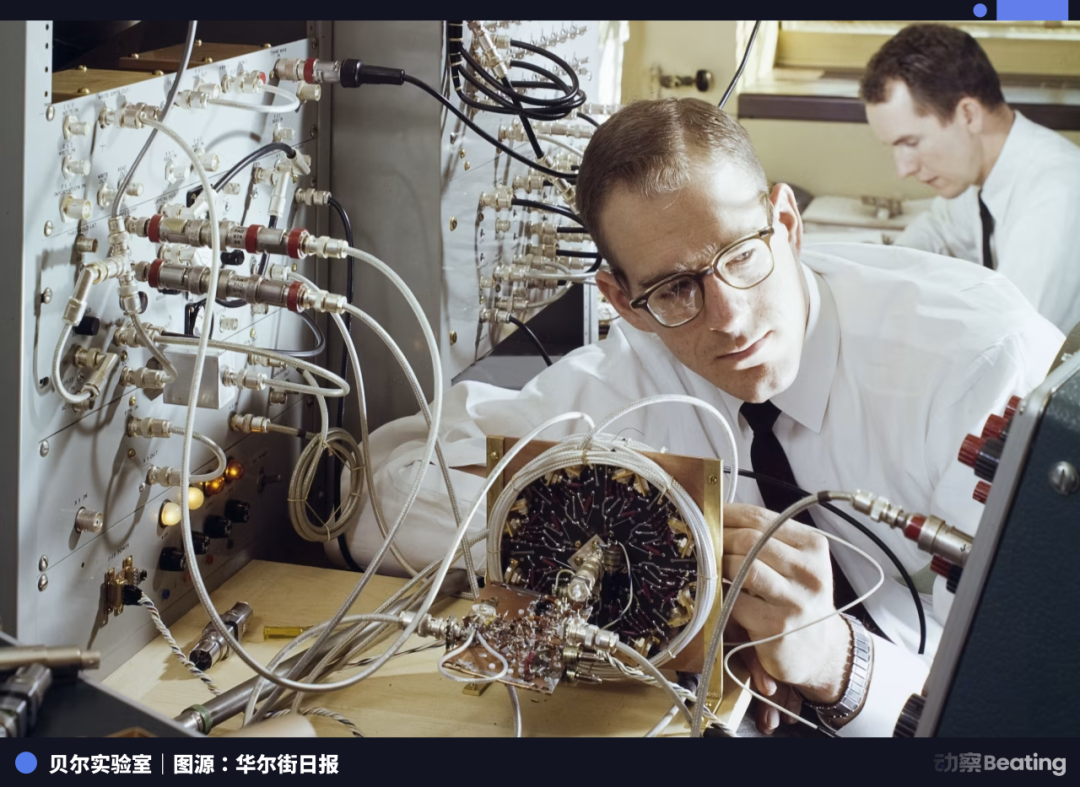
After leaving Bell Labs, William Shockley, co-inventor of the transistor, founded Shockley Semiconductor in California. In 1957, eight engineers left collectively to found Fairchild Semiconductor. The founding teams of Intel and AMD subsequently emerged from the Fairchild ecosystem. Much of what later became known as Silicon Valley's industrial network was formed precisely along this path of talent mobility.
Google DeepMind has not yet reached Bell Labs' ending. Gemini has a massive user base, and Google Cloud is still growing. The similarity lies in the fact that a top-tier laboratory sustained by a mature commercial system has begun to see the people it cultivated establish new labs and companies on the outside.
At a lab's most glorious moment, people measure it by how many geniuses it has gathered. At the next stage, people measure it by what those geniuses build after they leave.
This is both an achievement and a loss. For the broader technology industry, both can be true simultaneously—but for Google, the ledger is not so easily balanced.
By investing in Discovery Loop, Google can share in the company's future returns, and providing cloud services can convert compute spending back into revenue. But a company can invest in external outcomes without replacing the internal creative capacity it has lost.
Dean worked at Google for 27 years. He said he only seriously began considering entrepreneurship about five weeks ago.
A person who spent nearly three decades at the company made the decision to leave in five weeks. Discovery Loop still features the familiar faces—Ghemawat handling systems, Vinyals leading research, and Quoc Le continuing his work on automated machine learning. The division of labor has not changed much, and the research direction has not suddenly shifted. They simply moved out of Google's buildings.
In his farewell letter, Hassabis said AGI is within sight. Dean's new company is likewise betting that AI will transform scientific research.
They probably still believe in the same future—they have just begun pursuing it on separate paths.


