


The era of one-click chaining is coming. Is chaining still a good business?


Are the chains a bit too much?
Im afraid no one can figure out how many chains there are now.
Once upon a time, blockchain replaced Bitcoin and became synonymous with the entire industry, and the chain became the pearl of the entire encryption industry. The market would discuss the similarities and differences of each chain like a treasure. However, with the iteration of technology and the migration of narratives, times have changed - the more chains there are, the more usage scenarios have been falsified; when old chains have been falsified, new chains will be higher, faster, and more powerful. Strong attitude was added. God knows how many chains there are now?
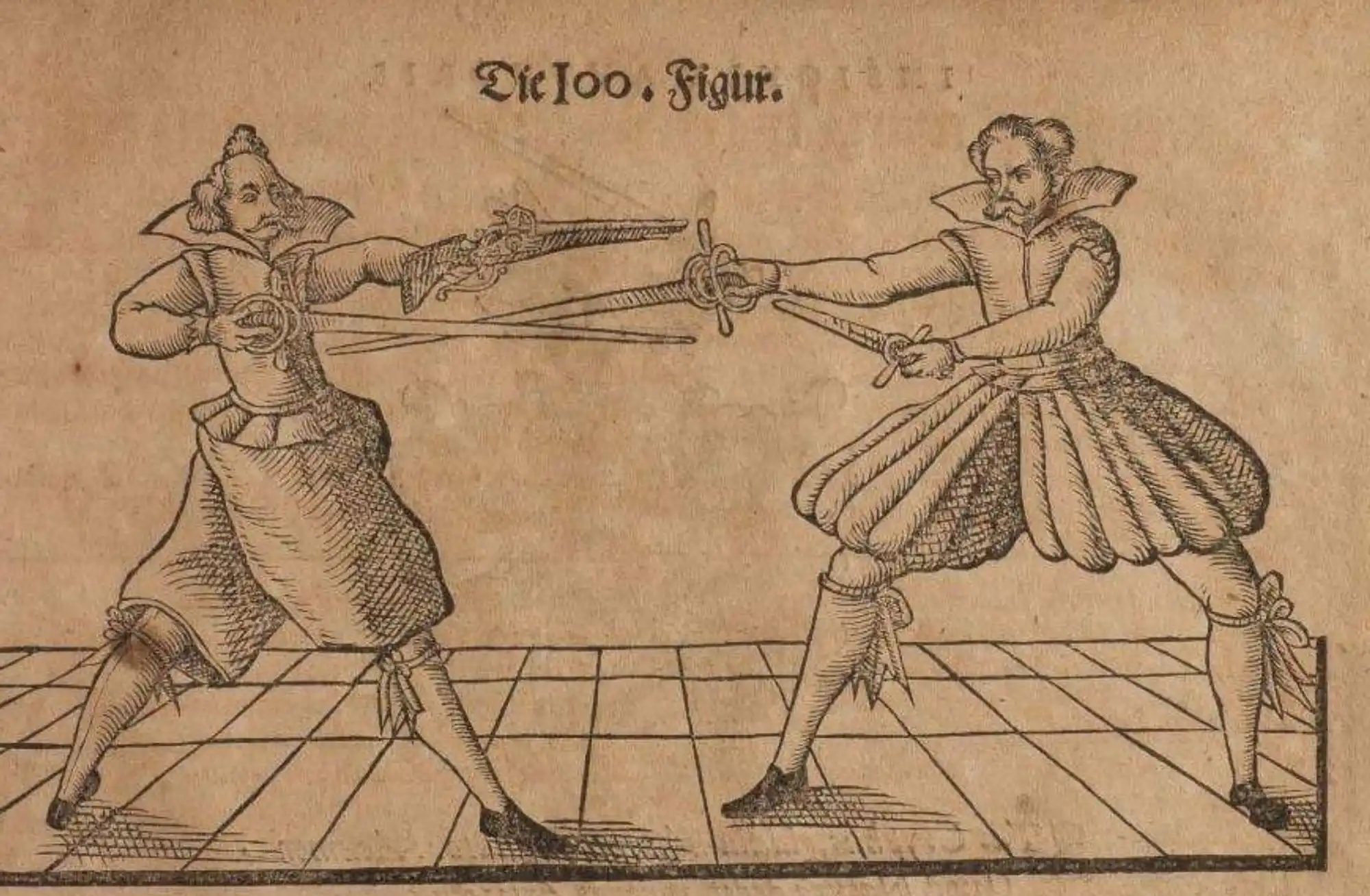
In 100 Moves with the Sword written by the German swordsman master Michael Hunt about cold weapons, Hunts last move was to advise his lord to choose a hot weapon, a musket, as his deputy in a duel.
Not only can no one count how many chains there are. More importantly, both Layer 1 and Layer 2 of large-scale financing are no longer sexy in the eyes of Mr. Market. Faced with a homogeneous user experience, it seems that only airdrop hunters and automated programs are persisting. Through the data, we can find that there are now more than one chain whose TVL value cannot match the project’s financing amount, and there are very few public chains whose token market value can exceed the value of the assets on the chain. It seems that the public chain that was once expected to run the entire world only served the chain itself in the end.
In the financial industry in recent years, it seems that narrative can always serve as the primary productive force. Everyone grew up listening to stories, but the encrypted stories have become narratives, and the content has changed from the Little Red Riding Hood and the Big Bad Wolf that I loved as a child to the paradigm shift and To da moon pursued by adults.
Every king-level project or popular track is wrapped in a story. It’s best to have a story that can evolve and iterate over and over again. Narratives processed by such stories are the favorites of event-driven investors - when there are stories, there are expectations, and when there are expectations, they can be exchanged for higher valuations. As a highly cyclical industry, narratives following the tide are always found to be swimming naked, and the stronger the narrative, the stronger the negative feedback it receives.
Although the narrative is good, don’t be greedy. For projects that spin off from various narratives, timing is key. There are many things like the public chain, which was once the most attractive narrative, being photographed on the shore. Judging from the historical laws of the encryption industry, this is inevitable. Technological progress creates new tracks, and the blue ocean eventually turns into a red ocean.
In the Bitcoin era, adjusting parameters and algorithms created Litecoin and Dogecoin. Polkadot, Cardano, Zilliqa, Qtum, ICON and Aeternity, etc. - Ethereum and the Ethereum killer narrative in a certain area have created too many zombie chains that are now considered to be, and even IOTA can trigger the once popular DAG ( Directed acyclic graph) concept.
What is more well-known to the public is the DeFi Summer and the EVM chain, from DEX to revenue aggregator machine gun pool to decentralized contract and options platform, and finally the Ethereum protocol is copied to other EVM compatible chains. It is likely that less than 10% of the poor imitators on each EVM chain are still active in the market.
Take DEX Clipper as an example. Clipper aims to serve retail investors and can optimize transactions below $10,000. In 2021, it will receive investment from Polychain, 0x Labs, 1inch, DeFi Alliance and other institutions.Financing 20 million, but after the token was launched this year, even the full circulation market value was only US$9 million. If the project chooses to list the token in 2021, even if the DEX data does not change much, I believe the situation will be much better. This is the importance of timing.
The same is true for chains. If the timing is wrong, half the result will be achieved with half the effort. The current market situation is just like Richard Chen from 1co nfirmationSaid, although many media reports that crypto VC funds are drying up, in fact, new financing is constantly taking place. It’s just that investors have no longer been interested in supporting projects that do not have PMF and have raised funds and spent them all in the bull market.
PMF, Product Market Fit, product market matching, that is, making what users want. a16z founder Marc Andreessen mentioned it in a 2007 blog post and popularized it.
If we go back to the original question, how many chains are there?
The following data can only be used as a partial reference: ChianList, a website that provides RPC-related services, has collected more than 550 EVM-compatible mainnets, the data website DefiLlama has collected 221 chains, of which 132 are EVM-compatible chains, and L 2B EAT has collected 48 L2s (including 15 upcoming projects).
When LobsterDAO was communicating with developers on this issue, one community member said, In addition to the chains included in ChainList, I estimate that there are another 500 private, non-public chains in operation.
Combined with todays market conditions, it can be clearly seen that under the traditional model, chains may no longer be a good business.
Disenchantment public chain, the era of one-click chain is coming
Faced with the huge influx of public chains with huge valuations, users urgently need to break their long-standing concepts. In most people’s understanding, running a chain requires a lot of technology, money and time. However, by integrating and encapsulating existing technologies with RaaS (Rollup as a Service), the chain is no longer an encryption pearl that is beyond the reach of ordinary people, but more like the swallow of Wang Xietang in the old days.
The author communicated with the DF Archon team who used the Raas service platform Altlayer to build an L2. During the communication, the team also expressed their recognition that RaaS is easy to build L2, and said that previously mature codes on various EVM networks can be directly deployed on the chain, which is very convenient.
The DF Archon team has previously launched a community round test of the full-chain game dark forest. Unlike the official version, which is built on the side chain xDai (now Gnosis), the community round uses the L2 test network supported by Altlayer. In the communication with the author, team members said that it is relatively easy to build an L2 test network, and they also received free services from Altlayer. If it is for profit, then even the native token of the new chain can be priced.

DF ARES v 0.1 Round 1 competition organized by DF Archon. According to reports, the event is supported by projects such as AltLayer, Weirdo Ghost Gang, 01 a 1, briq and TownStory Galaxy.
Not only Altlayer, there are already a large number of ready-to-use RaaS services in the market today. The author also used another RaaS product, Conduit. This RaaS service platform previously helped Zora launch a testnet and mainnet based on OP Stack. After testing, it is no exaggeration to say that building an OP L2 test chain only requires one click of the mouse.
Note that when deploying the test network, Conduits L1 and L2 are both in the test network state. This may be the reason why ordinary deployment users do not need to pay fees.

Requires some deployment time


Transfer money on the built L2 test network
According to the official documentation, in addition to deployment, users will also get logs, monitoring, Blockscout browser and samczsuntransaction tracker. As Conduit is upgraded, users will automatically gain access to new components. Unlike Altlayer, Conduit currently does not support the use of its own native tokens to pay gas fees. According to their explanation, because these native token gas fees will eventually be transferred to ETH by DA. However, such detailed issues are not static. With the iteration of business models, anything is possible.
In short, if you want, you can build an on-chain backgammon game on your own test network and have no regrets. Or deploy any potential use cases like Uniswap, dark forest, etc. for testing. You can also experience the thrill of dominating the computer room chain by pausing this chain.
In addition to the recent popularity of OP RaaS, L2B EAT, which focuses on L2 research, also recently published an article to guide users in deploying sovereign Rollup chains.article, titled Build Your Own Rollup.

BYOR echoes the common phrase DYOR in the encryption circle, Do Your Own Reserach.
BYOR’s code base consists of three programs: smart contracts, nodes, and wallets. The following technology stack is used:
Node: Node.js, TypeScript, tRPC, Postgres, viem, drizzle-orm
Wallet: TypeScript, tRPC, Next.js, WalletConnect
BYOR can implement functions such as fee sorting, publishing status to L1 and getting status from L1, discarding invalid transactions, viewing account balances, sending transactions and viewing transaction status.
Not only that, Arbitrum’s Orbit network dedicated to dedicated chains will also be launched soon. The Polygon team, which is recognized as having the most BD (Business Development) capabilities in the encryption circle, has already brought in Canto, which was previously based on Cosmos, and Manta, which has been working on Polkadot and OP.
In general, the technological development of the encryption industry has been upgraded and iterated from one-click currency issuance to one-click chain issuance.
Is chain still a good business?
The fact of thousands of people and thousands of chains has caused the chain to be disenchanted among the general public, and the so-called top public chain market has received a mediocre response, and even has the flavor of death in the light of day. In this case, we see the cruel side of the market: traditional and boring giants will either iterate or be replaced. Mr. Market, who can’t hold back his irritability and dislikes the old, is already looking for the next narrative like Socialfi, RWA and Telegram Bot.
But even now that the chain has become so involution, there is still a chain that continues to develop. It’s just that the traditional model of huge financing and a star team—issuance of coins—and distribution of coins may no longer work.
Before introducing new possibilities, let me first quote a set of data that is easily overlooked: According to DeFiLlama, Tron (Tron) has more than 1.5 million daily active users and a daily revenue of more than $1 million. In comparison, Ethereums daily income is only more than 2 million US dollars, and Ethereums income must be distributed to a wide range of interest groups. Judging from many indicators such as TVL, number of active users, and stablecoin issuance, Tron is already the public chain second only to Ethereum. With annual revenue of nearly $400 million, Tron may be the most low-key and stable money printing machine in the industry.

Data Sources:Tronscan
Although except for Justin Suns marketing incident, users rarely see Tron in daily interactions with dApps, Tron is a real cash cow - it mainly earns a lot of money from the service fees of stable currency transfers. .
Tron did not choose this path from the beginning. The earliest Tron was positioned as digital content entertainment, and it evolved to what it is today through continuous iteration. Tron’s achievements are also due to the fact that it was the first public chain to notice stablecoins on the chain. It launched free transfer fees and cooperated with major centralized trading platforms in the early days, and gradually developed to more and more downstream platforms. sink market. If Tether has built a stablecoin empire by issuing USDT, then Tron is the busiest and most profitable carrier in this empire.
Just like a reincarnation, todays L2 has also entered a similar stage - the centralized sequencer makes running a chain more profitable.
The main source of the fee income mentioned in the above figure is the transaction spread: the fee income obtained on L2, minus the cost of L2 packaging the transactions on its chain into groups and transmitting the proof to the Ethereum main network.
Igоr Barinov, formerly of the xDAI team (now acquired by Gnosis) and now developer of Blockscout and zkBob, has said that the cost of running a sequencer is negligible compared to the profits from the fee surplus and potential governance tokens.
Regardless of the accusation of centralization (some people think that todays L2 is somewhat similar to the concept of the older alliance chain; decentralized sequencers are imperative), todays L2 has proposed a new business for the chain, the foundation of the encryption industry. model and solve some deep-rooted problems in the crypto industry.
Real cash flow and “coinless” blockchain
I don’t know if you still remember, Base and Optimism jointly announced on August 25Revenue Governance Sharing Agreement, the main content of the agreement is: Base will pay Optimism Collective 2.5% of its revenue or 15% of its profits, whichever is higher. In return, Base will receive up to approximately 118 million OP tokens.
According to user @0x jaypegspeculation and narrative, L2 project parties can certainly capture the existing liquidity of the market to create value by issuing tokens - making money. However, for Base and Coinbase behind it, issuing tokens has regulatory and legal issues. By exchanging OP tokens for future income, it can act as an agent for direct issuance of Base tokens. According to the data calculation of the Base chain at that time, Optimism actually sold OP tokens to Base at a price of 0.25 to 0.3 US dollars.
For Base, the income from the chain locks in excess income while avoiding legal risks. For Optimism, it seems to be a good business to be optimistic about and bet on the future development prospects of Base, release the liquidity of OP tokens, and advertise Op Stack to potential customers through Coinbase.
As more and more projects like Uniswap choose to increase ongoing income by charging service fees, stable cash flow has increasingly become the focus of projects. The business model of chain (L2) is undoubtedly the most adaptable and sustainable cash flow field in the encryption industry - people make money when they use it.
The snake oil use case that was popular in the last cycle is against the background that governance tokens are gradually losing their governance functions due to legal supervision and lack of funds. If some projects have legal concerns or are troubled by token use cases and token economic models, one of the ultimate problems in the crypto industry, they may choose to weaken or even avoid the issue of token issuance. Then the form of replacement classes like Base and Op may be a path that can be explored. Of course, this requires the protocol to have enough real users and actual benefits.
Optimize cooperation and focus on own development
It may be a good idea to separate the focus of the chain and the application. If the thinking is changed and the application focuses on building solid and useful products, the public chain will transform token incentives into incentives for the actual performance of each protocol. Not only will the effect be better, but the actual income distribution of the public chain will also be far better than the limited one. Tokens are more transparent and durable, and can even achieve the effect of both the chain and the application being prosperous and losing.
If a certain chain announces that for its on-chain applications, it will give each protocol a certain proportion of return/buyback based on the generated handling fees, it may start a new round of inter-chain arms race. The redistribution of income at the protocol level has been upgraded to the public chain level. I believe that whether it is Rollbit, Unibot and friend.tech that are popular this year, or protocols such as Opensea and Uniswap that users require high-frequency interaction, they will be very interested in this.
And if its more extreme, assuming that the application is built directly on its own chain, then its income can be measured using the Gas consumed by its contract. This article uses the L2 chain as an example to simply calculate 1/50 of the gas fee of the Ethereum main network. From May 8 to October 22, Uniswap consumed more than 64 million US dollars in gas fees in 5 and a half months, which translates into approximately L2 revenue. is US$1.3 million, with a monthly income of over US$200,000. While it’s extremely inappropriate to talk about this amount of interaction regardless of liquidity, it does tell developers that if they build crypto projects again, they can try to focus on product design. Even if you only earn money from users using the protocol, you can still live well.
Not only is there a new way to play income distribution, but the division of labor between chains and applications can also be optimized. Nowadays, building your own chain has become a trend. Whether it is Argus and Merit Circle, which focus on onchain games, or Zora, which focuses on NFT, and dYdX and Aevo, which focus on derivatives, they have launched or plan to launch their own chains. Many of them Projects do not build their own chains from scratch, but choose to develop through cooperation or borrowing.

source:How to scale app rollups
Similar to white label companies that were previously popular on centralized platforms. For professional public chain teams, it is a good way to build a decentralized network for protocols with specific use case requirements and earn a certain service fee and commission on project development. The public chain team is freed from the troubles of complex affairs such as foundation operations and marketing, and focuses on the technical iteration of the chain itself, providing users with a high-quality user experience and developers with a good development environment.
write at the end
Every project has its era and the threshold of the era. If you pass it, it will be a door. If you dont pass it, it will be a threshold. When the era abandons you, it will not say hello to you, and you cant even keep up with its heels. , the door to the era of traditional public chains may be slowly closing.
The future of narrative and Mass Adoption is unclear, but chains are certainly no longer a rare thing. And when we look at the public chain from the perspective of on-chain transaction usage, revenue, user data and asset data instead of currency price, degree of decentralization, technology and legitimacy, the focus will shift greatly: the chain is more biased towards For products, data reflects the markets catering for the product, and the chain must also adjust its positioning based on the data.
Looking back at history, even Ethereum has to admit that products are evolved, not planned. Even Ethereum has to admit that insisting on absolute decentralization neither exists nor is realistic. Why cant Web 2.5, which has a centralized sorter and open and transparent data on the chain, be a new path to promote the development of the industry ecosystem and the implementation of Mass Adoption?
Reference reading:
From Paradigm Shift to Attention Shift: Narrative vs. First Principles
《Analyzing the Base <> Optimism deal》





