






Dev2Dev, a robust and ruthless arbitrage mechanism


Original title: Dev2dev: A Potential Technobabble Arbitrage
Original author: Matti, Zee Prime Capital
Original compilation: Kaori, BlockBeats
At Zee Prime, we were one of the first teams to formally propose and publish the middleware paper in early 2021, and launched the second part in 2022. Middleware includes everything that is not an application or base protocol. In other words, everything in between.
Another word used for middleware is infrastructure, and apparently, this is the promised land today. All that magical space between L1 and applications is something we should be excited about. Infrastructure is the future. Developing in parallel with AI and ZK is modular technology and so on... and many more industry terms.
Related Reading:《A panoramic overview of Web3 middleware and infrastructure》
Today, many large venture capital firms must prove their worth while raising significant amounts of assets under management (AUM) from those who know little about the space. In fact, creativity in the crypto field is very limited and resources for innovation are scarce. That’s why infrastructure has become a default response. Its a simple solution - a developers hell.
There are very few users in the encryption field except airdrop hunters, so it wants to achieve self-salvation through the B2B scenario. This hints at something warmly familiar about making money in Web2 - B2B SaaS - where you sell not to users (because there are no users), but to other businesses (of which there are many).
So when a pension fund board learns that homomorphic encryption is not actually"closeted homosexuality"Everyone looks to the cold technical terms that this infrastructure represents, but they say “Follow the money.”
Selling shovels
There is a small problem with the crypto B2B concept at the beginning. There are many cryptocurrency businesses selling services to other cryptocurrency businesses - but who are the customers of other cryptocurrency businesses? You guessed it – other cryptocurrency businesses.
One thing was missing and that was money. Without money, there is no B.
Unless there are VCs with a lot of money that they cant invest elsewhere, willing to fund a thriving developer-to-developer ecosystem, or as we call it - de v2 dev.
However, this cannot last forever, but it can last for a while. 2 years? Right into the four-year cycle (for those who believe in astrology). Its risky, but it has worked in the past.
Acronyms and buzzwords are popular because they can mean anything. In other words, you can use technical jargon so that no one really knows what you are talking about. Thats how you end up in a ring of mutual adulation thats fueled by institutional funding and only focuses on internal developers.
If you cant see the actual product, you probably are the product.
So in Web3, developers are providing perfect product/market fit to VCs, who can allocate capital and then raise new funds because we need new infrastructure and build Infrastructure is difficult and time-consuming.
What we end up with is the same self-referential token yield feedback loop, but this time a “composable” infrastructure self-referential dev2dev ecosystem. It is expected that eventually retail investors will buy into tokenized developers.
Resources and Creativity
The infrastructure does need improvement. But its questionable whether it should be built from the top down before the users arrive.
Amazon was the first user of AWS, which was built for internal use and by coincidence, not design, became the core infrastructure of Web 2.
People with users are most likely to move downstream. I dont want to burst your ETH-maxi decentralized bubble, but if Metamask exclusively brought order flow into their builder, they would build every block (which might already be happening, maybe look at the chain?).
Lex Luthor isnt trying to inspire a deep tech media company to rebrand as Metamaskless, so this refocusing of attack vectors is unlikely to happen anytime soon. But this gives you an idea of the fragility of the decentralized stack/infrastructure narrative.
Still, the disingenuous infrastructure narrative is a seemingly conservative bet. This is a great analogy, coming from the Big Tech era, and older generations are interested in it because its a familiar concept. So if you combine the sexy buzzword of ZK with the infrastructure SaaS analogy, institutional investors are attracted.
Predictable returns from selling picks and shovels look very attractive to corporate boardrooms.
BlockBeats Note: In the world of crypto venture capital,"Selling Shovels"Means companies engaged in infrastructure and services related to technologies such as cryptocurrencies and blockchain, rather than directly investing in cryptocurrencies. These companies may provide trading platforms, wallet services, blockchain technology development, etc. This phrase highlights that companies that provide infrastructure and tools for the entire industry can be more profitable than investing directly in cryptocurrencies.
This is how you combine drip-drip institutional narratives with unimaginative developers and serial entrepreneurs looking for lifestyle businesses wrapped in tech jargon.
It would be difficult for large VC firms to sell to their limited partners the crazy doubling of cryptocurrencies over the past cycle. Furthermore, funding creativity is cheap. Great ideas usually don’t require significant investment. This is why VCs are obsessed with resources; to them, developers are resources that need funding.
What I expect is that the next innovation trigger will be funded by 1% of the capital that has flowed into cryptocurrency startups over the past few years, which means that most of the capital that is directed will be exceeded by very little capital to support creativity.
The truth is, in crypto, the issue with innovation is not money, but ideas + execution.
Despite the fiercest competition to invest in infrastructure (and the vast resources this requires), todays high-stakes game is not played at the infrastructure level. Sayres law applies here:
In any dispute, the intensity of emotion is inversely proportional to the value of the issues involved.
This is reflected in Henry Kissingers oft-quoted statement; The reason university politics is so vicious is precisely because the interests are so small. When the objective difference is small, you need to go to great lengths to maintain some difference. compete. This difference is often more fiction than reality, so here are 20 L2 and ZKbs to fund.
After all, VCs capitalize on the L1 narrative. They squeeze all the value out of the field and more. Today, they are refocusing their attention on infrastructure while sidestepping the most important question: Where are the users? In the process, they also ignored existing infrastructure projects that had been under construction for some time.
infrastructure arbitrage
How to creatively use dumb money to support technology? Are there any infrastructure projects that are truly worth supporting? There are certainly exceptions to the generalization Ive made, and there are indeed some interesting and important efforts in building Web 3 infrastructure.
As I mentioned earlier, in the Zee Prime investment space, we have been active in infrastructure over the past few years and most of what we are seeing now is just recycling old ideas and products or shoehorning them into Current trends (ZK, L2, etc.). The difference is that they have a threshold and cannot be freely obtained on the secondary market.
While attending the Token 2049 event, I noticed free alpha vendor and folk hero Arthur Hayes quietly promoting Filecoin. This made me realize that playing the infrastructure game in the secondary market could be a solid arbitrage. Private equity rounds of infrastructure investment rely largely on illusory innovation.
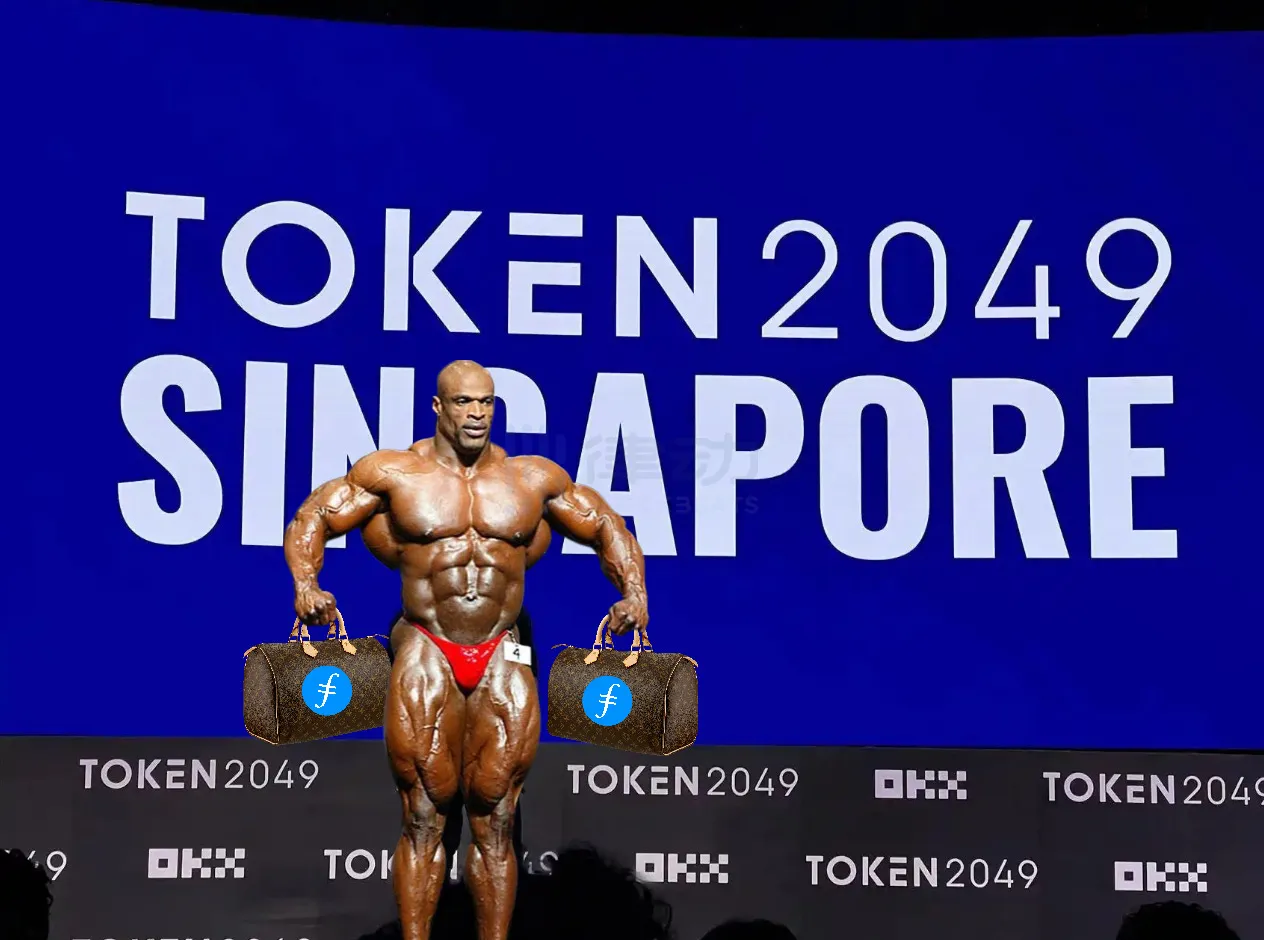
Innovation often comes at a high price, borne by large venture capital firms, and then quickly lowers the price once unlocked. Whether its storage or decentralized RPC (something we actually need), account abstraction, indexing, etc., there may be another way to play the infrastructure game.
The early winners of DeFi Summer 2020 are not teams built by venture capital firms, but projects that have been innovating and executing for a long time, whether it is Synthethix or Aave.
If one digs deeper, one can find well-funded teams on the secondary market and purchase the tokens at a significant discount. Not to mention the allocation is more favorable compared to private placement rounds. Its a risky bet, but its not the first time publicly traded markets have outperformed venture capital.
Maybe it can be avoided when the shiny new toy isnt actually that shiny and comes with heavy VC baggage. After all, the opportunity to invest in a great technology company is never a matter of a few private rounds or a few months. At least a multi-year opportunity.
If you must bet on infrastructure, consider experienced and bear-market teams that have been building for years. After all, Hayes has bigger traps than most VC firms, and you know big traps mean alpha gains.
Disclaimer: Zee Prime has invested in many infrastructure, middleware projects including Filecoin, Pocket Network, Biconomy, Subsquid, etc., therefore this article represents a biased view.





