AI回顧200期播客:押中美光180%漲幅,卻錯過Cursor 60億收購


- 核心觀點:透過將200期播客文字稿輸入AI分析,節目組驗證了算力與記憶體的投資邏輯,並揭示了行業焦點從宏大概念(如AGI)轉向實際應用(如垂直領域落地與能源瓶頸)。
- 關鍵要素:
- 早期判斷「算力即國家安全」被驗證,美光股價漲180%,SK海力士成為韓國市值最大公司,三星利潤超越輝達。
- 記憶體製造商平均報酬達153%,SK海力士、三星等巨頭在AI軍備競賽中輪番超越。
- 播客中提及「超級智能」和「AGI」的次數分別下降90%和54%,而Anthropic提及量反超OpenAI。
- 最佳模擬投資報酬達4倍,Valor Atomics報酬13倍,因其解決數據中心能源短缺問題。
- 前沿模型成本高昂(如Fable 5每百萬token輸出50美元),促使Uber和Meta削減AI支出。
- 未來三大趨勢:太空訓練模型、垂直領域AI(金融與生物科學)、邊緣端本地模型。
- 看多與看空言論比例為2.8:1,反映出對未來AI推動經濟、科技發展的極度樂觀態度。
Compilation & Translation: Shenchao TechFlow
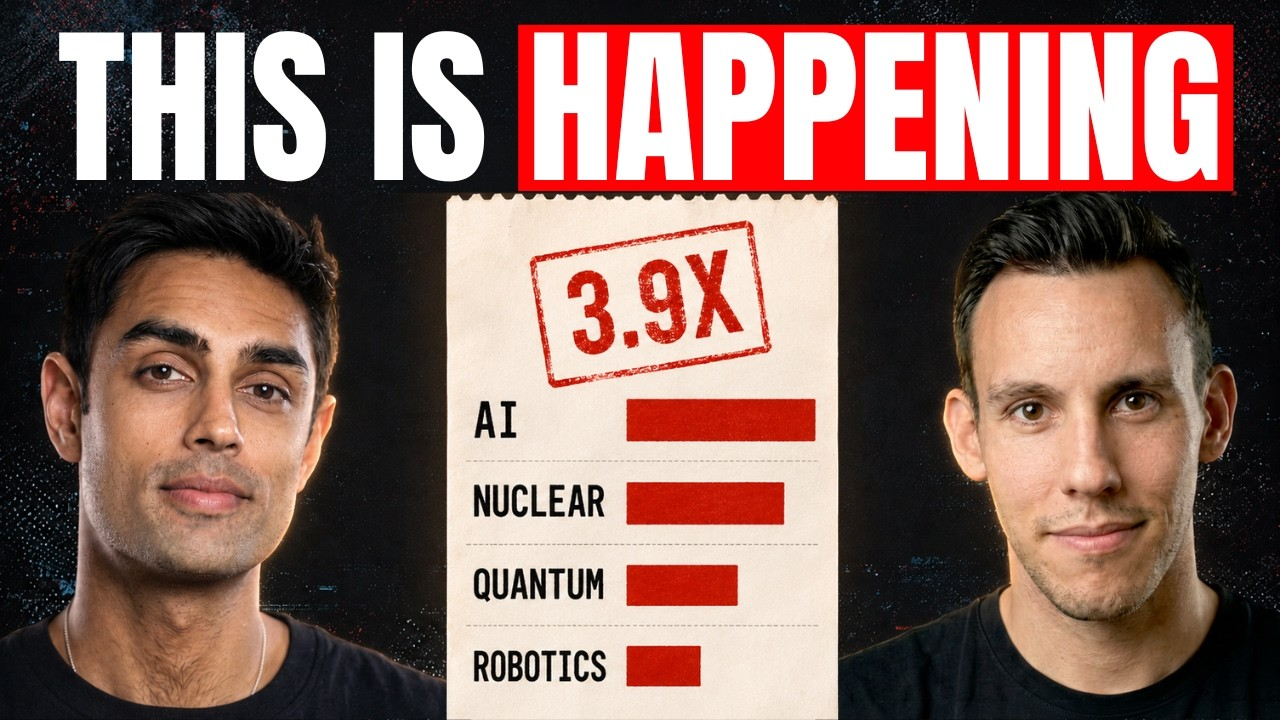
Guests: EJ and Josh, Hosts of the Limitless Podcast
Podcast Source: Limitless Podcast
Original Title: AI Found the Trades We Missed
Release Date: July 8, 2026
Key Takeaways
The Limitless Podcast has reached its 200th episode. The two hosts did something a bit dangerous: they fed the transcripts of all 200 episodes to Claude and ChatGPT, asking the AI to help them find hidden investment themes they might have missed, review their calls from the past year, and predict AI's next frontier. When they hit record on the first episode 14 months ago, SpaceX was still a private company valued at $350 billion, Anthropic was valued at $61 billion, OpenAI at $300 billion, and GPT-4o was the flagship model. Now, SpaceX has gone public with a market cap exceeding $2 trillion, Anthropic is nearing a trillion, and ChatGPT's user base has more than doubled.
The episode unfolds along two lines. One is a retrospective: when they first declared "compute power equals national security," SanDisk was up 35x; when they bet on memory chips, Micron rose 180%, SK Hynix became South Korea's largest company by market cap, and Samsung's profits surpassed Nvidia's. Just three months ago, they mentioned on the show wanting to buy stock in Cursor, only for Cursor to be acquired by SpaceX for $60 billion. If they had formed a portfolio of companies founded by their guests, the return over one year would be roughly 4x, with Valor Atomics being the best performer at 13x. The other line is forward-looking: mentions of big concepts like superintelligence and AGI on the show have plummeted by 90%, while mentions of Anthropic have quadrupled, surpassing OpenAI. The three directions they are most bullish on next are: space-based training models, AI deployment in vertical sectors, and small, on-device models.
Key Takeaways Summary
On Compute and Memory Validation
- "We were the first to say compute is a national security issue. Whoever owns the watts, the chips, the energy, and the cooling owns the rest of the economy. Looking back after 200 episodes, this is even more true than it was then."
- "The average return for memory manufacturers is 153%. If you bought Micron at the end of last year, you're up 180%. SK Hynix became the largest company in South Korea by market cap, displacing Samsung. Samsung just became the most profitable company globally, surpassing Nvidia."
- "Three months ago, we said we wished we could buy OpenAI stock, but there was one company that could ride that wave, called Cursor. Three months later, Cursor was acquired by SpaceX for $60 billion."
On the Limitless Portfolio
- "If you took the companies of the founders we interviewed on the show and formed a portfolio, investing from the day of the interview until today, the total return would be roughly 4x, with Valor Atomics being the best at 13x."
- "Valor Atomics CEO Isaiah Taylor had just finished his seed round when he came on the show. Now the company is valued at $2 billion. His logic is simple: data centers lack power, so he builds small modular nuclear reactors."
- "Boom Supersonic, originally building supersonic planes, has now started manufacturing gas turbines for AI data centers."
On Trend Shifts
- "The term 'superintelligence' was mentioned 60 times last year, but only 6 times this year. 'AGI' dropped by 54%, 'robotics' by 60%. Crypto is essentially at zero."
- "Mentions of Anthropic were only a quarter of OpenAI's last year. This year, they've quadrupled and taken the lead: 806 to 758. A year ago, we were saying Claude 3.7 wasn't good enough and ChatGPT was king. This company has completely turned its fortunes around this year."
- "The AI company we mentioned most frequently wasn't OpenAI or Anthropic; it was Google. But Google's momentum has clearly slowed down."
On the Next Bets
- "The price for Fable 5 is $10 per million tokens for input and $50 per million for output. If you're burning through millions of tokens a week, that cost stings. Uber and Meta are already cutting their AI token expenditures."
- "Most companies and ordinary people haven't truly started using these AI tools yet. The models are incredibly powerful, but the dispersion of adoption is still very small. The core question for the next 200 episodes is: How does the world extract value from these tools?"
- "Whoever solves the energy problem will be one of the most powerful companies on Earth. Regardless of whether AI takes off or not, energy is the ceiling for everything."
Episode 200: Feeding All Transcripts to AI
EJ: Welcome to Episode 200. We've spoken 1.4 million words on this show, 99.9% of which were Josh and I arguing about who has more compute power, whose model is better, and which AI company is the best to invest in. Before recording this episode, we did something a bit dangerous: we gave Claude and ChatGPT the transcripts of all 200 episodes, asking them to find hidden investment themes we might have missed, review our statements and calls from the past year, and pinpoint AI's next frontier.
Thinking back to when we recorded the first episode 14 months ago, the world was completely different. Back then, SpaceX was a private company valued at $350 billion. Now, it's public with a market cap exceeding $2 trillion. Anthropic was valued at $61 billion then; now it's nearing a trillion. OpenAI was valued at $300 billion; ChatGPT had about 500 million users, now more than doubled. The model landscape is even more interesting: back then, GPT-4o was the flagship, Claude was at 3.7, and Gemini at 2.5. The craziest part? When we recorded the first episode, almost all code in the world was still written by hand. Now, it's the opposite.
So what we're going to do today is look back at what actually happened over the past year, and then look forward based on those trends. Let's start with the calls we got right.
Compute is King: An Early Bet Validated
EJ: Josh, do you remember Episode 4? June 5, 2025. Our exact words were: Compute is now a national security issue. Whoever owns the watts, the chips, the energy, and the cooling owns the rest of the economy. What we meant was very direct – compute is king. Whoever owns the GPUs and can power them gets to build the best models.
Looking back after 200 episodes, this is even more true than it was then. Anthropic has signed four new compute contracts in the past few months. OpenAI is expanding production aggressively. Their aggressive bets on securing compute have proven absolutely correct. They haven't imposed any restrictions on any users, which precisely supports the core demand for reasoning, allowing AI agents to run 24/7. Compute is king – it was one of our earliest calls.
Josh: I just checked. When we said that, SanDisk was up 3500%. A 35x return. If you had told someone in June 2025 that the federal government would invest in companies like Intel, and these stocks would rally this much, we probably would have invested too, but we'd still be pretty surprised that this compute race had become this important. The most scarce resource in the world right now is the energy and memory to power GPUs. It's really remarkable that we noticed this so early. I really wish we had actually invested.
Memory Chips: 153% Average Return
EJ: Another asymmetric bet was AI chips, especially memory. When we made predictions at the end of last year, our core logic was: memory is expensive; it's a major component of the entire AI system. For a GPU to run, you need to remember the entire conversation context with ChatGPT and Claude. Memory prices are likely to rise, and memory manufacturer stock prices will follow.
What do you think the average return for these top three memory manufacturers was?
Josh: Infinite. It's probably the best single investment you could have made over the past year.
EJ: Not quite that dramatic, but close. 153%. If you bought Micron at the end of last year, you're up 180%. If you could buy SK Hynix, it became the largest company in South Korea by market cap, pushing out Samsung, which had monopolized the top spot for decades. Samsung just became the most profitable company globally, surpassing Nvidia.
This is a full-blown arms race, and these companies are constantly leapfrogging each other.
Cursor: Acquired by SpaceX for $60 Billion
EJ: In March 2026, not long ago, we said this was an asymmetric bet: I really wish I could buy OpenAI stock, but there's one company that can ride that wave, called Cursor.
Three months later, Cursor was acquired by SpaceX for $60 billion.
Josh, should we start managing a fund?
Josh: We need a fund. Anyone want to invest in us?
EJ: If we had actually turned these calls into investments, the returns would have been considerable.
The Limitless Portfolio: 4x Return in One Year
EJ: In the early days of the show, we interviewed many founders working on cutting-edge technology. These are companies we carefully selected, seeing immense potential. We secured exclusive interviews with their CEOs and founders. If we had invested our money on the day of the interview, the total return to today would be roughly 4x, in a little over a year.
The best performer was Valor Atomics, at 13x. In Episode 10, we hosted CEO Isaiah Taylor, who builds small modular nuclear reactors. His logic is straightforward: data centers lack power, and he solves that problem. When he came on the show, he had just finished his seed round; now the company is valued at $2 billion.
OpenRouter is similar. Founder Alex Atallah was valued at $500 million when he appeared on the show; now it's $1.3 billion. OpenRouter's logic is something we've repeated often: companies won't use just one model; they'll use different models for different scenarios. This is also why Cursor was favored, and why SpaceX spent $60 billion to acquire it. OpenRouter gets early access to models before their official release, including Claude, ChatGPT, and Chinese models. Developers can use a variety of models without restrictions. The aggregated user intent data they possess is incredibly rich, allowing them to determine what models to build next.
Zipline is also interesting; they do drone delivery. When they were on the show, they were still showcasing early prototypes. Now, they are operational in several major cities. Perplexity went from $18 billion to $21 billion, mainly because Samsung set its product as the default AI agent on all its phones.
Boom Supersonic is a special case. Originally making supersonic planes, they have now also started producing gas turbines for AI data centers.
Josh: A 400% return is already crazy compared to the broader market. If only we could have actually invested.
EJ: I would too. But this simulated portfolio tells us that several clear trends have formed over the past year: energy is a bottleneck, nuclear is one solution; the model routing layer is a real need; and AI deployment on mobile phones has already begun.
Trend Shifts: Superintelligence Exits, Anthropic Takes the Lead
EJ: Over the past 14 months, the topics we've discussed have changed significantly. After analyzing all 200 transcripts with AI, the trend shifts are very clear.
The term 'superintelligence' was mentioned 60 times last year, but only 6 times this year – a 90% drop. Crypto has essentially gone to zero; it's a deep freeze. 'Robotics' dropped by 60%, 'AGI' by 54%. We mention these big concepts less frequently, probably because they feel almost within reach, and the lines are getting blurry. When you see these Mythos-level models, it feels like this might be AGI. Robotics is more interesting; it feels like we're in a middle ground: many companies are building, but haven't officially launched yet. A new Optimus version is coming but hasn't been unveiled. Figure is also working on new robots but hasn't made them public yet. I suspect there will be a flurry of announcements later this year, and the robotics topic will explode again.
The most astonishing shift is Anthropic. Last year, we mentioned them roughly a quarter as often as OpenAI and ChatGPT. This year, mentions have quadrupled, taking the lead: 806 to 758. A year ago, we were looking at Claude 3.7 Opus, thinking it wasn't good enough and that ChatGPT was king. This company has completely turned its fortunes around this year. Claude Code has only been around for a little over a year; almost no one was using it at the end of last year, and now everyone is.
Another interesting finding: the AI company we mentioned most on the show wasn't OpenAI or Anthropic; it was Google. But Google's momentum has clearly slowed down. In the first few months, their product iteration speed was incredibly fast, with new releases almost every week, and they were all decent. But then it slowed down. The real two major players now are OpenAI and Anthropic, and I don't see that changing in the short term. Maybe Grok could be the comeback of the year; SpaceX's AI team is pushing hard.
The Next 100 Episodes: Three Tracks Worth Watching
EJ: If I had to pick the three most important trends ahead, the first is space-based training models. We first mentioned StarCloud, a Y Combinator startup that launched H100 GPUs into space to start training models. Now, SpaceX AI's entire strategy involves launching a large number of satellites to train models in space, likely Grok and others. This trend will only get stronger, and SpaceX will be the leader.
The second is the deployment of AI models in vertical sectors. General-purpose large models are great for chatbots, but they don