






Hedge fund manager Russell Clark: US Treasury bonds are a bigger speculative bubble than AI, and Big Tech's AI spending spree is to "keep Musk at bay"


- Core Thesis: Hedge fund manager Russell Clark argues that the biggest speculative bubble in the current market is not AI, but US Treasury bonds. He predicts the 10-year US Treasury yield will rise to 10% and points out that the massive capital expenditure of tech giants on AI is actually a defensive move designed to prevent Musk from entering the arena, rather than a simple bet on AI's prospects. This marks a market transition from the "low interest rates, excess capital" era to a new cycle of "high wages, high inflation, high interest rates".
- Key Elements:
- The US Treasury Bubble and High Interest Rate Forecast: Clark believes that for the US government to make housing affordable for young people, it needs to promote a 7% annual wage growth. Achieving this requires a real interest rate of around 3%, which, combined with inflation, would push nominal rates to 10%. He sees the 10-year Treasury yield hitting this level.
- AI Capital Expenditure is a Defensive Investment: Clark points out that the core motivation for giants like Google and Microsoft to pour money into AI is defensive—protecting their own business moats and preventing Musk from entering the AI field through avenues like SpaceX, potentially disrupting the current landscape.
- AI Impact Focuses on the White-Collar Workforce: Clark argues that AI's impact on the labor market will primarily hit specialized white-collar professionals like lawyers, accountants, and fund managers. Their wages are tied to asset prices, rather than affecting the lower-tier workforce, thus not undermining the narrative of a high-wage era.
- Semiconductors Analogous to 1970s Oil: Clark views semiconductors as the "new oil" of the era, believing their prices will remain high due to supply constraints, similar to oil in the 1970s. This supports the long-term high valuation of chip prices (like Nvidia's) and continues to drive related investment.
- Private Credit is a Hidden Risk: Clark specifically calls out the private credit and private equity sectors, arguing their asset quality is poor and redemption restrictions have already appeared. Once money market fund yields reach 7%-8%, he believes investors will question the necessity of holding highly illiquid private credit funds.
Author: Zhao Ying
Source: Wall Street CN
A hedge fund manager bluntly stated: The biggest speculative bubble in the market isn't AI, but U.S. Treasuries – he predicts the 10-year Treasury yield will rise to 10%, arguing that tech giants' massive spending on AI is essentially a defensive move to "stop Musk."
Recently, hedge fund manager Russell Clark appeared on the podcast "Other People's Money," where host Max Wiethe interviewed him on various hot market topics, including the U.S. Treasury market, the logic behind AI capital expenditure, trends in the semiconductor industry, and the risks of private credit, offering a series of contrarian views.
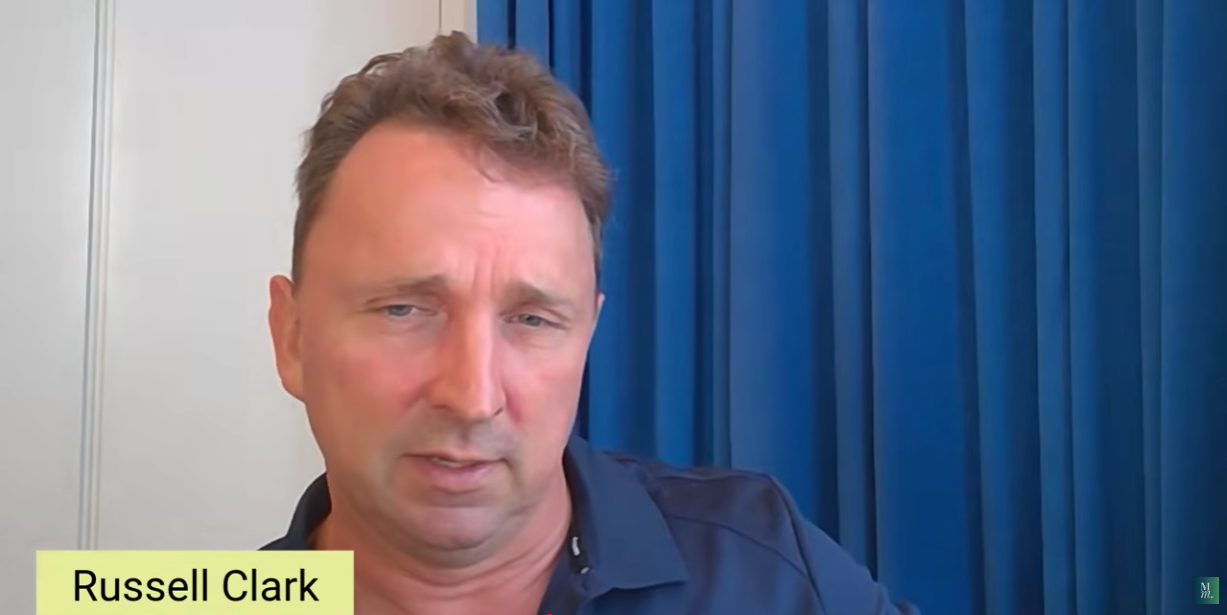
Clark, currently based in London, manages a hedge fund and regularly writes market commentary on Substack. His series of predictions have attracted market attention, with the core logic being that we are transitioning from an era of "capital surplus and low interest rates" to a new political-economic cycle characterized by "high wages, high inflation, and high interest rates."
U.S. Treasuries Are the Real Bubble: 10-Year Yield Target 10%
Amid the heated debate over the AI bubble, Clark instead targets a much larger market.
"I still have the 10% yield as my target for Treasuries this year," he states this striking figure directly.
His logic chain is clear: If the U.S. political goal is to make housing affordable again for people under 40, then wages need to grow by about 7% annually, doubling within 10 years. Meanwhile, the nominal price of housing should remain stable while real prices fall. To achieve this, real interest rates need to be around 3% – which, combined with inflation, implies rates need to rise to about 10%.
"If real interest rates stay around 3%, people will put their money in the bank instead of investing in physical assets."
Clark places this judgment within a longer historical perspective. He cites the leading indicator significance of Japanese government bonds (JGBs) – "I have always thought of JGBs as an excellent leading indicator for U.S. Treasuries" – noting that JGBs were once called the "widowmaker trade," with the market discussing their debt unsustainability for nearly 30 years "until it finally broke down."
He also points out that the freezing of Russia's foreign exchange reserves in 2022 is a noteworthy signal: "If a country has foreign exchange reserves, why keep them there?" He believes global reserve assets will naturally shift from Treasuries to gold – a trend happening quietly but slowly.
More broadly, Clark sees the current political transformation as the fundamental driver. Since the Reagan Revolution in 1980, capital accumulation has suppressed wages and interest rates. Now, the political pendulum is swinging back, with demands for "full employment and high wages" re-dominating the policy agenda, implying persistent inflation and rising interest rates.
"Tech Giants Burn Cash on AI – Not for AI, But to Stop Musk"
On the issue of AI capital expenditure, Clark offers an interpretation sharply contrasting with the mainstream narrative.
"The real issue is that Elon Musk, through SpaceX, is essentially signaling: I want to enter the AI space too. I produce computing hardware, and I have a way to manufacture cheaper computing devices."
He argues this is the real motivation behind the massive spending sprees of Google, Microsoft, Amazon, and other tech giants – not betting on AI's future, but defensively protecting their existing business moats.
"Companies like Google, Microsoft, and even Amazon all have very profitable businesses. They are all trying to stay ahead, trying to prevent Elon Musk from getting a foothold. That's how I understand this."
Clark draws an analogy with Tesla's rise: Traditional automakers struggled to produce competitive electric vehicles because they were always trying to protect their existing internal combustion engine business. The result? "Tesla's market cap is multiple times that of traditional internal combustion engine manufacturers." He believes the tech industry is experiencing the same logic – "If we don't invest money, we're finished."
Because of this, he is deeply skeptical of predictions that AI capital expenditure will be significantly cut: "I highly doubt we'll see Microsoft, Meta, Google, or Amazon announce a 50% cut in AI CapEx tomorrow – I think the ones who cut spending first are usually the ones about to lose money."
Regarding whether AI will disrupt the labor market, thereby undermining his macro narrative of a high-wage era, Clark is also dismissive. He believes AI's impact is mainly concentrated on professional white-collar workers – lawyers, accountants, fund managers, senior doctors – "whose salaries have always been tied to asset prices" – rather than the lower-skilled labor market. Using the post-WWII era as an example: major technological breakthroughs like nuclear energy and jet engines followed one another, yet wages rose by 1000%. "Technological change and the wage issue are actually two different topics."
Semiconductors Are the New Oil, Supply Constraints Will Support Prices
Clark offers an imaginative analogy: Semiconductors today are what oil was in the 1970s.
"If you look at the 1970s, holding both oil and gold was quite good. Oil was key to economic growth everywhere, and its supply was constrained... Modern economic growth is actually driven by semiconductors or computing technology. Therefore, the price of semiconductors remains high, like the new oil of the 1970s."
He notes that Nvidia's chip prices have remained high for the past five or six years. Traditionally, semiconductor prices fall as capacity expands, but not this time. Meanwhile, supply-side constraints exist, highly similar to the logic of oil in the 1970s.
Private Credit: A Severely Underestimated Time Bomb
Clark specifically calls out the private credit and private equity sectors – in his view, this is where the market's most overlooked risks lie.
"Why would I want to hold this illiquid private credit fund? I know nothing about the value of these assets, and their condition is quite poor."
He notes that "redemption restrictions" have already appeared in the market – redemptions have exceeded new subscriptions for the first time, forcing funds to activate redemption limit mechanisms. He bluntly states that once money market fund yields reach 7% or 8%, rational investors will start questioning the necessity of holding highly illiquid private credit funds.
"Businesses like private equity and private credit emerged in the 1980s, when we had already moved away from pro-labor policies. To me, these businesses are essentially relics of that era."
He believes the problems with this asset class emerged as early as a year and a half ago, but the market has been slow to acknowledge them – while extremely low credit spreads and high stock markets have masked the underlying risks. "The problem will continue to affect the market slowly but surely."
Transcript
Russell Clark: 00:00
If you look at people aged 40 and under, specifically those in their 20s and 30s, their biggest problem is the inability to afford housing. To bring housing costs back to a more reasonable level, wages would need to grow by about 7% annually, doubling within ten years. Meanwhile, the nominal value of the housing market should remain stable, while real values should decline. This requires real interest rates to be around 3%, encouraging people to put money in the bank rather than invest in physical assets. This would bring interest rates to around 10%. This is still my target for this year: a 10% yield on Treasuries. So the question is: how high can wages actually go?
Russell Clark: 00:49
This episode of "Other People's Money" is sponsored by the Tocurium Soybean Fund, ticker symbol Soy B. Welcome to "Other People's Money." I'm Max Wiethe, and joining us today from London is hedge fund manager Russell Clark.
Max Wiethe: 01:02
Russell, thank you for joining us. You're not only running a Substack but also managing a hedge fund. I recently read your articles and found your piece from last week on AI investment very interesting. Many think this might be the end of a major speculative bubble. In the AI investment space, you pointed out another asset class that you believe is much larger and more speculative. Can you tell me why you think this larger market is currently very risky? I assume you mean the Treasury market. The first question is: Is the AI market speculative?
Russell Clark: 01:44
So why do I think there's speculation in the U.S. Treasury market? Typically, whenever I look back at any major selloff event in my investment career, there are always clear signs that things are not right. But people choose to ignore these signs, partly due to human psychology – when problems arise and action is needed, people often prefer to ignore the problem because it's easier. That's likely human nature.
Russell Clark: 02:25
For example, during the 2008 financial crisis, people recognized the problem in the housing market three to four years before it actually happened. It started to become apparent then. Everyone thought, "This is just a problem we can handle because we've dealt with similar situations before." Of course, some said bank balance sheets were in terrible shape, making this housing crisis a much bigger issue. Eventually, everyone accepted that reality.
Russell Clark: 02:58
What I'm getting at, especially regarding the U.S. Treasury, but government bonds generally, is this: in recent years, as voters and politicians have gradually realized that the government will do whatever it takes to sustain economic growth, it seems more willing to spend. So, if any problem arises, the government steps in – as with the Trump administration. They even took more extreme measures: willing to spend what's necessary while taxing no one, especially large corporations.
So, there's government spending without attempts to raise taxes. If you look at the government's financial statements, current revenue can barely cover essential expenses like Social Security and interest payments. I think this accounts for about 90% of expenses. Of course, this doesn't include other areas like defense, education, infrastructure, etc. So overall, the government's spending and tax mechanisms are quite well-established. This applies not only to the U.S. but also to Japan.
Russell Clark: 04:23
For me, the interesting part was that in 2022, I was bearish on Treasuries for a period. There were other reasons, but mainly because after Russia's foreign exchange reserves were frozen, the Russian government couldn't use them following the invasion of Ukraine. I thought, if a country has foreign exchange reserves, and that country is the Russian government, why keep that money there? Thinking further, why would any country choose Treasuries as their foreign exchange reserves?
Russell Clark: 05:20 So, I expected to see a natural shift from the Treasury market to the gold market. To me, this seems very likely. However, I also suspect that investors seeking fixed income will gradually disappear, especially those looking for sovereign bonds. In reality, this is happening; the Treasury market has performed relatively well.
But if you look at more peripheral sovereign bond markets, like Japan, it's different. Japan is one of the world's largest sovereign bond markets, but yields there have risen significantly. The UK situation is more complex, with the market still very unstable. Over the long term, investors continue to sell off Treasuries. I think the U.S. Treasury market is doing okay, but truly willing investors are slowly disappearing.
Russell Clark: 06:13
This is what I've been emphasizing in my discussions. I'm 52 now and getting older.
Russell Clark: 06:24 The idea of establishing large sovereign wealth funds and accumulating vast foreign exchange reserves is relatively new. Before 1980, people didn't really know how to hold another country's fixed income as foreign exchange reserves. This is reasonable because all reserves were basically gold. Then Japan started buying large amounts of Treasuries because they didn't want their currency to appreciate.
Max Wiethe: 06:55
So, when you look at those 500-year charts, the former reserve currency was the British pound, and before that, another European currency. We can trace it back to the Portuguese era, where people thought the currency was closely tied to the strongest navy. But that wasn't really the case. Unlike now, we didn't hold other countries' bonds or currencies back then.
Russell Clark: 07:17 So, foreign exchange reserve currencies are a relatively new concept. Historically, gold was the only form of foreign exchange reserves. Usually, countries with strong militaries had the most gold for various reasons – essentially, they acquired it from other places or countries that had it. So, if a country lost a war, their gold reserves were used to compensate the victors.
So when people talk about foreign exchange reserves, they often confuse them with major trading currencies or currencies used for transactions. And these currencies were often backed by gold. In fact, the dollar was backed by gold until the 1970s. Remember, after World War I, the British Empire started to disintegrate.
Max Wiethe: 08:11
You saw the British pound continuously devalue because their calculations couldn't accurately reflect reality. So, do you think we are now returning to a historical period where hard assets, especially gold, become the main component of foreign exchange reserves, or perhaps the concept of foreign exchange reserves has changed?
Russell Clark: 08:32
They really will disappear. Yes, I believe so, because I think this is all just a political debate, not based on factual reasoning. So people often use empirical data to counter me, saying the past was like this. My response is that we are in a constantly changing political environment, so this change is inevitable.
Russell Clark: 08:59
I think, after 1980, with the Reagan Revolution, people gradually de-emphasized full employment and rising wages, preferring to let prices float freely and wages adjust according to market conditions. Wages can be adjusted in two ways: either cut wages or devalue the currency, thereby lowering wage levels and increasing competitiveness. So, I believe that from the 1980s, when many countries faced fiscal, financial, or current account crises, they often chose to devalue their currency, which lowered domestic workers' wages, thereby driving economic growth through exports.
This model was further developed in Japan, where they bought Treasuries to keep the yen weak, trying to create inflation and economic growth. Part of these arguments also involved free trade, specifically lowering trade barriers.
Russell Clark: 10:14
We are moving away from that government-led industrial organization model. When I was a kid, all major airlines were state-owned. Later, governments sold them off, and unions disappeared. In those countries, there were once three major automakers – GM, Ford, Chrysler – heavily regulated and protected by the government. After 1980, Japanese automakers entered these markets, disrupting the unions. So, the entire environment became very unfavorable for wage growth.
For highly competitive countries like Switzerland, Japan, or even Germany, they would try to let their currencies appreciate and then offset this by buying dollars. So this capital-driven growth model was actually designed to maintain low wages in some way.
Russell Clark: 11:13
But now I feel the political environment is gradually shifting towards something resembling the post-WWII era – achieving high wage levels, full employment, etc. It hasn't fully materialized yet, but it's getting closer. This trend can be observed from U.S. investment in businesses. Various


