






Khi thị trường "định giá trước sự hoàn hảo", dù Samsung có kết quả kinh doanh tốt đến đâu cũng không đủ tốt


- Quan điểm cốt lõi: Mặc dù lợi nhuận kinh doanh quý II của Samsung Electronics tăng vọt 19 lần, lập kỷ lục lịch sử, thậm chí vượt qua NVIDIA, nhưng vì thị trường đã định giá trước kỳ vọng "hoàn hảo", nên khi báo cáo tài chính được công bố đã kích hoạt dòng tiền xả hàng, khiến giá cổ phiếu giảm mạnh trong một ngày, làm nổi bật logic giao dịch "mua tin đồn, bán sự thật".
- Các yếu tố chính:
- Kết quả kinh doanh "có vẻ hoàn hảo": Lợi nhuận kinh doanh quý II đạt 89,4 nghìn tỷ won Hàn Quốc (khoảng 58,4 tỷ USD) vượt kỳ vọng, doanh thu tăng gấp đôi lên 171 nghìn tỷ won, nhưng giá cổ phiếu đã có lúc giảm 8%, cổ phiếu chip như SK Hynix cũng chịu áp lực đồng thời.
- Sự chuyển dịch trọng tâm thị trường: Các nhà đầu tư không còn chỉ tập trung vào tốc độ tăng trưởng lợi nhuận, mà chuyển sang tính bền vững của việc cải thiện dòng tiền tự do và chính sách lợi nhuận cho cổ đông. Kỳ vọng bi quan cho rằng định giá cao đã không còn biên độ an toàn.
- Cảnh báo bối cảnh vĩ mô: Meta ám chỉ sẽ thắt chặt chi tiêu vốn cho AI, kích hoạt đợt xả tháo hai ngày lớn nhất kể từ đại dịch đối với các cổ phiếu động lượng beta cao. Logic định giá cao của nhóm ngành chip nhớ đang đối mặt với sự tái định giá có hệ thống.
- Các vấn đề cấu trúc xuất hiện: Khoản lỗ từ mảng gia công và chip logic có thể mở rộng, và do có khoản dự phòng thưởng đặc biệt từ thỏa thuận lương, nếu không loại trừ chi phí này, lợi nhuận kinh doanh sẽ còn vượt kỳ vọng hơn nữa.
- Nhu cầu AI hỗ trợ sự tăng trưởng nhưng đang yếu dần ở biên: Tình trạng thiếu hụt nguồn cung chip nhớ ít nhất kéo dài đến năm 2027, nhưng Counterpoint cảnh báo tỷ suất lợi nhuận cao 75-80% có thể thu hút áp lực từ cơ quan quản lý.
Original Author: Dong Jing
Original Source: Wall Street CN
Samsung Electronics delivered a historic report with a 19-fold surge in profits, only to see its stock price plummet in a single day. This is not because the performance was insufficient, but because the market had already priced in "perfection" beforehand – the earnings release merely served as a signal for capital to exit.
On July 7, a Wall Street CN article stated that Samsung Electronics' second-quarter operating profit surged approximately 19 times year-on-year to 89.4 trillion Korean Won (approximately 58.4 billion USD). This not only set a new quarterly record but also surpassed Nvidia's operating profit of 53.536 billion USD in the previous quarter, making it the company with the highest quarterly operating profit globally. Revenue doubled to 171 trillion Korean Won, both figures exceeding the average analyst expectations. However, following the earnings release, Samsung's stock price once fell by up to 8%, the South Korean KOSPI index dropped by 6%, and SK Hynix fell by over 7%.
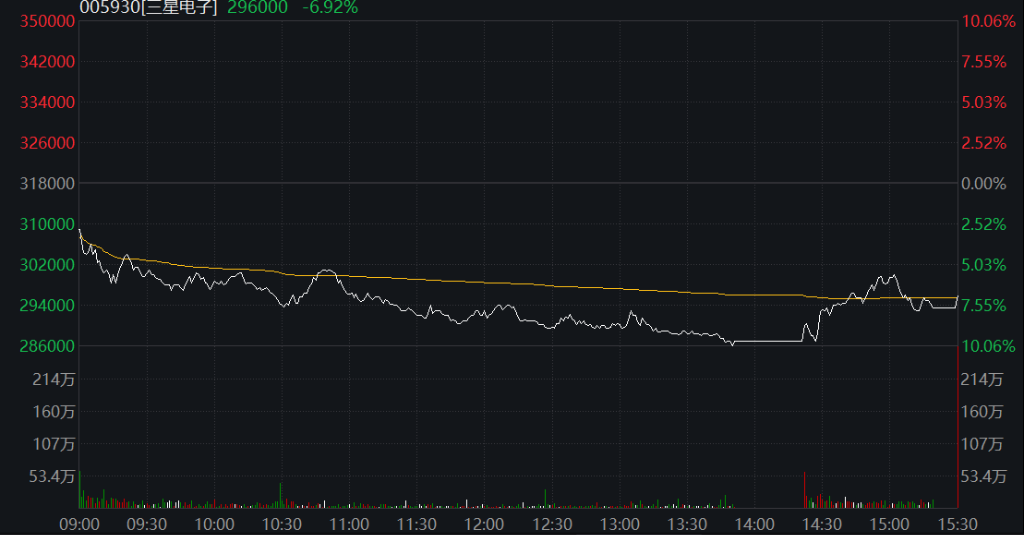
Another Wall Street CN article mentioned that the classic "buy the rumor, sell the news" logic was once again clearly on display. On the eve of the earnings release, the Philadelphia Semiconductor Index in the US rose 2.2% in a single day, the S&P 500 rose 0.7%, and the Nasdaq 100 rose 1.3%. As the good news materialized, capital swiftly withdrew.
Brian Cho, portfolio manager at Causeway Capital Management, stated bluntly, What the market truly wants to see is whether the improvement in free cash flow can form a sustainable, step-change trajectory, and how management approaches shareholder returns – the pricing logic has shifted from "how fast are profits growing" to "can these profits be converted into real cash distributed to shareholders."
Furthermore, the sharp reversal in market sentiment has a macroeconomic backdrop. Last week, Meta hinted first at curbing capital expenditure, triggering the largest two-day sell-off in high-beta momentum stocks since the COVID-19 pandemic. Samsung's decline also pressured fellow chip stocks like SK Hynix and Micron, as the high-valuation logic for the entire memory chip sector faces a systemic reassessment.
Strong Performance, But Not Good Enough
The Wall Street CN article wrote that Samsung's second-quarter operating profit is estimated at 89.4 trillion Korean Won, a sequential increase of 56% from the previous quarter, surpassing the average analyst forecast of 84.2 trillion Korean Won. Revenue for the period was 171 trillion Korean Won, exceeding the market estimate of 169.2 trillion Korean Won and representing an increase of approximately 129% year-on-year. The company plans to release its full earnings report on July 30, which will disclose net profit and segment data for various business units.
The core logic driving this growth lies in the ongoing tight supply of memory chips. Robust demand from AI data centers for High Bandwidth Memory (HBM) has prompted manufacturers to shift production capacity towards high-end products, leading to insufficient supply of traditional DRAM and NAND memory chips and pushing prices upwards across the board.
According to HSBC data, the average selling price (ASP) of DRAM increased by over 40% quarter-on-quarter in Q2, while NAND prices rose by over 50%. Citi Research data closely mirrors this, showing a sequential increase of 44% in average DRAM prices and 53% in average NAND prices during the same period.
However, although the 171 trillion Korean Won revenue figure surpassed the average analyst estimate, it fell short of some institutions' optimistic forecast of 173.9 trillion Korean Won. Against a backdrop of valuations already pushed to high levels, this slight shortfall was enough to trigger profit-taking.
The spotlight on memory business performance obscures several cracks in the company's overall structure. Analysts predict that losses in Samsung's foundry and logic chip (LSI) business may have widened further this quarter, partly due to bonus expenses being proportionally absorbed by the semiconductor division's overall costs.
In May this year, Samsung reached a compensation agreement with its chip division employees, linking performance bonuses to operating profit. The agreement stipulates that, provided specific profitability targets are met, 10.5% of the semiconductor division's annual operating profit will be allocated for special bonuses. Some analysts point out that, without this provision, Samsung's operating profit would have exceeded market expectations even further.
AI Demand Supports Memory Cycle, but Marginal Signals Weaken
The core logic driving this super-cycle for memory chips remains intact: the massive global expansion of AI data centers has fueled robust demand for high-end memory chips, with memory shortages becoming a key bottleneck for AI development.
Numerous industry executives, including Nvidia CEO Jensen Huang and OpenAI COO Brad Lightcap, have issued warnings about this. Major manufacturers are prioritizing supply for high-end memory products, causing shortages of conventional memory products concurrently. Analysts predict the supply shortage will persist at least until 2027.
Market research firm Counterpoint estimates that the average operating profit margin for the three major memory manufacturers – Samsung, SK Hynix, and Micron – will remain in the 75% to 80% range for the second quarter of this year. In its report, the firm stated that some view such high profit margins as "excessive profiteering" and warned that "if this situation persists, memory manufacturers could face regulatory pressure."
Furthermore, a Wall Street CN article mentioned that more noteworthy than the earnings report itself are the signals emanating from the upstream of the industrial chain. Meta recently hinted at setting caps on AI capital expenditure. The market interpreted this as an early warning that tech giants' AI infrastructure investment might be peaking, directly triggering one of the most severe two-day sell-offs in high-beta momentum stocks since the COVID-19 pandemic began.
The team of Jean Boivin at the BlackRock Investment Institute put the issue more directly: The core of the AI bubble debate is not current valuations, but whether future earnings can remain at extraordinary levels. If AI fails to translate its current scarcity into genuine productivity improvements, the current highly optimistic earnings expectations will face a correction.
Samsung Lags Behind SK Hynix, Korea Bets on AI Chip Dominance
From a national strategic perspective, the South Korean government views Samsung and SK Hynix as core pillars in the race for global AI leadership. The Samsung Group and SK Group each plan to build two chip factories in southwestern South Korea, with a combined investment of 800 trillion Korean Won, aiming to rapidly expand capacity. South Korea targets doubling its memory chip production capacity within five years, and Samsung has announced it will invest over 70 billion USD in 2026 for capacity expansion and R&D.
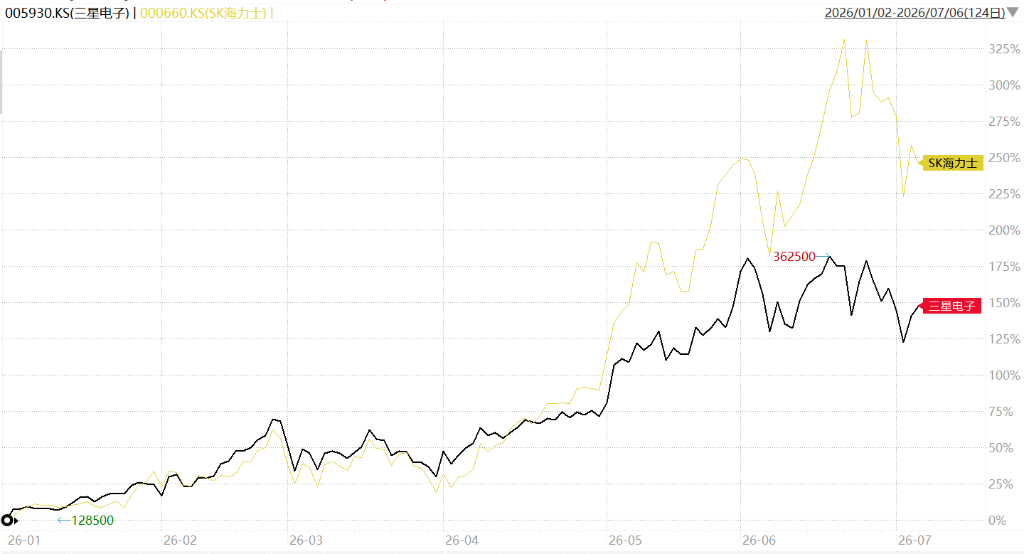
In terms of stock performance, Samsung's cumulative gain this year is approximately 165%, but it significantly lags behind competitor SK Hynix's gain of about 260%. The gap primarily stems from differences in product mix – SK Hynix's business is highly concentrated on high-end memory chips catering to AI computing needs, whereas Samsung's product portfolio is more diversified, spanning chips and consumer electronics. This divergence sends a clear signal: on the current track, focus is more favored by capital than scale.
Samsung's full earnings report will be released later this month. The breakdown data for each business segment will then tell the market how much real value has been generated from this wave of AI capital expenditure. That number will serve as a crucial reference point for the next phase of AI hardware investment logic.


