






Từ "The Big Short" đến San Francisco: Sự cuồng nhiệt và choáng váng trong bong bóng AI


- Quan điểm cốt lõi: San Francisco đang trở thành trung tâm hội tụ của công nghệ AI và bong bóng tài chính. Sự đan xen giữa đổi mới công nghệ, đầu cơ, những câu chuyện về ngày tận thế và nỗi lo về tài sản tạo nên bầu không khí "hành vi bong bóng lớn" độc đáo, nhắc nhở những người tham gia tận hưởng bữa tiệc nhưng vẫn giữ tỉnh táo.
- Các yếu tố chính:
- Mật độ công nghệ cao và "mạng lưới tin đồn" ở San Francisco dẫn đến sự bất cân xứng thông tin đáng kể. Mọi người xuất hiện các đặc điểm hưng phấn như "run rẩy" trên cơ thể do lo lắng và áp lực cạnh tranh, thể hiện tâm lý thị trường điển hình của "giai đoạn cuồng nhiệt".
- AI là "trò chơi địa vị" duy nhất ở địa phương. Ngành công nghệ chi phối mọi hoạt động xã hội và so sánh giá trị. Việc so sánh các chỉ số phù phiếm như số tiền gọi vốn, định giá cổ phiếu gây ra sự đồng nhất về môi trường và tập trung áp lực.
- Thành phố này tràn ngập tâm lý "ngày tận thế". Mối lo ngại của các nhà nghiên cứu về rủi ro AGI và nhu cầu bảo vệ xã hội hình thành một "phong trào kép", trái ngược hoàn toàn với thái độ lạc quan của các đội ngũ tập trung vào triển khai thực tế (GTM).
- Thị trường vô cùng say mê các nhà sáng lập là "thiên tài toán học", coi họ như chỉ số dự báo chính cho lợi nhuận vượt trội, hình thành một hệ sinh thái tài sản và câu chuyện tương tự như việc tuyển trạch ngôi sao.
- Một nhà đầu tư giàu kinh nghiệm khuyên rằng, phải trải qua ba lần bong bóng trong đời mới có thể nắm bắt cơ hội. Hiện tại, tiếng nhạc đang chát chúa, hãy "nhảy múa nhưng đừng say", tránh để "hành vi bong bóng lớn" bóp méo phán đoán.
Original Title: What's That Smell in San Francisco?
Original Author: Spencer Yen
Original Translation: Peggy, BlockBeats
Editor's Note: San Francisco is once again becoming the intersection of technological revolution and financial bubble. AI companies, research labs, venture capital, outdoor advertisements, and a network of insider tips are collectively shaping a highly charged urban atmosphere: some are driven forward by valuations and equity packages, others are immersed in apocalyptic visions of AGI, and still, others view math prodigies as the gateway to the next generation of excess returns.
The author starts from the line "I smell money" in *The Big Short*, documenting observations after moving from New York to San Francisco: the city's technology density, wealth creation, and information asymmetry are real, and so are the anxiety, comparison, and Big Bubble Behavior. As AI becomes the only status game in San Francisco, innovation, speculation, faith, and fear begin to blend, forming the most direct on-site sample of this AI boom.
The interesting aspect of this article is not its rush to judge when the bubble will burst, but its presentation of how the bubble happens: how people talk, compare, invest, and worry, and how they seek their place in the narrative that "the future is coming." The music is still playing, the party isn't over yet, but the author reminds himself, and everyone in it: you can dance, but don't get drunk.
The following is the original text:
One of my favorite movie scenes is the Jenga tower scene from *The Big Short*: Ryan Gosling's character pitches the trade of shorting the US housing market to Steve Carell's hedge fund team.
In that conference room, he exudes an insufferable, arrogant aura, accompanied by three props: his sidekick Chris, his quant Jiang, and the Jenga blocks with mortgage bond ratings printed on them. His opening line is also brilliant: Do you smell that? What is that smell? What scent? Perfume? No. Opportunity? No. It's money. I smell money.
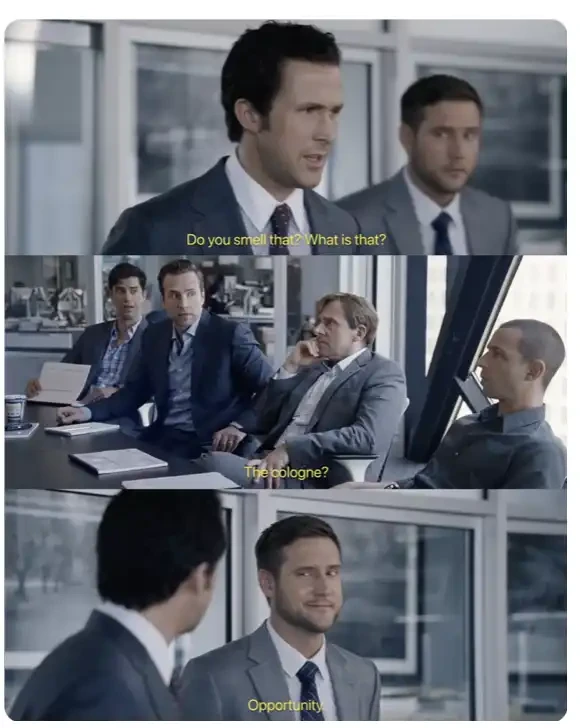
https://www.youtube.com/watch?v=YgF98vyn2fY
A few months ago, I moved from New York to San Francisco to join a friend's startup. Before moving, everyone told me, "You have to go to San Francisco," saying that's where everything happens. So during this time, I've been grappling with a question: Is San Francisco really that important? Was I really missing out while I was in New York?
My answer so far is: if you want to be at the center of this massive technological revolution and bubble, then this is indeed the place to be. The density here is real, the insider tip network is real, and because of that, the information asymmetry is also real.
During my time in San Francisco, I've accumulated some observations and thoughts. Here's what I've "smelled" in San Francisco:
1. People are shaking
2. There's only one status game here
3. A city always crying "wolf"
4. An obsession with math prodigies
What strikes me is how starkly different human experiences can be within the same city—walking down certain streets, you unfortunately feel like you're in hell; turn a corner, and you see the bay, distant cypress trees, and beautiful scenery. The most tech-forward, futuristic moments here are probably watching various autonomous vehicles roam the city streets. I can't help but smile every time I see those new, friendly light-blue Waymo cars. Or, you might feel like you're being watched by Ava, the AI BDR. I hate that ad. But I have to admit, their "rage bait" successfully made me still mention it now. Every morning, stepping out of my apartment door, I see this monstrosity:
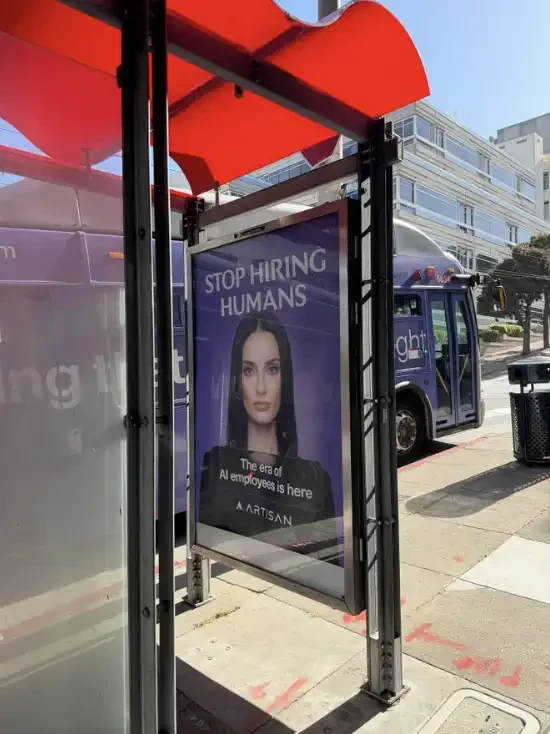
Why do people graffiti friend.com but not this kind of garbage ad? Also, if you live nearby, we can go get ice cream together!
People in San Francisco Are Shaking
A few weeks ago, I hung out with my friend Jared (@imjaredz). He lives in New York but recently joined Cognition. We had lunch and coffee at the Cognition office. The vibe was good, the coffee was great, and the rooftop was nice. I asked him what he thought of the vibe in San Francisco.
"Have you noticed that people in San Francisco are shaking?" I laughed, thinking: What? Shaking? Then I realized I had had a cold brew with 300mg of caffeine in the morning and was also a bit shaky. "Yeah, literally shaking. I'm not against everyone maxing out their ADD tendencies, but next time you have a coffee chat, pay attention—see if they're shaking."
Bubbles and boom periods create a restless energy, as if you'll never get another chance if you don't "make it" now. I'm not immune either—after Jared pointed it out, I found myself sometimes feeling like I was shaking. The trope of "hustling desperately to escape permanent lower class" is worn out, but every trope becomes popular because it captures the sentiment of the times. If nightlife is a city's heartbeat and the thermometer defining its culture, what does it say when a "dog startup's" 24-hour coffee shop becomes the de facto late-night hustler haven?
Shaking is part of the technological revolution and financial bubble process. I apologize in advance if you want to kill me for using AI in my writing this time. But I was Googling Carlota Perez, trying to find some citations, and I really liked Gemini's summary of the "Frenzy Phase":
Frenzy Phase: The peak of the installation period, where market psychology abandons fundamentals. Financial participants no longer seek dividends but turn to capital gains, causing the "paper economy" to decouple from the "real economy."
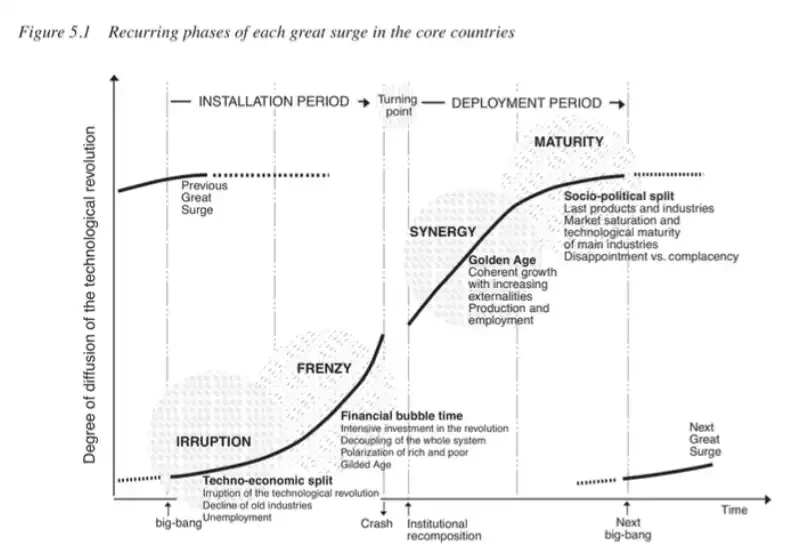
Source: https://stratechery.com/2021/the-death-and-birth-of-technological-revolutions/
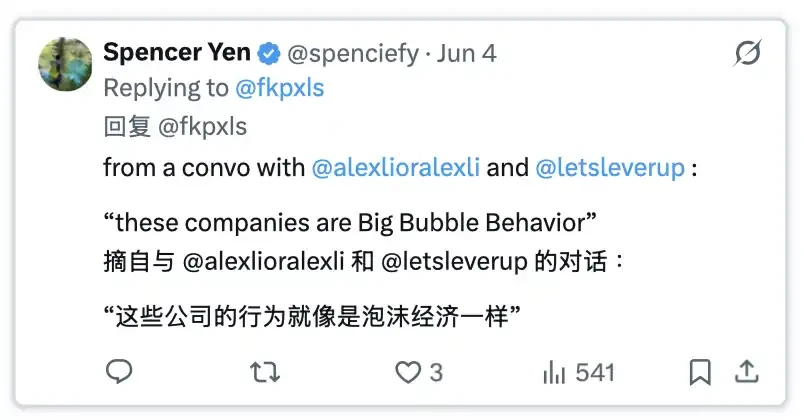
A friend of mine coined a term, "Big Bubble Behavior." It's a beautiful phrase, and I've been using it for the past two weeks to mark everything that fits the characteristics of the frenzy phase. Market euphoria can sometimes lead people to act irrationally. Shaking is Big Bubble Behavior. I've seen platters of lobster tails twice in my life: once at a crypto party in a Venetian Island mansion in Miami in 2021, and the second time at ClawCon in 2026.
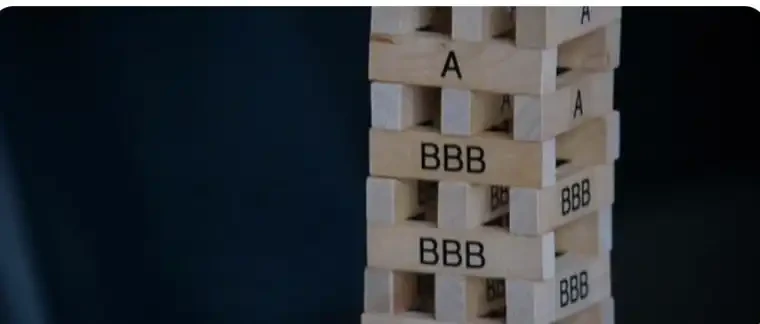
Big Bubble Behavior
There's Only One Status Game in San Francisco
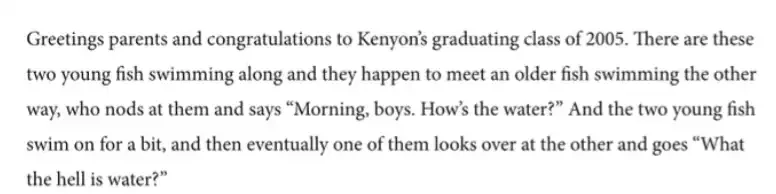
David Foster Wallace, *This is Water*: https://fs.blog/david-foster-wallace-this-is-water/
In San Francisco, this water is AI. Outdoor ads are everywhere—billboards, buses, bus stops, shared bikes, it's like it even occupies the blue sky.
My issue with San Francisco is this: the dominant status game here is just one—tech. You go to dinner or hang out in the park, and you hear the same words. You also see various "alpha farming" behaviors because those insider tip networks do exist. And I can't even be mad because I'm that kind of person too. Don't hate the player, hate the game.
The problem is, when a city has only one dominant status game, it's too easy to compare yourself with others.
Increasingly, we measure and compare each other using vanity metrics, like how much money was raised or which alphabet letter round your company is on. I really wish someone could raise a Series Z, because that would directly prove how absurd the private market has become. You hear gossip about which hot startup is being chased by financial players to invest in, and at what sizzling valuation. Then you can't help but start doing that disgusting, Blind-style reverse math: calculating how much someone's equity package is worth now.
I told a friend, if you saw the reverse salary calculation and offer optimization math on Blind, you'd cringe so hard you'd curl your toes. Blind is that anonymous big tech social network, most famous for memes like: "I'm in a life crisis, my wife might leave me, but do you think I should take Meta's L6 or Google's L9? TC: $969,000." So why are we doing the same thing here? Go touch some grass. Or, maybe this is just my cope.
In New York, there are at least 7 status games existing simultaneously. Finance, big law, music, fashion, celebrity circles, old money family offices, journalism, sports, entertainment. Because the range is so wide, some games are so distant they seem almost unattainable, making them interesting to talk about and learn. It disperses the attention of all ambitious people.
I enjoy asking my law school friends which top law firms are most prestigious, and understanding the subtle differences between each; I enjoy learning about the world of fashion and luxury, and what it takes to survive in that industry; I also enjoy understanding the comfortable lives of quantitative elites and their arrangements for garden leave.
San Francisco is creating unprecedented wealth, which brings a weird energy. A friend doing research mentioned that people around him are already studying how to buy land and diversify assets into scarce resources. There's a feeling here: you are either someone who owns lab equity or you aren't. There's also a joke that people in San Francisco don't know how to spend money; this weird energy comes from a lot of new wealth being created, but people don't know what to do with it. First time being rich? Let the experienced rich kids teach you how to enjoy life.
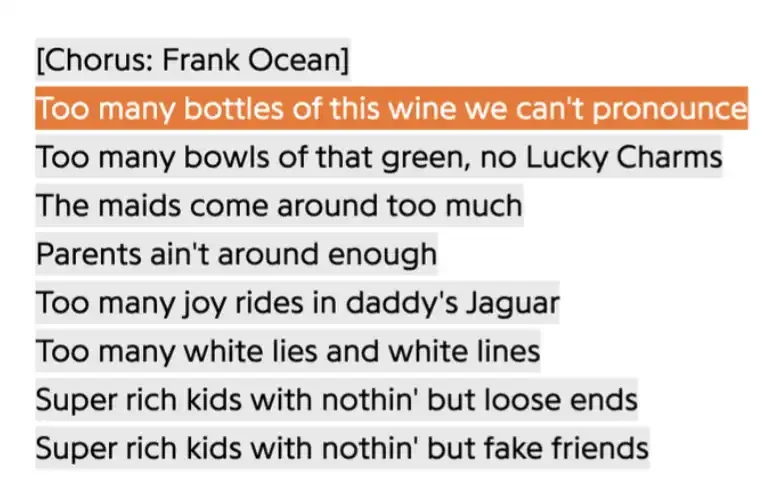
*Super Rich Kids* — Frank Ocean: https://www.youtube.com/watch?v=0XCQNpjWmRE
A City Always Crying "Wolf"
My first impression of San Francisco was a sense of apocalyptic doom. Maybe the researchers in the labs really do see some kind of "second coming," and if so, their calls for slowing down and emphasizing safety are certainly reasonable. But I can't truly know. The only thing I know is how the doomsday narrative makes *me* feel—not good!
I've already had quite a few nihilistic conversations, with a vibe roughly like: "If Mythos can wipe this all out in one go, or blow everything apart, then what are we even doing here making software?" And "Will AI destroy our lives?" And "AI will cause massive inequality and bring a lot of pain to society."
My one-sentence take here is: Humans will always find other things to do, work will migrate to higher levels of abstraction, and new things will become valuable.
We are very bad at predicting what future society will look like. I imagine the anti-capitalists I read in college would be angry in the wrong direction—imagine their reaction if they saw that humans could derive joy from AI-generated fruit garbage videos or from "Tung Tung Tung Sahur" in Italian brain rot.
"The problem isn't that AI makes content stupid, [sniff], but that we enjoy this stupidity, treat it as sacred garbage, a digital fetish object, [sniff], isn't it?"
From my friend Samir. His bio: not a researcher, but he has a "Fish Guy."
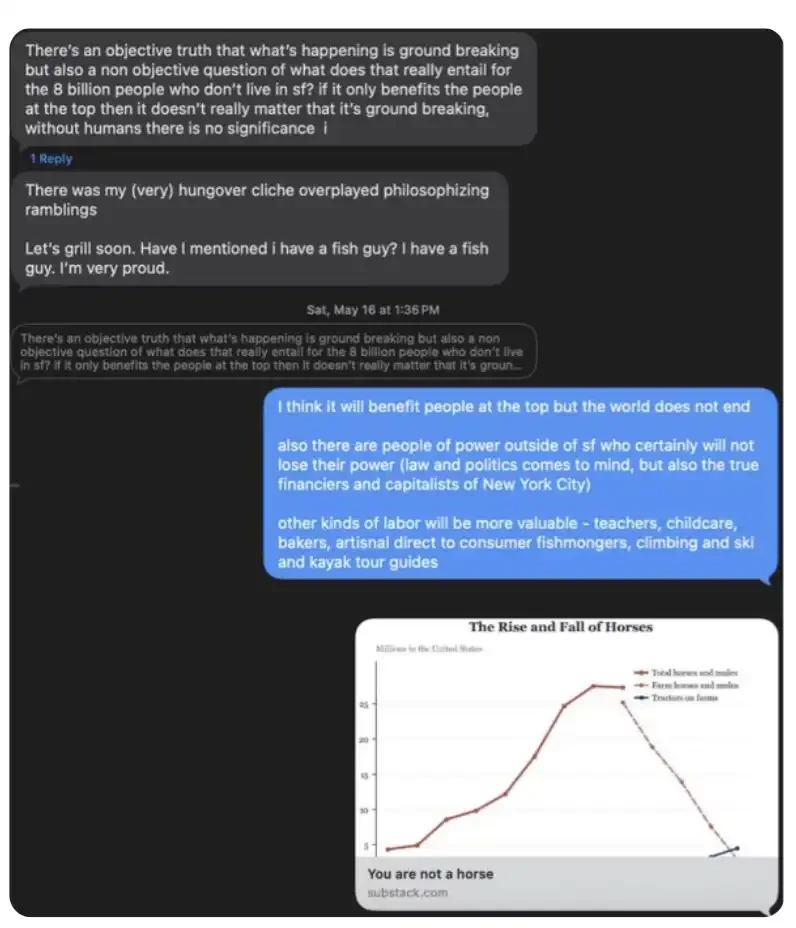
Does anyone else have their own "XYZ Guy"? Let me know.
A friend working at a lab pointed out that the GTM (go-to-market/sales/growth) team and the research team within the same company are currently having entirely different life experiences. That doomsday feeling is balanced by something else: "Come hang out with the GTM team, have a beer, touch some grass." There's definitely something to ponder in the contrast between the pessimism of the model creators and the optimism of the people closest to technology being deployed. Time to Forward Deployed!
Reality has a surprising amount of detail: https://johnsalvatier.org/blog/2017/reality-has-a-surprising-amount-of-detail
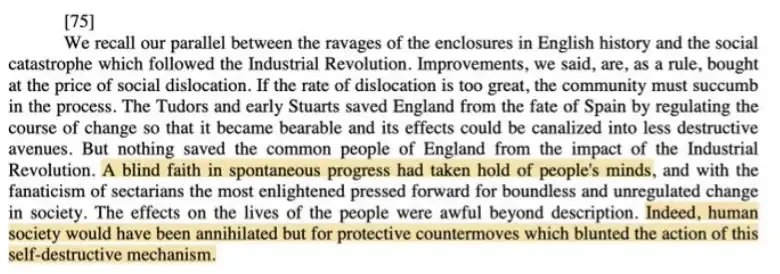
Six years ago, when I was in college, I wrote about how AI might reshape social structures, titled *Polanyi and the Second Great Transformation* (No need for Pangram AI detection; Medium before 2023 was like an organic pasture of human writing).
Let me explain the reference: Karl Polanyi was an Austro-Hungarian economic sociologist, famous for his book *The Great Transformation*. Written in 1944, it criticized the rise of modern market capitalism in 19th-century Britain. So, the "First Great Transformation" refers to the shift to capitalism, and my 21-year-old self thought I was clever by calling AI the "Second" great transformation… you get it.
Polanyi's most famous concept is "The Double Movement." It describes a historical push-and-pull: on one hand, the free market continuously expands; on the other, society generates counter-movements attempting to protect itself through regulation. The first movement is capitalist elites trying to expand the free market and commodify society; today, this would be commodifying intelligence. The second, reverse movement is people reacting to market-driven disruptions and trying to protect society; today, this would be anti-AI, anti-data center rhetoric.
This was my naive college writing style at 21:
Polanyi explains that the development of machinery for production led to the "fictitious commodification" of labor (people) and land (nature). Although the Fourth Industrial Revolution has occurred within a market system, the arrival of mechanical minds poses a different threat: taking over jobs. As computers can perform more "human" cognitive tasks with higher efficiency, many ordinary people might lose their jobs.
Polanyi wrote: "Nothing could save the common people of England from the impact of the Industrial Revolution. A blind faith in spontaneous progress had taken hold of people's minds..."
https://medium.com/@spenceryen/polanyi-and-the-second-great-transformation-6d6364b5d3c6
So, thinking about it now, maybe those who kept crying "wolf" do have a point. A blind faith in spontaneous progress might not lead to good outcomes. Polanyi's critique of market capitalism was this: for most of human history, economic activity was subordinate to social, cultural, and religious institutions. But then, market capitalism reversed this relationship, making society subordinate to the economy.
How do we ensure that society doesn't become subordinate to a nation of geniuses in data centers? As Ben Thompson accurately pointed out in his article on Anthropic's Mythos, the punchline of the *Boy Who Cried Wolf* story is that the wolf eventually came.
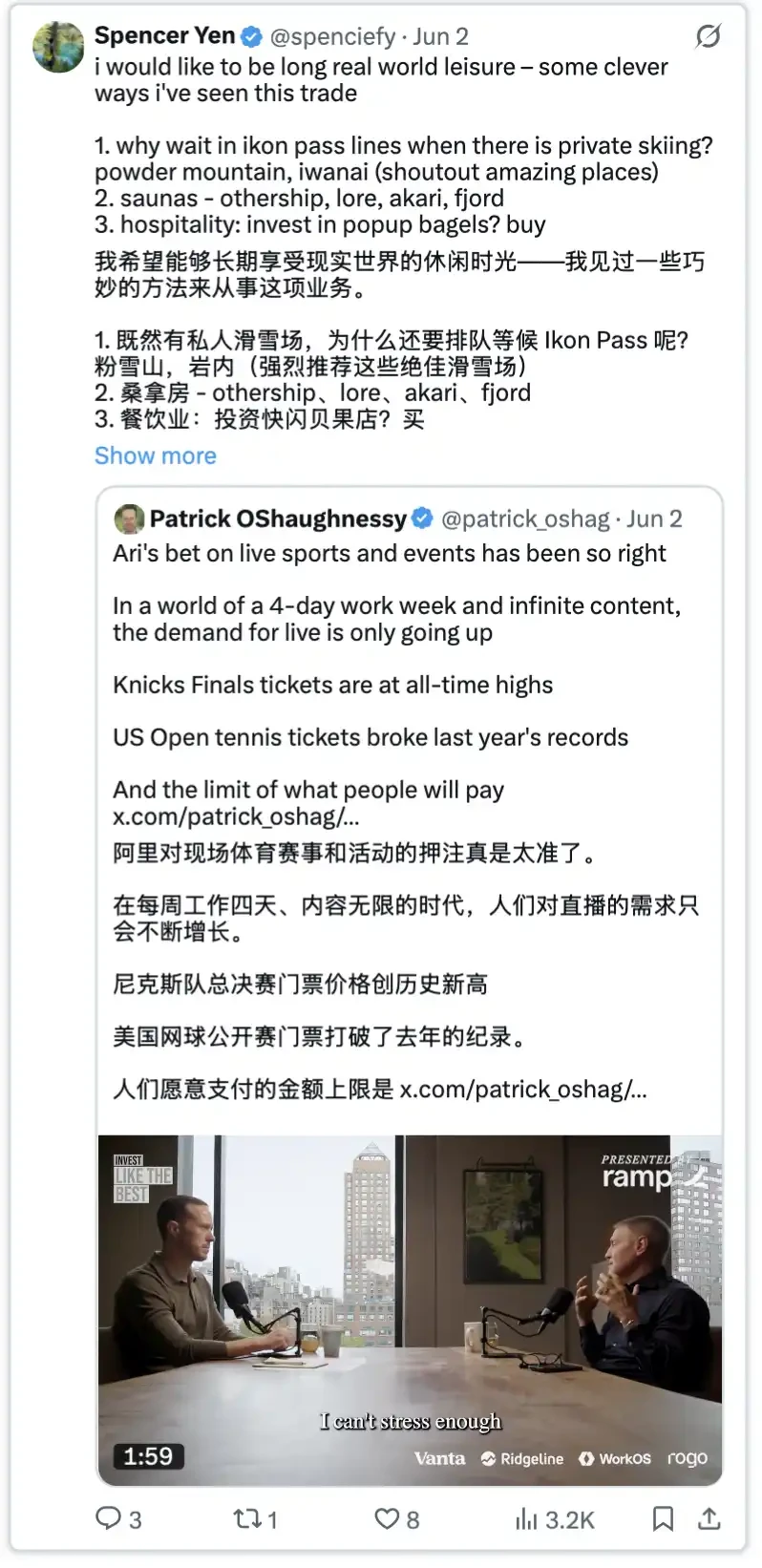
But what would my inner capitalist think? Then invest in social, cultural, and religious institutions! If you have any good trade ideas, feel free to DM me your prospectus.
Obsession with Math Prodigies
Another favorite gag of mine from the Jenga scene in *The Big Short* is when Ryan Gosling points to the Chinese man next to him and says: "That's my quant." This vibe has a weird similarity to the recent batch of hot founders being chased by investors—they often were the genius kids who dominated math competitions since childhood.
Again, Ryan Gosling, responding to Steve Carell's skepticism:
"You're saying, if defaults just hit 8%, these bonds collapse, and we're at 4% now? If they hit 8%, it's the end of the world?" "Yeah, exactly." "Why isn't anyone talking about this? Are you absolutely sure about this mathematical model?" "Look at him. That's my quant." "Your what?" "My quan-ti-ta-tive, my math expert. Look at him. Don't you notice something different about him? Look at his face." "That's kind of racist." "Look at his eyes. I'll give you a hint, his name is Yang! He won the national math competition in China, doesn't even speak English! So yeah, I'm very


