






input content is: Người sinh thập niên 80 tại Thiên Tân, sắp trở thành người đầu tiên lên sao Hỏa


- Quan điểm cốt lõi: Vương Thuần (Chun Wang), đồng sáng lập F2Pool, nhờ vào khối tài sản tích lũy từ lĩnh vực tiền mã hóa và năng lực công nghệ, đã thành công chuyển mình từ một nhà thám hiểm vùng cực thành người tiên phong trong lĩnh vực hàng không vũ trụ thương mại. Anh sẽ tham gia vào nhiệm vụ chở người liên sao lên sao Hỏa đầu tiên của tàu SpaceX Starship cũng như chuyến bay quanh Mặt Trăng, đánh dấu bước nhảy vọt thực chất của giới tinh hoa tiền mã hóa vào lĩnh vực thám hiểm không gian sâu.
- Các yếu tố then chốt:
- Vương Thuần sẽ thực hiện nhiệm vụ chở người lên sao Hỏa đầu tiên của SpaceX Starship, với chuyến bay không gian sâu kéo dài hai năm, bay qua sao Hỏa rồi quay trở lại Trái Đất; trước đó, anh cũng sẽ tham gia chuyến bay chở người thương mại đầu tiên vòng quanh Mặt Trăng của Starship.
- Vương Thuần đã kiếm được khoảng 7.700 Bitcoin từ hoạt động khai thác, và vào năm 2013, anh đồng sáng lập F2Pool (một trong những mining pool tổng hợp lớn nhất thế giới), năm 2018 thành lập dịch vụ staking Stake.fish, từ đó tích lũy khối tài sản khổng lồ.
- Vào tháng 4 năm 2025, với tư cách chỉ huy, Vương Thuần đã hoàn thành nhiệm vụ hàng không vũ trụ tư nhân mang mật danh “Fram2”, lần đầu tiên đưa tàu vũ trụ có người lái bay theo quỹ đạo địa cực 90 độ, quan sát hai cực của Trái Đất và thực hiện nhiều thí nghiệm khoa học.
- Động lực khám phá không gian của Vương Thuần bắt nguồn từ việc mở rộng giấc mơ du lịch vùng cực - sau khi đến được Nam Cực vào năm 2021 và Bắc Cực vào năm 2023, anh đã chuyển mục tiêu sang không gian, một “điểm đến xa hơn”.
- Trong hơn một thập kỷ qua, F2Pool đã khai thác tổng cộng hơn 1,3 triệu Bitcoin, cung cấp nguồn tài chính quan trọng cho kế hoạch hàng không vũ trụ cá nhân của Vương Thuần (ví dụ như mua toàn bộ nhiệm vụ tàu Dragon).
Original | Odaily Planet Daily (@OdailyChina)
Author | Azuma (@azuma_eth)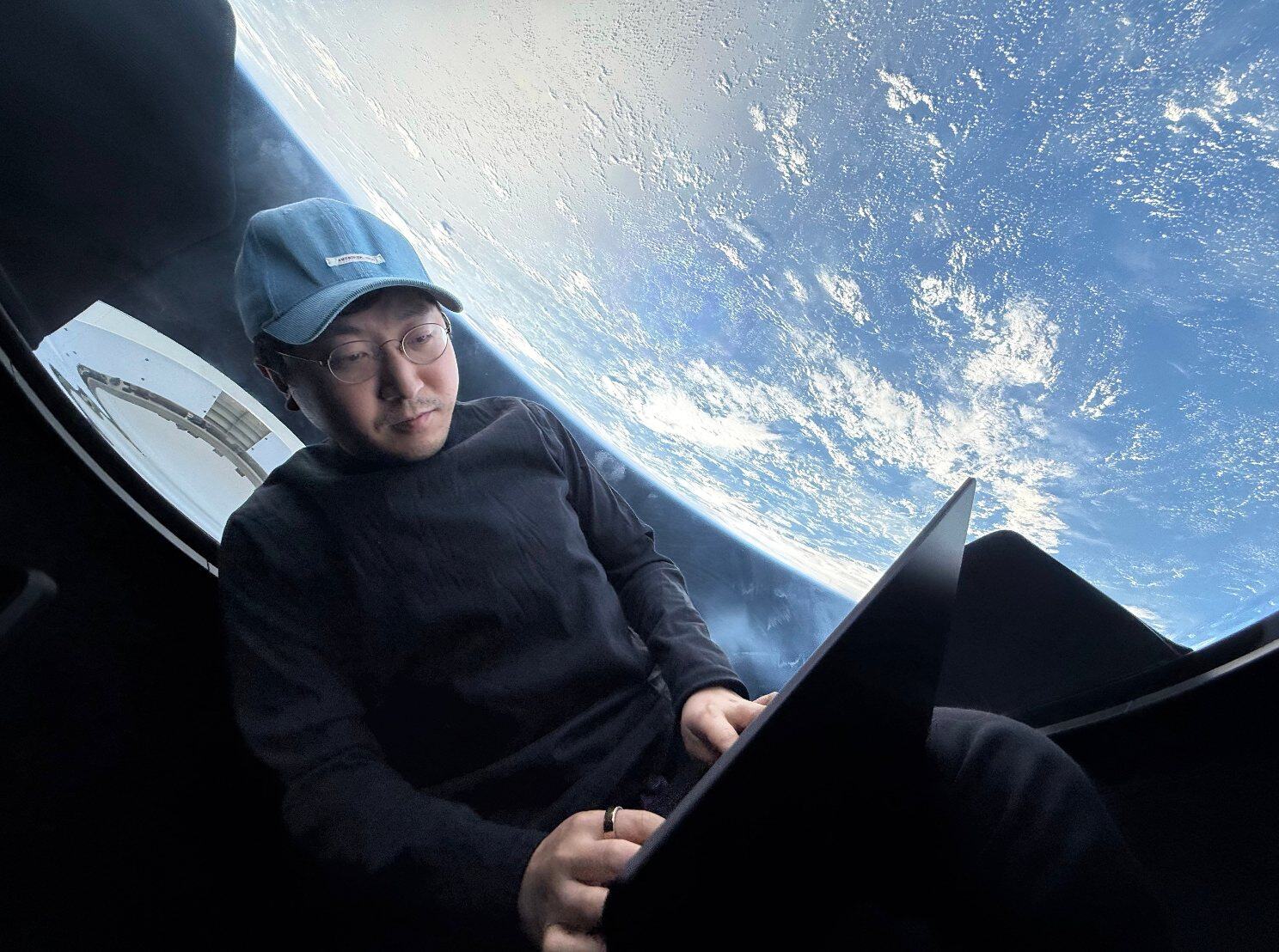
Humanity is finally about to embark on a journey to Mars, and the protagonist of this space mission destined to be etched into human history is a native of Tianjin.
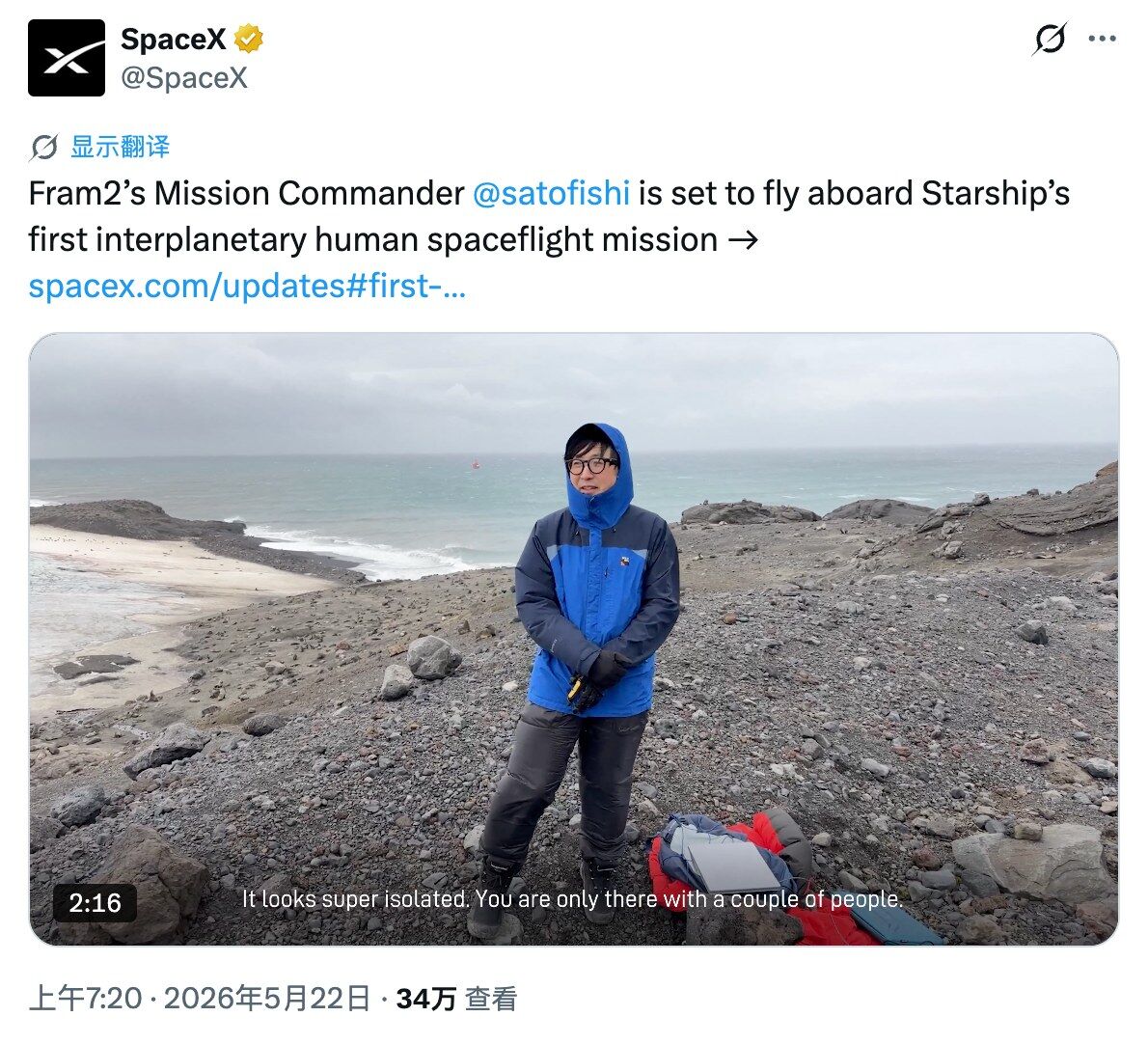
On the morning of May 22, Beijing time, SpaceX, on the verge of its IPO, made a major announcement — F2Pool co-founder and Fram2 mission commander Chun Wang will ride the Starship to execute the first-ever crewed interplanetary Mars flight mission! The mission plans a two-year deep space journey, exiting the Earth-Moon system, flying past Mars (without landing), and finally returning to Earth.
Prior to this mission, Wang will also participate in Starship's first commercial crewed lunar flyby mission alongside Dennis Tito and Akiko Tito. This mission is expected to last one week and will fly within approximately 200 kilometers of the lunar surface.
The Travel Enthusiast from Tianjin
On March 31, 2025, on the eve of the Fram2 mission launch, Wang gave an exclusive interview to the aerospace media outlet Spaceflight Now, revealing many little-known stories from his upbringing.
Born in Tianjin, China, in 1982, Wang was raised by his grandparents. Before leaving for university in 2000, he had hardly ever left his hometown.
However, from a very young age, Wang developed a keen interest in travel, always dreaming of traveling the world: "In 1987, when I was five years old, my grandfather brought home a world map he had found during a walk. That map instantly became my favorite toy and ignited my curiosity. What truly captured my attention was the vast blank area at the bottom of the map – the polar regions. From that moment on, I was deeply fascinated by the mystery and thrill of those distant, unknown lands."
After graduating from university, Wang first worked at a Norwegian software company in Beijing. From then on, his travel mileage truly skyrocketed – to save money, he often slept on a colleague's couch in France or directly at the office, commuting back on weekends to his home about 120 kilometers away.
Wang mentioned: "Despite having a full-time job, in 2007 alone, I traveled 75,900 kilometers by train on weekends. All in all, I spent a full two months of 2007 in train carriages, heading straight to the train station after work on Fridays and only returning to the office on Monday mornings."
Over the next four years, Wang expanded his travel map further. Traveling by train, he visited every province in China.
In 2010, Wang took his first international trip – to Nepal, followed by India. That journey took him to the southernmost tip of the Indian subcontinent. He boarded the then-longest non-stop train in India, the 16317 Himsagar Express, traveling from Kanyakumari all the way to Kashmir, continuing his exploration of the country.
That trip eventually cost him about $1,000 – all the savings he had at the time.
"In those years, I was obsessed with infrastructure and modes of transport, especially railways. I meticulously recorded every train ride, down to the minute and even second, and posted these records on online forums and message boards. Someone even nicknamed me 'Thousand-Ride High-Speed Rail Man' because I was counting my high-speed rail rides, aiming for the milestone of 1,000 rides."
Wang revealed that as of March 20, 2025, he had taken a total of 854 high-speed rail trips, but the number of times he had flown on commercial airlines was extremely close to 1,000.
Wealth, Skills, and Resource Accumulation Stemming from Cryptocurrency
Beyond travel, Wang also showed a very strong interest in various emerging technologies.
At age 7, Wang first heard about computers, but it wasn't until he graduated from primary school at 13 that he got his first computer, a 486SX running MS-DOS 5.0.
Wang mentioned: "Besides playing games, I also used it to write many interesting programs. One of the earliest was a gravity simulator that could visually display planetary motion in the solar system... At school, I participated in various programming competitions, including the International Olympiad in Informatics (IOI) and the ACM International Collegiate Programming Contest (ACM-ICPC). Due to my outstanding performance in these competitions, I bypassed the college entrance exam and was directly recommended for university admission."
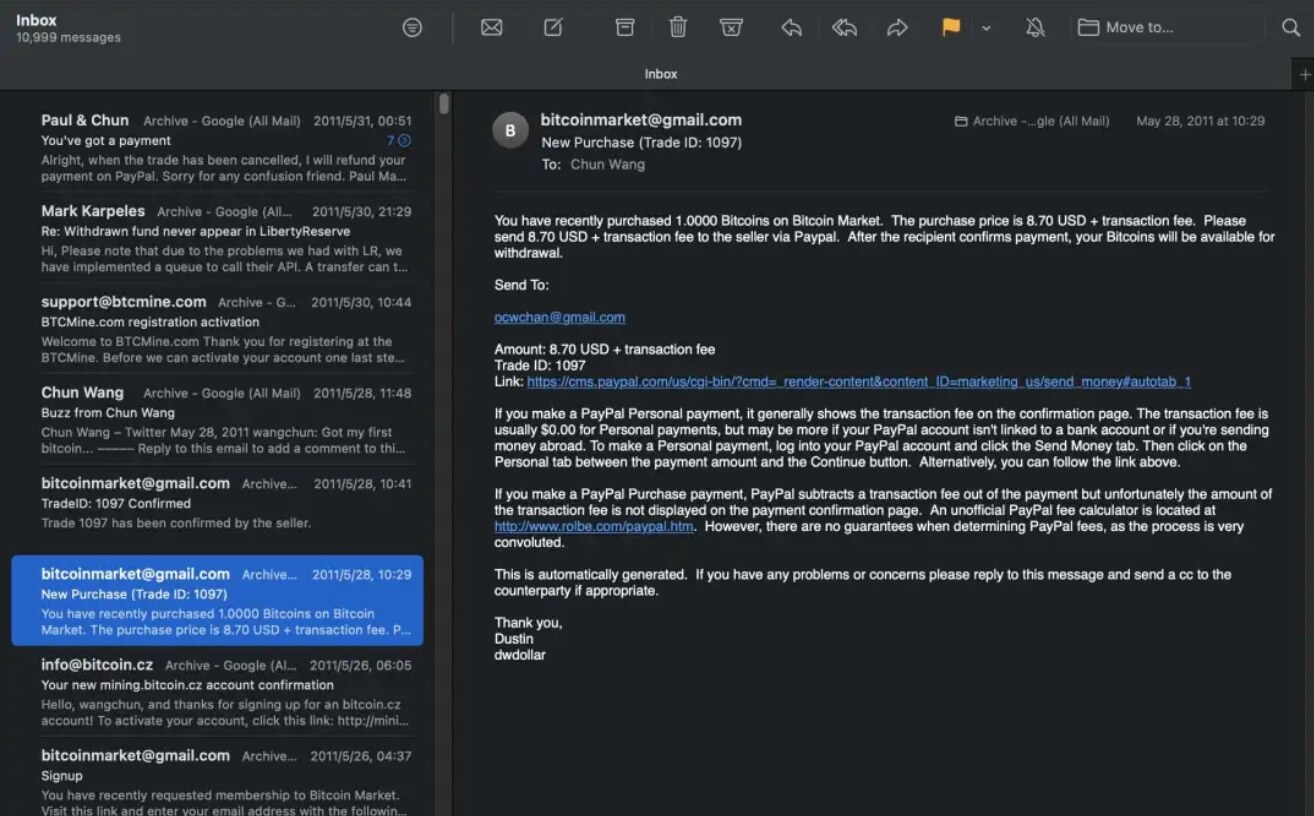
In 2011, Wang first heard about Bitcoin through the tech website Solidot, and on May 28 of that year, he bought his first Bitcoin at a unit price of $8.70.
At the same time, being a tech geek, Wang also started trying to build his own mining rigs for Bitcoin mining.
Initially, things weren't quite smooth. Wang first collaborated with Wu Gang, the later founder of币信 (Bixin), renting several residential houses and building a relatively crude mining farm with dozens of rigs. The startup capital was even borrowed from his father... But even so, over two years, Wang managed to mine 7,700 bitcoins. Of these, 4,000 were used to pay electricity bills, 660 were exchanged for an iPhone (which was later stolen at a St. Petersburg metro station), and some remaining bitcoins were liquidated by him at the beginning of 2023 at a price of $17...
The turning point came in 2013. In April of that year, he co-founded F2Pool (known to the crypto community as "Fish Pool") with Mao Shihang, nicknamed "Shenyu". The more introverted Wang was responsible for the backend code, while the more outgoing Shenyu handled operations. It was China's first Bitcoin mining pool and later evolved into one of the largest comprehensive mining pools globally.
In 2018, Wang founded his second company, Stake.fish, in Thailand, a staking service provider focusing on PoS networks, comprehensively deploying node staking services for PoS networks like Ethereum, Cosmos, and Polygon.
The success of F2Pool and Stake.fish, coupled with the surging price of cryptocurrencies, amassed enormous personal wealth for Wang – in 2025, Wang revealed that over the past decade or so, F2Pool had mined over 1.3 million bitcoins.
Space Dream Chaser
The rapid growth of his wealth allowed Wang to realize his childhood dream of traveling to the polar regions. In December 2021, Wang successfully reached the South Pole; in July 2023, he reached the North Pole.
But after fulfilling these dreams, Wang found that maybe this wasn't enough... His entire life had been a journey, continuously moving forward towards the unknown.
- 2006: He traveled west, reaching the Kazakhstan border at 82°E;
- 2011: He traveled to the southernmost tip of India, reaching 8°N southwards;
- 2012: He traveled to Europe via the Trans-Siberian Railway, reaching St. Petersburg at 60°N, 30°E;
- 2013: He traveled to the Kamchatka Peninsula, reaching 160°E eastwards;
- 2016: He traveled to the United States for the first time;
- December 2021: He successfully reached the South Pole;
- July 2023: He successfully reached the North Pole...
But now, there are no farther destinations left on Earth. Where else could he go?
Wang quickly found the answer: "Since SpaceX began recovering the first stage of the Falcon 9 rocket, the commercial aerospace industry has been advancing at an incredible pace. I saw something completely new and exciting unfolding again, feeling exactly the same as when I first heard about computers, and when I first discovered Bitcoin."
Wang's choice was to fly into space. In 2023, Wang proposed an extremely bold idea to SpaceX – to privately fully fund a SpaceX Crew Dragon mission, flying over Earth's north and south poles on a unique trajectory.
Wang's reasoning was that since humans entered space in 1961, because most rocket launches are concentrated near the equator or mid-latitudes, the International Space Station (ISS) and nearly all previous crewed spacecraft (except for Apollo lunar missions that flew far away) have never flown over Earth's North and South Poles. In other words, the polar ice sheets represent a 60-year visual and scientific gap in the history of crewed low-Earth orbit spaceflight. Therefore, Wang wanted to chart a path never taken before: a polar retrograde orbit (Polar Orbit) with a 90-degree inclination, directly crossing over and looking down upon Earth's poles.
Wang named the mission "Fram2", a tribute to the legendary polar exploration ship "Fram" that once carried Norwegian explorers to the Arctic and Antarctic.
On April 1, 2025, a Falcon 9 rocket carrying the Crew Dragon capsule "Resilience" lifted off on schedule from LC-39A at the Kennedy Space Center in Florida. Wang, as Mission Commander, leading his hand-picked, all-civilian, entirely non-US crew (including a Norwegian filmmaker, a German robotics engineer, and an Australian Arctic explorer), officially embarked on the space journey.
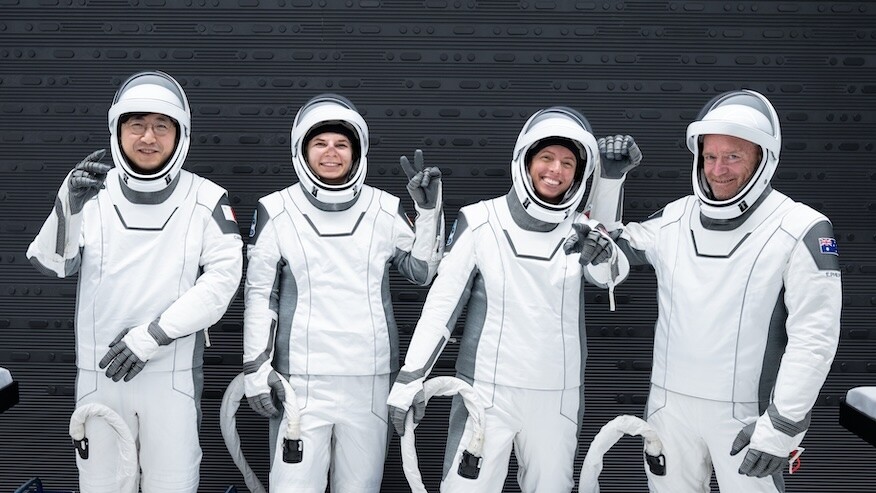
On a 90-degree polar orbit with an apogee of 413 km and a perigee of 202 km, the spacecraft orbited the Earth every 93 minutes, taking just 46 minutes to fly from the North Pole to the South Pole. During the three-and-a-half-day mission, Wang and his crew completed a vast amount of extremely hardcore scientific research and visual capture – including close-up observations of STEVE (Strong Thermal Emission Velocity Enhancement), an extremely rare high-altitude atmospheric phenomenon unique to high latitudes; taking humanity's first X-ray image in space; and making the first-ever attempt to grow fungal organisms in microgravity...
A noteworthy detail is that Wang's good friend, "Bao Erye" (Bobby Lee), revealed in a post before the mission that Wang had not made any backup of his Bitcoin private keys. He reportedly stated that if he encountered danger during the mission, the Bitcoins he held would be equivalent to being permanently destroyed.
Bound for Mars
Wang's spacefaring dreams did not end with the successful conclusion of Fram2; they are continuously upgrading.
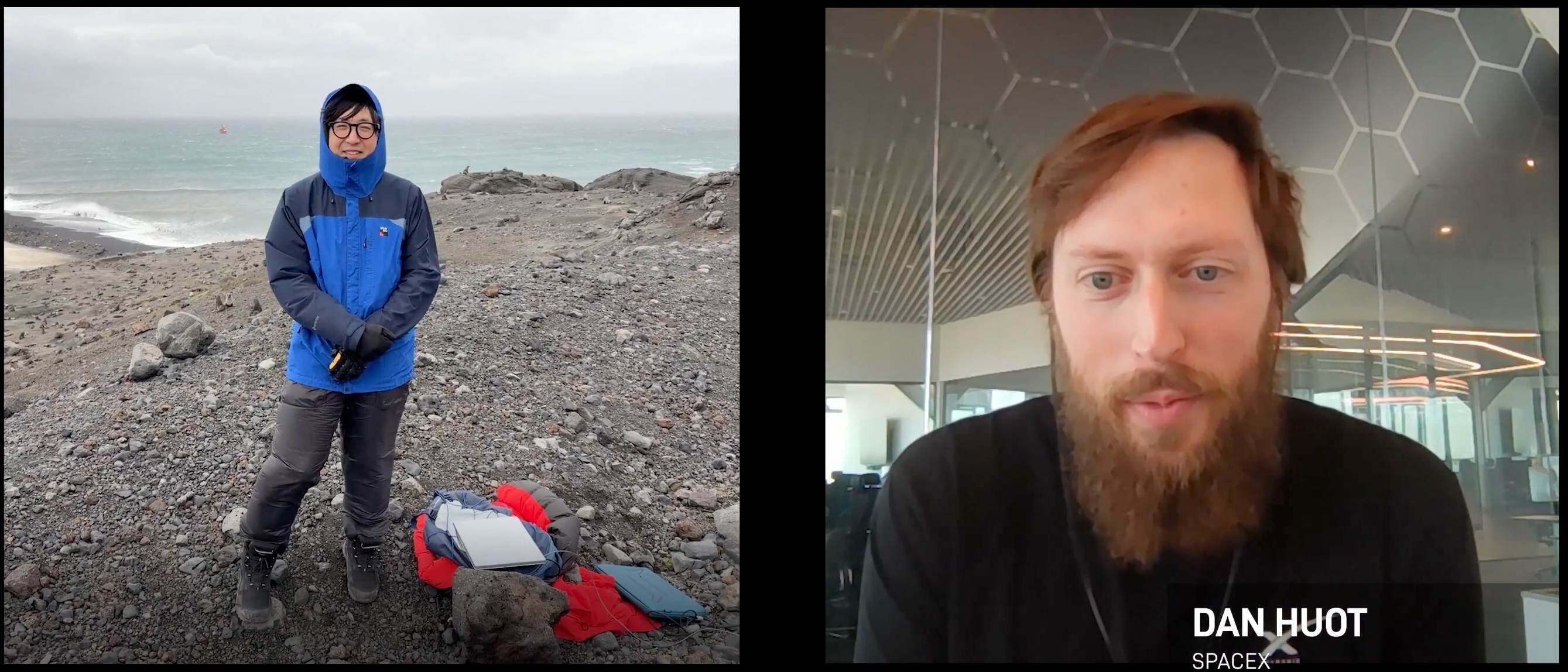
Returning to the story at the beginning, just before SpaceX tested the latest generation Starship launch, SpaceX officially announced Wang's subsequent two space plans during the live stream – a one-week crewed lunar flyby mission, and a full two-year mission, humanity's first crewed interplanetary Mars flight mission.
When SpaceX connected with Wang via live stream, he was standing in the wind on Bouvet Island, at 54°26′S, 3°24′E. This island, located in the South Atlantic near Antarctica, is a Norwegian overseas territory (Norwegian Antarctic Territory) and lies outside the land area frozen by the Antarctic Treaty.
On Wang's personal X page, he detailed his travel progress. As of this writing, the current status is: "Checked in 60% of one celestial body (150 / 249), to be continued..."


