






"China's SK Hynix" Earns Nearly 400 Million Yuan a Day, Even Apple is Eager to Buy


- Core Thesis: CXMT, as the world's fourth-largest DRAM manufacturer, is about to debut on the STAR Market (科创板). Leveraging Qimonda's technological legacy and support from Hefei's state capital, it has achieved a stunning profit turnaround during the 2026 DRAM super-cycle, recouping nine years of losses within six months. However, this profitability is primarily driven by cyclical factors rather than structural advantages.
- Key Points:
- In Q1 2026, CXMT reported revenue of 50.8 billion yuan and a net profit of 33 billion yuan, translating to nearly 4 billion yuan in daily earnings. Its profitability surpasses that of Kweichow Moutai, with market expectations suggesting its market cap could challenge for the top spot among A-shares.
- Founded in 2016, the company achieved mass production of 19nm DDR4 by leveraging Qimonda's technology files (2.8TB of data) and approximately $2.5 billion in redesign costs, filling a gap in China's independent DRAM production.
- By the end of 2025, CXMT had accumulated losses of 36.65 billion yuan. However, with a net profit of 33 billion yuan in Q1 2026 alone, it turned profitable within half a year and covered years of accumulated losses, primarily thanks to the DRAM price cycle (contract prices rose 93%-98% quarter-over-quarter).
- Its customer base includes major domestic and international companies like Apple, Google, Tencent (with a supply agreement exceeding 20 billion yuan), Alibaba Cloud, and ByteDance, indicating rapidly growing market acceptance.
- The IPO aims to raise 29.5 billion yuan, one of the largest fundraising amounts on the STAR Market. Proceeds will be directed towards backend technology upgrades and new projects. The valuation is anchored at 158.4 billion yuan, but institutional investors anticipate a market cap of 3-4 trillion yuan.
Original Author: Jialiu
When it comes to the global memory industry, many people only know Samsung, SK Hynix, and Micron. However, few realize that the world's fourth-largest player is a Chinese company that has yet to go public, named CXMT (ChangXin Memory Technologies).
On July 9, CXMT updated its latest IPO prospectus for the STAR Market. In terms of timeline, the subscription period starts on July 16, with payment due on July 20, and trading on the STAR Market is expected to begin by the end of this month at the earliest.
China's strongest memory leader is arriving by the end of this month.
Data shows that in the first quarter of 2026, revenue is projected to be 50.8 billion yuan, a year-on-year increase of 719%. Net profit is expected to be 33 billion yuan. Earning nearly 4 billion yuan a day, its profitability surpasses Kweichow Moutai, and the market has given it a trillion-yuan valuation, potentially challenging for the title of the highest-valued stock on the A-share market.
Yet, as of the end of 2025, the company's accumulated losses still stood at 36.65 billion yuan.
This means CXMT made back nine years of losses in just half a year. This domestic chip company, which had been loss-making for nearly a decade, suddenly became one of the most profitable hard-tech enterprises on the A-share market.
Over the past week, the name CXMT has appeared frequently in global tech media. Apple is lobbying the US government for a special license to include CXMT in the memory supply chain for Macs and iPads. Google has also initiated a procurement evaluation for CXMT's DRAM. Other reports mention that HP and Dell are verifying CXMT's DRAM, while Acer and ASUS are urging their Chinese partners to use more domestic memory chips. In the same week, Reuters reported that Tencent signed a long-term server DRAM supply agreement with CXMT worth over 20 billion yuan for a period of three to five years. The customer list disclosed in CXMT's prospectus also includes Alibaba Cloud, ByteDance, Lenovo, Xiaomi, OPPO, vivo, and Honor.
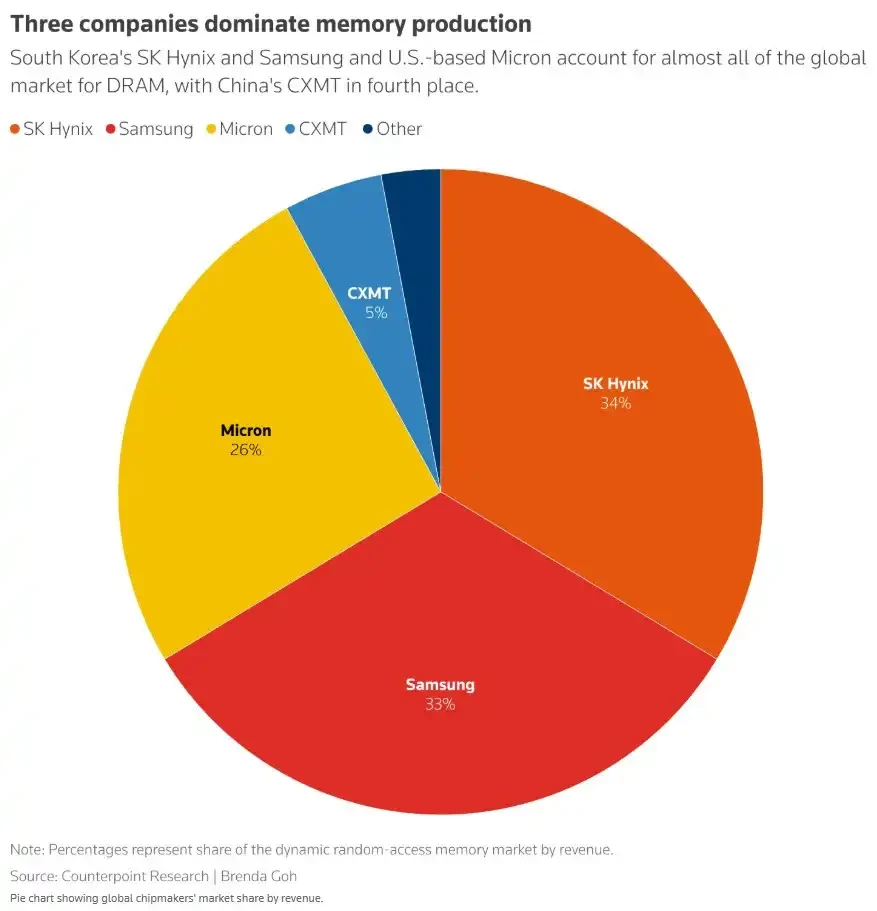
Leading companies in the global memory production field. CXMT's market share ranks fourth globally, behind Hynix, Samsung, and Micron. Source: Reuters
Suddenly, CXMT has become the favorite of almost all major domestic and international companies.
How did CXMT go from zero to fourth place globally? How much of the money it earns today comes from strength versus luck? Can its trillion-yuan valuation hold up?
CXMT's Path Forward: GigaDevice
The origin story of CXMT must begin with why China has always lacked DRAM.
Memory chips come in many types. NAND Flash is storage that retains data without power, used in phone storage drives, SSDs, and USB drives. DRAM is runtime memory; data disappears without power, but it is fast, serving as the workbench alongside CPUs, GPUs, phone SoCs, and AI accelerator cards.
Both NAND and DRAM are commodity semiconductors, but DRAM is more akin to a steel mill combined with high-precision manufacturing. Each generation of process technology must push capacitors, transistors, word lines, and bit lines to their limits, replicating billions of highly consistent units on a single wafer. A slight deviation collapses yield rates and blows up costs. Blowing up costs during a memory downturn causes money to drain away like water.
This is why the DRAM market eventually boiled down to just three giants: Samsung, SK Hynix, and Micron. This is a table you can't simply join by saying "I have a tech team." You need to survive price wars, capacity wars, patent wars, equipment restrictions, and customer certifications over a decade or more.
CXMT was launched around 2016 and established in Hefei. Its key figure is Zhu Yiming.
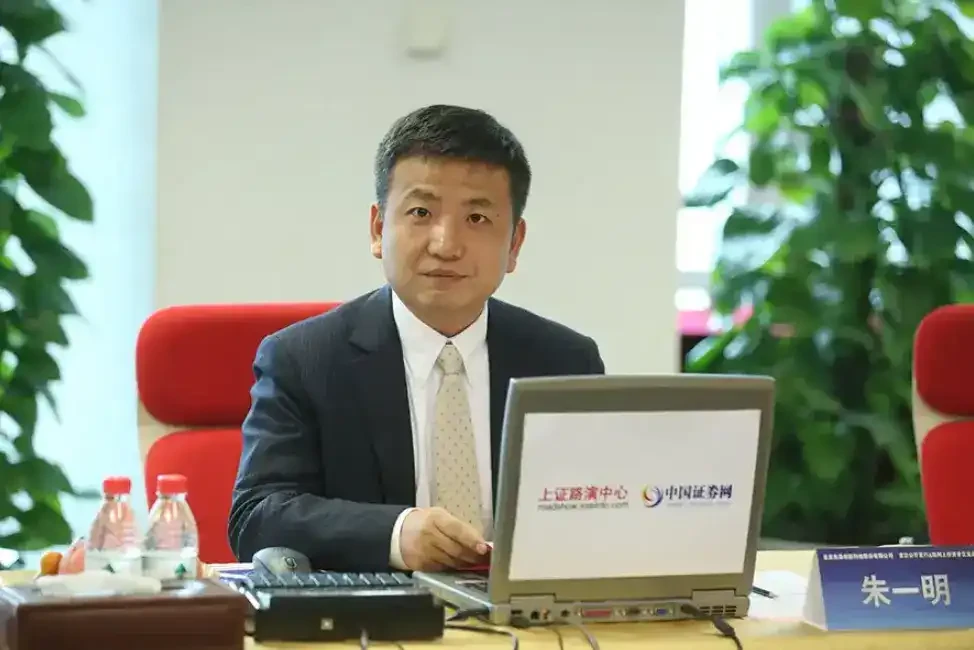
Photo of Zhu Yiming at a meeting
The name Zhu Yiming is familiar in China's semiconductor circles.
Born in 1972, Zhu Yiming was a child prodigy. He entered the Physics Department of Tsinghua University at 17. Although he studied physics, he was exceptionally skilled at programming. By helping other companies write programs, he earned over 300,000 yuan a year in the late 1990s. During this work, he learned that chips were designed by Americans at the time. Believing chip technology had higher technical content, he went to the US to study electronic engineering and later worked in Silicon Valley after graduation.
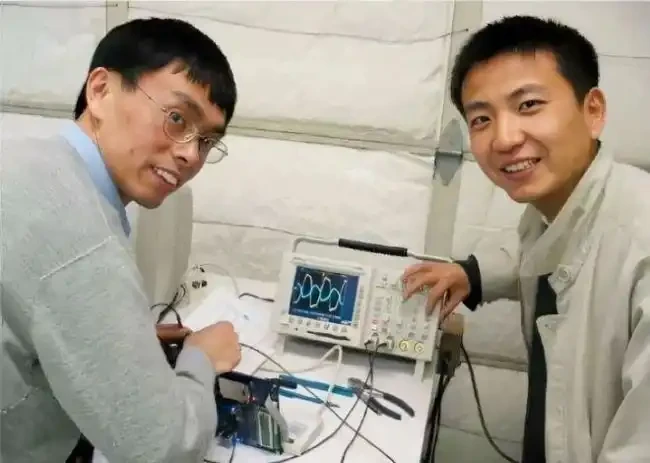
Early photo of Zhu Yiming (right)
In Silicon Valley, Zhu Yiming noticed that the memory industry had shifted from the US to Japan and then to South Korea and Taiwan, China. He predicted that mainland China would also have a significant opportunity in the future and might not be without the possibility of creating a "Chinese version of Samsung." He designed an SRAM (Static Random Access Memory) chip and returned to China in 2005 to found a company called GigaDevice.
From its inception, GigaDevice was a pure design company. It didn't manufacture its own chips; wafer fabrication was entirely outsourced to foundries. Its main products were NOR Flash (memory chips used for boot programs in routers and game consoles) and MCUs (microcontrollers for controlling refrigerators and washing machines). Zhu Yiming led the team to create China's first static memory and IP technology, the first serial flash product, and the first 32-bit general-purpose MCU based on the ARM Cortex-M3 architecture. By its IPO in August 2016, it was already mainland China's largest NOR Flash design company, with revenue growing from 14.89 billion yuan in its IPO year to 92.03 billion yuan.
Asset-light, high margin, no need to build your own fabs. This was the smartest way to operate in China's IC design industry at the time.
But this model had a prerequisite: sufficient capacity and stable pricing from foundries. In the second half of 2020, Zhu Yiming hit a snag. SMIC's 8-inch capacity became severely tight. GigaDevice was forced to transfer some NOR Flash orders to Hua Hong Semiconductor's 12-inch fab, incurring higher manufacturing costs. In Q4 2020, the gross margin plummeted from its previously stable level above 37% to 29.49%. The consequence of being strangled by foundry capacity was directly reflected on the income statement for the first time.
During the same period, GigaDevice was also paying the price for another acquisition. In 2019, it acquired Shenzhen Silead for 1.7 billion yuan, a 16x premium, creating 1.305 billion yuan in goodwill. Silead made in-display fingerprint chips. Zhu Yiming wanted to assemble a platform-type design company by combining memory, controllers, and sensors. However, they were sued by Goodix for patent infringement, leading to a price war. Silead only fulfilled 58% of its three-year performance commitment. From 2020 to 2023, GigaDevice recorded goodwill impairment for Silead for four consecutive years, totaling approximately 900 million yuan, consuming most of the 1.3 billion yuan in goodwill. The strategy of expanding product categories through horizontal acquisitions of other design companies also proved unviable.
The lesson Zhu Yiming learned from these two experiences was that the ceiling for an asset-light design company isn't design capability, but production capacity. Furthermore, the real battleground for memory chips isn't NOR Flash, which only accounts for 2.5% of the global market, but DRAM. However, unlike NOR Flash, DRAM cannot be produced at general-purpose foundries. DRAM process technology is highly proprietary. The cell structures, capacitor designs, and word line processes of each manufacturer are customized. Samsung, SK Hynix, and Micron all operate an integrated design and manufacturing model. To make DRAM, there is only one path: build your own fab.
This is the background and reason for CXMT's creation.
Hefei's Third Big Gamble, Following BOE and NIO
GigaDevice's financial statements and shareholder structure couldn't possibly bear the investment scale of building a DRAM fab. After all, Phase 1 alone cost 18 billion yuan, with a total investment exceeding 100 billion yuan, and nearly a decade of consecutive losses. This money had to come from a different kind of capital.
In 2016, the Hefei government extended an olive branch.
The market often calls Hefei the "city best at venture capital." Hefei's most successful VC story is BOE (Beijing Oriental Electronics). The starting point for the world's largest LCD panel shipper, with annual revenue exceeding 200 billion yuan and Chinese panel companies capturing a 70% share of the global LCD market, was in Hefei.
In September 2008, BOE and Hefei signed an investment framework agreement for a Gen 6 line. The total project investment was 17.5 billion yuan. The registered capital of 6 billion yuan was funded by Hefei, injected via a private placement to BOE, and then wholly invested in the project company. Hefei didn't just give BOE a simple subsidy. Using local government platforms for equity control, advancing funds, providing loan interest subsidies, and land and energy support, Hefei shouldered BOE's most difficult construction phase. Hefei then attracted glass substrates, polarizers, driver chips, equipment, and materials around BOE, earning the city the label of "Capital of New Displays."
The second classic story is NIO. In April 2020, NIO had just crawled out of its life-or-death crisis in 2019. Hefei Construction & Investment Group and Anhui Emerging Industry Investment Co., Ltd. made a total cash investment of 7 billion yuan in NIO China. NIO China's headquarters was established in the Hefei Economic and Technological Development Zone. NIO later became one of China's representative high-end electric vehicle brands, with a market value briefly exceeding $100 billion.
The strategy was: find asset-heavy leaders, use transaction structures instead of simple subsidies, help companies get through the construction phase, and then use the leader to pull upstream and downstream companies to establish roots locally.
In 2016, Hefei used the same investment logic for its next big gamble.
Yuan Fei, an early core figure at Hefei Industry Investment Group, later said, "Whether it was Hefei Industry Investment or the industrial partners, everyone involved in CXMT in the early days bore unprecedented risk and pressure."
After all, DRAM is harder than display panels or complete vehicles. The risks related to technology, equipment, yield rates, patents, and export controls are all higher. But from a local industrial organization perspective, it is just like BOE and NIO: it consumes money in the short term, but if successful in the long run, it can fundamentally change the supply-demand dynamics of an entire industrial chain.
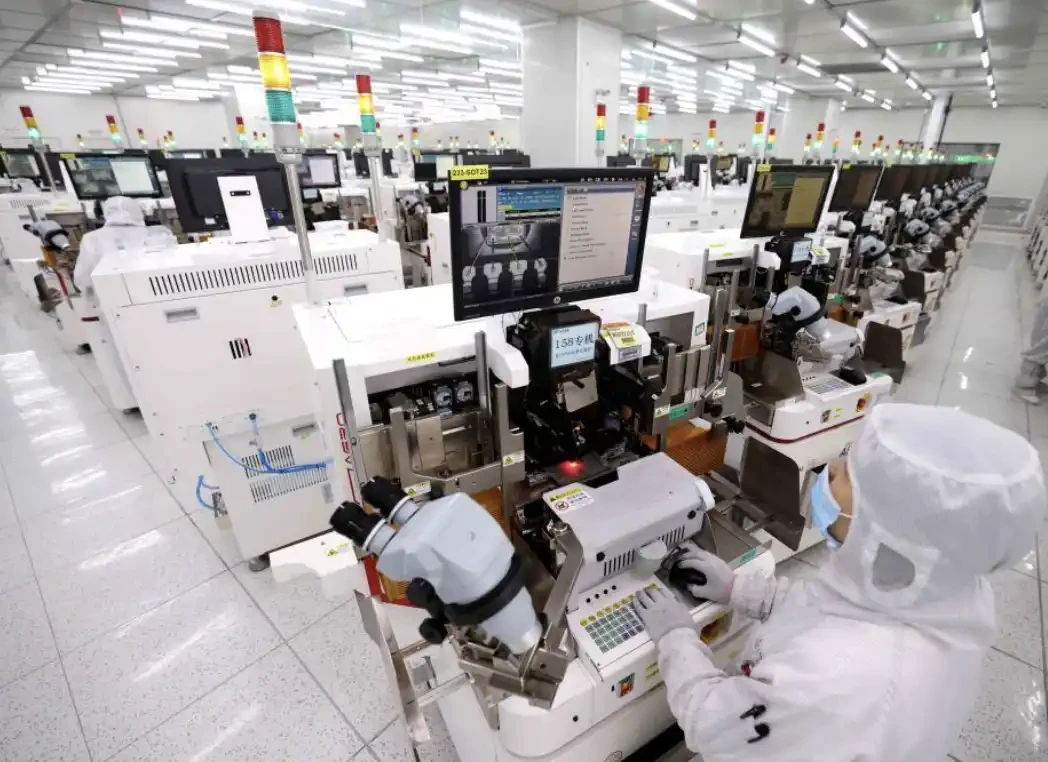
Hefei, Anhui advances the integrated circuit industry
Hefei Industry Investment Group invested 14.4 billion yuan in CXMT's Phase 1 alone. The total project investment exceeded 100 billion yuan.
In July 2018, GigaDevice announced that Zhu Yiming had resigned as general manager, retaining only the chairmanship, and formally assumed the roles of CXMT's Chairman and CEO. The industry called this Zhu Yiming's "second startup."
The current shareholder list already reveals the cards on the table for this gamble. The top five shareholders are Qinghui Jidian (21.67%, wholly controlled by Hefei state-owned assets), CXMT Integration (11.71%), Big Fund Phase II (8.73%), Hefei Jixin (8.37%), and Anhui Provincial Investment (7.91%). Hefei state-owned assets hold a combined stake of over 36%.
Among the other shareholders, Alibaba Cloud holds a 3.85% stake (investing 6.1 billion yuan, corresponding to a valuation of 158.4 billion yuan), and GigaDevice holds 1.8%. The investor list also includes the China Structural Adjustment Fund, CICC Capital, Legend Capital, China Merchants Venture Capital, Yunfeng Fund, Tencent, and Alibaba.
The money and momentum were in place. But Zhu Yiming's "second startup" still lacked one thing: core technology.
The Technological Legacy of a Bankrupt German Company
Around 2016, the three giants, Samsung, SK Hynix, and Micron, together controlled over 90% of the global DRAM market share. This was the result of nearly two decades of elimination rounds.
Since the 1980s, the DRAM industry has killed off a batch of players every few years.
Japan once held over 80% of global DRAM production capacity. By the 2010s, only Elpida was left struggling, eventually acquired by Micron in 2012. Europe once had Qimonda, a subsidiary of Infineon, but it went bankrupt in 2009.
Zhu Yiming's solution lay within this German company that had already gone bankrupt in 2009.
The name Qimonda comes from two words. "Qi" is the Chinese word for "energy," the flowing energy. "Monda" is Latin for "world." The literal meaning: key to opening the world.
The name was beautiful. The company's fate was tragic.
Qimonda was spun off from its parent company Infineon in May 2006 and listed on the NYSE on August 9, 2006, under the ticker QI. At its IPO, it was already one of the world's major suppliers of memory products and a leader in 300mm wafer manufacturing technology. By 2008, Qimonda had completed R&D on a 46nm stacked product based on Buried Word Line technology, promising a 100% capacity increase over the previous 58nm generation. It was just short of mass production.
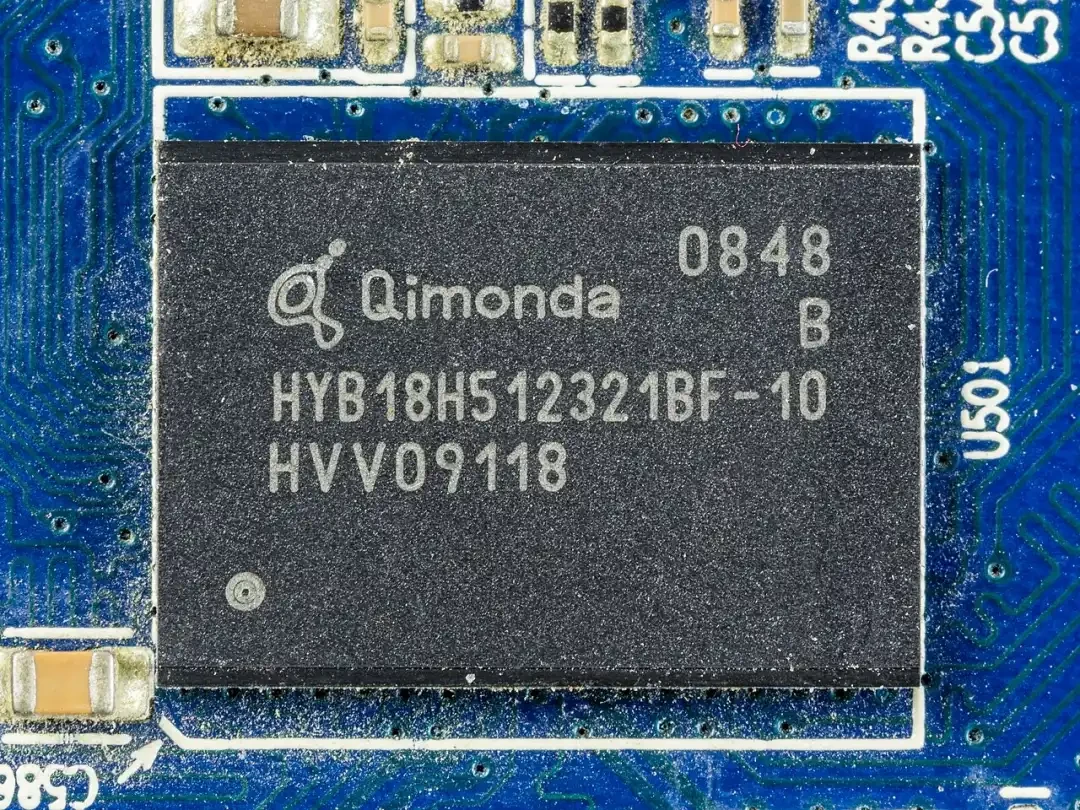
Image of Qimonda DDR2/GDDR chip products
But then the financial crisis hit. DRAM prices plummeted. Samsung expanded production at a loss to pressure competitors. Qimonda's new technology hadn't been mass-produced yet, and its capital chain broke. It went bankrupt in 2009. The lights went out for Europe's last major memory manufacturer. The Munich R&D center emptied, and its 12,000 employees scattered, absorbed by Samsung, Micron, and SK Hynix. In 2012, Qimonda's insolvency administrator began selling off its 7,500 patents.
Zhu Yiming saw his opportunity in this history.
Qimonda died from a cyclical downturn, not from bad technology. The 2.8TB of technical documents and over ten thousand patents it left behind were a legacy buried for nearly a decade. Traces of Qimonda's buried word line and honeycomb capacitor structures can be found in the DRAM products of Samsung, Micron, and SK Hynix today, having indirectly flowed into the process systems of the three giants through partners like Inotera Memories (Huanya Ke) and Winbond (Huabang).
But how to acquire this legacy and how to use it to build a fab was a huge problem, with a bloody lesson just ahead.
2016 is considered the "Year One" for the resurgence of memory in China. Before this, China's DRAM industry had completely declined, facing technological monopolies from US, South Korean, and other foreign companies, with no ability to counter.
At that time, when China launched its national memory team, besides CXMT, there were two other parallel paths: Yangtze Memory Technologies Corp (YMTC) in Wuhan doing NAND Flash, and Fujian Jinhua Integrated Circuit (Jinhua) doing DRAM.
In 2017, Micron filed lawsuits in the US and Taiwan against both UMC and Jinhua, accusing three employees who jumped from Micron to UMC of stealing Micron's DRAM trade secrets. One of them was accused of stealing over 900 technical files. In October 2018, the US Department of Commerce added Fujian Jinhua to the Entity List, imposing export controls. UMC immediately announced the suspension of its technical cooperation with Jinhua. Equipment supply was cut off, technical cooperation frozen, and the project halted. The US Department of Justice also filed criminal charges against Jinhua and UMC, accusing them of economic espionage, facing potential fines exceeding $20 billion. It wasn't until the end of 2023 that Micron and Jinhua reached a global settlement. The dispute lasted six years.
The lesson from Fujian Jinhua was clear: being caught in a trade secret dispute with Micron led to being placed on the Entity List, equipment supply being cut off, and the project shutting down. For a new


