币安撤回希腊 MiCA 申请:欧洲牌照战背后的监管博弈


- 核心观点:币安在欧盟MiCA法规过渡期结束前一周主动撤回希腊的牌照申请,表明其通过小国获取欧盟通行证的路径受挫。此举旨在规避正式被拒的标签,并为转向法国等成员国重新申请保留主动权,但暴露了其全球合规修复进程中的信任赤字。
- 关键要素:
- 2026年7月1日,欧盟MiCA过渡期正式结束,未获授权的加密服务提供商若继续向欧盟客户提供服务将违反法律。
- 币安于2026年6月24日主动撤回向希腊HCMC提交的MiCA申请,此前路透报道称希腊监管机构预计将拒绝该申请。
- MiCA采用“统一授权”与“欧盟护照”机制,一个成员国授权即可服务整个欧盟市场,但希腊所承受的来自ESMA和ECB的监管压力,使其审批过程政治化。
- 币安从塞浦路斯撤退后,押注希腊作为欧洲牌照入口,但美国大案留下的合规污点及大型交易所的体量争议,使其在希腊这一小国难以快速获得批准。
- 分析师预测,币安下一站可能转向监管更成熟、有DASP登记基础的法国,但法国的审批流程会更慢、更严格,且对币安的信任修复要求更高。
On June 24, Binance withdrew its MiCA license application in Greece. According to Binance, after carefully evaluating the status and timeline of the Greek approval process, it decided to withdraw the MiCA application submitted to the Hellenic Capital Market Commission (HCMC) and will subsequently seek authorization in another EU member state. It also emphasized that user assets remain safe and accessible, and it will directly inform affected European users of subsequent arrangements.
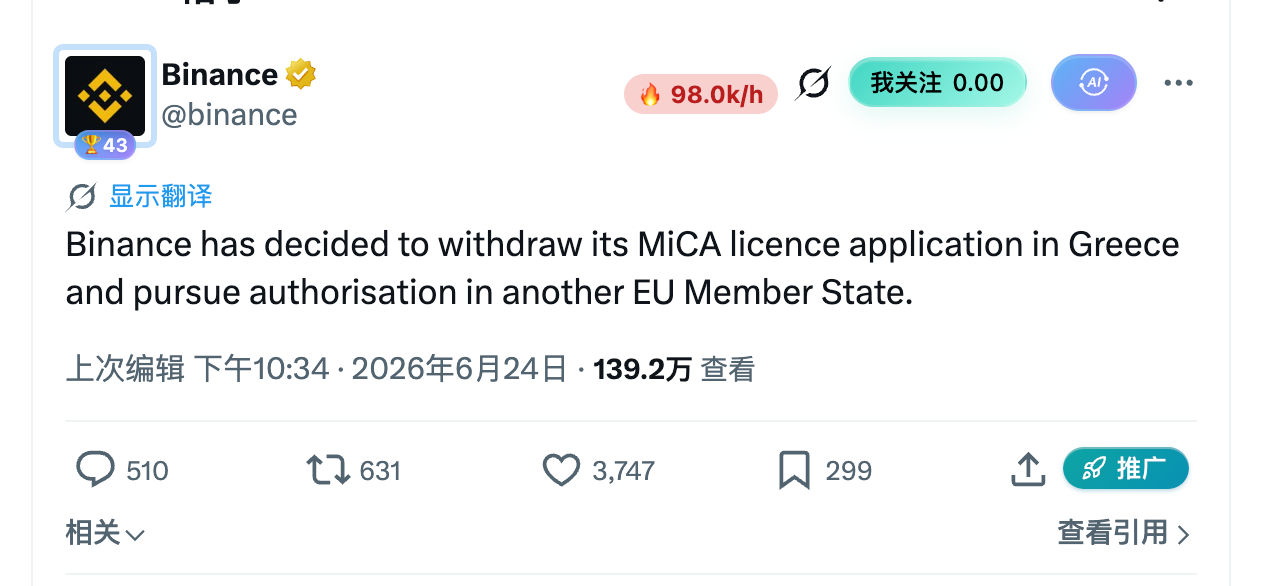
Original post: https://x.com/binance/status/2069791259812839895
In fact, many people are unaware of a key background to this: in just under a week, on July 1, 2026, the MiCA transitional period in the EU will officially end.
According to the European Securities and Markets Authority (ESMA), after July 1 this year, any crypto asset service provider without MiCA authorization that continues to serve EU clients will be in violation of EU law. They must cease relevant services and execute an orderly exit or client migration plan.
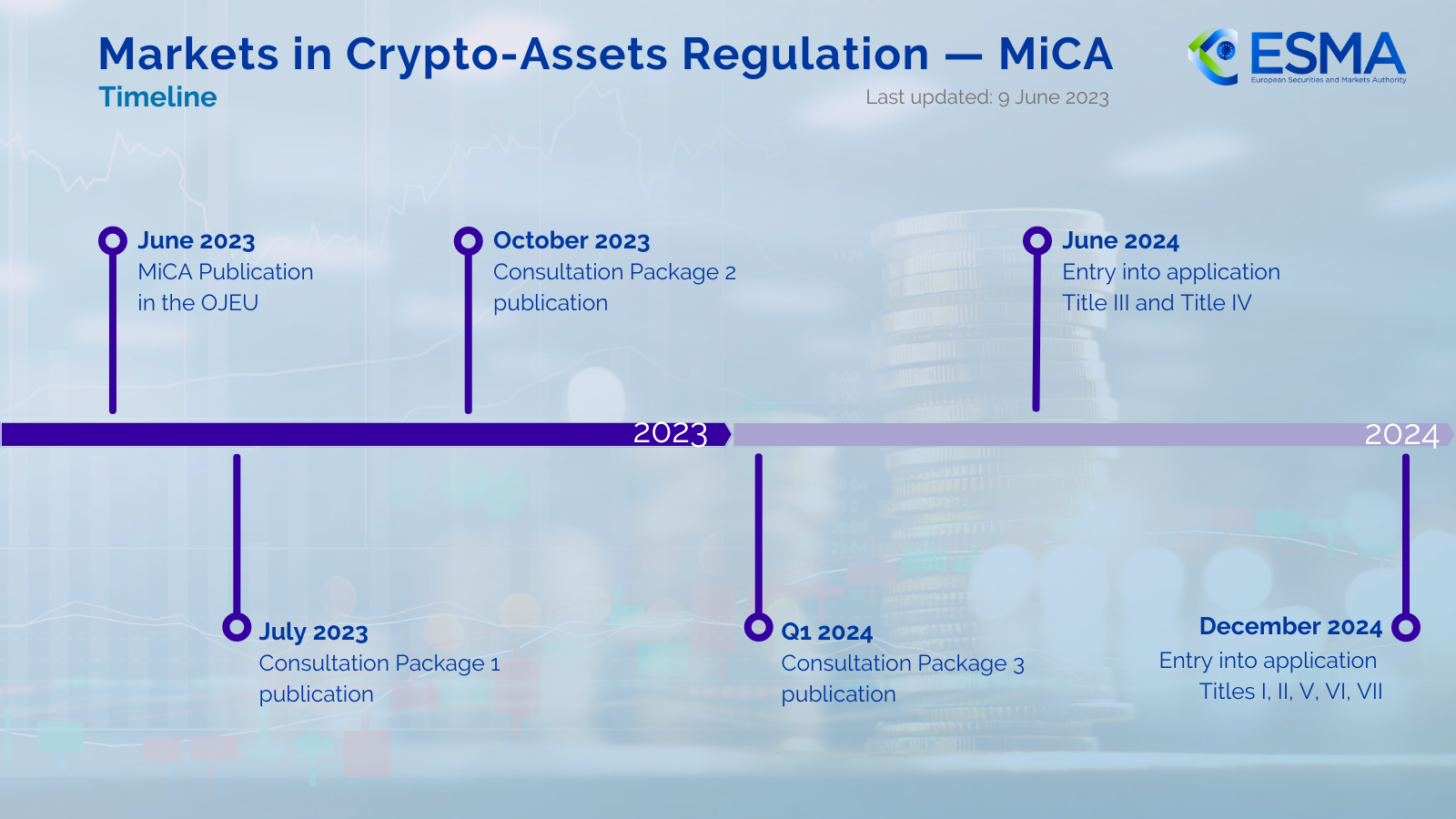
Image: ESMA Official MiCA Timeline, Source: gravityteam.co
Even if you hold a local financial license in a European country, without a MiCA permit after July 1, you cannot conduct crypto asset-related business in Europe. Essentially, you have until July 1 to prepare and adjust.
This is actually very unfavorable for Binance. For Binance, the July 1 deadline acts as a hard boundary. If the Greek application cannot yield a clear result before this deadline, its European business arrangements, user communications, institutional partnerships, and regulatory narrative will all come under pressure.
In fact, Binance submitted its MiCA application to the Greek HCMC back in January 2026. My estimate is that it expected the approval process to likely be completed before July 1. However, with the deadline fast approaching, the Greek side remains ambiguous and indecisive.
Earlier, on June 16, Reuters reported, citing informed sources, that Greek regulators were expected to reject Binance's MiCA application. Binance subsequently responded, stating that it had maintained constructive cooperation with regulators over the past 18 months, and indicated that its understanding was that the HCMC had completed its review, deemed the application compliant with MiCA requirements, and the application had even been reviewed at the ESMA level.
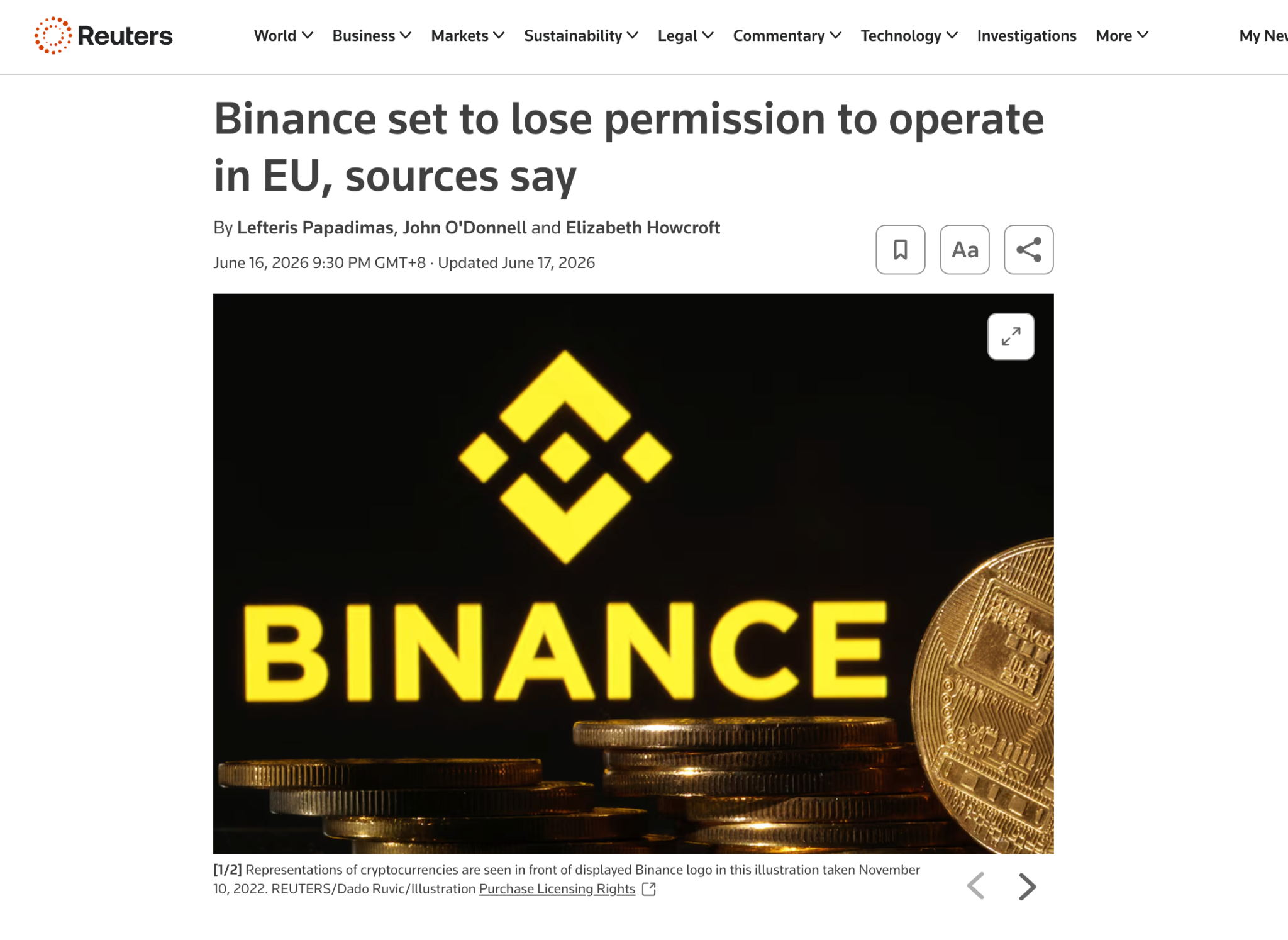
Image: Reuters article. Original text: https://www.reuters.com/business/finance/binance-set-lose-eu-licence-bid-permission-offer-services-bloc-sources-say-2026-06-16/
In other words, Binance essentially still believes it has a compliant foundation, but the Greek side's attitude is ambiguous, with rejection seeming more likely.
Therefore, from Binance's perspective, Greece turned out to be an unreliable partner. Withdrawing the application early on the 24th was essentially "cutting losses early," and it will now seek authorization in another EU member state.
In fact, Greece itself certainly hoped that Binance would choose it. As a smaller country, attracting a major fintech project like Binance would bring potential investment, tax revenue, and job creation.
But why did Greece act so hesitantly on this matter?
Let's delve deeper into the chain of interests behind this.
What Exactly Did Binance Withdraw?
Focusing on the announcement Binance issued to its European users, it confirmed the withdrawal of the MiCA application submitted in Greece, as we mentioned at the beginning of the article.
The core information in the announcement is threefold:
First, Binance withdrew the MiCA application submitted to the Greek HCMC.
Second, Binance will turn to another EU member state to continue seeking authorization.
Third, Binance emphasized that user assets remain safe and accessible, but some European users may be affected in terms of service arrangements due to differences in their country of residence and account status. Binance will contact relevant users directly through official channels to explain the next steps.
So, these three points together indicate that Binance has not announced an exit from the European market, nor has it abandoned MiCA. It has abandoned "the route using Greece as the entry point for an EU license." This means Binance still desires and is confident about obtaining MiCA approval.
Focusing on MiCA, it differs from local European financial licenses. It is more like a universal "business license" valid across the EU.
For instance, in the early days, a common path for an exchange wanting to operate in Europe was to obtain different forms of registration or licenses in different countries, such as DASP in France, OAM registration in Italy, local registration in Spain, or CASP registration in Cyprus. Systems varied across countries, regulatory intensity differed, and companies could distribute their operations across multiple points.
After MiCA's implementation, with its unified authorization and EU passport mechanism, once a crypto asset service provider obtains MiCA authorization in one EU member state, it can theoretically serve the entire EU market through this passport mechanism.
In other words, if Binance got the license in Greece, it wouldn't just mean access to Greece; it would mean obtaining a passport to all 27 member states.
Therefore, Binance's withdrawal of the Greek application should not be simply understood as an obstacle in a local regulatory approval process. It actually affects Binance's entire legal operation path within the EU.
In fact, ESMA had clearly reminded on April 17, 2026, that the MiCA transition period would end across the EU on July 1, 2026. After this date, crypto asset service providers without MiCA authorization, if they continue to provide services to EU clients, would violate EU law. ESMA also required unauthorized institutions to prepare orderly exit plans in advance, including notifying clients, arranging asset transfers, migrating to authorized CASPs, or guiding clients towards self-custodial wallets.
So, June 24 was only a week away from July 1. Binance's withdrawal of the Greek application at this juncture carries a strong sense of urgency.
From public information, the wind in Greece had begun to shift in mid-June.
As mentioned earlier, on June 16, Reuters reported, citing informed sources, that Binance's MiCA application submitted to Greek regulators was expected to be rejected. If this result materialized, Binance would be unable to rely on the Greek path to serve EU clients after July 1. Following the report, Binance quickly responded. It stated that it had maintained constructive cooperation with regulators for the past 18 months, invested significant compliance resources, and according to its understanding, the HCMC had completed its review, deemed the application compliant with MiCA requirements, and the application had even undergone ESMA-level scrutiny.
So, while one regulatory source suggested Greece might deny approval, Binance emphasized, "We believe the application meets the requirements and have not received any formal contrary signal from the HCMC."
This indicates that Binance's application process had fallen into a state of ambiguity. The official result wasn't public yet, but the market already sensed negative expectations. The applicant was still maintaining its compliance narrative, but the time window no longer allowed for prolonged back-and-forth.
By June 23, Greek media outlet eKathimerini reported that Binance had withdrawn two applications submitted to the HCMC and the Bank of Greece, stating that the entire process was considered "politicized" internally. The report also mentioned that while the Greek government was positive about Binance investment, the Bank of Greece advisors and the European Central Bank had expressed negative opinions.
After Binance's official announcement on June 24, it confirmed that Binance had voluntarily withdrawn the Greek application and was turning to another EU member state to continue pursuing MiCA authorization.
For Binance, waiting for a formal negative decision from Greece would saddle it with a clear "MiCA application rejected" label. This label would affect its applications in other EU member states, as well as the judgment of banks, institutional clients, and users. By voluntarily withdrawing now, although it still reveals the failure of the Greek path, it at least preserves the right to control its own narrative.
Externally, it can state that it still supports MiCA, still values Europe, and will continue to seek a clearer, more sustainable compliance path. Internally, it buys time to arrange for EU users, mitigating the impact of withdrawal panic and service disruptions.
Towards other regulators, it can also avoid entering the next round of negotiations carrying a formal rejection document.
So, Binance's withdrawal of the Greek MiCA application essentially means the path of using Greece as the entry for Binance's European license has hit a dead end, but it leaves room for future strategic moves.
From Retreating from Cyprus to Retreating from Greece
As early as June 2023, Binance's Cyprus entity applied to be deregistered from the local register of crypto asset service providers. At the time, Binance explained that it was preparing for the EU's MiCA implementation and needed to concentrate resources on fewer regulated entities. This was actually the starting point of Binance's strategic shift in Europe.
So, Binance's retreat from Cyprus was essentially about reshuffling the deck for the MiCA era. It aimed to reduce peripheral outposts and focus its firepower on a few key markets.
However, the major US case in November 2023 became a hindrance to Binance's compliance efforts. At that time, Binance reached a settlement with the US Department of Justice, Treasury, CFTC and other agencies exceeding $4 billion. US DOJ documents showed Binance acknowledged violations related to anti-money laundering, unlicensed money transmission, and sanctions. CZ also pleaded guilty to failing to maintain an effective anti-money laundering program, resigned as CEO, and served several months in prison.
In fact, the damage to Binance wasn't just the fine. For an exchange, fines are a one-time cost, but reputational liability is a long-term cost.
During the CZ era, Binance was the quintessential high-speed growth engine in the global crypto market, with rapid product iteration, fast market entry, and swift user growth, but often crossing regulatory boundaries. After Richard Teng took over, Binance's worldview shifted to compliance, regulatory cooperation, institutional governance, transparency, and long-termism.
In reality, within a European regulatory system, a company's historical compliance issues do not automatically disappear simply by changing the CEO or paying fines. Regulators will consider all potential risk factors comprehensively. For example, were these issues caused by the founder's personal style, or the company's governance structure? Has there been a fundamental change now?
If the MiCA passport is approved, is there a risk of problems arising again in the future, potentially affecting the EU's financial system?
From this point onward, Binance's European licensing efforts became more like a trust restoration battle.
So, in January 2026, Binance bet on Greece.
Why Greece?
In fact, Greece's appeal to Binance lay in its concentrated approval process, strong political willingness to attract investment, lower costs compared to traditional financial centers, and a system that, while offering the institutional value of an EU passport, might offer more operational flexibility than countries with stronger regulatory traditions and higher political scrutiny. Moreover, there weren't many local MiCA benchmark cases yet, and Binance hoped to become one.
Richard Teng had also publicly stated at the time that Greece's workforce and security conditions gave it an advantage in the selection of a European regulatory headquarters. When a global exchange CEO publicly praises a country's advantages, it usually means the company has included that location in its core strategic narrative.
For its part, Greece also genuinely hoped to welcome Binance as a partner.
Greece is an EU member state but not a traditional European center of financial regulatory power. It wanted to attract investment and shape its fintech image.
After all, a major exchange establishing a European hub locally could bring jobs, tax revenue, legal and accounting service income, and package Greece as a new node for fintech and the crypto industry in Southern Europe. So, a project like Binance definitely held natural appeal for Greece.
But Where Did the Pressure on Greece Come From?
In fact, the purpose of MiCA is to eliminate regulatory arbitrage in European crypto regulation.
Before MiCA's full implementation, European crypto regulation was fragmented. Each country had its own registration system; some had high thresholds, others low. Some focused more on anti-money laundering registration, while others had already started building more comprehensive digital asset service provider regulatory frameworks. For large exchanges, this meant getting a license in France, one in Italy, another in Spain, one in Cyprus, and expanding into Poland, Sweden, and Lithuania.
The advantage of this approach was flexibility. If regulation tightened in one country, it wasn't a big problem in another. If a license was hard to get in one country, you could apply in another. In the early days, many crypto platforms operated in Europe this way.
But after MiCA's implementation, this logic was completely rewritten.
MiCA's biggest feature is unified access. Once an exchange obtains authorization in one EU member state, it can theoretically serve the entire EU market through the passport mechanism. This means that if Greece issued a license to Binance, it wouldn't just affect Greek local users, but the market access for all 27 EU member states.
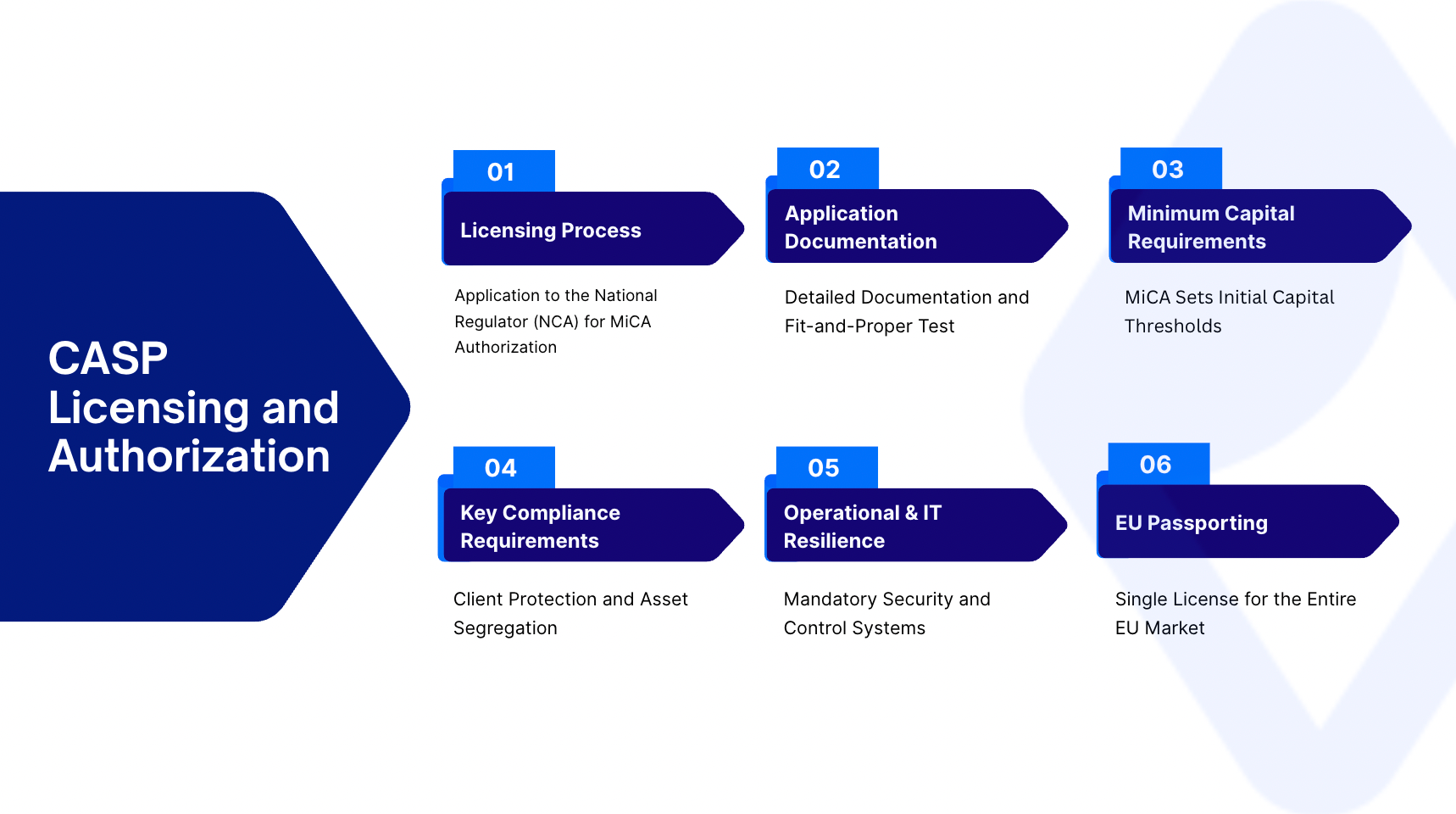
Image: Explanation of MiCA Passport Mechanism + CASP Authorization Process, Source: blog.amlbot.com
So, if a highly controversial exchange with a heavy historical compliance burden and immense global scale could quickly obtain MiCA authorization through a relatively smaller member state with limited regulatory resources but a stronger appetite for investment, it would inevitably lower the standard for countries like Germany, the Netherlands, France, and Ireland, which have stronger regulatory capabilities and more complex financial systems.
Once this door was opened, other large crypto platforms would follow suit. Instead of seeking out the most mature regulatory environment, everyone would go to the country easiest to negotiate with, most willing to attract investment, and most in need of an industry story. Ultimately, MiCA, designed to solve regulatory arbitrage, would become a new tool for it.
So, while MiCA applications appear to be decided by individual countries (e.g., the HCMC in Greece), in reality, they must also consider the stance of ESMA and the European Central Bank (ECB).
Although ESMA does not directly license crypto asset service providers (that's the role of local competent authorities in each member state), it oversees regulation and standard coordination. It ensures that different member states don't implement the same rules with vastly different levels of strictness.
The ECB doesn't have direct veto power over crypto licenses either, but its influence is very strong regarding financial stability, banking system risks, stablecoins, payment systems, and macro-prudential supervision. Especially when a large exchange enters the EU unified market, it involves not just a crypto platform, but user assets, banking channels, payment clearing, stablecoin liquidity, and potential systemic risk spillovers.
So, what Greek media called "politicization" more accurately refers to this approval being placed within the broader context of EU financial sovereignty, regulatory reputation, competition among member state interests, and the trust deficit of a major exchange.
Who Will Be the 'Another EU Member State' Binance Mentioned?
Currently, Coinbase has announced obtaining MiCA authorization through the Luxembourg CSSF, and Kraken has also obtained MiCA authorization through the Central Bank of Ireland.
Following such paths, once a platform completes MiCA authorization in one EU member state, it can serve the entire EU market via the passport mechanism. Their biggest advantage moving forward is the ability, after July 1, to leverage regulatory certainty in competing for institutional clients, compliance-sensitive users, and partners in banking, payments, and fiat on/off ramps.
For Binance, short-term revenue loss in Europe might not be fatal. Binance still possesses global liquidity, emerging market coverage, and a complete product line. However, Europe is a showcase market for global regulatory credibility. Failing to obtain MiCA could slow down Binance's legitimacy restoration process.
Besides affecting its exchange business, this could also have repercussions on banking partnerships, institutional capital, stablecoin and RWA strategies, and other jurisdictions' perception of Binance's compliance capabilities. For a platform transitioning from the aggressive expansion of the CZ era, the time cost of trust repair might be more important than short-term volume loss.
Long-term, this is beneficial for platforms with higher compliance costs, more transparent governance structures, and lighter historical burdens. It also benefits TradFi players entering crypto custody, tokenization, and payment clearing. Under a unified regulatory framework, the market will increasingly value platforms that are accepted by banks, institutions, and regulators over the long term.
On the other hand, some demand for high-frequency trading, high-risk appetite, and non-compliance-sensitive activities may continue to flow towards DEXs, non-custodial wallets, or non-EU platforms. The stratification where compliant platforms handle institutional capital while on-chain and offshore markets cater to more native, aggressive crypto demand will become increasingly apparent.
As for Binance, which has been tirelessly searching for a new partner, I believe the next stop could be France.
In fact, Binance previously completed DASP registration with the French AMF. Binance France SAS has been on the AMF's whitel