Reviewing the History of China's Crypto Exchanges: The Wild Rise, Offshore Migration, and Compliance Restructuring


- Core Thesis: This article systematically reviews the development history of China's crypto exchanges from their founding in 2011 to 2026. The central narrative arc is: From the triopoly of BTCC, Huobi, and OKCoin dominating the domestic market, through the forced closures following the "September 4th" regulatory crackdown in 2017, to the offshore rise of platforms like Binance, and finally, after the comprehensive crackdown in 2021 and the large-scale regulatory settlements post-2022, the industry has entered a new phase of global compliance and professionalization.
- Key Elements:
- Three Major Eras: 2011-2017 was the era of domestic wild west and the "Big Three" rivalry; 2017-2021 was the period of offshore migration and a second boom; post-2021 is the phase of global compliance restructuring and the domestication of the local market.
- Key Regulatory Milestones: The "September 4th" notice in 2017 terminated domestic fiat currency trading; the "September 24th" notice in 2021 designated all crypto-related businesses as illegal financial activities, also outlawing services provided to mainland users by overseas platforms.
- Fates of Major Players: Li Lin (Huobi) cashed out and left; Justin Sun took over and rebranded it as HTX. Star Xu (OKX) stepped back from the limelight, securing investment that valued the company at $25 billion from ICE. Changpeng Zhao (Binance) paid a $4.3 billion fine, served a brief jail term, and subsequently secured investment from Abu Dhabi's MGX.
- Evolution of Industry Structure: From the "HBO" (Huobi, Binance, OKEx) triumvirate battle to a stable ecosystem in 2026 comprising OKX (global compliance-focused), Binance (under regulatory pressure), with HTX and KuCoin/Gate.io coexisting as differentiated service providers.
- Key Supporting Data: From 2014 to 2016, China's three exchanges accounted for over 80% of global Bitcoin trading volume. Mainland China's trading volume dropped to zero in 2021. OKX was valued at $25 billion.
This article, which took me five days to compile and required extensive research, retraces the history of Chinese crypto exchanges. It aims to review the transformation of Chinese cryptocurrency exchanges from their wild, grassroots beginnings to their global reinvention. I believe this is also a story of the industry's underworld, interwoven with technological idealism,狂热财富, regulatory shifts, and global migration.
From the founding of BTC China in a Shanghai apartment in 2011, to the three-way battle for supremacy sparked by Huobi and OKCoin in 2013; from the era when the Chinese yuan once dominated the global Bitcoin market, to the "9.4" regulation in 2017 that abruptly ended the golden age of domestic exchanges; from platforms like Binance, HTX, and OKX moving to offshore markets, to the compliance-driven restructuring under a stricter regulatory era – the story of Chinese exchanges essentially encapsulates the entire cryptocurrency industry's journey from chaos to order.
In this path spanning over a decade, some rose from internet cafes and apartments to the world stage, some reached the global pinnacle through bull and bear markets, some sold their stakes and exited, some retreated behind the scenes, and others sought a ticket back into the mainstream financial system under the pressure of regulation.
Are you ready? Let us set off together from that unmarked apartment in Shanghai and retrace this path of Chinese exchanges – one of wilderness, frenzy, overseas expansion, and regulatory compliance.
01 The Dawn of the Wild West
During the rainy season in Shanghai in 2011, the air was suffocatingly humid and hot. In an apartment less than 20 square meters in Jing'an District, there wasn't even a proper signboard. Two chipped computer desks and a second-hand printer that frequently jammed – that was the entirety of China's earliest cryptocurrency exchange.
Yang Linke, cigarette dangling from his lips, stared at the flickering characters on the screen. Huang Xiaoyu typed in the last line of matching engine code. Neither of these two young men, scraping by on the fringes of the internet, could have foreseen that they were opening a wild door that would sweep the world.
Back then in China, no one considered Bitcoin a legitimate business. This virtual code from overseas was only hidden in the corners of tech forums. And the story of China's cryptocurrency exchanges quietly began with these two young men of vastly different backgrounds and personalities.
Yang Linke was a native of Wenzhou. Born in 1985, he never took the conventional path of studying and exams. He dropped out of school in his early teens and ventured out, working as an internet cafe manager in Wenzhou and Shanghai. Day in and day out, he tended to smoke-filled computers, fixed machines, troubleshot issues, and watched gamers play – this was his real youth. Later, he dabbled in selling virtual items and building small websites. He never made a fortune, but he developed a keen eye for niche market demands.
He didn't understand cryptography and had never been exposed to the overseas tech community. When he first saw the word "Bitcoin" on a tech forum in 2010, his sharp instincts told him this was a virtual token that could be transferred online without any control. A simple thought immediately struck him: if people are playing with it, some will want to buy and sell; if there's buying and selling, there needs to be a place for them to meet.
At that time, even OTC Bitcoin trading in China was scarce. Buyers and sellers had to post on forums, transfer money privately, and manually send coins – cumbersome and risky, much like people bartering vegetables on the roadside before there was a proper market. Yang Linke saw this untouched gap. But he had no technology, no team. The only thing he could do was find someone who could code to partner with.
The person he found was Huang Xiaoyu.
Unlike the grassroots Yang Linke, Huang Xiaoyu was a somewhat well-known tech geek in the community. He had spent years programming, specializing in website development and backend architecture. He was also among the first in China to truly understand Bitcoin's underlying logic. Introverted by nature, he disliked being in the spotlight and was obsessed only with code and decentralized technology. When Yang Linke found him on a forum and bluntly said, "I'll handle operations, you write the code; let's build a Bitcoin trading website together," Huang Xiaoyu agreed without much hesitation.
Perhaps it wasn't for the money, but for that inherent obsession of a tech geek: something so pioneering needed its own Chinese trading platform.
The two pooled together tens of thousands of yuan in startup capital and rented that apartment office. No investors, no official employees, no compliance procedures whatsoever. They coded and designed pages during the day, promoted on forums at night, ate instant noodles when hungry, and slept on the desk when tired. In June 2011, BTC China (BTCC) officially launched. It was China's first cryptocurrency exchange and one of the earliest trading platforms globally.
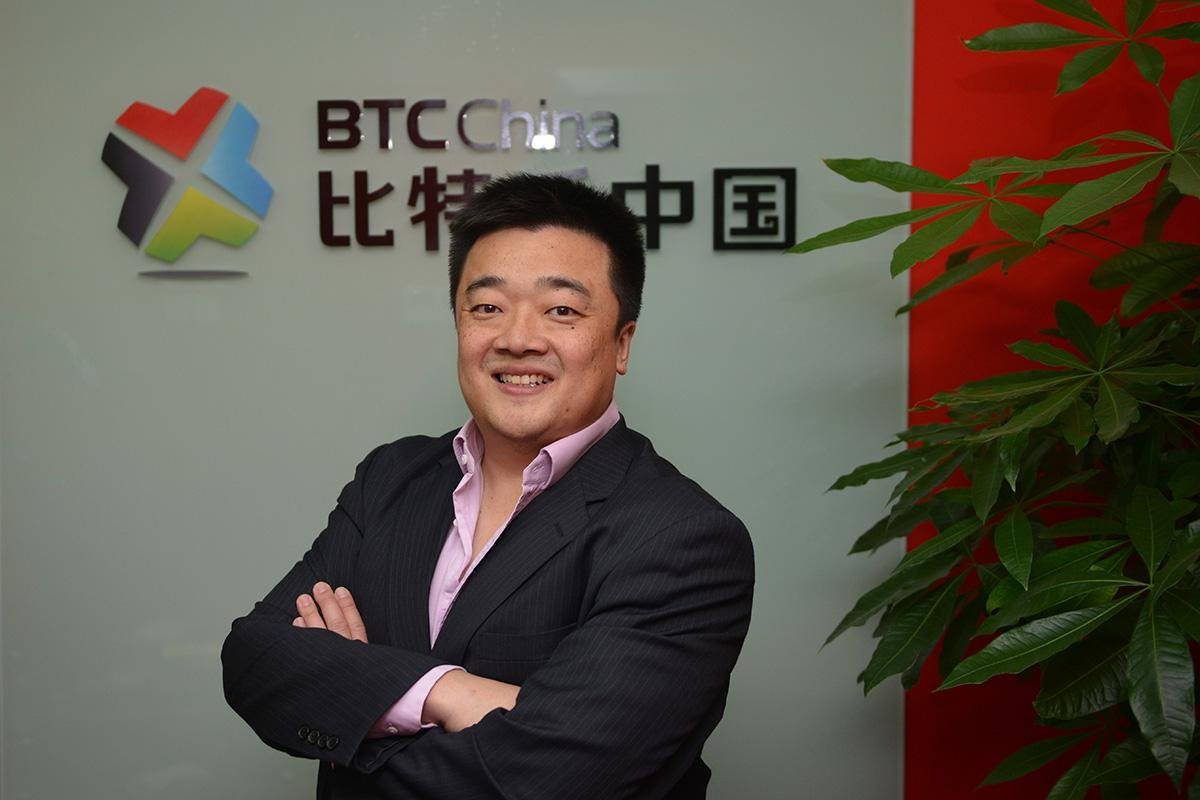
The early BTCC website was extremely rudimentary. The page only had the simplest buy/sell order book and price curve. There weren't even candlestick charts, and you could only trade Bitcoin. Deposits and withdrawals were entirely manual. Users would transfer money to Yang Linke's personal bank account, and he would manually verify and credit the coins. For withdrawals, users submitted requests, and Huang Xiaoyu would manually send the coins one by one.
Their first users numbered only a few hundred – all programmers, tech geeks, and overseas students. The daily trading volume was just tens of thousands of yuan. Yang Linke later recalled that they never thought about making money back then; they just felt they were doing something cool, like building the first small path in uncharted territory.
Two ordinary people – one daring to dream, the other daring to act – pitched the first tent for Chinese exchanges in the wilderness.
But this small grassroots tech platform remained lukewarm for a full two years after its launch, never breaking out of its niche circle. That was until 2013, when an elite player from overseas stepped in and completely rewrote BTCC's fate. His name was Bobby Lee.
Bobby Lee's life was from a completely different world than Yang Linke and Huang Xiaoyu.
He went to the US for studies at a young age, graduated from Stanford University, and worked for Silicon Valley tech companies and Wall Street institutions. He was familiar with overseas financial markets, media operations, and business tactics. He was also a devout believer in Bitcoin and one of the earliest to introduce it to Chinese-speaking business circles.
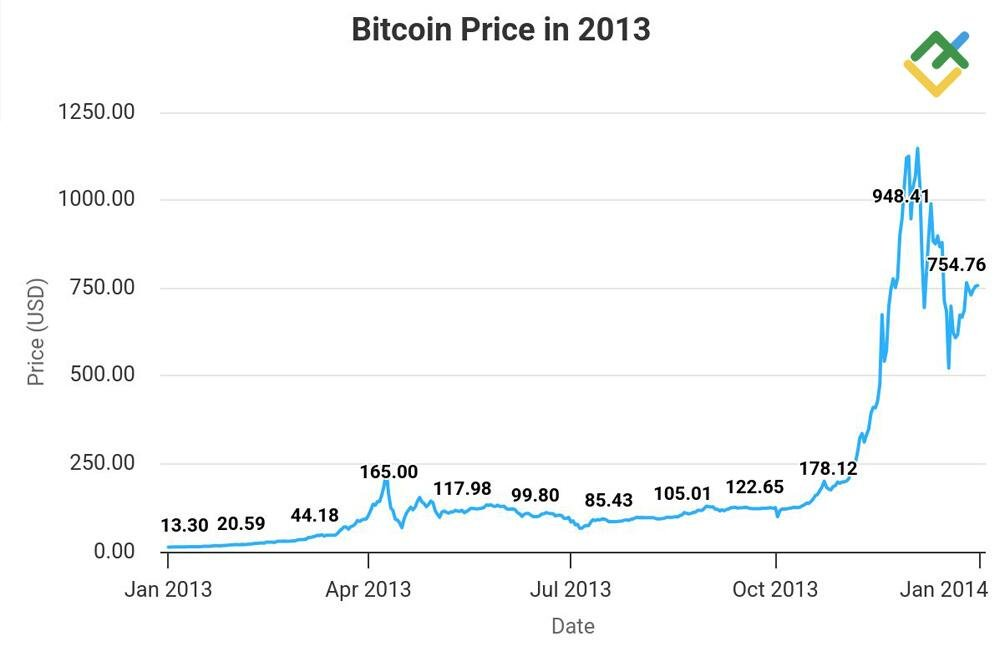
In 2013, Bitcoin's price skyrocketed from $13 at the beginning of the year to $1,100 by year's end. The first global bull run was sweeping in, demand from the Chinese market exploded, and BTCC's grassroots model couldn't handle the influx of users. Bobby Lee immediately saw the first-mover advantage of BTCC. He decisively joined to lead operations and, with three key moves, turned this small tech platform into an industry benchmark.
First, he ended the apartment workshop model, registered a proper company, and built a complete team for technology, operations, and customer service. He engaged with domestic and international financial media, pushing Bitcoin and BTCC into the public eye, striving to make ordinary people aware of Bitcoin and Bitcoin trading. He also optimized the deposit and withdrawal processes, improved system stability, and initially set up security mechanisms, successfully handling this explosive user growth.
2013 marked BTCC's peak. Daily trading volume exceeded hundreds of millions of yuan, user numbers surged, and it became the most influential exchange in China and globally. The original iron triangle of Yang Linke, Huang Xiaoyu, and Bobby Lee firmly established their position as China's exchange pioneers.
That period was the absolute wild west for Chinese crypto exchanges. No regulatory policies, no industry standards, no risk control requirements. There were no formal payment channels, no fund custody – all user assets were held in the founders' personal accounts.
This wild era completed the core primitive accumulation of the industry:
BTCC proved that the early business model of matching Chinese yuan with Bitcoin was viable. It expanded users from the niche crypto community to ordinary investors and provided the most intuitive entrepreneurial blueprint for those who followed.
Of course, the wild revelry eventually met its first warning bell.
In December 2013, the People's Bank of China and four other ministries jointly issued the "Notice on Preventing Risks Associated with Bitcoin." For the first time, it explicitly defined Bitcoin not as a currency but as a virtual commodity. It also drew a red line, prohibiting financial institutions and payment institutions from engaging in related businesses. It directly pointed out the fatal risks of exchanges: unregistered, poor security, vulnerable to attacks, and operators potentially absconding with funds.
While this notice didn't shut down exchanges, it put the first leash on the wildly growing industry. Yang Linke, reading the notice, knew in his heart that the days of grassroots workshops and grey areas were numbered. Little did he know that a game-changing battle among giants was already on the horizon.
In the winter of 2013, BTCC moved out of the apartment and into a proper office building. As its logo lit up, the three pioneers stood by the window, eyes full of light.
They had transformed from an internet cafe manager, a tech geek, and an overseas elite into the first generation of founders of Chinese exchanges, completing the first step from 0 to 1 in the most straightforward way. But they couldn't foresee that two more aggressive entrepreneurs were about to shatter the established landscape and propel Chinese exchanges to the pinnacle of the world.
Li Lin and Xu Xingming were already sharpening their skills nearby.
02 The Rise of the Three Giants and China's Domination of the World
Also in 2013, in Beijing's Zhongguancun, the lights in entrepreneurial cafes burned late into the night.
Li Lin stared at the Bitcoin candlestick chart on his computer, pondering repeatedly. Having just emerged from the failure of his group-buying venture, he sensed an unprecedented opportunity.
Simultaneously, in an apartment a few streets away, Xu Xingming's fingers tapped tirelessly on the keyboard. This tech geek, proficient in high-concurrency trading systems, was building his own trading engine.
Two young men with completely different backgrounds, mindsets, and strategies set their sights on the Bitcoin trading track in the same year. They didn't simply copy BTCC's grassroots pioneering path. Instead, using mature internet tactics, they forcefully broke the initial landscape established by Yang Linke and Bobby Lee, propelling Chinese crypto exchanges from a niche community to a position of global dominance.
Li Lin was from Shaoyang, Hunan. Born in 1986, he was a seasoned internet product expert. A computer whiz during his student days, he joined major companies like Renren.com and Oracle after graduation, mastering product design and user operations. In 2010, he rode the wave of group-buying, founding Mengmai.com, which once ranked in the top ten in China. But ultimately, it fell in the brutal "thousand-group-buying wars."
This failure gave him a crucial insight: small entrepreneurs could only break through by focusing on vertical tracks, addressing urgent pain points, and using asset-light operations.
In 2013, as Bitcoin surged from $13 to over $1,000, domestic trading demand exploded. Li Lin immediately tried to use BTCC but was frustrated by the poor experience: lagging pages, cumbersome deposits, unreachable customer service – user needs were severely neglected. He instantly identified the industry's bottleneck: China didn't lack people wanting to trade crypto; it lacked a good, fast, and reliable trading platform.
At that time, BTCC was holding its ground with its first-mover advantage but still carried the rough edges of a tech platform. In September 2013, Li Lin announced the launch of Huobi. Leveraging its "user-friendly, free, and fast" approach, it reached a trading volume of one million yuan within three months of launch, starting to challenge BTC China's first-mover advantage.
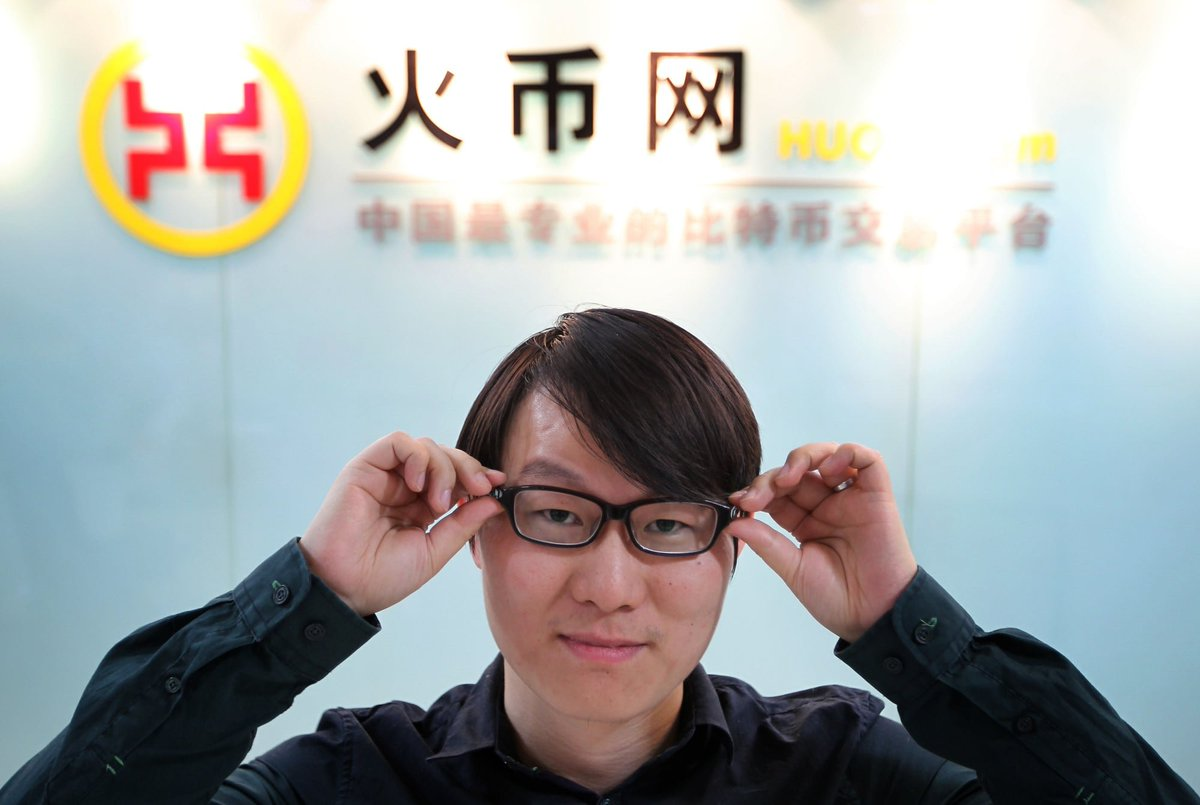
Li Lin's breakout strategy was user experience: instant deposits and withdrawals, 24/7 customer service, smooth pages. He then dropped the bombshell of permanent free trading, directly undercutting the first-generation platforms that relied on trading fees.
While Li Lin was aggressively capturing the market with user experience, Xu Xingming, also looking to profit from this track, took a completely opposite path.
Born in 1985 in Suzhou, Jiangsu, Xu Xingming was a tech geek. A graduate of Beijing University of Posts and Telecommunications, he mastered distributed systems and high-concurrency architecture in college. After graduation, he worked at Yahoo! China, participating in the development of world-class trading systems, and later served as Technical Director at Docin.com, thoroughly learning the stability of a ten-million-user platform.
After getting exposed to Bitcoin, he didn't focus on retail user experience. Instead, he immediately saw the core barrier of the trading system. At that time, the matching engines of all domestic platforms couldn't handle massive trades and high-frequency quant trading. Institutional users had no place to go. Xu Xingming's goal was to build the most stable and fastest exchange in China, specifically serving institutions.
In October 2013, OKCoin officially launched, branding itself as "technically top-tier, professional trading," setting itself up as a rival to Huobi.
He personally led the team to write the matching code, creating a system boasting millisecond execution and tens of thousands of concurrent transactions, directly overshadowing BTCC's outdated architecture. He focused on quantitative and high-frequency trading, firmly targeting professional investors and institutional teams, creating a stark contrast with Li Lin's retail-centric approach.
One understood users, targeting retail; the other understood technology, catering to institutions.
Li Lin and Xu Xingming, in the same year on the same track, forged two complementary yet competing paths to power.
By the end of 2013, both Huobi and OKCoin had risen, completely breaking BTCC's monopoly. The three-way stalemate of Chinese exchanges was officially formed.
At that time, BTCC held onto its pioneering reputation, securing loyal users with overseas resources and old-brand credibility; Huobi, with its superior user experience and aggressive operations, became the platform with the largest user base; OKCoin, with its top-tier technology, dominated the institutional and quant markets.
The three didn't engage in a destructive war but instead grew the industry pie together. As yuan on-ramps opened and trading processes standardized, it became easier for more people to enter the crypto space, transforming exchanges from a fringe business into one of the most lucrative entrepreneurial tracks.
The global influence of Chinese exchanges began to emerge, and a sudden global black swan event allowed them to take over the world.
In February 2014, a thunderclap echoed across the global crypto industry. Japan's Mt. Gox exchange, which once handled over 70% of global Bitcoin trading volume, lost 850,000 Bitcoins due to a hacker attack and internal mismanagement, leading directly to its bankruptcy.
The global cryptocurrency trading system collapsed overnight. Users panicked and fled, liquidity dried up, prices plummeted, and exchanges in Europe and the US were completely routed, leaving a massive vacuum in the market.
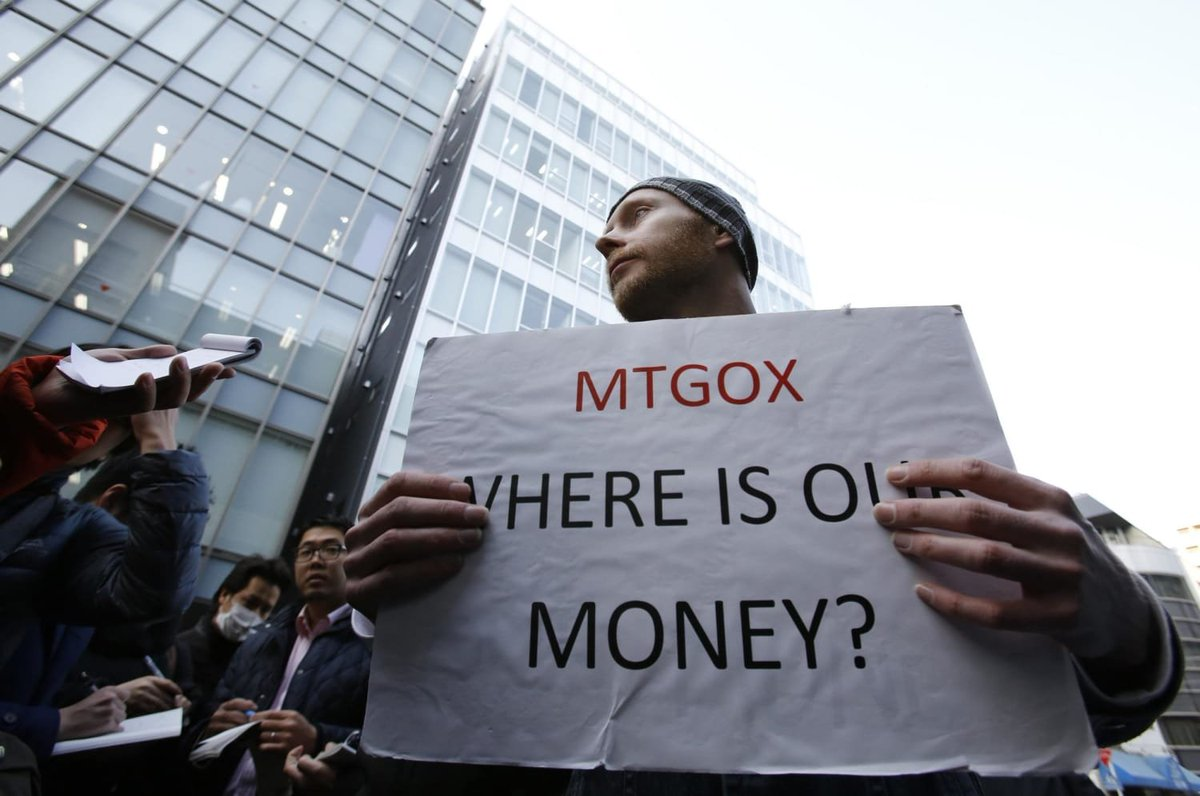
The three major Chinese platforms seized this historic opportunity to rewrite history: their yuan trading systems were mature, user bases were large, liquidity was abundant. Huobi and OKCoin's systems were capable of handling the global overflow of traffic, while BTCC leveraged its overseas resources to connect with international users.
Within three months, the center of global Bitcoin trading shifted from Tokyo to Beijing and Shanghai.
From 2014 to 2016, the BTCC, Huobi, and OKCoin trio firmly held over 80% of global Bitcoin trading volume, peaking at over 90%. The Chinese yuan became the core pricing currency for Bitcoin, and China's trading hours, policy direction, and user sentiment directly influenced the global Bitcoin price.
In the early hours of Beijing, Huobi's customer service was still processing orders; in late-night Shanghai, BTCC's matching engine hummed at high speed; quant teams in Shenzhen stared at OKCoin's order book for high-frequency trades. China was the undisputed epicenter of the global cryptocurrency universe.
These were the three most glorious years for Chinese exchanges. No high-pressure regulation, no vicious internal competition, no fatal scandals. The three giants jointly ruled the world, reaping enormous profits. Li Lin, Xu Xingming, and Bobby Lee stood at the pinnacle of the industry, becoming Chinese names known throughout the global crypto community.
Alongside the giants' dominance, smaller and medium-sized platforms mushroomed, ushering in a prosperous era of a hundred schools of thought. Chinese Bitcoin targeted the lower-end market with low fees, Bitcoin Trading Network focused on spot trading, and Bter (now Gate.io) was among the first to list niche altcoins. By 2016, the number of legitimate domestic exchanges exceeded 30, and Bitcoin trading had achieved a certain scale, spreading from first-tier cities to smaller towns.
This stage was purely about spot trading. Everyone believed the golden age would last forever.
But beneath the surface of prosperity, undercurrents were already stirring.