






Bitcoin has fallen below $60,000 again; 20 months on, we’re seeing new lows


- Core Viewpoint: Bitcoin has recently breached the key support level of $60,000, hitting a nearly 20-month low, primarily due to a systemic confidence shock triggered by the longest-ever net outflow streak from spot ETFs and renewed expectations of a Federal Reserve rate hike.
- Key Factors:
- Bitcoin’s price once dipped to $59,023, its lowest point since October 2024; it recorded a cumulative 7-day decline of about 9%, with the 24-hour loss narrowing to 3%.
- U.S. Bitcoin spot ETFs have seen net outflows for six consecutive weeks, with total withdrawals reaching approximately $5.94 billion over 30 days. Assets under management have dropped from $113 billion to $77.5 billion, evaporating by over a third.
- BlackRock’s IBIT saw a single-day net outflow of $528 million on May 28, the highest since its listing; institutional withdrawal momentum has yet to show a substantial reversal.
- Rising macroeconomic pressure in the U.S.: April job openings exceeded expectations at 7.62 million, along with hawkish remarks from the Cleveland Fed President, leading the market to price in over a 50% probability of a rate hike by year-end.
- Divergent market views: 21Shares maintains its expectation of a price recovery to $100,000 by year-end; Arthur Hayes predicts a bottom of $40,000 over the next six months; CryptoQuant forecasts the bear market could extend until the end of 2026.
Original: Odaily (@OdailyChina)
Author: jk
Bitcoin broke through the key psychological support level of $60,000 again during today's trading session, falling to a low of $59,023, marking its lowest point since October 2024, a nearly 20-month low. As of press time, BTC has slightly recovered from the low, trading at approximately $60,600, narrowing its 24-hour decline to about 3% and logging a cumulative decline of roughly 9% over the past seven days.
This dip marks the third time Bitcoin has fallen below the $60,000 threshold this year. Unlike the previous two instances, this decline occurs against a backdrop of sustained institutional capital outflows and a sharp shift in macroeconomic policy expectations, leading to a systemic shock to market confidence.
What are the reasons?
Reason 1: Spot ETFs Experience Longest Net Outflow Streak
US Bitcoin spot ETFs have been a key driver of this downturn. Since mid-May, ETFs have recorded net outflows for six consecutive weeks, with cumulative outflows totaling approximately $5.94 billion over 30 days, the largest wave of institutional capital withdrawal since their launch in January 2024.
Notably, BlackRock's IBIT saw a single-day net outflow of $528 million on May 28, a record high since its inception. The total asset scale of Bitcoin ETFs has shrunk from approximately $113 billion at the start of the year to about $77.5 billion, eroding over a third of their value. It is worth noting that according to The Block data, ETFs still recorded a net outflow of approximately $113.8 million on June 23, indicating that the institutional withdrawal trend has not yet shown a substantial reversal. Whether institutional selling pressure will ease from here will be a key observation point for the market.
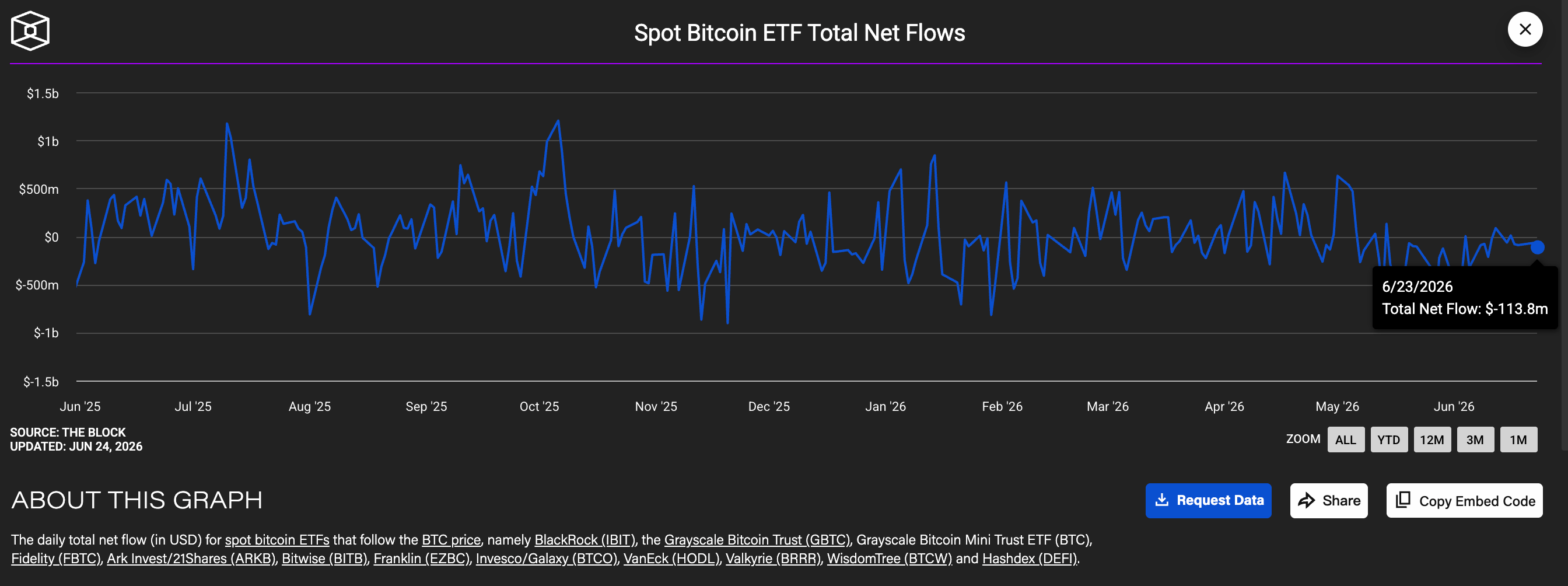
ETF Net Outflows, Source: The Block
The issue with ETFs is cyclical: when institutions redeem their shares, authorized participants must sell the corresponding Bitcoin directly on the secondary market, creating sustained spot selling pressure. CoinShares characterizes the current situation as an "emotional shock," arguing it is not a structural breakdown of the crypto market's fundamentals.
Reason 2: Resurgent Fed Rate Hike Expectations Intensify Macro Headwinds
From a macroeconomic perspective, Bitcoin faces undeniable pressure. The US JOLTS job openings rose to 7.62 million in April, far exceeding market expectations and reaching the highest level in nearly two years, directly pushing the 10-year Treasury yield back above 4.45%.
Cleveland Fed President Beth Hammack subsequently stated publicly that if inflation remains persistently high, the Fed may need to resume raising interest rates. According to CME FedWatch data, the market's implied probability of a rate hike before the end of the year has risen to over 50%.
Conversely, the strong bull market in 2025 was built on the liquidity expectations of "Fed rate cuts." Once these expectations reverse and real interest rates rise, institutional capital tends to shift towards low-risk assets like bonds and cash, making Bitcoin, as a high-risk asset, the first to be affected.
What Are Different Analysts Saying?
- 21Shares: In its latest "State of Crypto Market" report, 21Shares notes that the current decline closely mirrors historical post-halving correction cycles. Although initial expectations at the start of the year suggested the four-year Bitcoin cycle might be over, the current price action indicates the cycle remains intact. The firm maintains its forecast for a price recovery to $100,000 by year-end, believing that a substantial base of cumulative ETF net inflows, totaling around $53 billion, will provide effective bottom support.
- Arthur Hayes: Hayes holds a more bearish outlook, predicting Bitcoin will bottom out at $40,000 over the next six months, based on the core thesis that the Fed's hawkish stance will continue to suppress market liquidity. Hayes stated that while he maintains a long position, he has hedged downside risk through options.
- CryptoQuant: Citing on-chain data, CryptoQuant points out that the current average cost basis for investors is approximately $53,000. Historically, bear market bottoms typically occur after prices fall below the "realized price." The firm believes this bear market could extend until late 2026 or even early 2027, as there are currently no clear signals of sustained demand recovery.
In the short term, market focus will be on the upcoming US inflation data and the Fed's next policy signal. A CPI reading below expectations could provide a respite for Bitcoin. Conversely, if it confirms persistent inflation, pressure for further downside will continue to build. With extreme fear still prevailing and ETF flows yet to show a clear inflection point, whether Bitcoin can defend the critical $60,000 support level may determine the next direction of this bear market.


