Gate Research: ETF Outflows Suppress Risk Appetite, Two-Way Systems Navigate a Weak Market


- Core Viewpoint: In May 2025, the crypto market experienced a rally at the beginning of the month followed by a decline, entering a phase of low-volatility consolidation. Under the market structure characterized by weakening spot demand and dominance by derivative leverage, two-way trend trading strategies significantly outperformed buy-and-hold, verifying that the current market is more suitable for a disciplined, two-way trading framework.
- Key Elements:
- Main Asset Performance: BTC, ETH, and SOL recorded monthly returns of -4.45%, -12.09%, and -1.74% respectively. ETH suffered the largest decline, while SOL experienced significant actual volatility. The market displays a characteristic of "BTC as the risk anchor, ETH and SOL as risk amplifiers."
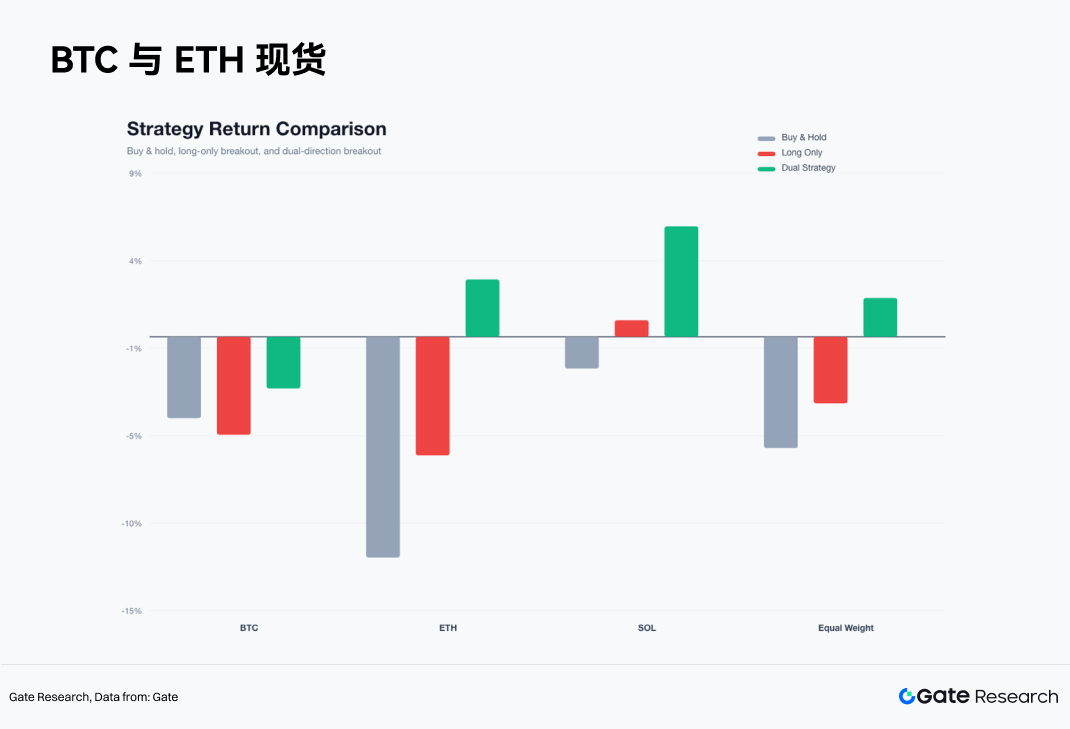
- Strategy Backtest Results: A three-asset equal-weight buy-and-hold strategy yielded approximately -6.09%, a long-only strategy yielded about -3.65%, while a two-way moving average cluster breakout strategy achieved a positive return of +2.11%. The excess return primarily came from the short-side trends in ETH and SOL after mid-May.
- Capital and Derivatives Structure: The BTC spot ETF experienced net outflows of approximately $2.8 billion over a consecutive nine-day period within the month. Perpetual trading volume was roughly 7.2 times that of spot volume. The market exhibits a structure of "active leveraged trading, insufficient spot demand," causing breakout rallies to frequently turn into declines after an initial surge.
- Cross-Asset Correlation: The 30-day correlation between BTC and the S&P 500 remained around 0.6 at the end of the month. AI leaders in the US stock market (e.g., Nvidia) have earnings support, while crypto assets lack an earnings anchor of comparable strength, leading to capital divergence within risk assets.
- Volatility Status: At the end of the month, the 7-day realized volatility for BTC/ETH/SOL was lower than their respective 30-day volatility, indicating the market has entered a low-volatility compression phase. The moving average cluster width was below the 2.2% strategy threshold, an environment prone to triggering two-way breakout signals.
Executive Summary
• The crypto market in May experienced a pattern of an early-month surge, followed by a mid-month decline and low-volatility consolidation towards the end. BTC, ETH, and SOL all formed local highs in the first half of the month before entering a correction. Mainstream ETF flows weakened, perpetual contract volume remained high, and the market exhibited a structural characteristic of weak spot demand and leverage dominance.
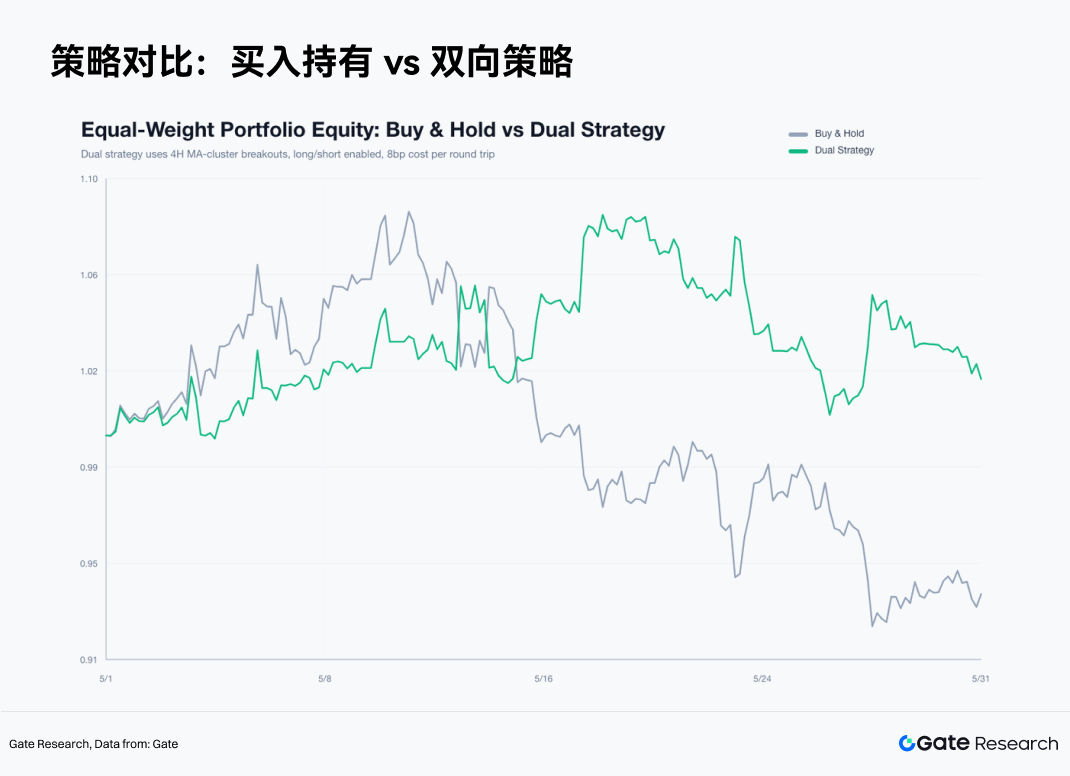
• The two-way moving average cluster breakout strategy performed the best. A buy-and-hold strategy with equal weighting across the three assets yielded approximately -6.09%, a long-only strategy yielded approximately -3.65%, while the two-way strategy generated a return of approximately +2.11%. Profits were primarily derived from short-side trends in ETH and SOL, validating that May's market favored two-way trend trading.
• Disciplined trading outperformed subjective judgment in a low-volatility compression environment. The EMA12 exit mechanism effectively controlled losses from false breakouts, while the 3R take-profit level preserved trend profits. The current market is still in a directional selection phase. Identifying market conditions, controlling risk, and executing two-way signals constitute a superior trading framework compared to subjective trend-chasing.
The dominant narrative for the crypto market in May was the divergence between spot demand and leverage trading structures after prices peaked early in the month. BTC, ETH, and SOL all formed local highs in the first half of May, followed by pullbacks and low-volatility consolidation. BTC fell from a 4-hour closing price of $77,117.4 at the start of the month to $73,684.0 at month-end, a monthly return of -4.45%. ETH fell from $2,283.02 to $2,007.0, a monthly return of -12.09%. SOL fell from $83.90 to $82.44, a monthly return of -1.74%. While SOL's closing decline was modest, it reached an intra-month high of $98.40 before retracing to around $80.00, indicating significantly higher actual trading volatility than the monthly change suggests.
This month's strategy backtest results are clear. The buy-and-hold strategy with equal weighting across the three assets yielded approximately -6.09%; the long-only moving average cluster breakout strategy yielded approximately -3.65%; the two-way moving average cluster breakout strategy yielded +2.11%. The two-way strategy achieved approximately +8.2% excess return relative to the buy-and-hold approach. Profits were mainly derived from the short-side trend leg after mid-May, with ETH and SOL contributing the most.
The effective trading framework for May was: first identify the compression of the moving average cluster, then allow the price to complete its directional selection, either upward or downward; use the EMA12 to manage failed signals, a fixed 2.5% stop-loss to limit per-trade losses, and a 3R take-profit (3 * 2.5%) to preserve trend profits. This framework is well-suited for market structures like May's, characterized by low win rates, high risk-reward ratios, and concentrated trend legs.
Equity market factors reinforced this assessment. In May, AI bellwether stocks were supported by earnings and industry cycle strength. Nvidia reported strong quarterly results, with Q1 FY2027 revenue of approximately $81.6 billion, and briefly retouched the ~$5 trillion market cap milestone. The correlation between BTC and the S&P 500 remained elevated; public samples show a 30-day correlation reaching approximately 0.74 during 2026, still hovering around 0.6 near the end of May. Crypto assets remained within the equity risk budget framework in May. Consecutive outflows from BTC ETFs, weakening support for ETH ETFs, and an increased proportion of perpetual contract volume collectively resulted in the crypto market underperforming leading US tech stocks.
1. Market Structure: Early-Month Rally, Mid-Month Weakness, Late-Month Low Volatility
Phase one of May occurred from May 1st to May 6th. BTC rose from $77,117.4 to $82,828.2, ETH rose from $2,283.02 to $2,423.99, and SOL continued its ascent, reaching $98.40 by May 11th. During this phase, the short-term moving average cluster shifted upwards, volatility remained in a controllable range, and the market exhibited characteristics of a recovery rally. SOL showed leading elasticity, with capital willing to take on higher risk exposure early in the month.
Phase two began around May 7th. BTC failed to stabilize above $82,000, ETH could not sustain prices above $2,400, and SOL formed a monthly high near $98. Breakout signals began to fail frequently, and prices fell back near the EMA12, repeatedly triggering exits. Long trades initiated in BTC after May 14th hit stop-losses, long trades in ETH after May 6th consistently underperformed, and SOL entered a clear downtrend after May 15th.
Phase three was concentrated from May 22nd to month-end. BTC moved down to around $73,000, ETH approached $2,000, and SOL returned to near $82. Price fluctuations narrowed, the width of the moving average cluster decreased, and the market entered a new phase of compression.
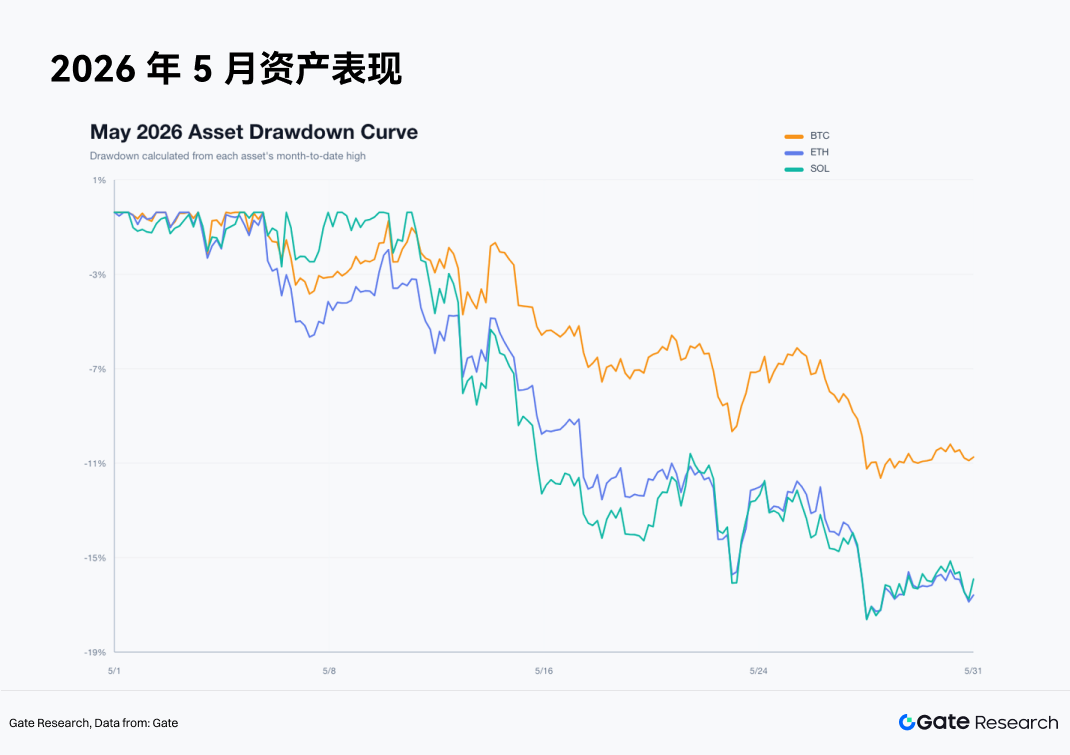
The intra-month drawdown depths validated the roles of the assets. BTC's maximum drawdown from its monthly high to low was approximately 12.5%, ETH's was around 18.8%, and SOL's was approximately 18.7%. BTC serves as the risk anchor, while ETH and SOL function as amplifiers of risk appetite. When BTC weakened, ETH and SOL retraced faster, implying a strategic need to reduce long exposure in high-beta assets.
2. Capital Structure: Stablecoins Abundant, Mainstream ETF Inflows Weaken
As of May 31st, the total market capitalization of stablecoins across all exchanges was approximately $320 billion, with DeFi TVL at around $251 billion. Underlying US dollar liquidity did not show a systemic retreat. CEX 24-hour spot volume was approximately $124.2 billion, while CEX perpetual volume was around $894.4 billion, meaning perpetual volume was roughly 7.2 times that of spot volume. Price discovery was primarily driven by the derivatives market.
ETF flows emerged as a significant pressure point in the second half of May. Public news indicated net outflows from BTC spot ETFs for nine consecutive trading days, totaling approximately $2.8 billion, including a single-day net outflow of around $649 million. BlackRock's IBIT saw a single-day outflow of about $448 million. ETH ETFs also faced pressure, with net outflows of approximately $241 million in the last week of May.
However, capital did not completely exit the crypto space. Altcoin ETFs like SOL and XRP saw modest net inflows, and new ETF narratives such as HYPE also garnered attention. Capital migrated from mainstream BTC and ETH ETFs towards thematic local ETFs and high-elasticity assets. This structure suggests the core issue is cooling demand for mainstream spot ETFs, with capital participating in local rotations and short-term trading.
Derivatives data corroborates this. The aggressive buy/sell ratio for BTC, ETH, and SOL was below 1, indicating slightly stronger aggressive selling pressure. Funding rates stood at approximately 0.01%, not reaching extreme crowding levels. The market in May was in a typical state: active leveraged trading, insufficient spot follow-through, weak aggressive buying, making price breakouts prone to turning into false moves.
3. US Equity Linkage: AI Leaders Support Nasdaq, Crypto ETFs Create Capital Headwinds
May's crypto performance must be viewed within the context of US equity risk appetite. The correlation between BTC and the S&P 500 remained high, with the 30-day correlation reaching approximately 0.74 during 2026 and hovering around 0.6 near the end of May. On a larger scale, BTC functioned as a high-beta risk asset this month, lacking the characteristics of a stable, independent safe haven.
Core support on the US equity side came from AI and large-cap tech stocks. Nvidia reported strong quarterly results in May, with Q1 FY2027 revenue of approximately $81.6 billion, its stock price hitting an all-time high and retouching the ~$5 trillion market cap milestone. AI bellwether stocks supported Nasdaq risk appetite through confirmed earnings. Crypto assets lacked an earnings anchor of comparable strength, with prices influenced by ETF flows, derivatives leverage, and liquidity expectations.
This cross-asset divergence impacted May's strategy outcomes. US tech leaders were earnings-driven, while BTC and ETH mainstream ETFs experienced outflows, leading to a reallocation of capital within large-cap risk assets. Traditional capital continued to buy high-certainty AI leaders, reducing its willingness to allocate to BTC ETFs. Long-side crypto breakouts lacked spot support, causing volume-driven breakouts to often peak and reverse.
The May macroeconomic data calendar also compressed risk budgets. Key data points during the month included NFP, CPI, PPI, the second estimate of GDP, and PCE. Employment, inflation, and growth data directly impacted Treasury yields, the USD, and Nasdaq valuations, which in turn transmitted to BTC ETF flows and perpetual funding rates. Towards month-end, the market was already focused on early June data releases (Employment, ISM, JOLTS, ADP) as well as the FOMC meeting and options expiry. The low-volatility compression in crypto occurring around these events is rationally explained by position squaring and reduced risk budgets.
4. Volatility: Short-term Compression Forms, Price Momentum Insufficient
As of late May, BTC's 7-day 4-hour realized volatility was approximately 0.46%, compared to its 30-day 4-hour realized volatility of around 0.64%; ETH's figures were roughly 0.7% and 0.81%, respectively; SOL's were around 0.76% and 1%. Short-term volatility for all three assets was lower than medium-term volatility, indicating the market had entered a low-volatility compression.
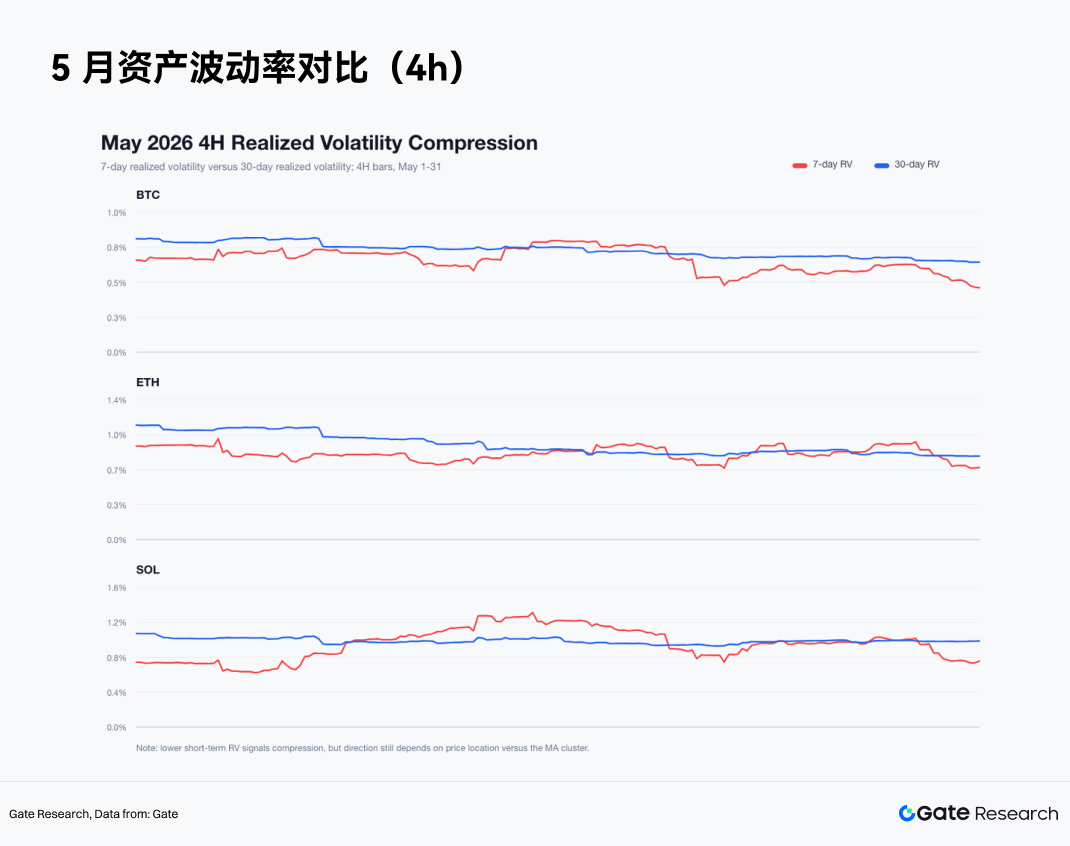
Low-volatility compression typically signals an impending directional selection, but not necessarily an upward breakout. At the end of May, BTC closed at $73,684.0, with its EMA12 around $73,776.35; ETH closed at $2,007.0, with its EMA12 near $2,016.34; SOL closed at $82.44, with its EMA12 around $82.39. BTC and ETH remained in a weak range, while SOL had just returned near its EMA12. Price momentum was insufficient, and the low volatility was more akin to consolidation following a decline.
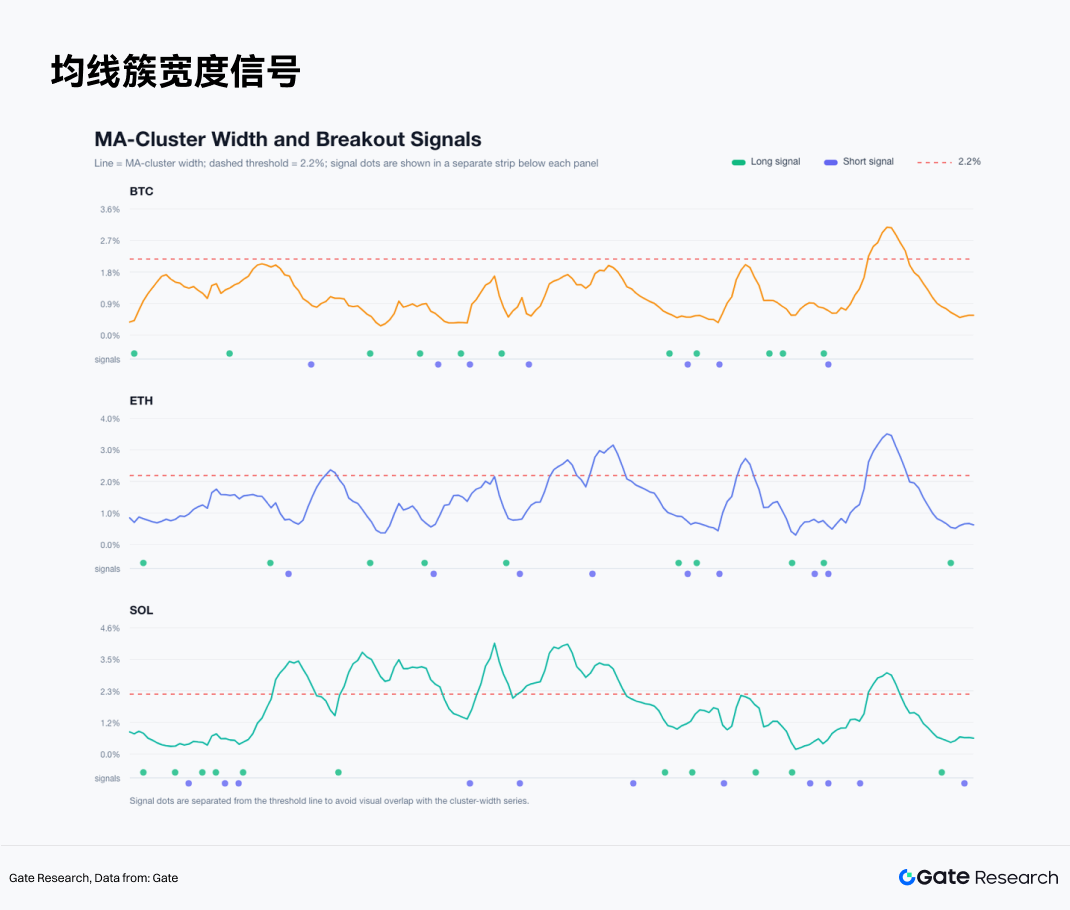
The width of the moving average cluster confirmed this state. At month-end, the cluster width was approximately 0.57% for BTC, 0.63% for ETH, and 0.58% for SOL, all below the 2.2% strategy threshold. This environment frequently triggers breakout signals, and May's data indicates that two-way trading is essential after MA cluster compression. Trading only upward breakouts would systematically miss the downward trend.
5. Strategy Backtest: 4H MA Cluster Compression Breakout System
The strategy uses six moving averages to form the cluster: EMA6, EMA12, EMA24, SMA6, SMA12, SMA24. The cluster width is calculated as the difference between the maximum and minimum of these six averages, divided by the current closing price. If the previous candlestick's MA cluster width is below 2.2% and the current candlestick closes above the upper bound of the cluster, a long position is opened at the open of the next 4-hour candle. If the previous candlestick's width is below 2.2% and the current candlestick closes below the lower bound, a short position is opened at the open of the next 4-hour candle.
Exit rules are fixed. A long position is exited if the price breaks below the EMA12; a short position is exited if the price breaks above the EMA12. The per-trade stop-loss is 2.5%, and the take-profit is 3R, i.e., 7.5%. If take-profit and stop-loss are triggered on the same candle, the stop-loss is prioritized. A round-trip transaction cost of 8 bps is deducted. Open positions at month-end are closed at the close of the last 4-hour candle.
This report tests two strategy methodologies. The long-only version only trades upside breakout signals. The two-way version trades both upside and downside breakout signals. The May results show the two-way version better fit the market conditions.
5.1 Long-Only Strategy: Declining Quality of Upside Breakout Signals
The long-only strategy largely failed. BTC had 11 trades, yielding -5.36% with a 18.2% win rate and a maximum drawdown of -10.08%. ETH had 10 trades, yielding -6.49% with a 10.0% win rate and a maximum drawdown of -10.64%. SOL had 11 trades, yielding +0.91% with a 18.2% win rate and a maximum drawdown of -7.11%.
Profits for the BTC long-only strategy were concentrated in the first two trades of the month. Entry on May 1st, exit on May 4th, net profit +2.09%. Entry on May 4th, exit on May 7th, net profit +0.92%. Subsequently, signal quality deteriorated. A long trade entered on May 14th hit its stop-loss, resulting in a net loss of -2.58%.
The ETH long-only strategy performed the weakest. An entry on May 1st, exiting on May 5th, yielded a net profit of +3.17%. All subsequent 9 long trades resulted in losses. Upside breakouts in ETH were mostly weak bounces rather than trend expansions.
The SOL long-only strategy generated a small profit from two trades. Entry on May 5th, exit on May 8th, net profit +3.95%. Entry on May 8th, exited on May 10th at the 3R take-profit, net profit +7.42%. Most other signals resulted in losses. SOL was the only asset this month yielding a positive return through a long-only approach, with profits heavily concentrated.
5.2 Two-Way Strategy: Short-Side Trend Legs Contribute Main Profits
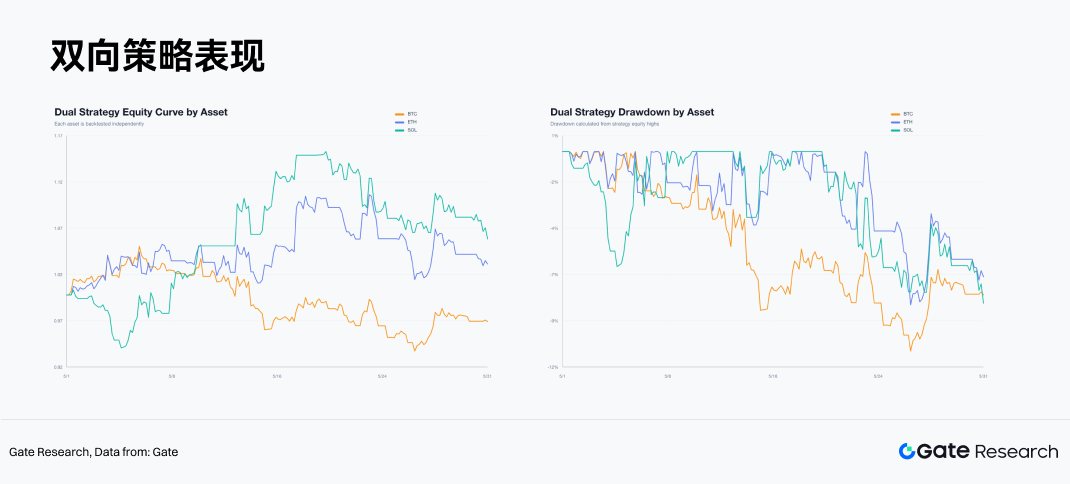
The two-way strategy significantly improved results. The BTC two-way strategy yielded -2.83%, ETH +3.14%, and SOL +6.05%. The equally-weighted two-way strategy across the three assets yielded +2.11%, compared to the equally-weighted buy-and-hold return of approximately -6.09% over the same period.
The BTC two-way strategy remained in loss, but the loss magnitude was smaller than the long-only version. BTC executed 18 trades, with a 22.2% win rate and a maximum drawdown of -10.74%. Two short trades contributed the most: short entered on May 15th, exited on May 20th, net profit +2.35%; short entered on May 26th, exited on May 30th, net profit +3.42%. BTC had numerous false signals in mid-May, with frequent long/short switching causing friction.
The ETH two-way strategy yielded +3.14% from 18 trades, with a 38.9% win rate and a maximum drawdown of -8.26%. Key trades included a short entered on May 15th, exiting on May 17th at the 3R take-profit, net profit +8.03%. Another short entered on May 26th, exited on May 29th, net profit +2.68%. Long signals in ETH proved ineffective, with short legs constituting the main source of profit.
The SOL two-way strategy yielded +6.05% from 22 trades, with a 22.7% win rate and a maximum drawdown of -8.17%. SOL provided both long and short trend trades. A long entered on May 8th, exited on May 10th at 16:00 at the 3R take-profit, net profit +7.42%. A short entered on May 15th, exited on May 17th at the 3R take-profit, net profit +8.03%. SOL exhibited the strongest trend elasticity but also the highest trading noise.
5.3 Trade Distribution: Low Win-Rate Structure, Few Large Trades Determine P&L
Across all 58 trades in the two-way strategy, the number of profitable trades was limited. BTC had a 22.2% win rate, ETH 38.9%, and SOL 22.7%. Strategy returns were driven by a few large trend trades, with losses managed by the EMA12 exit mechanism and fixed stop-losses.
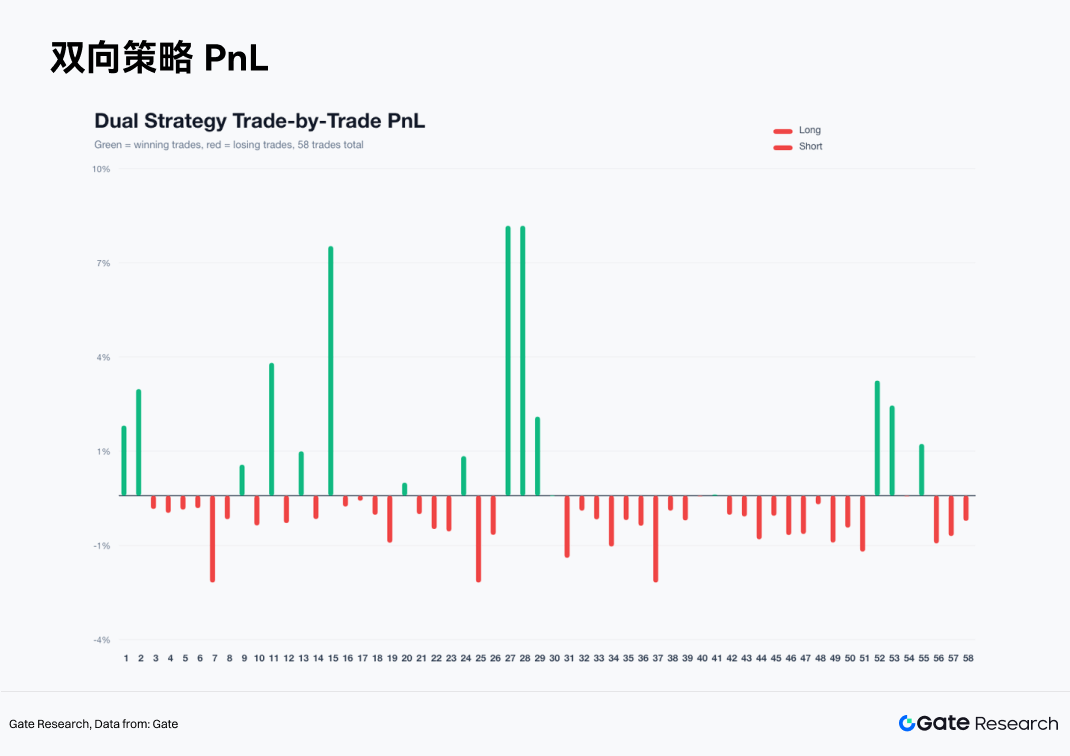
The cumulative P&L per trade shows that the strategy's equity curve rose slowly