






The crypto industry is dead; Perp lives forever


- Core Thesis: The crypto industry is shifting from a "new asset factory" to a "global asset gateway." The narrative around native assets (altcoins) is exhausted, while perpetual contracts (Perp) have become the core product, enabling 24/7 global trading of traditional assets (e.g., US stocks, gold) on-chain.
- Key Elements:
- Industry function is migrating: from issuing new assets (public chains, tokens) to building on-chain channels for traditional assets. Stablecoins (USDT/USDC) were the earliest successful example.
- The value of native assets (altcoins) is being disproven: high volatility, thin cash flows, demand reliant on speculation, unable to compete with traditional assets (US stocks, gold) that have real-world value, or with the AI tech narrative.
- Ethereum's dilemma: Having lost the faith of the "native asset worldview," ETH's ability to capture the value of its ecosystem is weakened, and users no longer need to hold ETH to conduct on-chain transactions.
- Perpetual contracts (Perp) have become the core industry innovation: by eliminating settlement dates and trading time limits, they simplify assets into price symbols, offering 24/7, global, permissionless trading on volatility, bypassing the compliance and custody barriers of traditional finance.
- Hyperliquid's key to success lies in timing: it seized four waves—the breakdown of trust in CEXs, macro volatility, the explosion in US stock trading, etc.—to transform from a protocol into a trading venue.
- On-chain perpetual markets possess a "financial absurdity": they renounce ownership and a return to the real world, focusing solely on risk exposure and price discovery, creating unprecedented liquidity while simultaneously amplifying speculative risk.
Even the most oblivious can feel it — the crypto industry is at a generational turning point.
Over the past decade, the core competency in the crypto space has been asset issuance. Launch a chain, launch a coin, launch a governance token, launch an economic model, then push it to the market with narratives, airdrops, liquidity incentives, and community consensus — a game of pass the parcel.
We once boldly hypothesized that blockchain would create an entirely new asset system: new currencies, new financial protocols, new gaming assets, new social networks, and even new forms of organization.
But now, these native assets are heading towards a slow death, making every dip-buy feel like a futile attempt like a mantis trying to stop a chariot.
What's actually sucking away liquidity and attention are the legacy assets: US stocks, US treasuries, gold, crude oil, indices...
Say Bye Bye to All Native Assets, Say Hi Hi to Traditional Assets
The star of the show on-chain has changed. Native assets are ignored, while wrapped assets are thriving.
Every bear market, someone says "ETH is dead," "alts are worthless," "DeFi is over." But why does ETH at $2000 feel more desperate than it ever did at $200?
Because the criticism is no longer about price cycles or narrative shifts, but about a fundamental migration of the industry's function. Crypto is transforming from a "new asset factory" into a "global asset pipeline."
Stablecoins are the earliest and most successful example. The mass adoption of USDT and USDC wasn't crypto defeating the dollar; it was crypto finding a more efficient way for the dollar to circulate on-chain.
For over a decade, countless projects have shouted about "creating a new monetary system," yet only stablecoins have achieved mass global usage. Because aside from us degens, ordinary users aren't fixated on inventing a new world currency. They just want the dollar to move faster, cheaper, and with fewer restrictions on time and geography.
Looking back, this was an early verdict on the fate of crypto-native assets.
The capabilities of blockchain that have been validated at scale are not value storage, governance, or some fancy complex financial innovation. It's the original peer-to-peer transfer and global settlement. Long live Satoshi Nakamoto.
Except for Bitcoin, the value storage story of every other coin has been disproven. These assets are incredibly volatile, generate negligible cash flow, have vague governance rights, and their demand is purely speculative.
After all this wandering, the market has returned to the basic functions of blockchain's core: transfer, settlement, cross-border movement, collateralization, and trading.
Altcoins? Even the Dogs Won't Play
The awkward position of crypto-native assets, i.e., altcoins, becomes clear within this logic.
When hot money flowed in, we compared assets within crypto, picked one we liked, and went all-in. Public chains compared TPS, DeFi compared TVL, Memes compared community热度. We were all swimming in the same narrative pool, with little real-world anchoring. Every story had room for imagination. As long as the packaging was grand enough, a new Token could pre-spend a decade's worth of valuation.
But now, internal narratives are completely exhausted, and external wealth effects are everywhere. Plugging our ears and stealing bells is useless.
On one hand, real-world assets like US stocks, gold, and crude oil are being placed into the same on-chain trading interface. On the other hand, AI has burst into everyone's lives in a way that feels like science fiction becoming reality.
Once, crypto was best at telling futuristic stories, earning valuation premiums through "future-ness" — new networks, new finance, new organizations, new modes of production. But years later, the narratives are stuck in whitepapers, roadmaps, funding news, and token prices. Meanwhile, AI, besides its powerful narrative, has become a readily available tool on everyone's computers and phones.
An altcoin used to only need to tell a more compelling story than another altcoin. Now it faces two types of external competitors simultaneously: one is traditional assets with real cash flow, asset backing, and global pricing systems; the other is AI, a new tech cycle with both a futuristic narrative and real-world products.
On one side, you have junk coins with no revenue, no demand, and no value capture. Standing next to Nvidia, Micron, crude oil, and AI applications, they look truly ugly.
Ethereum, Not Doing Well
The "Ethereum problem" frequently discussed lately should also be viewed within this framework.
Ethereum isn't just facing short-term pressure on its roadmap and liquidity. It's that the "native asset worldview" it once championed has been squeezed dry.
On one side, traditional wrapped assets are entering the chain. On the other, AI is monopolizing global tech narratives.
Ethereum remains critical infrastructure for on-chain finance and asset issuance, but having lost its "native crypto" innovation universe and the faith in its worldview, ETH's ability to capture value from the ecosystem is severely weakened. Users can pay on Base, trade on Arbitrum, transfer assets between Rollups, and trade US stocks on-chain, but they certainly don't need to hold ETH to do any of it.
The same goes for DeFi. Its grand initial narrative was about rebuilding the financial system, but the truly sticky, demanded core is quite thin.
Users don't need an entire on-chain bank. They need cheaper dollar transfers, faster settlement, deeper liquidity, and tradable price volatility. Lending, DEXs, and yield aggregators still exist, of course, but they increasingly feel like part of the infrastructure, unlikely to single-handedly carry the industry's imagination. The "financial lego" narrative has become the legacy of the last cycle.
The Protagonist Becomes the Assets Themselves
Crypto must admit that on-chain finance doesn't need to reinvent Nvidia, nor does it need to reinvent the US dollar. And of course, we lack the capability for that anyway.
We just need to work hard to make these assets transferable, tradeable, collateralizable, shortable, leveragable, and composable into new financial structures with greater freedom.
So when we say crypto is dead, it means the era of relying on the constant expansion of native assets has come to an end.
No one dares to talk about crypto overthrowing traditional finance anymore. What industry participants are busy doing now is installing a new transmission layer onto traditional finance. US stocks are still US stocks, but through new infrastructure, they can have 24/7 trading, global liquidity, on-chain settlement, permissionless access, and composability. The industry is working hard to produce a new API for the old world.
To be fair, tokenized US stocks, RWA, on-chain perpetuals... none of these are really new ideas.
The industry didn't just think of bringing traditional assets on-chain today, nor did it just think of trading everything via perpetual contracts today.
Years ago, the market saw wave after wave of Perp DEXs, synthetic assets, on-chain stocks, and projects trying to bring traditional assets on-chain. Looking back at the designs of some early protocols, you'll find their underlying mechanisms are fundamentally no different from many of today's hot projects.
This is also why some old-timers looked down on Hyperliquid and missed the opportunity. Kyle Samani's persistent bearishness on Hyperliquid is a classic example.
It's not that he hadn't seen this kind of thing before; it's that he saw it too early, saw too many iterations, and got tired of it. Five, eight years ago, or even earlier, many in the industry tried to build on-chain perpetual exchanges, decentralized derivatives, and multi-asset trading platforms, but most failed.
I recently came across an article Odaily published in 2020 about a PerpDEX project. Honestly, its mechanism is no different from today's.
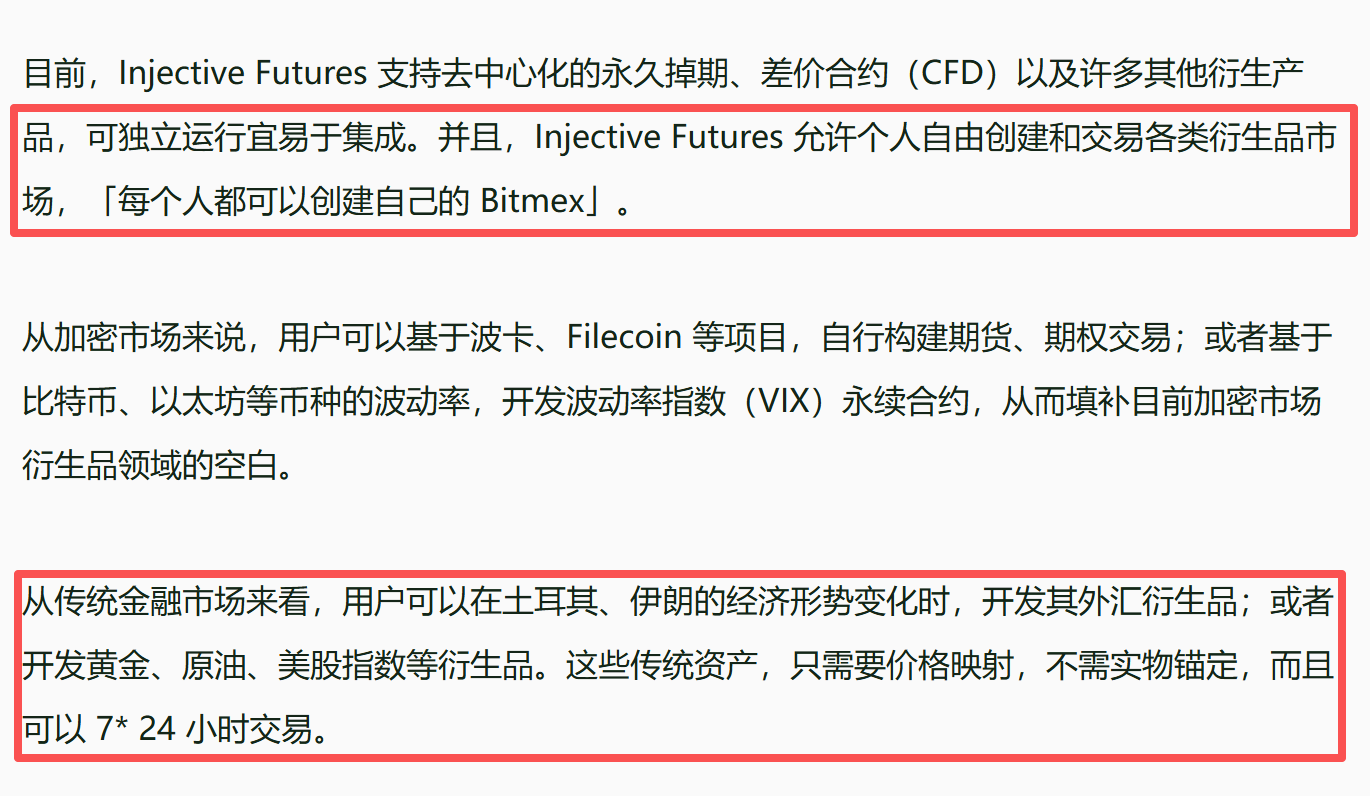 Screenshot of an article from 6 years ago.
The problem is never the direction; it's always the Timing.
The Industry's Shining Star: Hyperliquid
Hyperliquid's early days were also rough, with mediocre liquidity and widely criticized regulatory risks. But it continuously rode wave after wave of change, becoming the biggest beneficiary, leaving followers in the dust.
The first wave was making on-chain Perps feel like a CEX. Hyperliquid's initial appeal wasn't just building another Perp DEX; it was making on-chain margin trading feel less like DeFi and more like a centralized exchange. Order books, low latency, API, rebates, ecosystem front-ends, the HYPE airdrop, no VCs, community wealth effects – these factors combined to push it from an on-chain protocol into a primary trading venue. This phase wasn't glamorous, but it was critical. The hardest part for a trading platform is that first drop of liquidity. Once people come to trade, market makers follow, and only then can it handle larger asset sizes.
The second wave was the transfer of trust after 10.11. The black-box risks of centralized exchanges were exposed again. Since then, many whales prefer to trade openly against everyone on-chain than risk being silently liquidated in a dark forest system where they can't see their counterparty's true nature. "Decentralization" isn't just a slogan; it's the traders' practical need to "know exactly how they died" during extreme market conditions.
The third wave was the volatility in macro assets like gold and crude oil. Wars and geopolitical conflicts pulled the global market back into macro narratives. Users needed a venue to trade global assets 24/7. Traditional markets have opening and closing bells, regional restrictions, and account limitations. On-chain perpetual markets have none of these burdens.
The fourth wave, needing little elaboration, is the explosion in US stock trading. When hot assets are placed into a 24/7, global, low-barrier perpetual market, the assets themselves bring traffic, which attracts B-side market makers and ecosystem front-ends, which in turn enhance liquidity, creating a snowball effect.
So, understanding the concept early doesn't guarantee big results. We all know now that previously, there weren't enough on-chain users, wallet experiences weren't mature enough, market-making infrastructure was incomplete, and asset volatility didn't present sufficient external opportunities. Without the wind, building a big ship just leaves it stranded.
The Evil and Alluring Perpetual Contract!
Finally, let's talk about crypto's greatest invention: the perpetual contract.
If you want to trade spot US stocks, you face a complex web of compliance, custody, underlying asset mapping, trading hours, settlement, equity rights, dividends, corporate actions, and more. Every step involves interacting with the old financial system, and every step can become a bottleneck.
But if you do US stock Perps, the platform only needs to maintain a contract pool around the price. Liquidity can be provided by ecosystem partners. Users are trading price exposure; they don't directly hold the underlying equity.
It bypasses the heaviest parts and captures the most trade-demanding part.
This is, of course, also its evil side. Perps simplify an asset into a symbol for betting, compressing complex ownership into a choice of direction and leverage multiplier. It doesn't care if you own the stock, it doesn't care if you understand the company's value. It only cares if the price moves, if someone wants to go long, and if someone wants to go short.
This is also its most compelling and vibrant charm.
People might not really want to own Nvidia, but they want to trade Nvidia's volatility. People might not really want to hold gold, but they want to bet on gold's direction. People might not need crude oil, but they might want the risk exposure that crude oil prices offer.
Perps abstract this desire to its extreme. They don't create new assets; they create new casinos. They don't offer ownership; they offer risk exposure. Their goal isn't to reconstruct the financial world; it's to turn every asset into a "price" that can be traded 24/7.
So, if we look back at the entire history of crypto, the product that truly survives is probably the Perp.
From a financial perspective, it's almost absurd. Futures have an expiration date because assets ultimately need to return to the real world. Perpetual contracts cancel the expiration, turning a product with a finite term into one that exists forever. This is perhaps the ultimate revelation born from crypto's issuance of junk assets.
Traditional exchanges have opening and closing times because markets need to rest. Perpetual contracts cancel rest time, keeping the market online forever. Traditional finance relies on brokers, clearing houses, and regional regulatory systems, while the perpetual market is naturally borderless.
The perpetual contract might be the most successful, yet most dangerous financial innovation in the entire history of crypto. It truly is like a financial monster unleashed by a demon. (Arthur Hayes: Blame me?)
Countless people have been liquidated because of it, countless fortunes have evaporated because of it. It amplifies the greediest side of humanity. But at the same time, it creates unprecedented liquidity and price discovery efficiency.
Conclusion
Looking back, a few years have passed in the blink of an eye. Crypto's most successful currency is the US dollar, its most successful asset is Bitcoin, its most successful application is trading, and its "most anticipated new growth driver" now comes from US stocks.
This is a defeat for the idealists, and more likely, it's the market completing its final Darwinian selection.
Tales of "been there, done that" are old hat. Humanity's pursuit of wealth, appetite for risk, and infatuation with leverage have never changed. So today's crypto industry is no longer obsessed with inventing new assets, but is instead trying to turn existing assets into always-online, globally accessible, permissionless trading pairs.
Crypto is dead. Long live Perps.


