






对话 CZ:อย่าคิดที่จะออกจากวงการคริปโท การเริ่มต้นใหม่ฉันก็ยังจะทำ exchange


- มุมมองหลัก: ผู้ก่อตั้ง Binance คุณ CZ ย้อนรอยการพัฒนาในรอบ 9 ปี เน้นย้ำว่าประสบการณ์ผลิตภัณฑ์และการปกป้องผู้ใช้คือกุญแจสำคัญสู่ความสำเร็จของ exchange เขามองว่าความเข้าใจผิดที่ใหญ่ที่สุดของอุตสาหกรรมคริปโทคือการมองว่าเป็นสินทรัพย์เพื่อการเก็งกำไรมากกว่าเป็นเทคโนโลยีพื้นฐาน และทำนายว่า AI agent จะผลักดันให้การชำระเงินผ่านคริปโทกลายเป็นกระแสหลักภายในเวลาไม่กี่เดือน
- องค์ประกอบสำคัญ:
- Binance ขึ้นแท่นอันดับหนึ่งของโลกภายในห้าเดือนหลังจากก่อตั้งในปี 2017 โดยความสำเร็จมาจากประสบการณ์ผลิตภัณฑ์ การปกป้องผู้ใช้ และโชคที่ทันกระแส ICO
- คุณ CZ สะท้อนว่าจุดอ่อนที่ใหญ่ที่สุดในช่วงเริ่มต้นก่อตั้งคือการปฏิบัติตามกฎหมายและการเมืองระหว่างประเทศ พร้อมแนะนำให้ผู้ประกอบการเริ่มเรียนรู้เรื่องการปฏิบัติตามกฎระเบียบโดยเร็วและเร่งนำผลิตภัณฑ์ออกสู่ตลาด
- อัตราการซึมผ่านของเทคโนโลยีคริปโทเมื่อวัดจากความมั่งคั่งนั้นน้อยกว่า 1% อุตสาหกรรมยังไม่อิ่มตัว การแปลงสินทรัพย์ในโลกจริง (RWA) เป็นโทเค็น และ stablecoin คือทิศทางการพัฒนาที่สำคัญในอนาคต
- AI agent จะเริ่มดำเนินการชำระเงินแทนมนุษย์ภายในไม่กี่เดือน และคริปโทเคอร์เรนซีจะเป็นสกุลเงินในอุดมคติสำหรับการทำธุรกรรมของ AI เนื่องจากมีลักษณะเฉพาะโดยธรรมชาติ การชำระเงินด้วยคริปโทคือจุดเปลี่ยนที่ยิ่งใหญ่ที่สุดของ AI
- AI จะเปลี่ยนแปลงภูมิทัศน์ด้านความปลอดภัยอย่างสิ้นเชิง สามารถค้นหาช่องโหว่ได้อย่างมีประสิทธิภาพ ในระยะสั้นอาจก่อให้เกิดเหตุการณ์โจมตีได้ แต่ในระยะยาวจะทำให้ระบบปลอดภัยยิ่งขึ้น
- หลังจากคุณ CZ พ้นจากตำแหน่ง CEO เขายอมรับว่าพลาดโอกาสในการเติบโตของ stablecoin และขณะนี้กำลังศึกษาเชิงลึกเกี่ยวกับสาขา RWA และการแปลงเป็นโทเค็น
- การเงินแบบดั้งเดิมและการเงินแบบคริปโทจะต้องหลอมรวมกันอย่างแน่นอน การแปลงเป็นโทเค็นเป็นเพียงเรื่องของเวลาเท่านั้น และท้ายที่สุดจะมีระบบการเงินเดียวที่เป็นหนึ่งเดียว
Compiled & Translated by: Odaily TechFlow
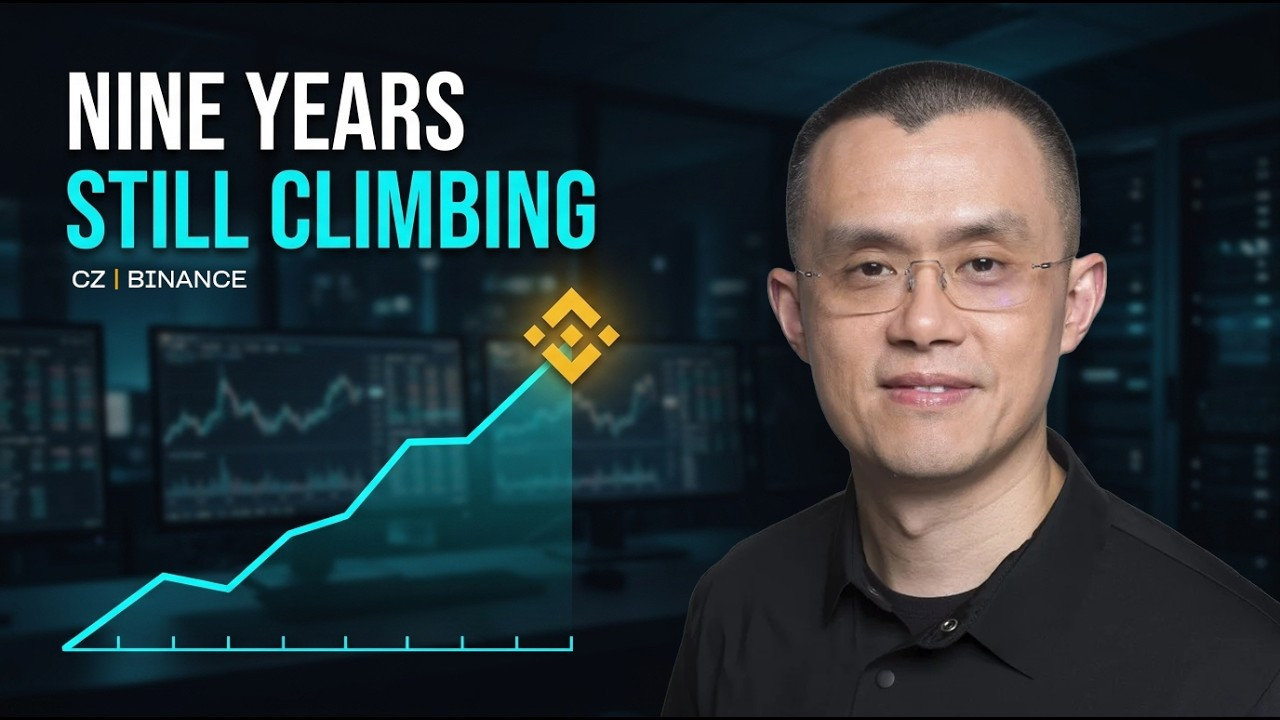
Guest: CZ (Changpeng Zhao), Founder & former CEO of Binance
Host: Jacquelyn Melinek, Talking Tokens Podcast (Strata Media)
Podcast Source: Talking Tokens Podcast
Original Title: Binance Founder CZ on what it took to build the world's largest crypto exchange and stay #1
Release Date: July 16, 2026
Disclaimer: CZ is the founder and major shareholder of Binance. This episode covers general industry trends and Binance's development; the views expressed are inherently biased.
Key Takeaways
On the occasion of Binance’s ninth anniversary, CZ gave a brief interview to Talking Tokens at a Binance event. He reflected on the rough state of the exchange industry when he started in 2017, admitting his biggest blind spot at the time was legal compliance and international politics. Binance became the world's largest exchange within five months of its launch, which CZ attributes to product experience, user protection, and the luck of riding the ICO wave.
The most forward-looking part of the interview was about the intersection of AI and crypto. CZ predicts AI agents will start handling payments for humans within months, not years, and that cryptocurrency is the "native currency" for AI agents. He also believes crypto adoption, measured by wealth, is less than 1%, and the industry's biggest misconception is viewing crypto as a speculative asset rather than a foundational technology. Since stepping down as CEO, CZ admits he missed the rise of stablecoins and is now spending significant time researching RWA and tokenization.
Highlights
Looking Back at the Startup Journey
- "I would tell my younger self: spend more time learning compliance and politics. Before 2017, I was just a tech guy, focused on building products and protecting users, but I underestimated the importance of the legal side."
- "My second piece of advice would be to move faster. Binance's futures contract was launched two years after the exchange went live. If I could do it again, I would launch it much sooner."
- "We became number one globally within the first five months, and we've stayed in that position every day since."
On Community
- "If you treat the community well, they will follow you to the ends of the earth."
- "While a company can be attacked by regulators, laws, and geopolitics, the community is largely immune to this. The community will even fight back for you."
On Crypto Perception
- "People treat crypto as a speculative asset and are always thinking about when to exit. You don't 'exit' the internet. You don't 'exit' AI. Crypto is the same; it's a technology."
- "Measured by wealth, crypto penetration is probably less than 1%. The market is far from saturated."
On AI × Crypto
- "Eventually, AI will handle payments for us. AI can already find the best hotel and flight, but it still can't book it for you. This capability will arrive within months, not years."
- "Once AI starts transacting, it will need a native currency. Using a credit card is too clunky; cryptocurrency is a natural choice."
- "Crypto payments are the biggest unlock for AI. Other things like training data verification are still very far off."
On Security
- "AI will completely change the security landscape. It can find vulnerabilities, which is useful for both developers and hackers. There may be some attacks in the short term, but in the long run, systems will become much more secure."
- "Anthropic's latest Methuselah model is incredibly powerful. I hope a version becomes available soon for developers to harden their systems."
On Financial Integration
- "There shouldn't be a distinction between crypto finance and traditional finance. It's like saying postal mail and email are two separate systems. Eventually, there will be just one financial system."
- "What country wouldn't want to open up its stock market to the world? Tokenization is just a matter of time."
Main Content
Nine Years On: The Exchanges of 2017 Weren't Good Enough
Jacquelyn Melinek: This year is Binance's ninth anniversary. Before founding Binance, you also worked at a large exchange. Looking back at the market in 2017 and your situation then, what problems in the exchange industry were no one solving well that made you feel you had to start your own?
CZ: Before starting my company, my entire career was in order execution and exchange systems. Looking at the exchange industry in 2017, I felt the products could be better, the technology could be better, the matching engine could be faster, security could be higher, and customer service could be more complete. At that time, exchanges didn't truly put users first. I felt there was definitely room for improvement. Of course, we were also lucky to ride the ICO wave and benefit from that market trend.
Jacquelyn Melinek: Do you think the CZ of 2017 and the CZ of 2026 are the same person?
CZ: [Laughs] No. Much older, but not necessarily wiser. I've been through more challenges, let's put it that way. A lot has happened in nine years; my mindset and body are different.
Jacquelyn Melinek: If you could give one piece of advice to your 2017 self, what would it be?
CZ: Knowing what I know now, I would tell my younger self: spend more time learning legal compliance and politics. Before 2017, I was just a tech guy, focused on building products and protecting users, but I underestimated the importance of the legal side. I also didn't understand international law well enough, not knowing that some US laws have global jurisdiction and long lookback periods. That's the first piece of advice I'd give myself.
The second piece of advice is to move faster. There were many products I hesitated to launch. With hindsight, entrepreneurs should get their products to market for feedback as early as possible. For example, Binance's futures contract was launched two years after the exchange went live. If I could do it again, I would launch it much sooner.
Reaching the Top in Five Months: Product, Mission, and a Bit of Luck
Jacquelyn Melinek: Binance surpassed dozens of exchanges and reached the top very quickly. Was that in the first or second year?
CZ: The first year. We became number one globally within the first five months, and we've stayed in that position every day since.
Jacquelyn Melinek: Reaching the top is one thing; staying there is another. What do you attribute that to?
CZ: A company's success comes from many factors. The product must be good, customer service must be good, but more importantly, there has to be a mission. Our mission is to increase the freedom of money, and one of our core values is protecting users. Protecting users helped us hold our position after becoming number one.
Of course, there was an element of luck in 2017. That year was the beginning of the ICO era. We were a new exchange, natively supporting fast ICO listings. Most other exchanges were still Bitcoin exchanges; some of the largest US exchanges didn't even list Ethereum at the time. We caught a turning point in the industry. But the competition was also fierce; Bittrex and Poloniex were giants then. We had a good product and service, plus excellent user protection. All these factors were indispensable.
Community is More Resilient Than a Company
Jacquelyn Melinek: Binance's ninth-anniversary theme is "Built by You." How would you describe the community culture you wanted to foster?
CZ: Nine years ago, crypto was a very niche industry. When we started, Bitcoin was around two to three thousand dollars. The user base was small but incredibly loyal; they were all early adopters with deep product knowledge. They knew we protected them, so they followed their hearts and their money.
As the community grew, Binance consistently acted to protect users. Many volunteers contribute to the Binance ecosystem; some are called Binance Angels, others don't have an official title. The entire platform is truly community-driven. That's what 'Built by You' is all about.
Jacquelyn Melinek: You've said that communities can sometimes be more resilient than companies. What can a community do that a company can't?
CZ: If you treat the community well, they will follow you to the ends of the earth. A company is subject to various attacks, especially centralized ones – from regulators, laws, and geopolitics. Communities are almost immune to these attacks because they are distributed, and in our case, global. It's very difficult to launch an effective attack against a global, distributed community. The community will also fight back for you, often with a louder voice on social media than mainstream media. It's a powerful force to be harnessed.
Crypto Penetration is Below 1%: The Biggest Misconception is Mistaking a Technology for a Speculation Tool
Jacquelyn Melinek: In today's market, what makes a product that users will keep coming back to?
CZ: Products in any industry can be improved. Today, fiat on-ramps and off-ramps still have high friction. Whoever can achieve lower fees, lower friction, and cover more regions will have an advantage.
Stablecoins are another example. The most popular ones don't pay users interest, and the ones that pay interest are difficult to trade. If there were a stablecoin that offers good interest and can be freely traded, that would be an improvement. RWA tokenization is still very new. Only a handful of stocks are truly tokenized, and it's mostly US-centric. Why wouldn't other countries want to tokenize their stock markets and allow global participation? Measured by wealth, crypto penetration is probably less than 1%. We are still in the early stages.
Jacquelyn Melinek: We've been talking about the "next billion users" for years, but we haven't even reached the first billion. What do you think is the industry's biggest misconception about mainstream adoption?
CZ: Many people see crypto as a speculative asset, not as an underlying technology. They buy Bitcoin and are always thinking about when to exit. You don't 'exit' the internet. You don't 'exit' AI. Crypto is the same; it's a technology. Crypto and blockchain are here to stay; they are one of the three fundamental technologies in my lifetime, the other two being the internet and AI. I advise people to look at projects based on their long-term potential.
AI Agent Payments: Coming Within Months
Jacquelyn Melinek: Where will the worlds of AI and crypto truly intersect?
CZ: Eventually, AI will handle payments for us. AI can already find the best hotel and flight, but it still can't book it for you. This capability will arrive within months, not years. Once AI starts transacting on our behalf, it will need a native currency. Using a credit card is too clunky; cryptocurrency is the natural choice.
Traditional fiat payments work within a country, but they perform poorly for global payments. You will see more and more global citizens who need to pay someone on the other side of the planet or book tickets in different regions. Crypto payments are much more convenient. Crypto payments are the biggest unlock for AI. Other things like using blockchain for training data verification are still very far off. AI companies are big, profitable, have high valuations, and for now, aren't too concerned with decentralization.
Jacquelyn Melinek: Do you see this happening in the near future, or in three to five years?
CZ: I'd guess one to two years. Once people start using AI to make payments via crypto, they will find it is much faster. Also, the early adopters in crypto and the early adopters in AI have a very large overlap.
AI Changes the Security Landscape: Using the Strongest Models to Harden Systems
Jacquelyn Melinek: How does AI impact Binance's internal operations and the crypto infrastructure?
CZ: I see AI like the internet. Can you say you don't use the internet? That's probably not a good idea. Every company and every individual should use AI to its fullest extent, but not abuse it. AI is great for writing code, debugging, and code analysis, and it's also useful for design and video. But don't let AI do everything. We live in a human world; people still want a human touch. AI is good in terms of creativity, but original creativity is still stronger in humans.
Jacquelyn Melinek: Besides payments, where else will AI change crypto?
CZ: AI will completely change the security landscape. AI is very good at finding vulnerabilities. Developers can use it to quickly discover system weaknesses. Anthropic's latest Methuselah model is incredibly powerful. I hope a version becomes available soon for developers to harden their systems. There might be some hacking incidents in the short term, but in the long run, systems will become much more secure.
Also, blockchain throughput isn't enough yet. We need faster chains with higher capacity to lower usage costs. AI will play a significant role in accelerating this development. There's another more fundamental trend: AI will push us into an even more digitized world, ten or even a hundred times deeper than the internet achieved. The more digital we become, the more we need digital currency. The concept of paper money is outdated. AI will push us past that tipping point.
A View from After Stepping Down: Missed Stablecoins, Now Focusing on RWA
Jacquelyn Melinek: You've moved from CEO to a different role. Since stepping down, have you noticed anything different about the industry?
CZ: The perspective is indeed different. As a CEO, everything revolved around Binance. Twenty-five meetings a day, various problems constantly popping up; the field of vision was actually very narrow. Now that I'm forced to step back, I can look at the industry as a whole. I have time to learn new things – AI,


