






四天冲上4000万美元,sato是庞氏还是新叙事创新?


- 核心观点:Sato是一个基于以太坊和Uniswap v4 Hook构建的ERC-20代币实验,通过联合曲线(Bonding Curve)机制将发行阶段资金全部沉淀为储备,旨在创建一种“数字稀缺性”资产,市场资金已开始为其创新的运行逻辑买单。
- 关键要素:
- 机制设计:无预挖、无团队分配、无管理员权限,所有买卖双向0.3%手续费永久锁仓在Hook中,无法被任何人提取。
- 发行阶段:用户向系统支付ETH,系统通过联合曲线自动mint新代币,随累计ETH增加,mint价格递增,所有ETH永久作为系统储备。
- 停止发行:当mint量达总量2100万枚的99%(即2079万枚)时,系统永久停止mint,转向“外盘阶段”。
- 外盘回购:停止发行后,用户无法通过Curve购买新币,但可卖出sato换取ETH,卖出代币被销毁,Curve转化为永久链上回购池。
- 价值主张:每个sato对应真实进入系统的ETH,试图在以太坊生态中重现比特币“数字黄金”的稀缺性感,而非依赖传统叙事。
In the current market environment, the entire crypto market's thirst for projects with "mechanism innovation" has reached an almost frenzied level. Compared to past Meme projects that relied purely on narratives, KOLs, or community sentiment, market capital is increasingly willing to pay for "new operational logic" and "new asset structures."
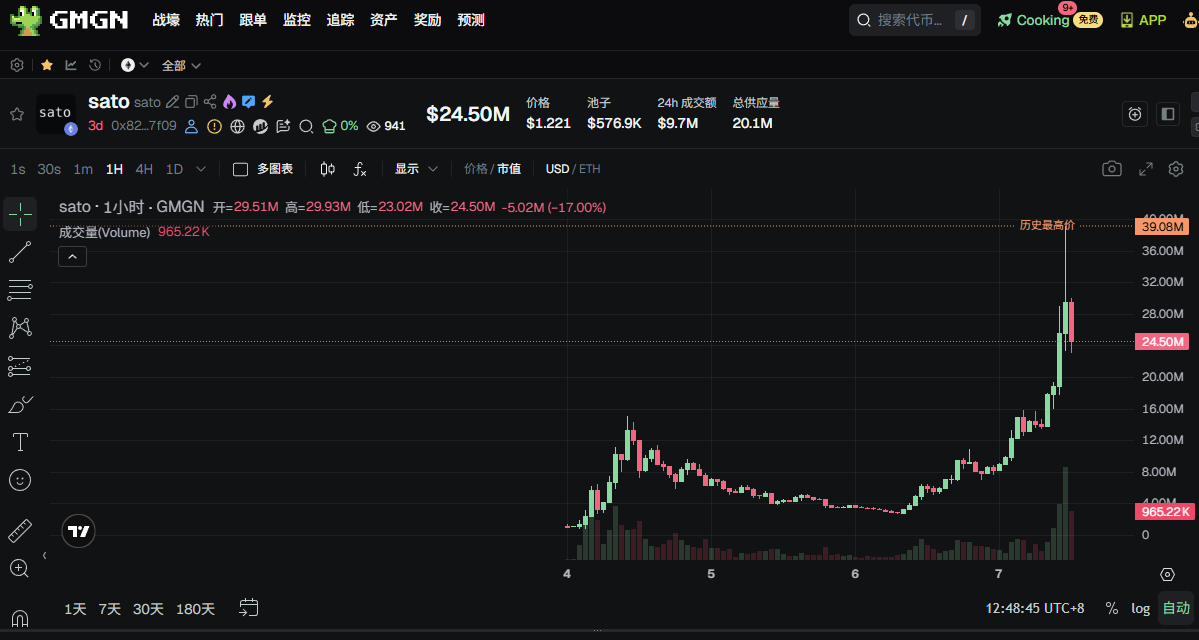
Launched with almost zero hype and only a single website, sato has become the focus of the crypto community over the past few days: In just four days since launch, sato's market cap briefly approached $40 million and has stabilized around $25 million. This article from Odaily will explain the operational mechanism behind sato.
What Exactly is sato?
sato is an ERC-20 token deployed on Ethereum, with its core mechanism built on the Uniswap v4 Hook. sato has no pre-mining, no team allocation, no admin keys, and no upgradeable or pausable functions. The entire system operates automatically via on-chain code.
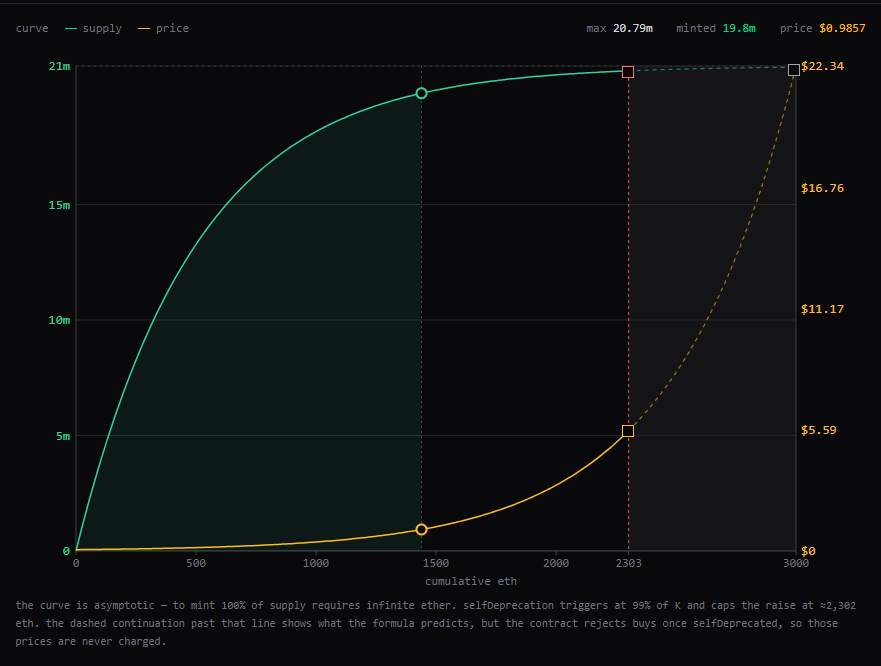
sato uses a Bonding Curve for issuance. When a user sends ETH to the Hook contract, the system automatically mints new sato tokens according to a fixed mathematical formula. As the cumulative ETH entering the system increases, the subsequent mint price becomes higher. All ETH remains permanently locked in the Hook as the system's reserve.
On the sell side, users can sell sato back to the system for ETH. Once 99% of the total sato supply has been minted, any sato sold back is burned directly and does not re-enter circulation. The system charges a 0.3% fee on both buys and sells. These fees remain permanently locked in the Hook and cannot be withdrawn by anyone.
The theoretical total supply of sato is 21 million tokens. However, the system will permanently stop minting once 99% of the supply (20.79 million tokens) has been reached. After issuance stops, users can no longer purchase new tokens via the Curve, but they can still sell sato back to the system for ETH. The Curve will then continue to exist as a permanent on-chain buyback pool.
The Core Mechanism of Sato
sato's mechanism is somewhat like a more extreme variant of Pump.fun's Bonding Curve model. In sato, users also buy tokens from the system via the Curve. However, unlike traditional Bonding Curve projects, sato explicitly splits the entire process into an "issuance phase" and an "external market phase."
Phase One: The Issuance Phase
During this phase, users are not trading with other holders but directly with the system itself. When a user sends ETH to the system, the Curve automatically mints new sato according to a fixed formula. As more ETH accumulates in the system, the subsequent mint price increases.
In a sense, this phase functions more like an automated "internal market system." The Curve itself is responsible for both issuing the token and setting its price.
Phase Two: The "External Market Phase"
Once sato's supply reaches the predetermined 99% cap, the system permanently stops minting. Users can no longer purchase sato from the system through the Curve. At this point, sato tokens begin to truly circulate in secondary markets like Uniswap. The price is no longer determined by the Curve formula but by market supply and demand.
However, the Curve itself does not disappear. Although the issuance function is halted, the "redemption" function remains. Users can still sell sato back to the system for ETH. The sato tokens sold back are burned directly and do not re-enter the market. In a sense, the Curve transforms from an "issuance system" into a permanent on-chain buyback pool. sato's operational logic can be understood as a process of gradually transitioning from the internal market to the external market.
Sato: Reconstructing Digital Scarcity
What truly attracts the market to sato is not just the Bonding Curve, Hook, or deflationary mechanism itself. It is the attempt to retell the story of "digital scarcity."
Bitcoin established the consensus of digital gold through a fixed supply and high creation costs. sato attempts to transplant this logic onto Ethereum. The difference is that Bitcoin completes its issuance through energy expenditure, while sato chooses to sink all costs directly into the system's reserve. Every sato corresponds to real ETH that has entered the system.
This is why many consider sato a very "sexy" on-chain experiment. It possesses both the scarcity and late-stage acceleration game dynamics brought by the Bonding Curve, while retaining the composability and liquidity of the Ethereum ecosystem. There is no pre-mining, no team control, no admin keys, and even the operational logic after the Curve ends is pre-written on the chain.
Whether this model can ultimately form long-term consensus similar to Bitcoin's remains to be seen by the market. But at least for now, sato seems to be more than just another Ponzi project. It feels like an experiment focused on creating an "Ethereum-native scarce asset."


