






AI PC 전쟁: 진영에 베팅하지 말고, '통행세'에 베팅하라


- 핵심 시각: AI PC 경쟁의 본질은 x86과 Arm의 아키텍처 싸움이 아니라, 산업 체인 내 '통행세' 로직의 확립에 있다. 선진 공정, 컴퓨팅 플랫폼 등 지속적으로 현금 흐름을 창출할 수 있는 부문에 우선 투자하고, 특정 진영에 베팅하지 말아야 한다.
- 핵심 요소:
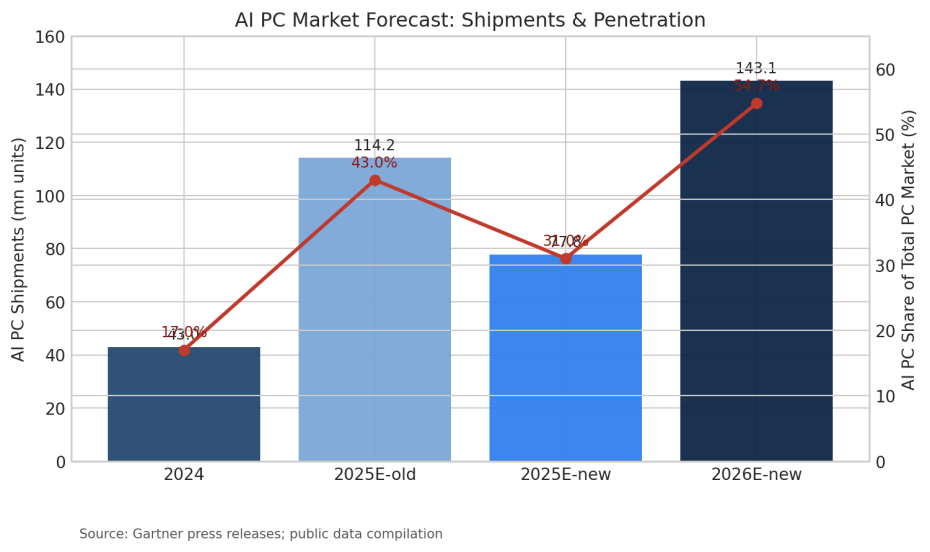
- Gartner는 2026년 AI PC 보급률이 54.7%에 이를 것으로 예상하며, 단기적으로는 관세 영향이 있지만 장기적인 표준화 방향은 변하지 않는다.
- 사용자의 교체 동기는 '회의록'과 같은 기본적인 경험을 넘어서는 로컬 AI 애플리케이션(예: 엔터프라이즈 프라이버시 컴퓨팅)의 등장에 달려 있다.
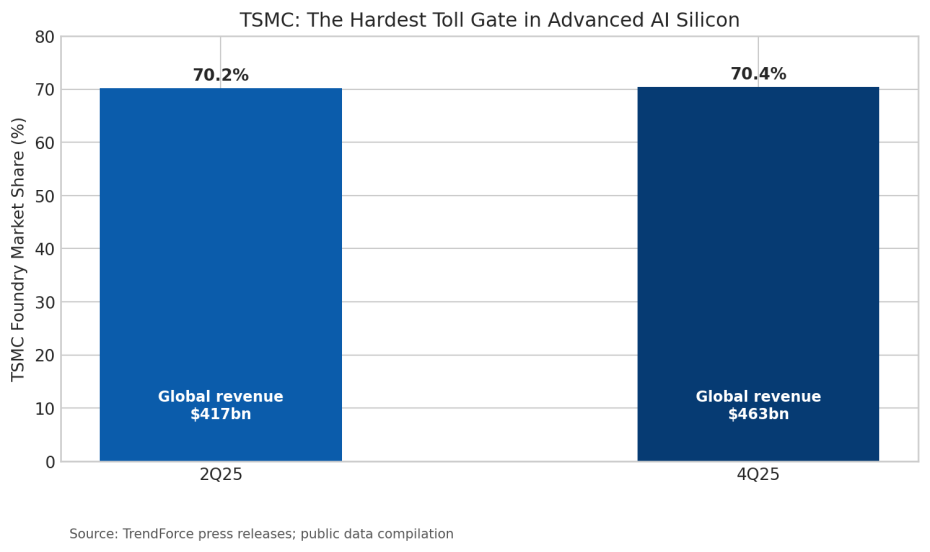
- TSMC는 선진 공정의 '통행세'로서 2025년 4분기 글로벌 파운드리 점유율 약 70.4%를 기록하며, 모든 플레이어 간의 경쟁 혜택을 누린다.
- NVIDIA와 MediaTek의 진입으로 Windows 온디바이스 AI 생태계는 단일 플레이어 시험 단계를 넘어 다중 플레이어 구도로 전환되어 경쟁을 심화시킨다.
- 투자 대상 레이어링: TSMC는 핵심 보유 자산, AMD와 NVIDIA는 공격적 성장 탄력성 제공, ARM과 Intel은 고위험 반전 기회에 해당한다.
Original author: Roger Lee, BIT US Stocks Special Analyst
With 21 years of experience in investment banking, asset management, and financial institutions, he has long focused on research into the AI industry chain, US stock market macro liquidity, and options strategies.
Report date: June 4, 2026
Investment Summary
My core conclusion is just one sentence: In the AI PC war, don't bet on camps; bet on toll booths. TSMC is the foundation, AMD is the offensive play, ARM is a small position to follow, Intel is just a lottery ticket, Qualcomm awaits repricing, and NVIDIA should not chase the FOMO after news pulses.
NVIDIA and MediaTek's entry into AI PCs, on the surface, adds a new chip combination to consumer PCs, but fundamentally, it represents the Windows on-device AI ecosystem moving from single-point pilots to multi-player competition. My assessment is that this war should not be simplified into a religious "x86 vs. Arm" standoff; what's truly worth studying is who can navigate the upgrade cycles and sustainably secure gross margins, cash flow, and pricing power within the industry chain.
I view AI PC as a three-tier opportunity: The first tier is the advanced process toll booth. Regardless of who wins, TSMC more easily collects the toll. The second tier is the spillover of computing power and platforms, where AMD and NVDA represent the x86 offensive and the extension of the GPU software stack, respectively. The third tier is architectural diffusion and turnaround plays. Both ARM and INTC have upside potential, but position discipline must be stricter.
I. Industry Outlook: AI PC Moves from Concept to Shipment Verification Phase
Gartner estimated in 2024 that AI PC shipments would reach 114.225 million units in 2025, accounting for 43% of the PC market. After a 2025 revision, influenced by tariffs and procurement pace disruptions, the forecast was lowered to 77.792 million units, representing 31%, but 2026 is still projected to reach 143.113 million units, with a penetration rate of 54.7%. My takeaway from this data is not that "AI PC demand is falsified," but that short-term rhythms will fluctuate, but the long-term direction of standardization remains unchanged.
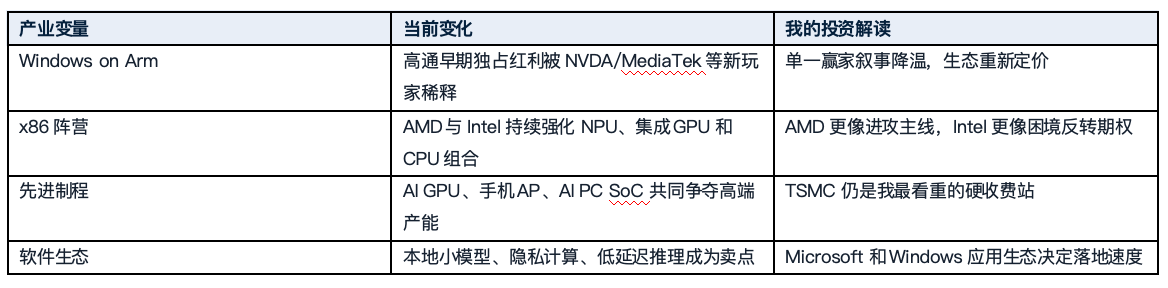 From an investment perspective, the real challenge of AI PC isn't "having an NPU or not," but whether users are willing to upgrade their devices for the local AI experience. If the application layer only stays at meeting summaries, image generation, and simple assistants, the upgrade elasticity will be lower than the market's most optimistic expectations. However, if enterprises start adopting privacy computing, low-latency inference, and local knowledge base deployment as standard configurations, AI PC will transform from a consumer electronics narrative into an enterprise IT upgrade narrative.
II. Competitive Landscape: Chipmakers Fight, TSMC Collects Toll Fees
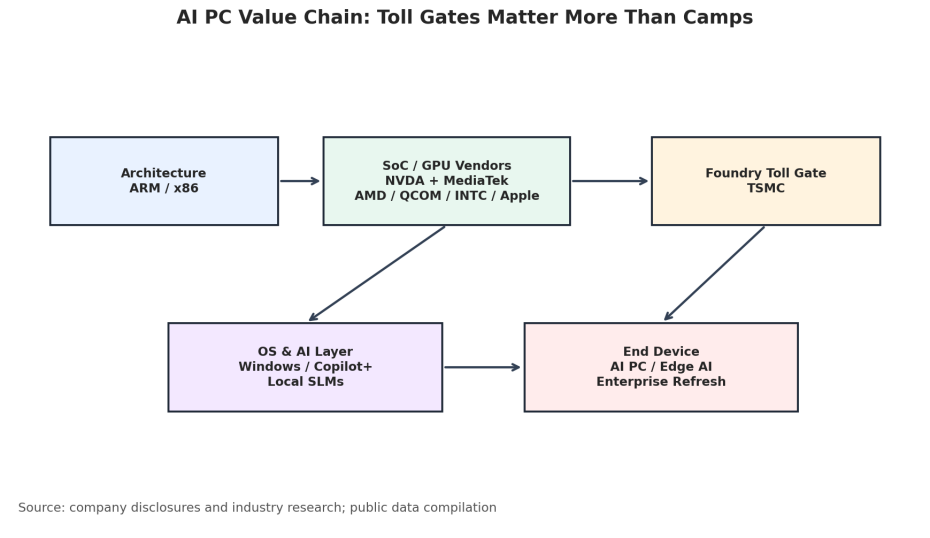
The surface-level narrative of AI PC is Arm challenging x86, but I'm more concerned about where the profit pool is shifting. NVIDIA's strength lies in its GPU and AI software stack; AMD's strength is in its x86 CPU and GPU combination; Qualcomm's strength is in low power consumption and communication; Intel's strength is in its legacy ecosystem and enterprise channels. Each has its advantages, but the commonality is also clear: High-end chips cannot escape advanced manufacturing processes.
TrendForce disclosed that global wafer foundry revenue was approximately $41.7 billion in Q2 2025, with TSMC holding a 70.2% market share. In Q4 2025, global wafer foundry revenue was approximately $46.3 billion, with TSMC's share around 70.4%. This means that as long as AI PCs, AI servers, mobile APs, and edge AI chips continue to compete for advanced process nodes, TSMC is not simply a cyclical stock but more like a toll gate for the entire AI hardware era.
I don't believe every new product launch is worth chasing for gains. However, I believe that every time industry competition intensifies, one should ask the reverse question: If the winner is still uncertain, who can charge all winners? In the AI PC sector, my answer remains advanced manufacturing processes, packaging, key IP, and platform software, rather than simply betting on a single architectural slogan.
III. Asset Ranking: Core Holdings in TSM, Offensive Play in AMD, Upside in Intel/ARM
Over the past year, semiconductor stocks have already priced in AI PC, on-device AI, and computing power spillovers. Yahoo Finance daily price data shows that within the sample period, AMD, Intel, ARM, and TSM all exhibited strong elasticity, but they represent different risk-reward profiles. My approach isn't to buy all AI PC-related stocks together, but to tier them based on certainty, valuation discipline, and their position in the industry chain.

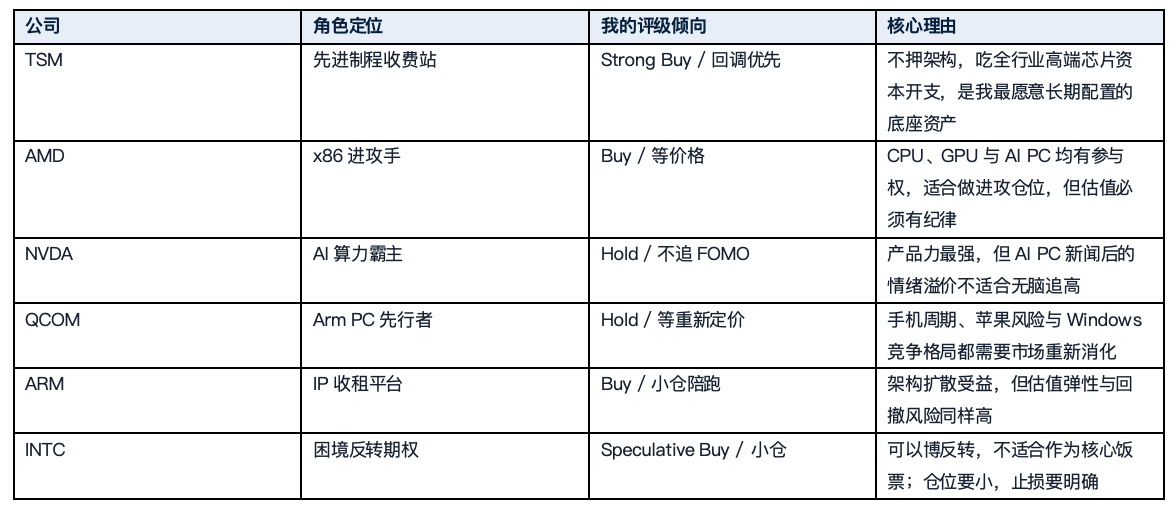
My core conclusion is simple: This is not a war where you only buy the winner; it's a war where you should buy toll booths, platforms, and companies with certain cash flow. If the market gets overly excited on the day of a news release, I'd rather wait. If a pullback brings the risk-reward profile of good companies back into a reasonable range, I will prioritize TSM and AMD, followed by the elastic opportunities in ARM and Intel.
IV. Risk Factors
The risks of this theme cannot be ignored. First, AI PC applications may underperform expectations, leading to a weaker-than-expected upgrade cycle. Second, if Windows on Arm compatibility improvements are too slow, the narratives for Qualcomm and new entrants will be suppressed. Third, tariffs, corporate procurement pauses, and macroeconomic uncertainties can affect PC demand. Fourth, if there is a temporary mismatch in advanced process supply and demand, TSMC could also experience valuation pullbacks. Fifth, the valuation of the entire AI chain is high; once US stock risk appetite declines, the most elastic assets often experience the fastest pullbacks.
Therefore, I prefer to view AI PC as a long-term industrial migration, rather than a short-term news trade. A truly professional approach isn't to buy slogans on launch day, but to wait for the emotional tide to recede and then buy ecosystems, toll booths, and companies that can consistently deliver cash flow.
V. Data Source Description
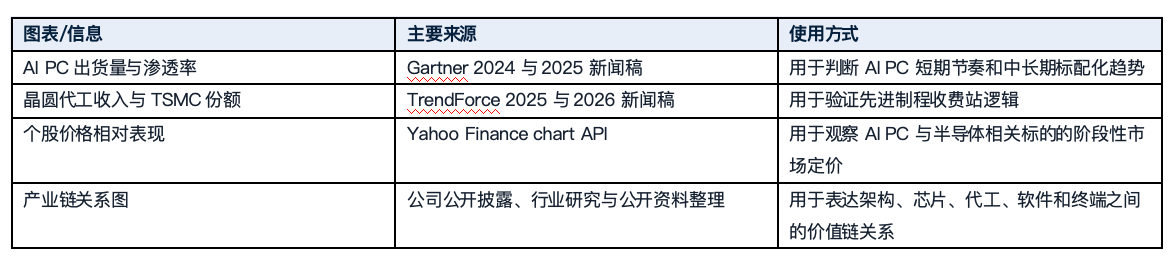
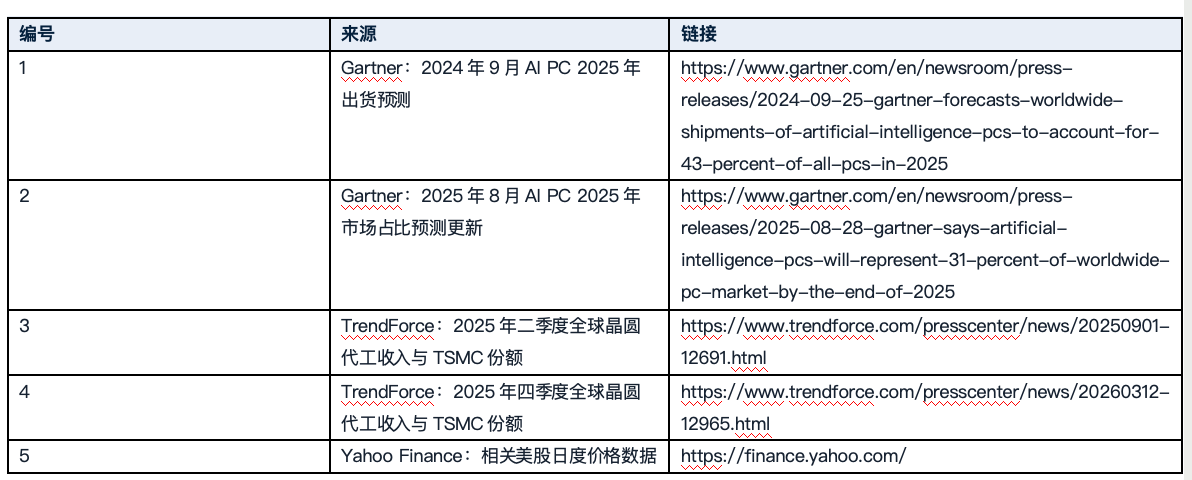
Data References
This report was prepared by a special analyst. The views expressed in this report represent only the personal standpoint of the author and do not represent the views of the BIT platform. This material is for reference only and does not constitute investment advice.





