






对谈VanEck CEO:存储芯片股是供需错配泡沫,多数加密项目五年后消亡


- 核心見解:VanEck CEOのJan van Eck氏は、NVIDIAはソフトウェアエコシステム、規模の優位性、電力効率によりAIインフラの中心的存在へと変貌を遂げ、深い堀を有すると分析。一方、メモリチップ株の高騰は短期的な需給バブルに過ぎず、中長期的には慎重な見方を示す。また、ブロックチェーン、ステーブルコイン、ビットコインは生き残るが、多くの暗号資産プロジェクトやトークンエコシステムは5~10年後に消滅すると指摘する。
- 重要要素:
- NVIDIAの競争優位性:単なるGPUメーカーからAIの「ホスト」へと変貌。ソフトウェアエコシステム、生産規模、高い電力効率を有し、予想PERも20倍強と、ポートフォリオにおける堅実な資産。
- メモリチップ株のリスク:利益の急増は主に販売数量の増加ではなく価格上昇に起因。NVIDIAのような深い競争上の堀がなく、中期的には新規参入企業や顧客の使用量削減圧力に直面する。
- 暗号資産業界の見通し:現在は「暗号資産の冬」を経験しており、元には戻らない。ブロックチェーンの概念、ステーブルコイン、ビットコインは残るが、大半のプロジェクトやアプリケーションは5~10年後に意味を失うか消滅する。
- 2026年のトレンド:企業の支配連鎖の年と呼ばれる。ウォール街の金融機関はブロックチェーンの優位性を吸収しつつも、依然としてエコシステムを支配する。ステーブルコイン法案により、テクノロジー企業が初めて銀行システムと競争する能力を得る。
- マクロリスクと金:米国政府の債務問題は憂慮すべきもので、市場がその債務履行能力への信頼を失えば、金は中長期的なヘッジ手段としても短期的には売却され得る。金は再び世界第一の通貨になりつつある。
- AI投資のアドバイス:AIの計算需要は高まり供給は不足しており、半導体は中核的な位置にある。高値掴みではなく調整時に購入し、分散化された方法で参加することを推奨する。
Edited & Compiled by: Odaily
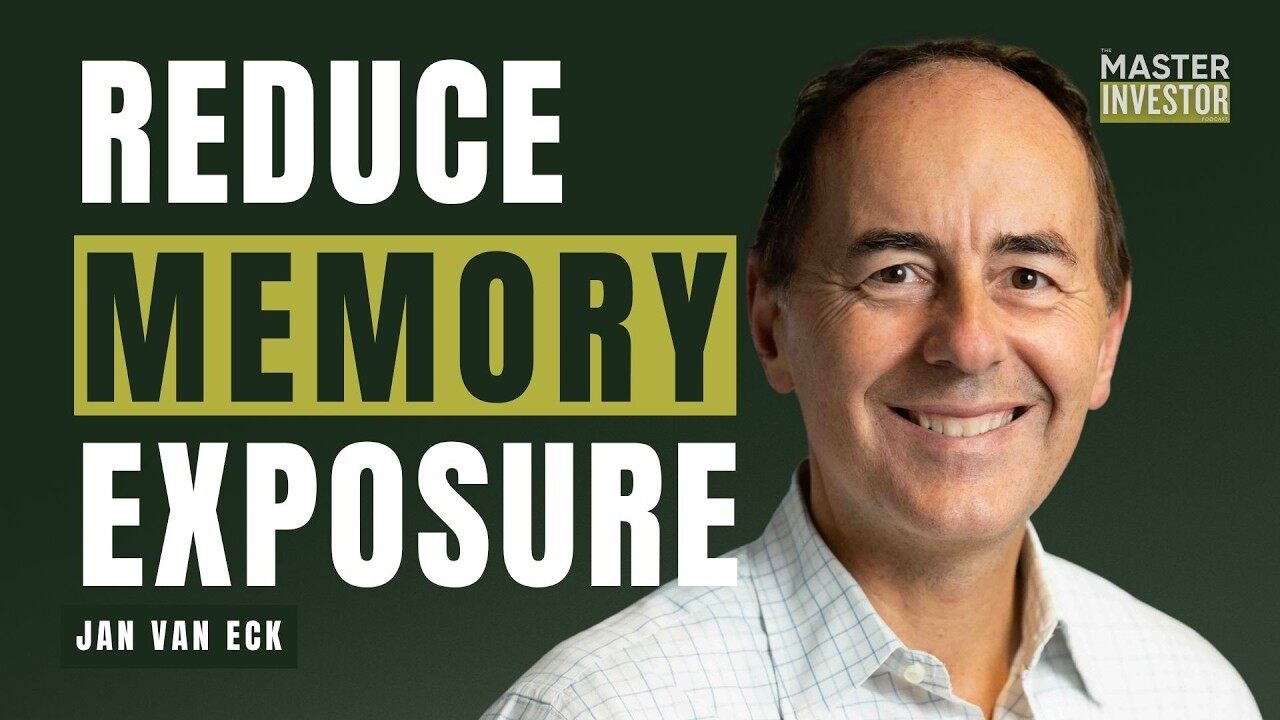
Guest: Jan van Eck (CEO of VanEck)
Host: Wilfred Frost
Original Title: Memory Is A Bubble, But Nvidia Protected – Jan Van Eck On Semis Surge
Podcast Source: The Master Investor Podcast with Wilfred Frost
Air Date: May 27, 2026
Editor's Note
In this episode, we welcome Jan van Eck, CEO of VanEck. His core thesis is that Nvidia has transformed from a pure GPU manufacturer into the "Host" for AI infrastructure, boasting moats in its software ecosystem, scale, and power efficiency. However, the surge in memory chip stocks resembles a bubble driven by cyclical supply-demand imbalances.
The head of VanEck, which manages approximately $225 billion in assets and was among the first to push for a Bitcoin ETF, distills the main narrative for the next decade into three key themes: AI computing buildout, the rise of India, and excessive fiscal leveraging in developed economies like the US, UK, and Japan.
More strikingly, he calls 2026 the "Year of the Corporate Controlled Chain," believing Wall Street will absorb the best aspects of blockchain, stablecoins, and programmable money, but that most crypto projects and software will become irrelevant in 5 to 10 years. Bitcoin, stablecoins, and blockchain will remain, while many token ecosystems will disappear.
Key Takeaways
AI, Semiconductors & Memory Chip Stocks
- "From an AI perspective, the problem is simple. Demand for compute is here, but supply is below. Semiconductors are clearly at the core of this structure."
- "Nvidia is no longer just a GPU manufacturer; it's more like the host for AI. Its past cyclical and highly competitive nature as a single chip maker is no longer the whole story."
- "Nvidia's advantage comes not only from its manufacturing scale but also from chips that deliver higher efficiency per dollar of electricity. With a forward earnings multiple in the low 20s, I still see it as a solid asset in the portfolio."
- "The profit explosion in memory chip stocks isn't primarily because they sold more products, but because prices increased. This means companies using these chips will start looking for ways to conserve usage."
- "I don't like calling tops easily, but I'm cautious on memory chip stocks. In the medium to long term, they don't have a deep enough competitive moat compared to Nvidia."
ETFs, Active Management & Asset Allocation
- "VanEck's investment philosophy is to look back from a ten-year perspective: By 2036, which major themes will have truly changed the world and financial markets?"
- "ETFs are a scale game. The larger the assets, the broader the client base you can serve. Much active management, especially in private equity and hedge funds, might actually exhibit diseconomies of scale."
- "Even if the ETF vehicle itself is passive, deciding which ETFs to own, how to allocate, and when to add or reduce positions are inherently very active decisions."
Macro Debt, Gold & Hard Assets
- "If the market truly loses confidence in the US government's ability to fulfill its obligations, I don't know where to hide. Even gold, as a medium-term hedge, could be sold off in the short term."
- "I believe gold is in the process of re-emerging as the world's primary currency. Because if not the US dollar, I don't think China or India would become the international reserve currency either."
- "The government bond market is one of the strangest, most inefficient markets in the world. It can get locked into a certain mindset and become disconnected from reality."
- "The Nuclear ETF grew from under $20 million to $4.7 billion, driven by a very dramatic policy shift. Both parties in the US, as well as countries like Japan, are re-embracing nuclear energy."
Crypto, Stablecoins & Corporate Controlled Chains
- "I call 2026 the 'Year of the Corporate Controlled Chain.' Banks, trading firms, and financial institutions want to absorb the best parts of blockchain but still control their own ecosystem."
- "I think we are experiencing a crypto winter, and it's not coming back. Many projects and software will neither be interesting nor alive in five to ten years."
- "The concept of blockchain will remain, stablecoins will remain, Bitcoin will remain. But many other parts of the ecosystem, in my view, will disappear."
- "The stablecoin bill, for the first time, gives technology companies the ability to compete with the banking system. But banks have survived competition from money market funds before."
India & SpaceX IPO
- "You can't fight demographic trends. India has been consistently pursuing pro-business reforms under Modi. There's no reason a country like that shouldn't grow at a higher speed."
- "SpaceX is massive. As an ETF issuer, we're very happy to see it entering the public market. The liquidity flowing into the economic system will be in the hundreds of billions of dollars."
The Frenzy in Memory Chip Stocks
Wilfred Frost: Our guest today is Jan van Eck, President and CEO of VanEck and its affiliates. VanEck, an asset management firm founded by his father, is now a major player in the ETF industry, with about $225 billion in assets under management. Jan is a frequent podcast guest known for his direct and clear views, which is why we're thrilled to have him. Jan, welcome to the show.
Jan van Eck: Wilfred, it's great to be doing this show with you for the first time.
Wilfred Frost: I want to start with one ETF. It's fair to say it's driven a lot of your performance in recent years and is at the center of the current market: SMH, the VanEck Semiconductor ETF. It's been performing remarkably. I understand it's now about $65 billion in AUM, correct?
Jan van Eck: It's roughly that size.
Wilfred Frost: It's become the primary gateway for investors seeking exposure to semiconductors. It's up 58% year-to-date and 135% over the past 12 months. More impressively, its annualized return since inception is about 29%.
Jan van Eck: That's crazy, isn't it?
Wilfred Frost: It truly is incredible. Achieving that on a compounding basis is very difficult. You could retire now.
Jan van Eck: Yes, I should quit while I'm ahead.
Wilfred Frost: But I'm sure you won't, which is why you're here. Over the past year or so, SMH grew to $65 billion. How much of that was price appreciation versus inflows?
Jan van Eck: A significant portion is price appreciation. I'd be hard-pressed to think that inflows account for more than 10% to 20% of the growth over the last 12 months.
Wilfred Frost: That's interesting. I would have guessed a higher inflow percentage. What do you think is driving this rally? Maybe it's a simple question – is it purely the AI theme?
Jan van Eck: Yes. VanEck's investment philosophy is to try to look at things from a big-picture, macro perspective. I call it the "10-year macro." It means looking back from 2036 and asking which themes will have most profoundly impacted the world and, consequently, the financial markets. This perspective helps filter out a lot of noise.
I think at least three things will remain: AI, the rise of India, and excessive leveraging led by the US, UK, and Japan. From an AI standpoint, the logic is simple: compute demand is high, and supply can't keep up. Semiconductors are clearly at the core of this.
Drilling down, we come to Nvidia. Our ETF has outperformed other semiconductor ETFs partly because it focuses on the top 25 stocks and allows its largest holdings to go up to 20%. So, it has essentially ridden the Nvidia wave significantly.
Nvidia itself could be a whole show on its own. Are we still comfortable with semiconductors, with Nvidia today? My answer is yes. No one can guarantee a company won't lose its competitive moat, but I think Nvidia will certainly be one of the leaders in ten years. Part of the reason is that it has become like the host for AI, no longer just the single-chip or GPU manufacturer of the past. That previous business was not only cyclical but also highly competitive.
Today's Nvidia has software, cost advantages, manufacturing scale, and higher power efficiency. In other words, it produces more efficient chips per dollar or pound of electricity used. Its forward earnings multiple is in the low 20s. So, despite not being the hottest stock in SMH over the last nine months, I still consider it a very solid part of the portfolio.
Wilfred Frost: Based on your recent disclosures, Nvidia is about 17% of SMH, and TSMC is about 9%. I want to dive into them later. You mentioned the large Nvidia exposure is important, but it's also interesting that the performance this year, or as you said over the last nine months, hasn't solely been driven by giants like Nvidia. Many semiconductor companies were left behind by the AI theme until recently catching up.
Jan van Eck: Absolutely. There's some thinking, and also some luck, in SMH's methodology. When you select only the top 25 names, what has happened over this 15 to 20-year investment era is that large-cap stocks have truly led the market. There are certainly more than 100 semiconductor companies, and filtering out the bottom ones, which are in more competitive spaces, effectively removes the drag.
Of course, this doesn't apply to all investment periods. But during this timeframe, it has certainly amplified the impact of these big winners.
Wilfred Frost: In the short term, with a 58% gain year-to-date, the rally has clearly broadened out significantly. Memory chip stocks are up very sharply. Can this kind of move continue?
Jan van Eck: I doubt this kind of performance is sustainable. We just saw historic moves in May, so I don't think it will continue at this pace. But I also don't think the market pricing is necessarily irrational. Going back to the super-macro view, if demand is high and supply is low, the capital market is essentially telling entrepreneurs and founders: come here, we need your capital, and we are willing to value your capital because we need to build AI compute centers. This isn't surprising.
I think this ten-year perspective works because humans naturally tend to look backward. When a big trend emerges, whether it's the rise of a country or a major technology, we can't just look back at the last few quarters of company earnings or the past uses of the technology to understand the scale of its buildout.
Of course, not all tech trends materialize. There are many fake waves and fake technologies in the world. But AI is clearly grabbing the global market by the neck and shaking it.
Wilfred Frost: A short-term question. The KOSPI hit another all-time high today. It has tripled in the last 18 months, which is incredible for a country index, driven mainly by Samsung and SK Hynix. The Korean index had a single-day gain of 12% last week. Does this remind you of the other side? Like in late 2021, some meme stocks surged, followed by a sharp correction in 2022. I know these memory chip stocks, especially those two, have phenomenal earnings per share expectations, so it's different from meme stock mania. But are there any similarities that raise a red flag for you?
Jan van Eck: Within the AI ecosystem, I would say there are indeed some bubbles. Going back to late last year, the question was the financial sustainability of the OpenAI ecosystem. OpenAI is one of the leading model companies with ChatGPT, and will Claude surpass it? Companies in what I call the OpenAI ecosystem, like Oracle, which is leveraged building compute for OpenAI, and CoreWeave, both saw declines of 50%.
So, even within the bigger AI trend, you can find local bubbles, or company-specific bubbles. Getting back to your question, I do think the memory segment is a cyclical moment. Nobody likes to call the top at times like this, but I am personally cautious on memory chip stocks because, in the medium to long term, they don't have the competitive moat that I believe is deep enough, unlike Nvidia.
There will be new entrants in this space. There's a shortage right now, which gives them pricing power. The main reason for their exploding profits is not a huge increase in sales volume, as they have capacity constraints; the real reason is they raised prices. This also means that companies using these memory chips will start looking for ways to conserve usage.
So, I agree with your sentiment that it feels very bubbly. In our active management funds, we are reducing exposure to the memory segment.
Wilfred Frost: Nvidia is about 17% of SMH, TSMC is the second largest, followed by Intel, Broadcom, AMD, Micron, Texas Instruments, Qualcomm, each around 6% or 7%. Does TSMC also have a defensible moat similar to Nvidia's? Though different in type, is its defensibility comparable?
Jan van Eck: I think so. TSMC not only has manufacturing capability but also the capital capacity to build incredibly expensive chip fabrication facilities. I suspect one common advantage for both Nvidia and TSMC is that they work with a wide range of participants within the ecosystem, allowing them to see almost all customers. Therefore, they can see where technology is heading and how customer demand will evolve. Most people would agree that TSMC will still be there in ten years; it will be a survivor.
Wilfred Frost: You mentioned Oracle or CoreWeave saw significant pullbacks from their late October highs to the "Iran war lows" in March, with Oracle nearly halving, which is significant for a company its size. I heard you say on another podcast not to worry too much about an overall AI bubble because it has already burst to some extent. The question is, in those moments, how do you have the confidence to re-buy the right companies? Especially since a large portion of the companies we're discussing are not even public yet; investors can only participate through proxy vehicles.
Jan van Eck: This might sound like a typical answer from an ETF issuer, but from a company perspective, a diversified approach is certainly more reasonable. In terms of timing, if you're in such a trend, it's better to buy during pullbacks rather than chasing the rally now. We talked about SMH's flows earlier; I think a lot of the fund's assets came from investors who bought years ago and let the appreciation happen naturally. This is healthy to some extent because there isn't a lot of hot money chasing it.
Of course, money is chasing memory stocks, and the hottest parts of the ecosystem. But overall, we are still overweight semiconductors in


