Stocks, Gold, and Bitcoin All Fall Together as Goldman Sachs Warns: The Market Is Entering a Liquidity Contraction


- Core View: The November U.S. equity selloff is essentially a repricing of the AI asset valuation framework. The market has shifted from focusing solely on AI growth to questioning funding costs, financing structures, and regulatory risks, with the pricing logic upgrading from a "rate trade" to a three-factor resonance of "rates + earnings + financing."
- Key Elements:
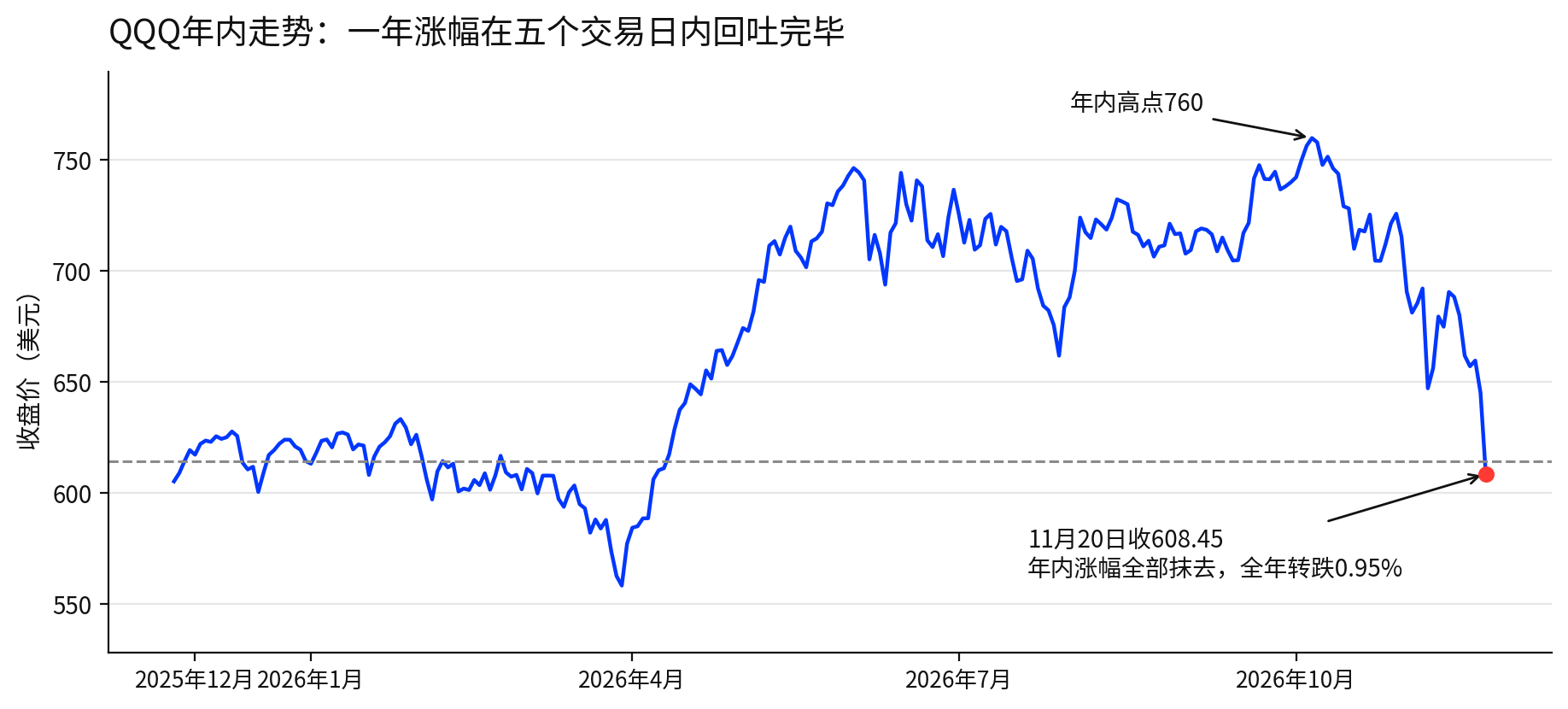
- The S&P 500 has pulled back 11.6% from its peak, the Nasdaq 100 has erased its year-to-date gains, yet the 10-year Treasury yield has retreated to around 4.93%. Gold and Bitcoin fell in tandem, indicating that capital is broadly reducing risk exposure rather than rotating into traditional safe-haven assets.
- Federal Reserve Governor Barr disclosed that the on-balance-sheet debt of the seven largest AI companies is projected to exceed $800 billion in 2026, with off-balance-sheet obligations potentially peaking at over $3 trillion in notional terms. Cloud providers and GPU manufacturers have cumulatively invested over $100 billion in equity in AI startups, with some of those funds flowing back into GPU procurement, forming a "circular financing" structure.
- Nvidia reported quarterly revenue of $115.844 billion and data center revenue of $108 billion, up 21% quarter-over-quarter. Despite the strong results, the stock still fell 22.91% that week, confirming that fundamentals have not deteriorated while valuations remain under pressure.
- The Fed's October meeting minutes show that nearly all officials believed further rate hikes may be appropriate, with a December 9 rate hike fully priced in. The upward shift in the risk-free rate has reduced the discounted value of forward AI profits.
- Democrats are set to control Congress in 2027 and plan to push for AI model testing and regulation of data center electricity costs. Both parties have proposed the AUDIT AI Act, requiring publicly listed companies to disclose material AI investments, special purpose entities, and leasing arrangements.
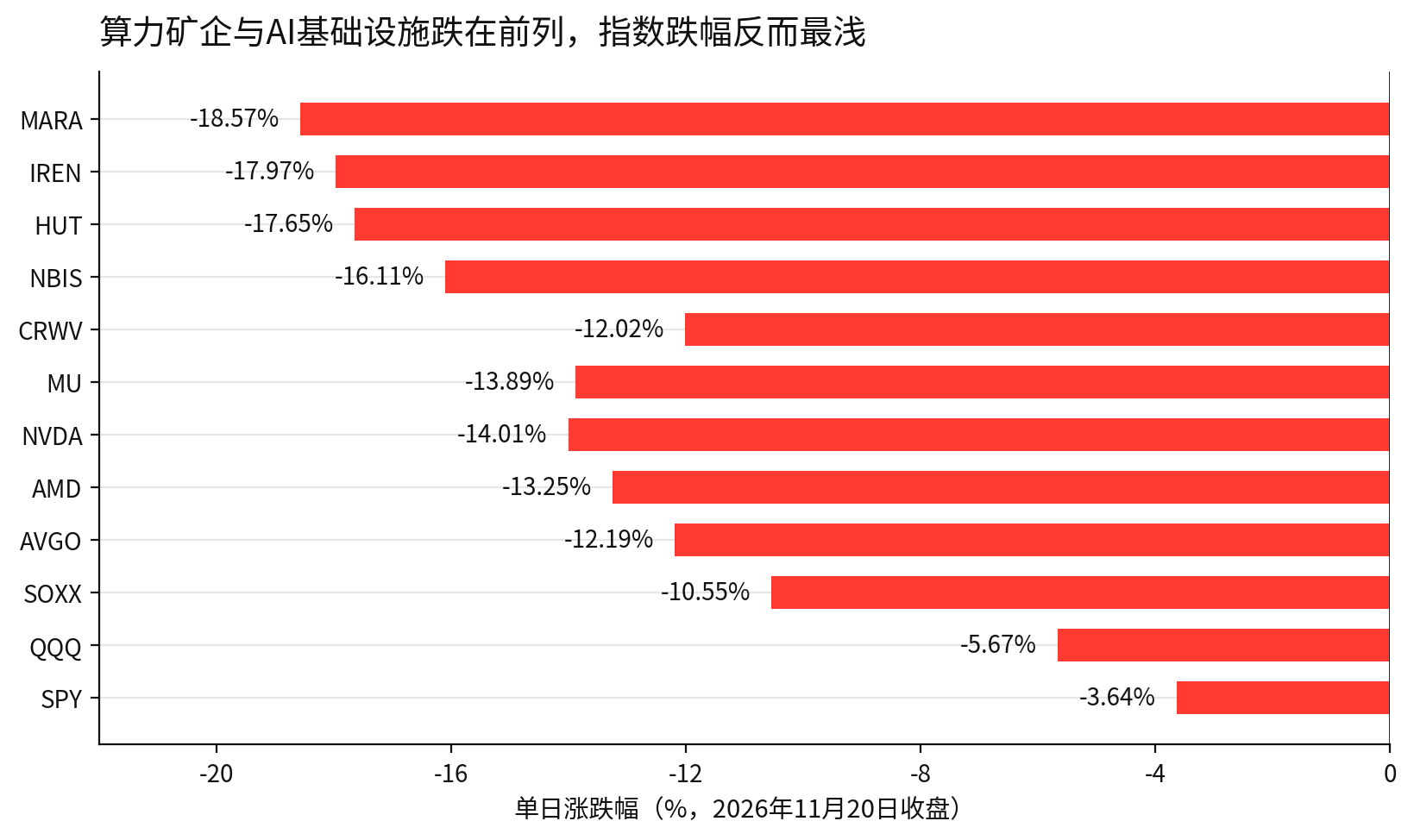
- Highly leveraged computing power companies suffered larger declines, with CoreWeave falling 25.64% for the week. However, investment-grade credit spreads widened by only about 5 basis points and high-yield bonds by about 38 basis points, indicating that financing pressure has not yet transmitted to the bond market.
- Key validations this week: October core PCE expected at 3.2% and GDP revision at 3.5%, combined with Dell's AI server orders and cash flow, constitute a "funding cost test" and an "AI demand realization test."
The U.S. stock market correction in November is evolving from a phase of "AI stocks have fallen too much" into a more significant repricing of the valuation framework.
Over the past few trading sessions, the market has repeatedly priced in Nvidia's decline, the AI bubble, and tech stock valuations—these narratives alone are no longer sufficient to explain the current market dynamics. What has truly changed is the relationship between assets. The S&P 500 entered correction territory, closing at 6,910.39, down 3.70% on the day and 11.6% from its October 6 high. The Nasdaq 100 erased its year-to-date gains, with QQQ closing at $608.45, turning negative for the year at -0.95%. Meanwhile, the 10-year Treasury yield fell notably to around 4.93%, yet gold and Bitcoin also declined.
This means capital is indeed seeking safety, but it is not broadly rotating into traditional safe-haven assets—rather, it is reducing overall risk exposure. Reuters' summary of this global selloff also noted that concerns over AI investment sustainability and expectations of further rate hikes are simultaneously weighing on markets, while rising government bonds and weakening gold suggest some investors may be directly increasing cash holdings.
So the real question that needs answering this time is no longer "can Nvidia keep rising," but rather: when interest rates, financing, and regulation simultaneously begin to raise the cost of capital for AI, how much valuation is the market willing to assign to AI growth?
1. The Market Is No Longer Just Selling Stocks—It's Repricing the Financing Logic Behind AI Assets
If you look at last Friday in isolation, it's easy to conclude "tech stocks crashed, capital fled to safety." But looking at the past few weeks together, the market is actually re-examining the capital cycle behind the AI boom.
The core logic of the AI industry over the past two years has been: cloud providers increase capital expenditure, GPU makers receive orders, data center companies obtain financing, AI model companies secure compute, and model companies then prove compute demand through revenue growth. As long as revenue grows fast enough, this chain can keep rolling forward.
The problem is that this model is increasingly reliant on financing. U.S. AI infrastructure investment continues to expand, some data center companies require substantial debt and asset financing, and large cloud providers and GPU manufacturers participate through equity investments, procurement commitments, guarantees, and other means. Federal Reserve Governor Barr, speaking at a conference in Milan on November 16 about AI financial stability risks, provided three sets of figures: on-balance-sheet debt of the seven largest U.S. AI companies is projected to exceed $800 billion by the end of 2026; off-balance-sheet obligations could peak at over $3 trillion in nominal terms, including long-term contracts, leases, and residual value guarantees; cumulative equity investments by large cloud providers and GPU manufacturers in AI labs and cloud computing startups exceed $100 billion, with some of those funds ultimately flowing back into these companies' GPU and compute procurement.
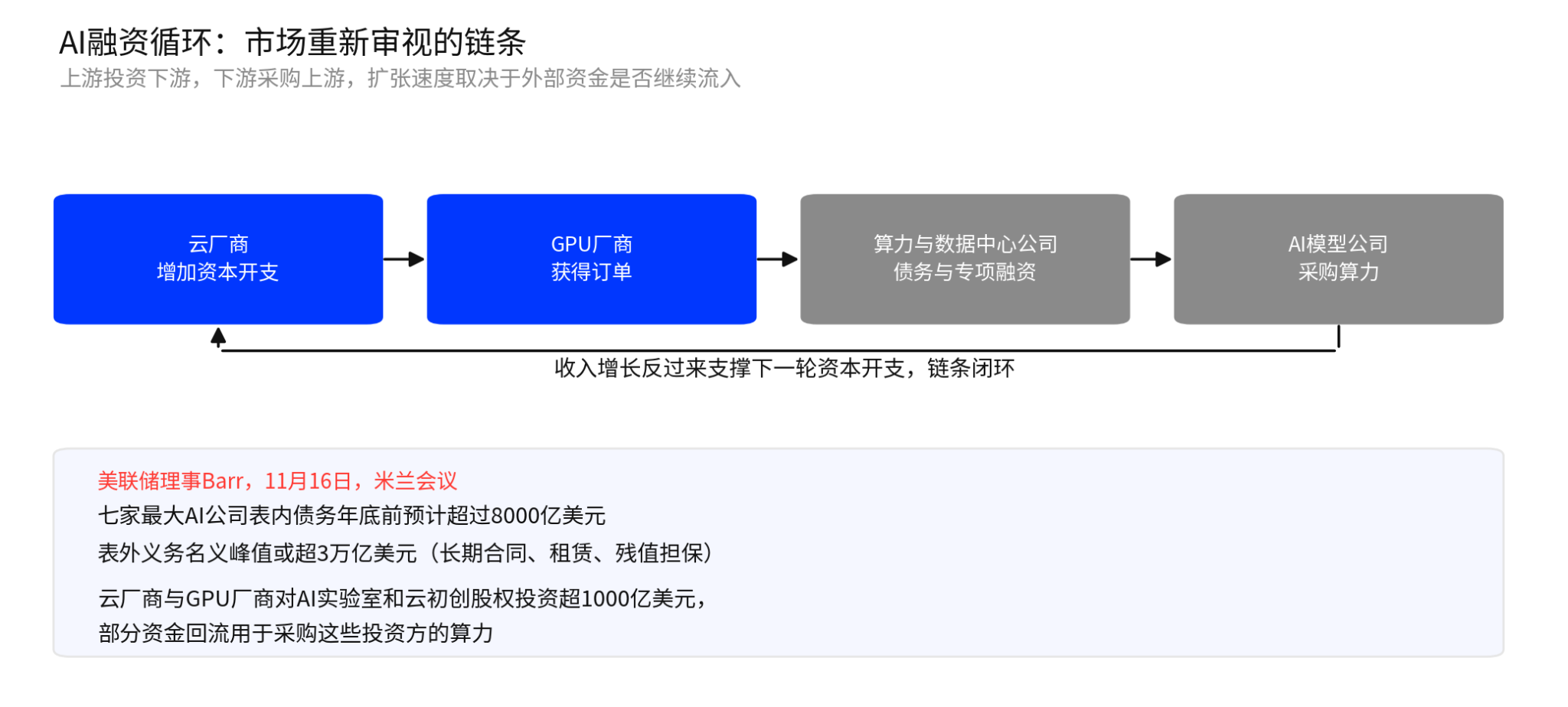
This is the "circular financing" that the market is now focusing on. It does not mean AI demand is fake, nor does it mean the related transactions themselves are improper. The issue is that when upstream and downstream players in the supply chain simultaneously become investors, suppliers, customers, and financing supporters, the financial relationships between companies become more complex. As long as capital markets remain willing to provide funding, this structure can support very rapid expansion. But if financing conditions tighten, the self-reinforcing capital cycle that once amplified growth could reverse and amplify deleveraging.
This is why, in this correction, assets closer to the financing end have fallen faster. Highly leveraged compute companies, data center operators, and some emerging cloud computing companies are facing not just "slightly slower future revenue growth," but a rising discount rate on future revenue, combined with rising financing costs.
However, these concerns are currently mainly reflected in equities. According to Goldman Sachs, as of November 19, investment-grade credit spreads had widened only about 5 basis points since October 6, and high-yield credit spreads about 38 basis points—both significantly smaller than the changes during the same period in Q4 2018. Only if credit spreads widen significantly going forward would it signal that financing pressure is transmitting from the stock market to the bond market—a signal worth monitoring.
The market is moving beyond "can AI generate revenue" to ask: is that revenue sufficient to cover the cost of capital? That is the true starting point of this valuation repricing.
2. Rate Hike Expectations Repriced—AI Valuations Face a Different Pricing Framework
A key premise that allowed AI stocks to sustain high valuations was the market's willingness to believe in very high profit growth over the coming years, alongside the expectation that the cost of capital would not keep rising.
That combination is now changing. The Fed's October meeting minutes showed that almost all officials believed further rate hikes may be appropriate. The market has already priced in a December 9 rate hike very fully. This means AI assets are facing not an ordinary "valuation compression," but a re-discounting of all future cash flows after the risk-free rate has shifted higher.
The market was previously willing to pay high prices for AI profits in 2028 and 2029 because investors believed growth would be fast enough and the rate environment would ultimately help. Now, if the market begins to believe policy rates will continue rising—and that even by 2027 there may be no quick return to an accommodative environment—then the same forward profit contributes less to today's valuation.
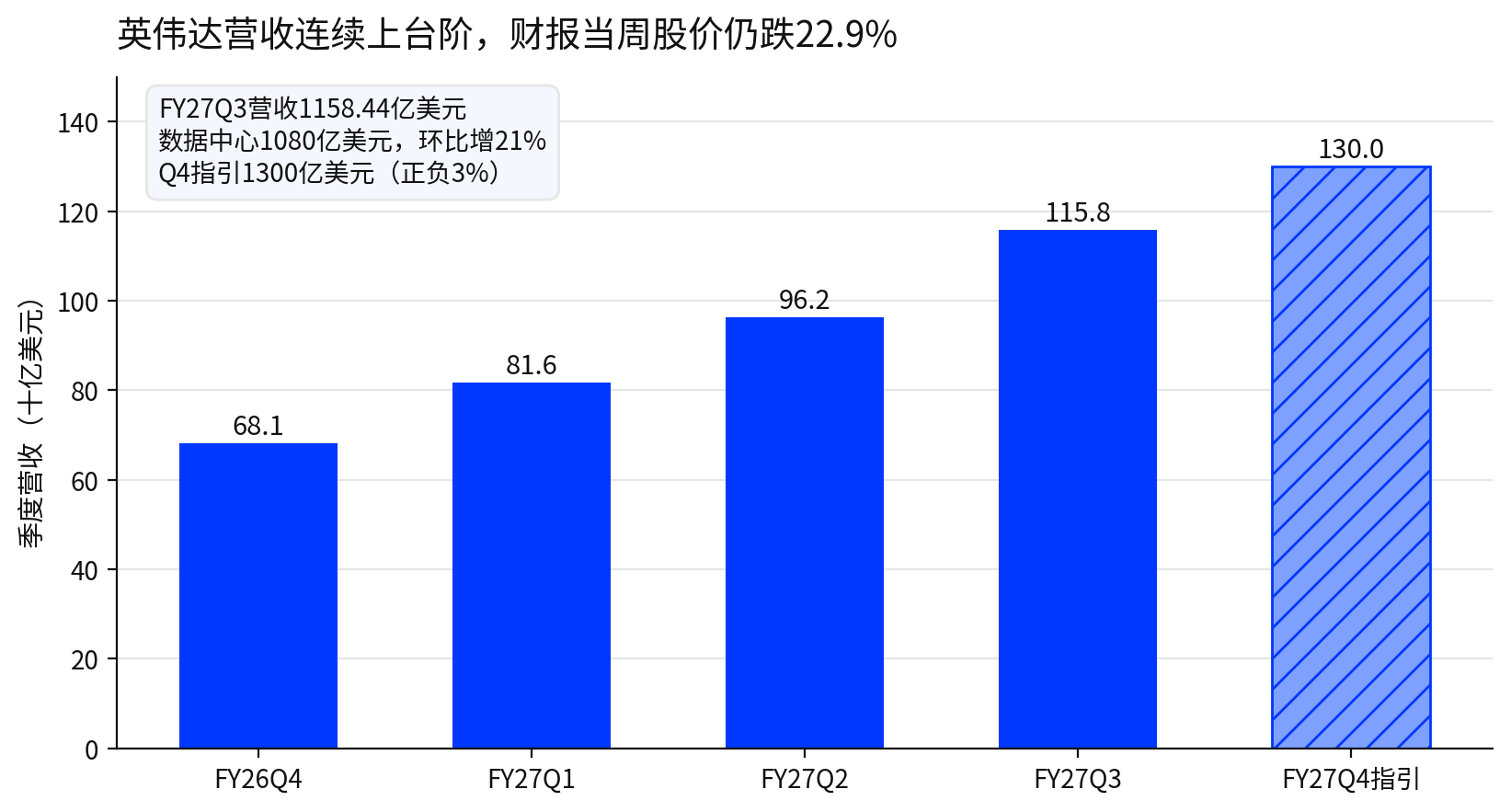
Figure 4 reminds us that this repricing is occurring against a backdrop of unchanged fundamentals. Nvidia's latest quarterly revenue was $115.844 billion, with data center revenue of $108 billion, up 21% quarter-over-quarter, and Q4 guidance of $130 billion (±3%). Business performance continues to step up, yet the stock still fell 22.91% that week.
Therefore, a very important market phenomenon that has recently emerged is: the 10-year Treasury yield fell, but AI stocks did not immediately rebound. If tech stocks were only experiencing a rate-driven valuation adjustment, the rapid decline in long-end yields should have provided some relief—but the market did not rush back into AI assets. This suggests that pricing has moved from a pure "rate trade" to a three-factor trade of "rates + earnings + financing."
In other words, a slightly lower Treasury yield is no longer enough to automatically rescue high-valuation AI stocks. The market needs to see stronger evidence: inflation genuinely declining, rate hike expectations receding, AI capex remaining strong, corporate cash flows not deteriorating, and no systemic problems in the financing chain.
3. Regulatory Risk Enters AI Valuation from "Long-Term Narrative" for the First Time
This may be the biggest difference between this market cycle and previous AI corrections. After the midterm elections, Democrats will control Congress in 2027. The market is now beginning to trade in advance a variable that had not been fully priced: will AI infrastructure expansion face stricter regulatory and political constraints?
Democrats have already clearly signaled a series of policy directions, including requiring enhanced testing of advanced AI models, increasing corporate accountability, addressing electricity costs brought by data centers, and strengthening oversight of AI companies and data center construction. Reuters previously reported that Democrats plan to push a series of AI and data center-related bills in 2027.
What the market is focused on this time is not just AI models themselves. Data centers require large amounts of electricity, water, and land, so the larger the AI capex, the more evident the costs borne by local communities and consumers. After the U.S. midterm elections, multiple local governments have seen political pressure to restrict data center construction, increase disclosure requirements, and protect electricity prices.
A more direct change comes from financial regulation. On November 19, a bipartisan team of Democratic Senators Mark Warner and Angela Alsobrooks and Republican Senators John Kennedy and Mike Rounds introduced the AUDIT AI Act, requiring public companies to provide more explicit disclosure of major AI investments, financing arrangements, and related risks, including special purpose entities and leasing arrangements.
This in itself is far from changing AI industry fundamentals, but it changes the market's risk premium. Because investors could previously treat many AI financing relationships as ordinary commercial arrangements between companies, now regulators are beginning to require the market to see clearly: who is financing whom? Who are these companies' customers? Which guarantees do not appear directly on balance sheets? If one AI company runs into trouble, who ultimately bears the risk?
For companies with already very high valuations, regulation does not need to actually halt business to have an impact. As long as the market demands higher information disclosure, stricter capital constraints, and higher financing costs, valuations themselves need to be recalculated.

The tiering in Figure 5 has taken on new meaning in the regulatory context. CoreWeave fell 25.64% that week—a decline even larger than several chip leaders—indicating that when the market begins to recalculate capital costs and future disclosure obligations, valuations of high-capex, high-leverage companies will fluctuate much more significantly.
4. Gold and Bitcoin Falling Together Shows the Market Is Really Short on "Risk Tolerance"
The most easily overlooked signal in this cycle is actually not NVDA, but gold and Bitcoin. If the market were simply rotating from tech stocks into defensive assets, gold should normally see stronger capital inflows. If the market were simply rotating from stocks into crypto assets, BTC should also show relative resilience.
But the reality is that stocks, gold, and Bitcoin have all declined, while Treasury yields have fallen notably. Reuters noted that during the global market selloff, Treasuries saw capital inflows, but gold showed unusual weakness. The dollar rose to a 19-month high, further reinforcing the appeal of cash and dollar-denominated assets.
According to Goldman Sachs, as of November 19, gold had fallen 10.8% from its recent high, and the yen had weakened about 1% against the dollar; during the comparable adjustment in Q4 2018, gold rose 5% and the yen appreciated 2.1%.
This combination is more noteworthy than a simple "tech stock crash." It suggests that the market's core need right now may not be to find a new high-yield asset, but rather to reduce risk first and wait for a new price framework to form.
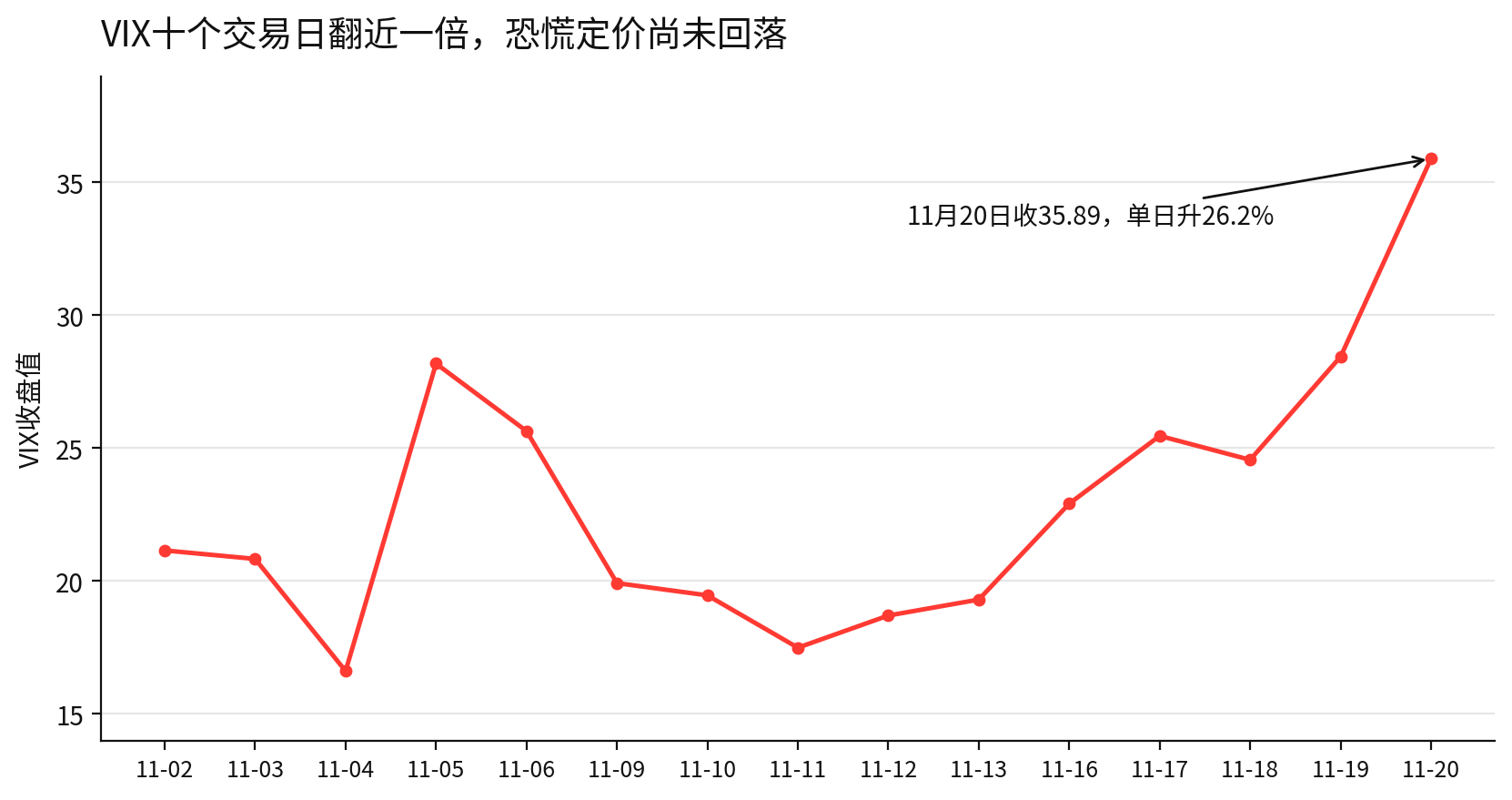
For traders, this means gold, BTC, and tech stocks cannot simply be viewed as three independent markets. When BTC falls, gold falls, NDX falls, and the dollar strengthens, the market looks more like it is experiencing a liquidity contraction. Only when BTC stabilizes, gold strengthens again, the dollar retreats, and NDX begins to rally on volume does it come closer to a recovery in risk appetite.
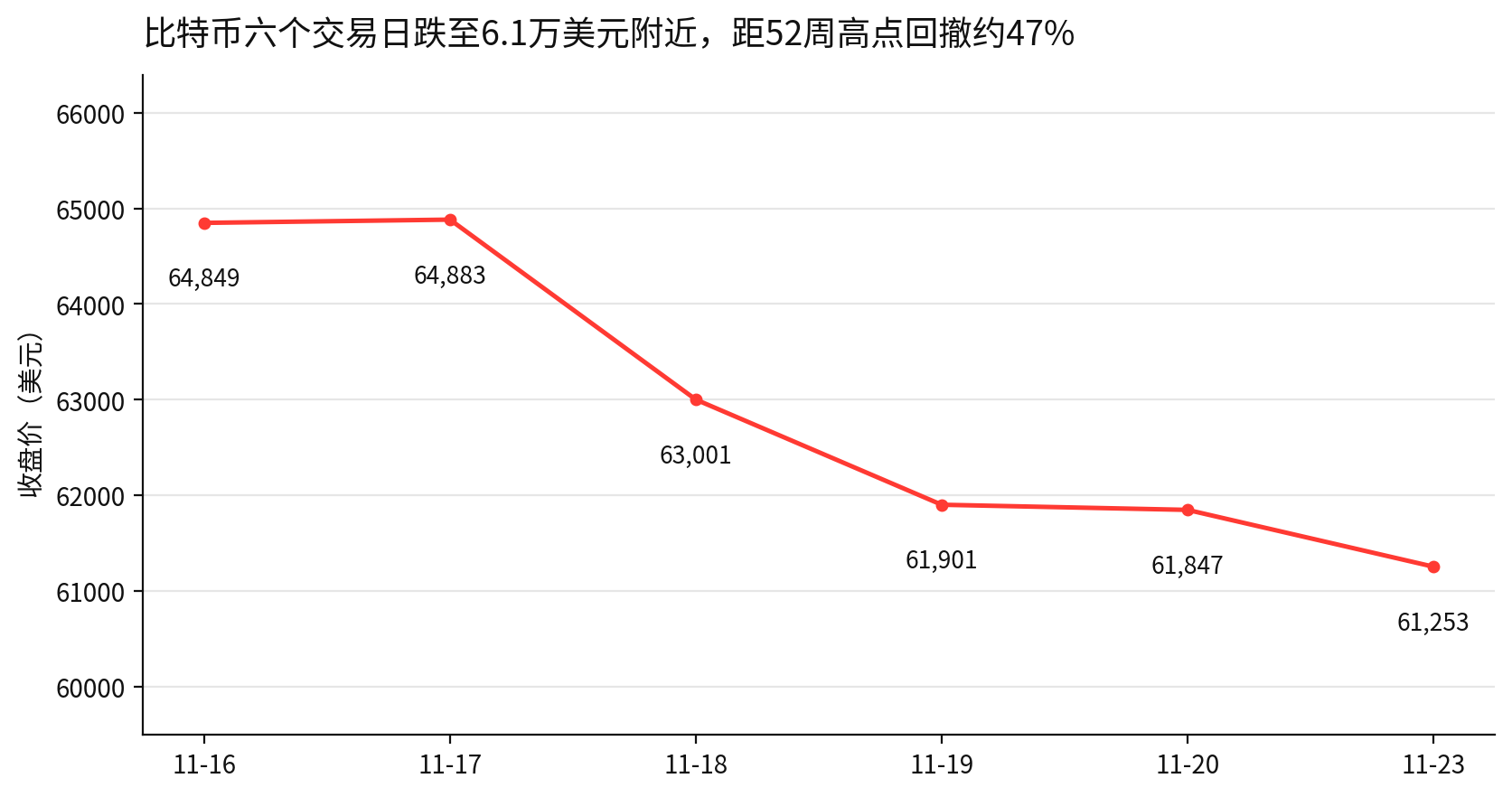
Therefore, the significance of BTC this week is not just about the crypto asset itself. It can serve as a quick indicator of whether high-beta capital is flowing back. What is truly worth waiting for is not one asset rising first, but several risk assets beginning to stop dragging each other down.
5. PCE and Dell Earnings Will Tell the Market Whether This Is "Valuation Compression" or "Fundamental Deterioration"
This week's calendar happens to give the market an opportunity to validate this logic. On November 25, U.S. October PCE, core PCE, Q3 GDP revision, personal spending, durable goods orders, and initial jobless claims will all be released together. The market currently expects October headline PCE year-over-year at about 3.8%, core PCE at about 3.2%, and month-over-month at about 0.3%. Annualized GDP growth is expected to be revised slightly upward from the initial 3.4% to 3.5%.
Therefore, what matters most on Wednesday is not looking at whether PCE is high or low in isolation, but looking at inflation, growth, and employment together:
- If core PCE continues to rise while GDP and consumption remain resilient, the market will be more accepting of "higher rates for longer or even further hikes." For high-valuation tech stocks, this means both the discount rate and risk premium come under pressure.
- If PCE cools and growth remains resilient, a better combination could form: inflation pressure declines but the economy does not clearly recession, the market re-trades "soft landing," long-end yields have room to fall further, and tech stocks could see valuation recovery.
- The worst combination is high inflation and weak growth. In this case, the market has neither room for rate cuts nor the ability to avoid downward earnings revisions, and pressure on AI and growth stocks would increase significantly.
Corporate earnings will answer the other half of the question. Dell will report on November 24, and the market will especially need to watch AI server orders, backlog, delivery pace, margins, and cash flow. Because after Nvidia, Dell is closer to the downstream realization of AI capex: GPUs selling well is one thing; whether server orders can convert into revenue, and whether revenue can convert into profit and cash flow, is another.
<