






Brent Crude Breaks Above $100! PPI and CPI Data Incoming This Week, Fed Rate Hike Uncertainty Persists


- Core View: Brent crude has broken above $100/barrel, and PPI and CPI may be pushed higher passively. However, cooling consumer data suggests the root cause of inflation is more likely a supply shock than overheated demand, raising uncertainty around the Fed's rate hike path.
- Key Factors:
- Brent crude touched $100.45/barrel intraday, while WTI rose to around $95. Oil prices have steadily climbed from a July low of $76, and cost pass-through will likely show up in PPI over the next 1-2 months.
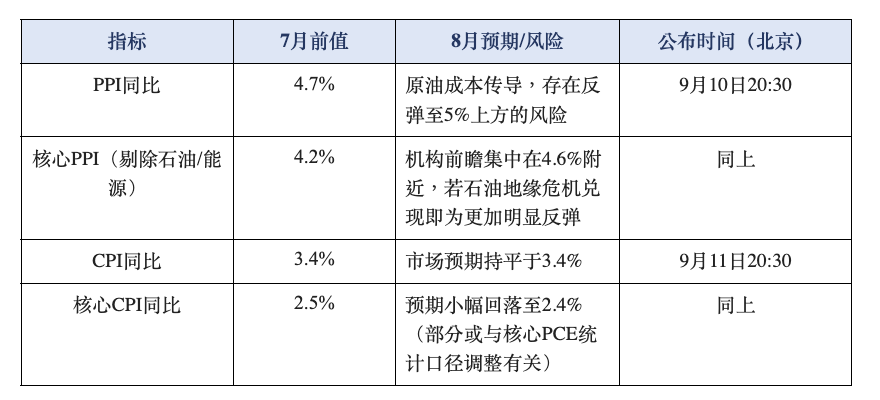
- July PPI came in at 4.7% year-over-year, with core PPI surging 0.4% month-over-month; institutions expect August core PPI to rebound to 4.6%, while headline PPI could rise above 5%.
- July CPI was 3.4% year-over-year, with core CPI at 2.5% year-over-year; August core CPI is expected to edge down to 2.4%, but a BEA methodology adjustment could mechanically lower core PCE by 0.1-0.2 percentage points.
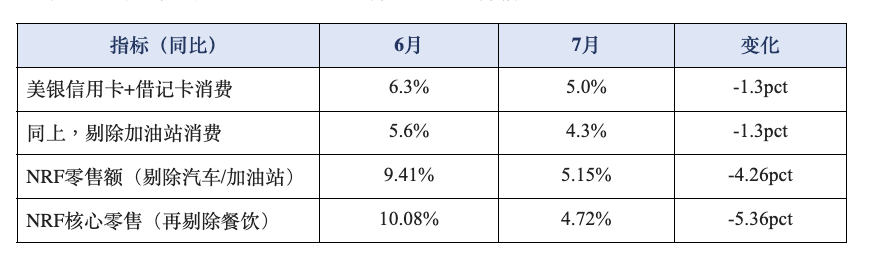
- Bank of America data shows card spending growth slowed from 6.3% year-over-year in June to 5.0% in July; NRF retail monitoring shows core retail growth plunged from 10.08% to 4.72%, indicating a clear cooling in consumption.
- Fed Chair Warsh's hawkish hints suggest a possible rate hike, while Governor Waller leans toward holding rates steady, leaving expectations divided ahead of the September 17 FOMC meeting.
- UBS has abandoned its call for no rate hikes this year, instead forecasting 25 basis point hikes in both September and December, bringing rates to 4.00%-4.25%, and remains bullish on three major themes: AI, power/resources, and longevity.
Over the next two days, the US will release its August PPI and CPI data back to back. Last night, Brent crude briefly broke through $100 per barrel in intraday trading, while WTI rose in tandem to around $95 — already sounding an alarm. The transmission of crude oil prices through the industrial production chain has historically been one of the most direct and reliable leading signals for anticipating the trajectory of PPI. At the same time, the latest data from the Bank of America Institute and the NRF/CNBC retail monitor show that consumer card spending and retail sales growth are cooling markedly — which means that even if this week's PPI and CPI are pushed higher passively by crude oil costs, the root cause of inflation looks more like a supply shock than demand overheating, and the Fed's rate hike path may not be as straightforward as the market imagines.
1. US-Iran Conflict Escalates: Will Crude Oil Become This Week's Market "Time Bomb"?
According to CNBC and Rigzone, Brent crude briefly touched a high of $100.45 per barrel in intraday trading last night, up about 2.9% from Tuesday's close of $97.92; WTI crude rose in tandem to above the $95 mark, gaining about 2.4%. The market believes that from a technical perspective, WTI is breaking out of a symmetrical triangle formation that has been in place since the March high, with the 100-day moving average having crossed above the 200-day moving average. If the current trend continues, a further challenge to the $100 psychological threshold cannot be ruled out.
From a broader supply chain perspective, oil prices spent most of August in the $80 range, held persistently above $90 from the start of September, and have now broken through $100 — this is different from the panic-driven spike in March, when the Iran-Israel-US conflict escalated abruptly and Brent surged to around $109 in a single day before gradually retreating over the following months. This time, it looks more like a sustained rally climbing steadily from the July low of $76. Persistently rising crude oil costs are enough to leave a clear mark on PPI data over the next one to two months through channels such as transportation, chemical raw materials, and energy inputs.
2. This Week's Major Events: Can PPI and CPI Set the Tone for the September Rate Hike Debate?
Data from the US Bureau of Labor Statistics show that July PPI rose 4.7% year-over-year, with core PPI (excluding food, energy, and trade services) also at 4.7% year-over-year, while the core month-over-month figure surged 0.4%, presenting a structural pattern of "flat headline, strengthening core." August PPI will be released at 20:30 Beijing time on September 10. Given the lagged transmission effect of crude oil costs, the market is generally cautious about this reading, with institutional forecasts suggesting core PPI (excluding food and energy, prior July reading of 4.2%) risks rebounding to around 4.6%. If realized, this would mean PPI is turning back upward after a brief decline, and could push headline PPI year-over-year above 5%.
Immediately afterward, August CPI will be released at 20:30 Beijing time on September 11. July CPI was 3.4% year-over-year, with core CPI at 2.5% year-over-year; street expectations suggest August headline CPI will likely hold steady at 3.4%, but core CPI is expected to edge down slightly to 2.4%. This seems to contradict the logic of surging crude oil — core CPI excludes the energy component by design, so there is a natural time lag in how oil price increases transmit to it. But more noteworthy is that the US Bureau of Economic Analysis (BEA) recently announced it will adjust the statistical methodology for investment advisory services, legal services, and software categories. Both Goldman Sachs and JPMorgan estimate that this adjustment could mechanically lower core PCE readings by 0.1-0.2 percentage points. In other words, core inflation "looking more moderate" may partly stem from changes in statistical methodology rather than a genuine easing of price pressures — a point that requires particular caution when interpreting Friday's data.
3. Are Consumers Starting to "Tighten Their Wallets"? What Card Spending and Retail Data Tell Us
If PPI and CPI are the "thermometers" on the price side, then consumer spending data serve as the key corroborating evidence for judging whether this round of inflation is "demand overheating" or "cost-push." The latest Bank of America Institute "Consumer Checkpoint" report shows that total credit card plus debit card spending growth year-over-year fell from 6.3% in June to 5.0% in July, and excluding gas station spending, also dropped from 5.6% to 4.3%. However, the report also emphasizes that this cooling stems more from the fading of "temporary factors" such as World Cup-related spending and the timing mismatch of online promotions, rather than a broad-based weakening of demand — the 5.0% year-over-year growth in July is still among the top three readings of the past three years, more than four times the full-year 2025 average.
Meanwhile, CNBC/NRF retail monitor data show that July marked the 10th consecutive month of positive retail sales growth, but the slowdown was more pronounced: retail sales excluding autos and gas stations fell sharply from 9.41% year-over-year in June to 5.15% in July; if dining expenses are further excluded, core retail sales growth dropped from 10.08% to 4.72% year-over-year, a decline of more than 5 percentage points.
4. Fed's Warsh vs. Waller: How Much Uncertainty Remains Before the September 17 FOMC Meeting?
Federal Reserve Chairman Kevin Warsh's remarks at the Jackson Hole global central banking symposium on August 28 took a noticeably more hawkish tone, suggesting that persistently elevated inflation may require rate hikes to address, which the market widely interpreted as significantly raising the probability of a rate hike at the September FOMC meeting. But Fed Governor Christopher Waller stated on September 3 that if the recent "disinflation" trend continues, he would lean toward supporting holding rates steady in September — creating divergence in market expectations ahead of the FOMC meeting.
Regardless of whether the final decision in the early hours of September 17 (Beijing time) is a rate hike or "holding steady plus hawkish rhetoric," the directional shift is fairly clear: the Fed's policy narrative is moving from "no more hikes this year" to "further tightening cannot be ruled out." Viewed alongside the aforementioned adjustment to core PCE statistical methodology, this also suggests that under the Fed's "data-dependent" decision-making framework, the interplay between different data components and different statistical methodologies will itself become a variable shaping market expectations.
5. UBS's Big Reversal: From "No Hikes All Year" to Bullish on Two Hikes — Which Assets Do the Giants Favor?
Notably, UBS analysts have abandoned their previously held position of no rate hikes for all of 2026, instead predicting the Fed will hike by 25 basis points each in September and December, bringing the federal funds rate range to 4.00%-4.25%. A key judgment in the UBS report is: "Tightening conducted against a backdrop of resilient GDP growth, robust AI capital expenditure, and a solid job market has historically tended to support risk assets." This is fundamentally different from the scenario of "being forced to hike rates to fight inflation amid weak economic growth" — UBS believes the current situation is closer to the former, i.e., "growth-driven rate hikes" rather than "inflation-driven rate hikes." Based on this judgment, UBS's asset allocation recommendations are as follows:
Equities: Maintain a constructive view on equity assets throughout the rate hike cycle, remain bullish on the three major themes of artificial intelligence, power/resources, and longevity, and view short-term volatility as an opportunity to buy on dips.
Bonds: Raise US Treasury yield forecasts, with the 2-year yield target upgraded to 4.25% (June 2027) and the 10-year upgraded to 4.5%; the relative attractiveness of short-duration bonds has declined somewhat, but high-quality medium-to-long duration bonds still offer allocation value, providing both coupon income and a hedge against slowing economic growth.
US Dollar: Rising tightening expectations are bullish for the dollar in the short term, but UBS also cautions that if subsequent rate hikes prove to be "inflation-driven" rather than "growth-driven," this support may not be sustained.
Disclaimer: This article is a compilation and analysis of publicly available market information, provided for general informational purposes only. It does not constitute any investment advice, securities recommendation, financial or tax advice, nor does it constitute an offer, solicitation, or recommendation in any jurisdiction.
The data sources cited in this article include publicly available information from the US Bureau of Labor Statistics (BLS), the US Bureau of Economic Analysis (BEA), the Bank of America Institute "Consumer Checkpoint" report, the CNBC/NRF retail monitor, CNBC, Rigzone, the Federal Reserve website, and third-party institutional research reports. The views, forecasts, and estimates of third-party institutions mentioned herein are their own positions and do not represent the views or judgments of BIT; BIT has not independently verified their accuracy, completeness, or timeliness.
This article contains forward-looking statements and institutional forecasts. Such content is based on information and assumptions available at the time and is subject to uncertainty; actual results may differ materially from forecasts. Macroeconomic data, policy decisions, and market prices may all change rapidly; please refer to official releases for specific data. Crude oil, foreign exchange, bond, and equity markets are highly volatile, and historical trends and market behavior characteristics do not represent future performance.
The products and services described in this article are not offered to users in all countries or regions, nor to residents of countries or regions where local laws and regulations prohibit or restrict them.
Investors should make independent and prudent decisions based on their own financial situation, investment objectives, and risk tolerance, and seek professional advice when necessary.





