Bitcoin Tests $62,000 Again: How Many More Rate Hikes Will the Fed Deliver?


- Key Takeaways: Rising expectations of Fed rate hikes have dragged the crypto market down in tandem with global risk assets, with Bitcoin twice falling to around $62,000. Dip buyers are now waiting for clear signals on the rate hike path for December and January.
- Key Factors:
- Bitcoin fell to around $62,000 and Ethereum dropped below $1,750. Over the same period, gold fell 3.6%, silver dropped about 5%, and LME copper declined over 4%, with risk assets broadly under pressure.
- Fed Governor Waller favors a 50 basis point hike in December, while meeting minutes show internal divisions over the pace of tightening, with most officials believing further hikes are needed in the coming months.
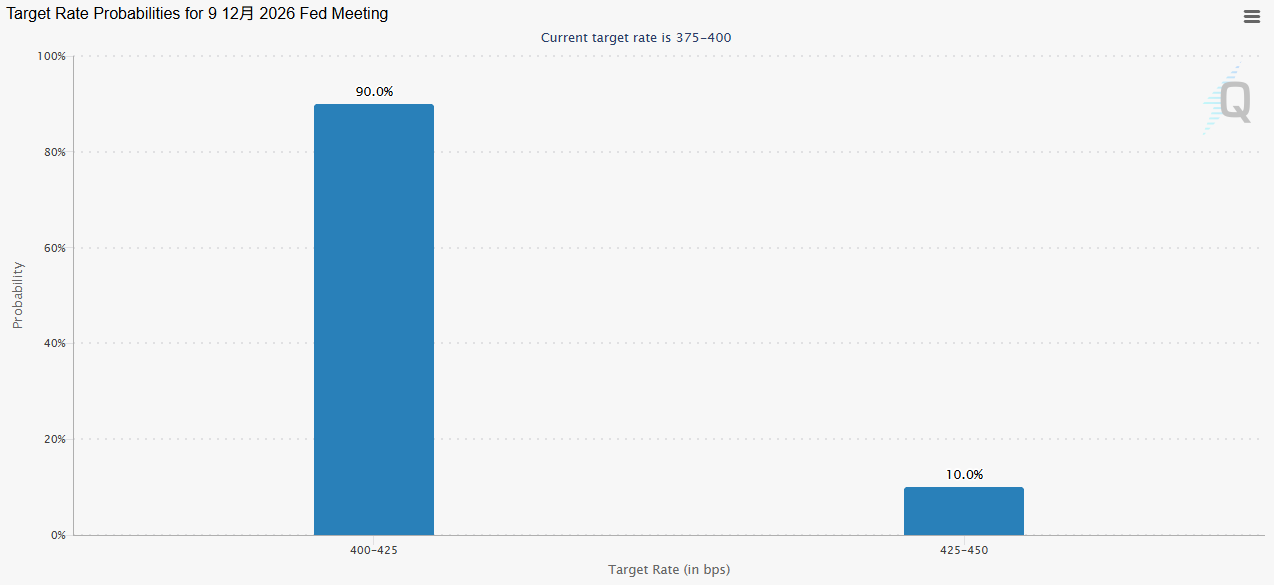
- CME data shows a 90% probability of a 25 basis point hike in December; the probability of a cumulative 50 basis point hike by January stands at 75.5%, with two 25 basis point increases emerging as the mainstream expectation.
- About $2 billion in leveraged positions were liquidated during the weekend liquidity crunch, perpetual contract funding rates turned negative, and options hedging demand rose to levels last seen at a阶段性 low.
- Bitcoin has broken below its 200-week moving average of around $68,000; total orders within 1% of the order book are down nearly 38% from this year's high, indicating clearly insufficient buying support.
- The market is sharply divided on whether $62,000 marks the bottom: Fidelity's Timmer sees support from long-term models, while Peter Brandt warns of downside risk from a head-and-shoulders pattern.
Original | Odaily (@OdailyChina)
Author | Asher (@Asher_ 0210)

Amid rising expectations of a Federal Reserve rate hike, the crypto market has weakened again. Today, Bitcoin once again fell to near $62,000; Ethereum dropped below $1,750, hitting a low of $1,735. Beyond the crypto market, over the past 24 hours, spot gold fell 3.6% and silver dropped about 5%; industrial metals also came under clear pressure, with LME copper falling over 4% intraday and LME tin briefly dropping over 8%.
After last week's U.S. inflation data was released, the market had already sold off once on expectations of a 25 basis point rate hike in December. Now, investors worry that the December hike could exceed expectations and are also positioning for further hikes in January next year.
Waller Proposes a 50 Basis Point Hike; Fed Remains Divided
Before the U.S. stock market opened, Federal Reserve Governor and FOMC voting member Christopher Waller said in a CNBC interview that U.S. inflation is moving in the wrong direction, and price pressures have spread to the services sector. Waller worries that once businesses get used to raising prices 3% a year, even if oil prices fall back, it will be harder for the Fed to bring inflation back to 2%.
Waller favors a direct 50 basis point hike in December. If the Fed clearly signals another 25 basis point hike in January next year, a 25 basis point hike in December would also be acceptable. Waller also mentioned that to bring down inflation, the total magnitude of this hiking cycle could exceed the combined total of the previous three rate cuts.
The minutes of the October FOMC meeting released this morning show that the Fed had already discussed increasing the size of rate hikes. After a 25 basis point hike in September, most officials wanted to observe the policy effects first, and in October the rate was ultimately held at 3.75% to 4.00%. Fed Governor Cook and Cleveland Fed President Hammack favored an immediate hike and therefore voted against. Almost all officials believed that if the economy evolves as expected, further hikes would be needed in the coming months. Two of them suggested that if subsequent inflation data disappoints, a hike of more than 25 basis points in December could be considered.
The division among Fed officials is mainly over the pace of hikes. San Francisco Fed President Mary Daly supports continued hikes but prefers a gradual approach. Fed Governor Barr said that if the economy evolves as expected, further hikes would be appropriate. Even if only a 25 basis point hike is delivered in December as expected, whether the post-meeting statement signals another hike in January will also affect market pricing of future rates.
Cumulative 50 Basis Point Hike by January Becomes Market Consensus
According to the latest CME data, the probability of a 25 basis point hike in December is 90%, and the probability of a 50 basis point hike is 10%. By January next year, the probability of a cumulative 50 basis point hike reaches 75.5%. Combining the pricing of both meetings, the market is more inclined to bet on 25 basis point hikes in both December and January next year.
Scott Anderson, Chief U.S. Economist at BMO Capital Markets, believes the October meeting minutes further reinforced expectations of two consecutive hikes. Jeffrey Roach, Chief Economist at U.S. financial services firm LPL Financial, expects inflation readings to improve over the next two months, making a 25 basis point hike in December sufficient.
Whether January hike expectations can cool down will depend on upcoming core inflation data. Economist Robin Brooks noted that falling oil prices have already driven down the inflation expectations implied by the U.S. Treasury market. Fed officials mentioned in the minutes that core services prices excluding housing remain elevated, and AI infrastructure demand is also pushing up prices of some tech products. If subsequent inflation improvement mainly comes from energy price declines while core services prices remain firm, the market's bet on a January hike will be hard to shake.
Bitcoin Falls to $62,000 Twice: What Are Bottom-Fishing Funds Waiting For?
Last weekend, Bitcoin fell to near $62,000 for the first time, with institutions and traders bullish on a rebound mainly focused on oversold signals after concentrated liquidations. Bitwise Chief Investment Officer Matt Hougan noted in a November 17 report that U.S. inflation beating expectations raised the probability of a December hike, and about $2 billion in leveraged positions were liquidated during the thin-liquidity weekend, further amplifying the decline. Michael Nadeau, founder of The DeFi Report, chose to add positions during this drop, betting on a short-term rebound. K33 Research Head Vetle Lunde noted that over half of circulating supply is at a loss, perpetual contract funding rates have turned negative, and options hedging demand has risen to levels seen at previous cyclical lows.
After this morning's release of the Fed meeting minutes, institutions began to focus more on how much pressure high dollar and Treasury yields would put on Bitcoin. Sygnum Bank Chief Investment Officer Fabian Dori believes the market has begun pricing in multiple hikes extending into next year, and long-end Treasury yields and the dollar may remain strong. Whether Bitcoin can offset this pressure will depend on how strong institutional allocation demand and buying to hedge currency depreciation are. Bitget analyst Lewis Huang is more focused on last weekend's low; Bitcoin has already fallen below the 200-week moving average of about $68,000, and if the dollar and Treasury yields rise further and BTC loses the $62,000 level again, selling could continue.
Bitcoin has fallen back to near $62,000, but spot buying has yet to clearly recover. Wintermute OTC trader Jasper de Maere believes the rally from the July low may have been a false breakout, and currently ETFs, crypto treasury companies, retail investors, and institutions all lack clear buying support. Data from digital asset technology firm Talos shows that the total value of orders within 1% of Bitcoin's mid-price has dropped nearly 38% from this year's high before the Binance hack incident. With thinner order books, trades of the same size can more easily push prices up or down, and whether a rebound can be sustained will depend more on follow-through buying.
As for whether $62,000 can become a bottom, market views are divided. Jurrien Timmer, Fidelity's Global Macro Director, remains optimistic about Bitcoin's current cycle, with the current price having returned to near the support line of his long-term price model. If it clearly breaks below this line, the model's validity would also be tested. Wellington-Altus Chief Market Strategist James Thorne sees a bullish pattern in Bitcoin's weekly chart and views $57,000 as the invalidation level for that view.
Veteran trader Peter Brandt believes Bitcoin may be forming a head-and-shoulders top, and once the pattern is confirmed, downside risk could further increase.
Bitcoin has fallen back to $62,000 twice. What bottom-fishing funds may be waiting for is a clear signal from the Fed in December: will there be another hike in January?