Metals Crushed! Gold, Silver, and Copper All Fall


- Core View: Rising expectations of Fed rate hikes, a stronger dollar, and cooling AI trades have jointly triggered a sharp selloff in the metals market, with copper, gold, and silver all plunging together. The concentrated unwinding of prior long positions amplified the decline, and the bullish logic for metals now faces a severe test.
- Key Elements:
- LME copper closed down about 5.7% at $12,471/ton, hitting a seven-month low; COMEX copper futures fell nearly 6% intraday, while LME zinc and LME tin dropped about 5%.
- Spot gold broke below $3,750 and touched its lowest level since September 2025, while gold futures fell more than 3%; silver futures dropped over 5%, a larger decline than gold.
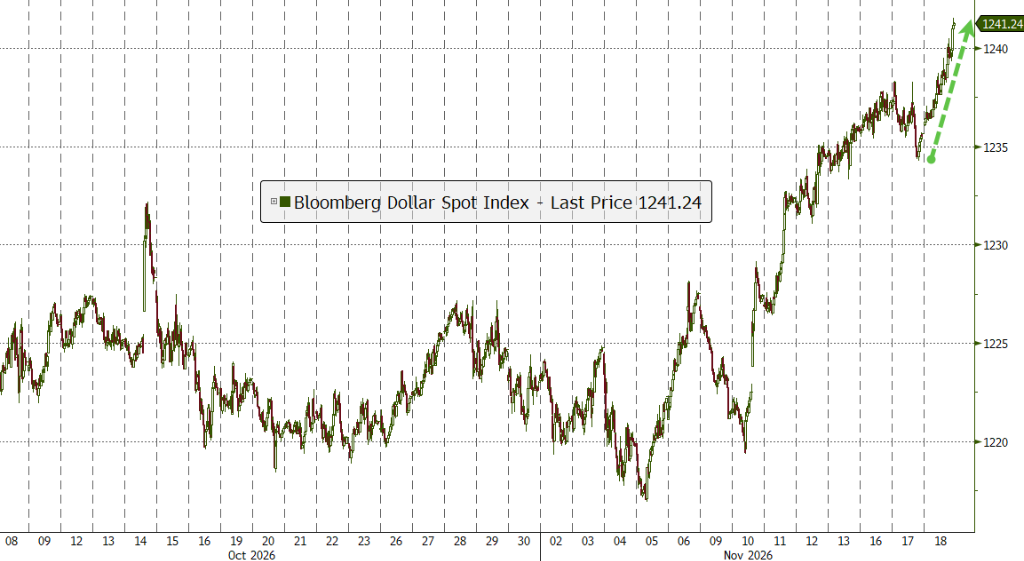
- CME data show the market sees a 92% probability of a 25-basis-point rate hike in December, the dollar index rose for a sixth consecutive day to a 19-month high, and U.S. Treasury yields climbed.
- Uncertainty over the AI investment outlook has weakened copper demand expectations, Nvidia gave back gains of more than 5% to close down 2-3%, and Druckenmiller publicly turned bearish on copper.
- Market rumors link the selloff to "making room" for Anthropic's IPO, with investors selling risk assets such as cryptocurrencies, precious metals, and copper to raise funds.
- The premium for imported copper in China rose 21% to a record high, inventories remain low, and spot fundamentals still provide support for copper prices.
- Goldman Sachs data show hedge fund short positioning reached 56%, long-only funds were net sellers of tech and materials sectors, and risk appetite has diverged.
Original authors: Li Dan, Dong Jing
Original source: Wallstreetcn
On Wednesday, November 18, global metals markets suffered a violent selloff, with industrial metals such as copper and precious metals gold and silver all plunging in unison. During the session, COMEX copper and LME copper fell nearly 6%, COMEX gold dropped over 3%, and silver futures fell over 5%.
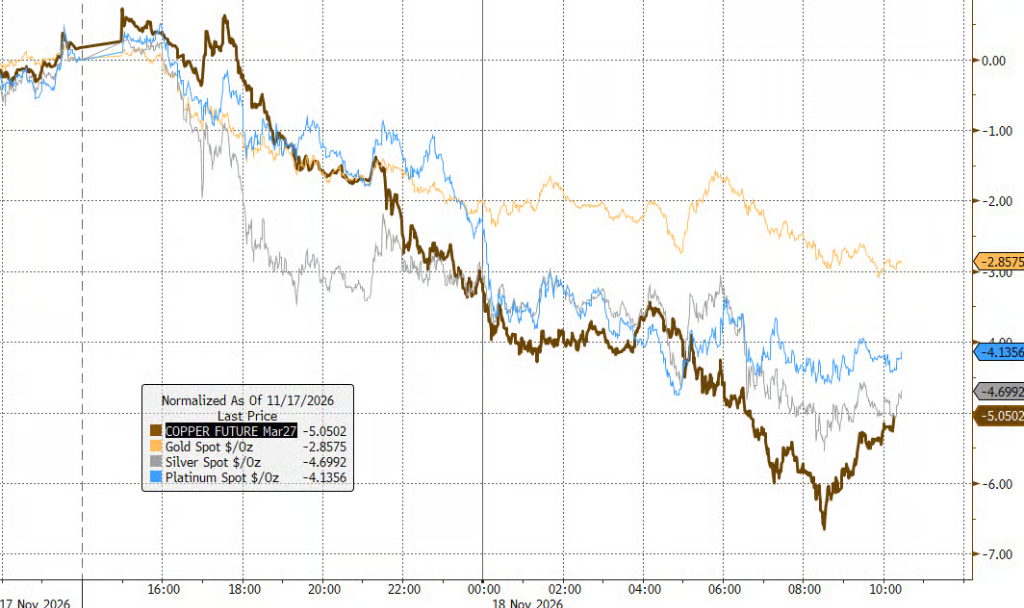
This round of declines was driven both by heightened expectations of Federal Reserve rate hikes and by market concerns over the outlook for AI infrastructure investment and global industrial demand. The bullish trades that had previously supported metal prices are now unwinding, while a stronger dollar, profit-taking, and technical selling further amplified the slump.
Meanwhile, market rumors suggest this selloff is also closely tied to fund repositioning around the Anthropic (ANT) IPO—investors are selling risk assets to raise capital for what could be a record-breaking IPO.
LME Copper Closes at Seven-Month Low; Cooling AI Trade Becomes Key Trigger
In industrial metals, copper prices suffered a violent selloff on Wednesday.
London Metal Exchange (LME) three-month copper closed down about 5.7% at $12,471/ton, marking its lowest close since early April this year and leading declines among LME base metal futures. LME zinc closed down over 5%, LME tin fell about 5%, and LME aluminum and nickel dropped nearly 4%. COMEX November copper futures fell nearly 6% at one point during the U.S. midday session.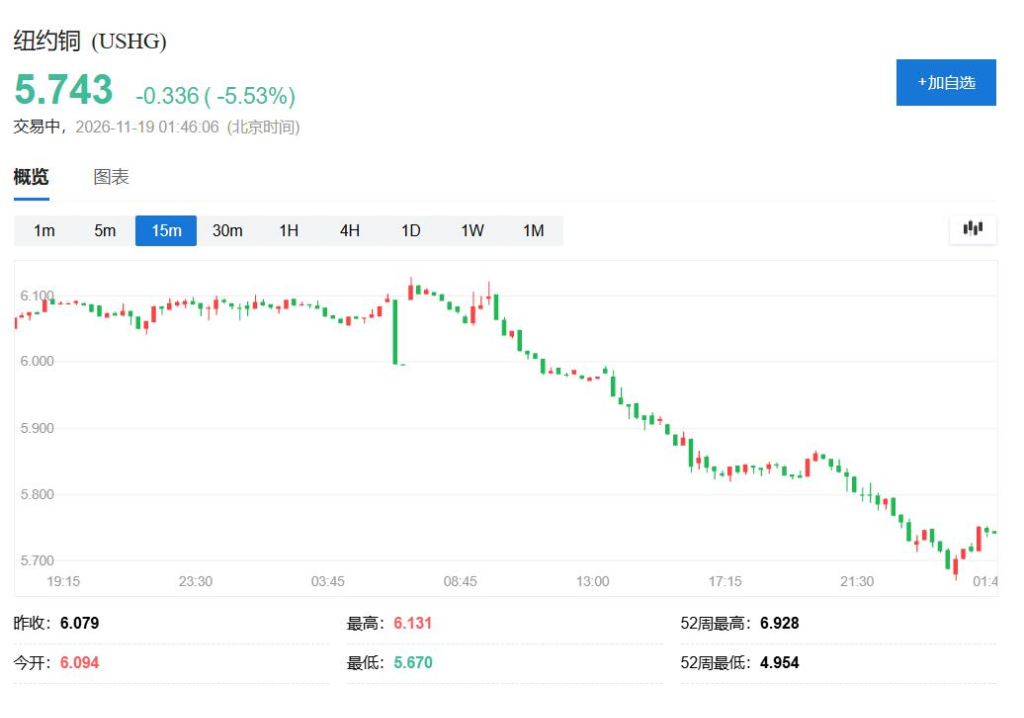
Copper prices had previously benefited from demand expectations tied to AI data center construction, power grid expansion, and the energy transition, climbing steadily for much of the year. But recent violent swings in AI tech stocks have prompted investors to reassess the return on investment in data center construction and whether related infrastructure spending can deliver on prior demand expectations.
Bloomberg noted that recent turbulence in the AI industry is eroding copper's market appeal. Copper is widely used in wiring, cables, and power infrastructure and had been viewed as a key beneficiary of the AI data center construction boom—but is now facing a backlash from uncertainty over AI investment prospects.
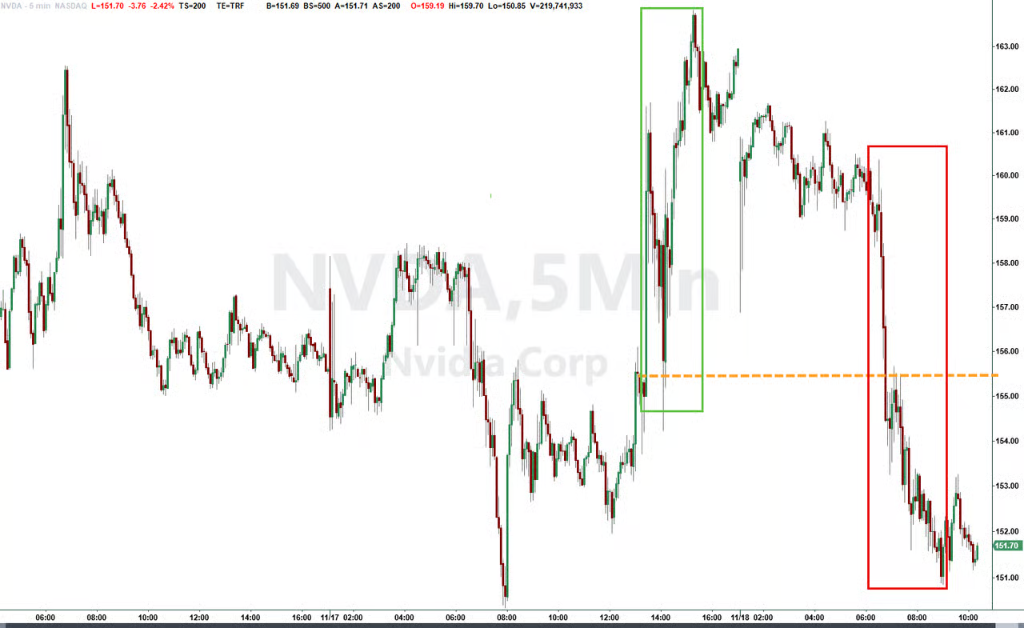
Notably, Nvidia also came under heavy pressure on Wednesday, erasing gains of over 5% from the Colette Kress earnings call and ultimately closing down about 2-3%. Nvidia's decline weighed on overall market sentiment and further intensified concerns about the outlook for AI capital expenditure, indirectly suppressing demand expectations for AI-related commodities such as copper.
More notably, billionaire investor Stanley Druckenmiller, founder of the Duquesne family office, publicly stated on Tuesday that he has turned bearish on copper. He had previously been one of the supporters of the copper rally trade, and his shift in stance further undermined market confidence.
Nicholas Snowdon, head of metals and mining research at Mercuria Energy Group, said at an industry conference on Wednesday:
"Copper demand today is closer to a recessionary environment than a growth environment. Many macro-level views paint a very optimistic picture of current copper demand, but the reality is clearly not that good."
Meanwhile, weak industrial data from China, the world's largest copper consumer, is also weighing on the demand outlook for copper.
However, spot fundamentals in the copper market are not uniformly weakening. China's imported copper premium recently rose 21% to a record high, reflecting that the Chinese market is still competing for spot supply. Low inventories in China and constrained global mine supply remain important supports for copper prices.
This also means that the current decline in copper prices partly reflects the retreat of long positions in financial markets and cooling demand expectations, rather than being entirely driven by looser spot market supply.
Fed Rate Hike Expectations Intensify; Gold Falls to 14-Month Low
Precious metals markets were also hit hard, with gold falling to its lowest level in over a year and silver declining even more than gold.
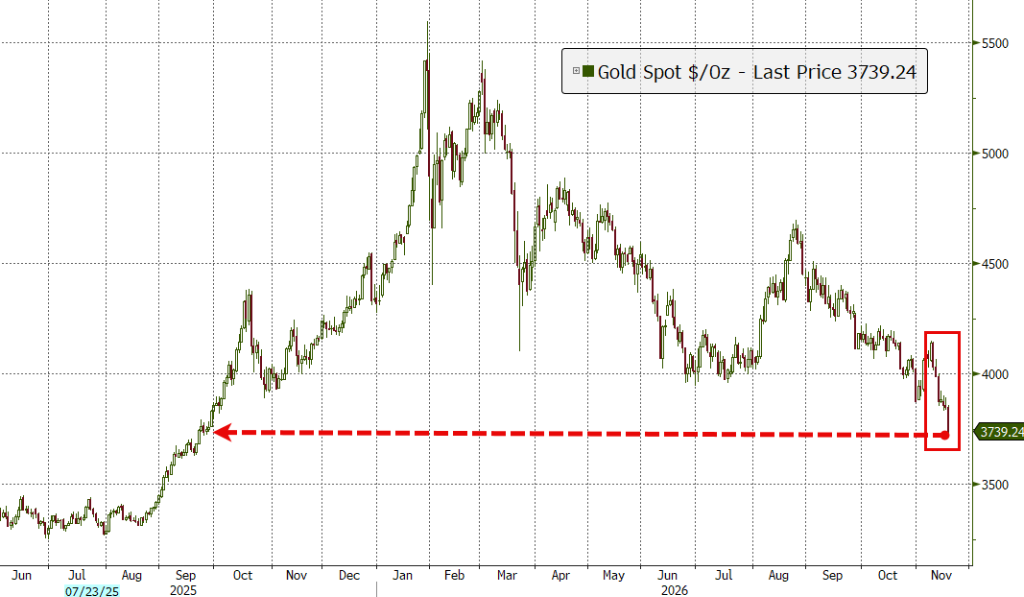
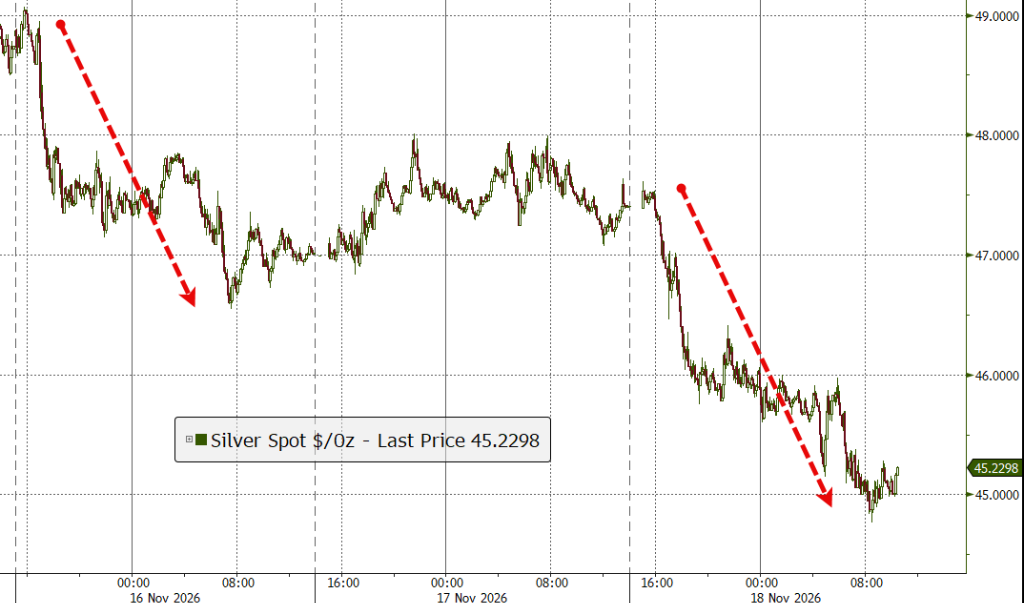
During U.S. midday trading on Wednesday, spot gold briefly fell below $3,730. Bloomberg macro strategist Simon White noted that spot gold has broken below $3,750, retreating to its lowest level since September 2025. COMEX December gold futures fell over 3% intraday, also hitting intraday lows not seen since September 2025.
Silver performed even more weakly. COMEX December silver futures fell over 5% intraday, and spot silver dropped over 5%, briefly touching the $44 mark, also hitting its lowest level since September 2025.
The core driver of this precious metals selloff is that U.S. inflation pressure and economic data have reinforced expectations of further Fed rate hikes.
Federal Reserve Governor Christopher Waller said on Wednesday that the Fed needs to take more aggressive action on inflation, raising two possibilities: a 50-basis-point rate hike at the December meeting, or signaling to the market that rate hikes will proceed at a faster pace in 2027. Waller also emphasized that he is concerned inflation is "spreading," and that if a January hike signal is not issued, rates should be raised by 50 basis points directly in December.
Additionally, Fed Governor Barr stated that inflation remains too high, many households are under pressure, and further rate hikes may be appropriate; San Francisco Fed President Daly said inflation is elevated but its trajectory remains uncertain, supporting continued prudent policy advancement. Earlier this week, the Fed's "third-in-command"—New York Fed President John Williams—and St. Louis Fed President Alberto Musalem also hinted that the Fed may need to raise rates further to curb inflation.
Meanwhile, the minutes of the Fed's October 27-28 policy meeting (FOMC Minutes) also released hawkish signals, further reinforcing market concerns about the rate hike path.
Markets quickly adjusted rate expectations. According to CME's FedWatch tool, investors now price in a 92% probability of a 25-basis-point hike in December and an 8% probability of a 50-basis-point hike. However, Damien McColough, head of fixed income research at Westpac Banking Corp., noted: "The market has already priced in a considerable amount of rate hike risk."
Rate hike expectations pushed the dollar higher. On Wednesday, the dollar index hit a 19-month intraday high for the sixth consecutive trading day, and U.S. Treasury yields rose accordingly. For non-interest-bearing gold, rising rates mean higher opportunity costs of holding gold, reducing its appeal for capital allocation.
Naeem Aslam, chief investment officer at Zaye Capital Markets, said:
"We believe this selloff reflects pressure from a stronger dollar, rising U.S. Treasury yields, and expectations of further monetary tightening. Yesterday's economic data further reinforced this market sentiment."
He also warned that if the FOMC minutes further reinforce concerns about persistent inflation and support additional tightening, the dollar and Treasury yields could continue to rise, and gold prices could fall further below $3,800.
Bloomberg macro strategist Simon White takes a different view on gold's long-term value. He noted that gold is not a liquidity hedge but historically the "piggy bank" most commonly used by investors to cover losses in other assets. Gold is currently undervalued based on measures such as real rates, the dollar, equities, and copper, but trend-followers' entry has pushed it even lower.
He emphasized that gold's function as a solvency hedge and as protection against both inflation and deflation tail risks remains unchanged; the dollar system remains in turmoil, and central banks and China continue to increase gold holdings. Therefore, for non-liquidity-demand holders, the current undervaluation of gold represents an opportunity.
Beyond the Dollar and Rates, Fund Retreat Is Amplifying the Metals Selloff
While copper, gold, and silver each face different fundamental pressures, their synchronized plunge also indicates that the market is undergoing a broader contraction in risk exposure.
On one hand, a stronger dollar and rising Fed rate hike expectations have diminished the appeal of metals as investment assets; on the other hand, the cooling AI trade has not only hit copper's long-term demand expectations but also intensified concerns about global economic growth and capital expenditure prospects.
Additionally, a widely circulated market narrative is that this selloff is partly related to the "repositioning" effect of the Anthropic IPO. Similar to market behavior ahead of the SpaceX listing, investors—especially fast money—are selling risk assets including cryptocurrencies, precious metals, and copper to raise capital for Anthropic's potentially record-breaking IPO. Data from on-chain analytics platform Glassnode also corroborates this capital flow trend.
Copper and precious metals had previously accumulated large long positions, and sustained price gains had also attracted trend-following capital. When prices broke below key technical support levels, quantitative trading and trend strategies may have further reduced long positions, making the selloff self-reinforcing.
Bloomberg noted that copper prices had already fallen more than 10% from their highs, with investors continuing to cut previously established long positions. As turbulence emerged in AI stock markets, copper's AI demand trade also began to lose appeal.
Goldman Sachs trading desk data shows that overall market activity was low on Wednesday, with institutional client flows down about 20% from the two-week average. Hedge funds were net buyers overall, but short positions accounted for as much as 56%, indicating clear divergence in risk appetite; long-only funds showed net selling, concentrated in technology, materials, and communication services sectors.
Furthermore, cooling expectations for U.S. refined copper tariffs also weakened another important factor that had supported copper prices. A shift in market expectations regarding whether the Trump administration will continue to pursue refined copper tariffs means that some bullish trades built around U.S. import demand now face unwinding pressure.
Therefore, the current adjustment in metals markets is not merely a reaction to a single economic data point or policy, but also includes the amplifying effect of a concentrated unwinding of previously accumulated long trades.
Looking Ahead: Fed Rate Outlook and Chinese Demand in Focus; Metals Bull Case Faces Test
In the short term, whether metals markets can stabilize depends first on whether U.S. monetary policy expectations shift further hawkish.
The minutes of the Fed's October 27-28 policy meeting will be a key focus for the market going forward. The minutes were released on Wednesday with an overall hawkish tone; officials' concerns about inflation persistence deepened, and they supported further monetary tightening. The dollar and Treasury yields rose accordingly, putting new pressure on gold, silver, and copper.
For gold, $3,800 is an important level the market is watching. Gold has already broken below this threshold; if the dollar and rates continue to rise, gold may face further downside risk; conversely, if subsequent data or official comments prove less hawkish than the market fears and the dollar and yields retreat, gold may get a short-term reprieve.
The copper market needs to monitor both Chinese spot demand and AI infrastructure investment.
If China's spot copper premium remains elevated and inventories stay low, supply-side tightness may still limit further downside for copper prices. But if global economic growth slows, AI capex expectations continue to cool, and the dollar and financing costs remain elevated, copper prices will struggle to shake off pressure in the near term.
TD Securities rates strategist Molly Brooks noted:
"Against the backdrop of Fed officials speaking intensively this week, emphasizing that inflation is too high and leaning toward further tightening, the decline in oil prices has somewhat eased market concerns about inflation pass-through pressure—which is one reason the bond market has found support this week."
From a longer-term perspective, copper demand from AI data centers, power grid expansion, electrification, and the energy transition has not disappeared, and gold's central bank buying and asset diversification logic has not entirely changed. As Simon White put it, the structural turmoil in the dollar system, geopolitical uncertainty, and the trend of central banks continuing to increase gold holdings all constitute underlying support for gold's medium- to long-term value.
But the market is currently reassessing the optimistic expectations that had accumulated. Under the combined effects of rising rate hike expectations, a stronger dollar, and the cooling AI investment trade—compounded by the liquidity repositioning effect triggered by the Anthropic IPO—the previous bullish logic in metals markets is facing a severe test.