A Schism That Changed the AI Landscape: The Secret History of Grudges Between OpenAI and Anthropic


- Core Viewpoint: In 2020, seven core members of OpenAI collectively left to found Anthropic due to a collapse of trust in management. The root cause lay in accumulated suspicion and value disagreements from events such as the 2017 "national plan," and today the two sides still regard each other with hostility.
- Key Elements:
- Dario Amodei laid the foundation for the large-model technical roadmap with his 26-page 2017 paper "Computing Collectives," and later became a core driver of GPT-2 and GPT-3.
- In 2017, the "national plan" proposed auctioning AGI rights to governments around the world. Amodei strongly opposed it, calling it "morally disgusting."
- Amodei believed Altman concealed the customer list during Microsoft investment negotiations and lied about the terms of merger assistance, completely exhausting trust.
- At an all-hands meeting in December 2020, seven people were suddenly kicked out, their email and Slack access revoked, and their computers remotely locked.
- Anthropic expanded from an initial vision of about 50 people to thousands of employees and is now sprinting toward a trillion-dollar valuation IPO, keeping pace with OpenAI.
- The two sides signed a non-disparagement agreement, but internally on Slack, Dario called OpenAI "evil," while OpenAI employees accused him of hypocrisy.
Author: Long Yue
Source: Wallstreetcn
In December 2020, during the final minutes of an all-hands video meeting at OpenAI, the landscape of the AI industry was彻底 changed.
Jack Clark, then OpenAI's policy chief, typed "I love you all" into the chat box. The screen immediately went black—seven core OpenAI members were simultaneously kicked out of the meeting, their email access revoked, their Slack accounts deactivated, and their laptops remotely locked. This was not an accident, but the endpoint of a long-premeditated rupture.
These seven people were taken away by Dario Amodei. At the time, he was OpenAI's Vice President of Research, a core driving force behind GPT-2 and GPT-3, and the person who had written a 26-page internal paper that laid the foundation for the large model technical roadmap. His reason for leaving was not money, not position, but his belief that OpenAI's management—especially Sam Altman—simply could not be trusted.
On September 29, according to disclosures by The Atlantic journalist Kevin Roose, who spent years investigating and interviewed over 150 relevant individuals, the root of this rupture can be traced back to an internal proposal called the "Countries Plan" in 2017, and the accumulating suspicion, quarrels, and sense of betrayal over the following three years.
Five years later, the Anthropic founded by those seven people now has thousands of employees and is racing alongside OpenAI toward AGI. But the relationship between Dario and Altman, according to multiple sources familiar with the matter, remains one of "mutual contempt."
That 26-Page Paper, and Amodei's Ambition
In 2016, Dario Amodei left Google and joined OpenAI.
He wore round-framed glasses and had a head of brown curly hair, habitually twirling a curl around his finger when nervous or deep in thought. Colleagues described him as "a genius, but stubborn."
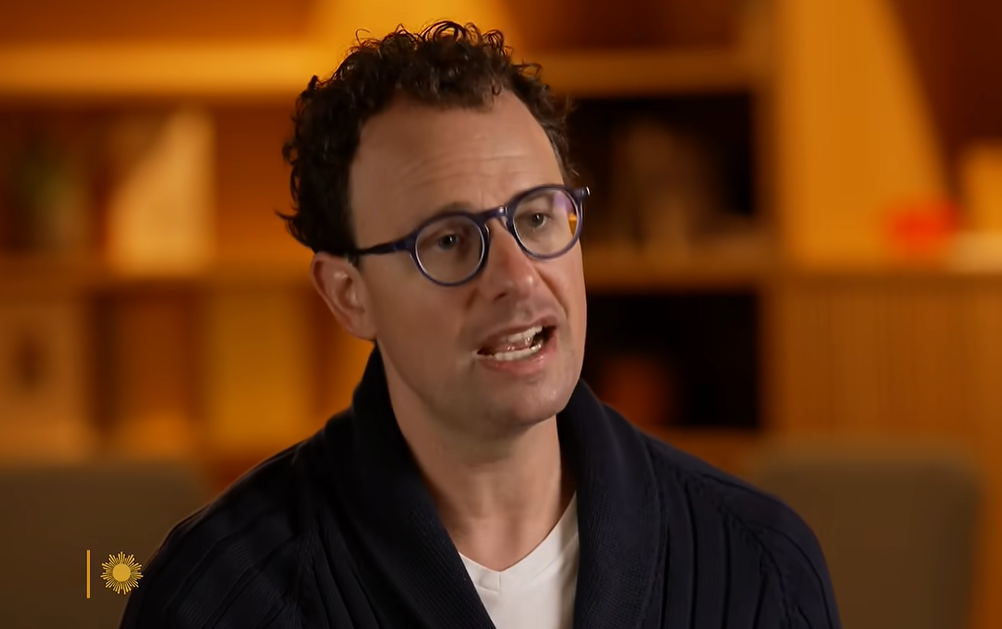
Dario Amodei video screenshot
His way of expressing his views was to write long essays.
In 2017, he wrote a 26-page internal article titled "Big Blob of Compute." The article argued: Machine intelligence is essentially a function of scale—the larger the model, the smarter it becomes.
This judgment directly pushed OpenAI's research direction toward large language models (LLMs), and also laid the foundation for the later GPT-2 and GPT-3.
By all accounts, Amodei's career was at its peak. His team not only proposed the "Scaling Laws" that predict model performance improvements, but also pioneered the "Reinforcement Learning from Human Feedback (RLHF)" technique that steers models away from harmful outputs.
Yet he became increasingly convinced that he would not stay to develop GPT-4.
The "Countries Plan": The Proposal That Completely Disillusioned Him
Amodei lost confidence in the company's leadership.
He believed Sam Altman was a "two-faced manipulator," and that President Greg Brockman was "power-hungry and reckless." He resented their decision to commercialize OpenAI, believing it deviated from the original intention of being "unconstrained by the need to generate financial returns."
What disgusted him even more was the internal factional strife.
A person who once spoke with Amodei revealed that Amodei at the time believed OpenAI was "a farce," "run by people lacking integrity." This person said bluntly: "There was a new crisis every day. If Dario didn't throw an absolute fit, Sam would do something new and crazy within 24 hours."
The fuse had already been laid in 2017.
At the time, Musk was withdrawing from OpenAI, and the company desperately needed funding. According to five people familiar with the matter, Brockman and Ilya Sutskever conceived a fundraising proposal called the "Countries Plan": holding an auction among the United States and other major governments to sell the rights to OpenAI's future AGI technology.
Brockman and Sutskever's logic was: AGI has extremely strong national security implications and will sooner or later be taken from private enterprises by governments. Since it will have to be handed over eventually, why not sell it now in exchange for development funding?
"It sounded like tech people pitching a crazy startup, with a bizarre plan whose final step was: we'll get the government to foot the bill." One person who heard the pitch recalled.
Amodei was stunned. He believed that peddling AGI to governments ran counter to OpenAI's mission.
In December 2017, he wrote an email to Brockman, Sutskever, and other executives, with blunt wording:
"In my view, this plan would not reduce but rather intensify the arms race, could trigger human rights atrocities... and would undermine OpenAI's moral legitimacy." He insisted that OpenAI should optimize for "benefiting humanity."
An OpenAI spokesperson later told The Atlantic that the company "briefly considered whether to transform OpenAI into an international collaborative project," but "never considered selling AGI to any country."
The proposal was ultimately shelved due to Microsoft's involvement. But Dario did not forget that Brockman and Sutskever had seriously discussed an idea he considered "morally repugnant."
Trust Eroding Bit by Bit: The Hidden List, the Vetoed Acquisition Clause, and the Kanye Incident
Over the following two years, the rift continued to widen. Amodei began keeping records of moments when he believed he had been misled by Altman.
For example, during GPT-3's private beta, Amodei asked Altman for a list of approved customers. Altman sent him one. But Amodei subsequently claimed he discovered another, longer approved list, which Altman had never mentioned.
Another example: during negotiations with Microsoft for a $1 billion investment, Amodei strongly insisted on retaining the "merger and assistance clause" in OpenAI's charter—namely, that if a safer AGI project emerged, OpenAI should stop competing and assist it. He insisted that Microsoft had no right to veto a possible future acquisition of OpenAI (the most likely means of achieving merger assistance).
Altman told him Microsoft did not agree to this clause. But Amodei firmly believed that Altman had conceded (or simply not raised it) in his eagerness to close the deal, and then lied to him about it.
There were also some seemingly absurd business decisions that Amodei could not tolerate. In 2020, Altman met with rapper Kanye West and proposed including him in the GPT-3 beta. At the time, Kanye had just released a video appearing to urinate on a Grammy Award trophy, and his mental state was extremely unstable. Policy Director Jack Clark ultimately stepped in to kill this dangerous idea.
Viewed in isolation, these things might not be enough to make someone resign. But in Amodei's mind, they pieced together a conclusion: a technology as powerful as AGI must never be placed in the hands of such people.
The "Plush Toy Advisory Board," and an Increasingly Isolated Safety Faction
Amodei's sister, Daniela Amodei, was also growing weary of OpenAI.
As a manager who had worked in politics and possessed high emotional intelligence, Daniela became a complement to her brother's technical fervor. But as she took over more technical teams, her conflicts with management grew.
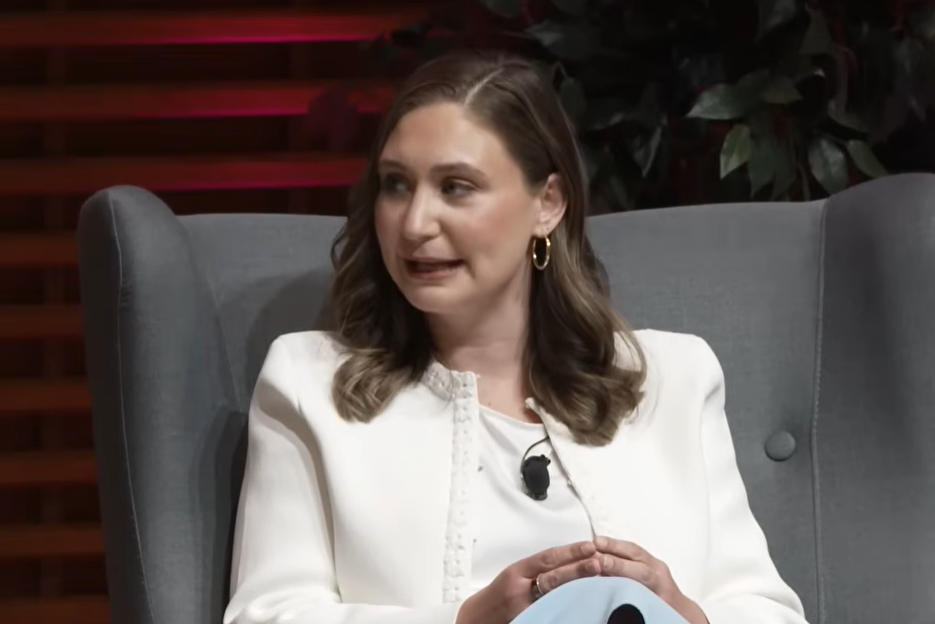
Daniela Amodei video screenshot
Interestingly, Daniela had a unique conflict-resolution mechanism—the plush toy advisory board.
She and board member Holden Karnofsky collected a large number of plush toys and assigned them roles: Jinji was a lazy cat who encouraged her to cancel meetings and do less work; Maura the pink bear was a detail-oriented Type A manager; and Beary Bonds the panda was "the guardian bear of generosity and empathy." She used this half-joking approach to conduct management role-play.
By 2020, the Amodei siblings began building their own inner circle within OpenAI.
They created private Slack channels filled with "safety jargon" that non-technical staff could not understand. A former colleague recalled: "Dario had a habit of just saying: we have to do X; it's the morally right thing. It was like a shortcut to winning any argument—'because safety.' This infuriated the non-safety teams."
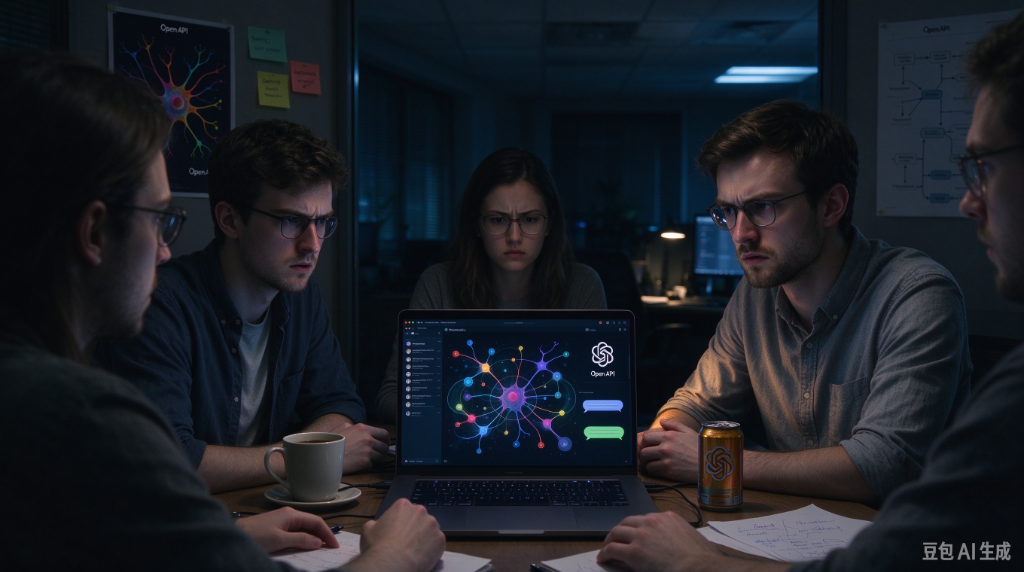
In 2019, Amodei briefly wanted to give up, even considering jumping ship to DeepMind. But Jared Kaplan, a physics professor in charge of Scaling Laws research, proposed a more disruptive idea: since the philosophies didn't align, why not take everyone who cared about safety and start their own company?
In 2020, the same year GPT-3 was released, Amodei assembled seven co-founders.
Before the final showdown, Amodei presented Altman with a series of conditions for staying, including giving the safety team a "veto power" over new product releases. He knew this would most likely be rejected, and only hoped to use it to force Altman into compromise.
During the negotiations, these seven people created a secret Slack channel called "BATNA"—a business school term meaning "Best Alternative to a Negotiated Agreement"—ready to walk out at any moment.
Pulling the Plug, Screens Going Dark
After confirming that Altman would not meet the demands, the "BATNA" team hired lawyers and began negotiating what was called the "divorce."
The two sides reached an agreement: the departing team could poach desired employees within a few weeks, in exchange for a one-year non-poaching commitment thereafter; they could take some internal research documents; and both sides signed a mutual non-disparagement agreement, never speaking ill of the other in public.
In December 2020, the fateful OpenAI all-hands online meeting was held.
Altman opened as usual, reporting on research progress. Then he handed the floor to Amodei.
Amodei calmly announced that he and six other leaders would resign to found an AI organization focused on safety. The meeting chat window was instantly flooded with shocked emojis and exclamation marks. Everyone was speculating: who would train GPT-4? Who would be my new manager?
Amid the screen full of astonishment, Jack Clark typed the final sentence into the chat box: "I love you all."
Immediately after, in an instant, all seven of their screens went black.
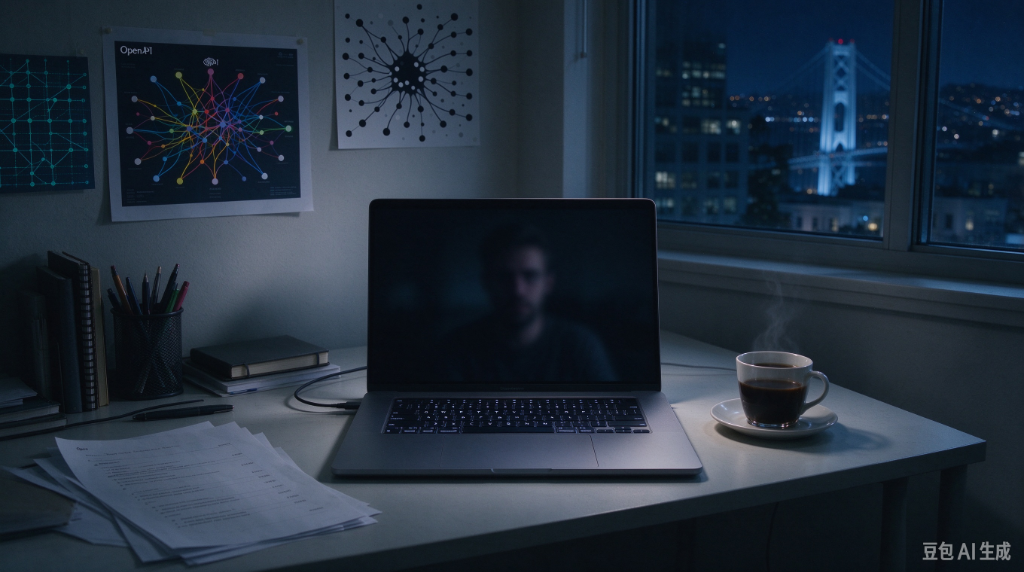
OpenAI directly kicked them out of the meeting, revoked their email and Slack access, and remotely locked their laptops.
A few hours later, this group of newly unemployed founders held their first video meeting. No computers, no GPUs, no data, and they hadn't even settled on a company domain name (they originally wanted to call it Sparrow Systems, but ultimately changed it to Anthropic). Yet they raised their glasses in celebration in front of the screen, laughing more happily than they had in months. They were free.
A Trillion-Dollar Valuation and Unstoppable Resentment
Five years later, reality played a huge joke on their original intentions.
In the founding vision Amodei wrote in 2021, he envisioned a small AI safety research lab of about 50 people, and predicted that building AGI would cost only about $10 billion.
In the summer of 2023, the place still felt like a thriving cult headquarters or a university plant laboratory. 160 safety-obsessed employees crowded together eating vegan sandwiches, stacking empty cans of Liquid Death (a sparkling water brand) into a tall throne.
But by the winter of 2025, Anthropic had become a command center.
Staff had swelled to thousands, and they had moved into a heavily secured high-rise building. A dozen burly bodyguards stood at the entrance, and the floor where the new version of Claude was being trained required special clearance even for internal employees.
Amodei had become a tech giant traveling by private jet, surrounded by bodyguards. Once low-key and reserved, he now had to manage one of the fastest-growing capital beasts in history, sprinting toward a trillion-dollar valuation IPO.
Daniela Amodei called it all "a disaster of success": "It's stressful in every dimension. It's frightening, because we could lose it at any moment. That's just the business side. Then there's our mission—we wonder, could we accidentally make things worse? For example, we think we've figured out everything about safety, but have we really?"
The only thing that hasn't changed is their mortal-enemy relationship with OpenAI.
According to people familiar with them, Dario and Daniela still despise Altman and Brockman. In Anthropic's internal Slack channels, Dario even explicitly called Altman and OpenAI "evil," to the point that during OpenAI's board coup in 2023, PR executives even asked him to delete the message, fearing it would leak.
On OpenAI's side, employees privately described the Amodei siblings as "power-hungry virtue signalers," accusing them of hypocrisy—publicly warning about AI risks while privately accelerating the race.
This has become Silicon Valley's most profound dark humor: both camps are pouring all their compute into training AI models to be kind, empathetic, and restrained; yet as the humans who created them, they can never let go of their deep hatred for each other.