US Treasuries' "Black Wednesday"! A "perfect storm" strikes, and calls for "another rate hike in October" are stirring


- Core View: Multiple bearish factors detonated in a concentrated burst, sending the 10-year US Treasury yield up 14 basis points in a single day to 5.113%, a new high since 2007. Market bets on the Fed continuing to raise rates intensified sharply, and the repricing of real interest rates became the main driver of the selloff.
- Key Elements:
- Fourfold blow stacked together: Middle East tensions pushed oil prices up nearly 4%, the September PMI showed the fastest expansion in more than five years, Fed Governor Barr made hawkish remarks, and the $70 billion 5-year Treasury auction saw weak demand.
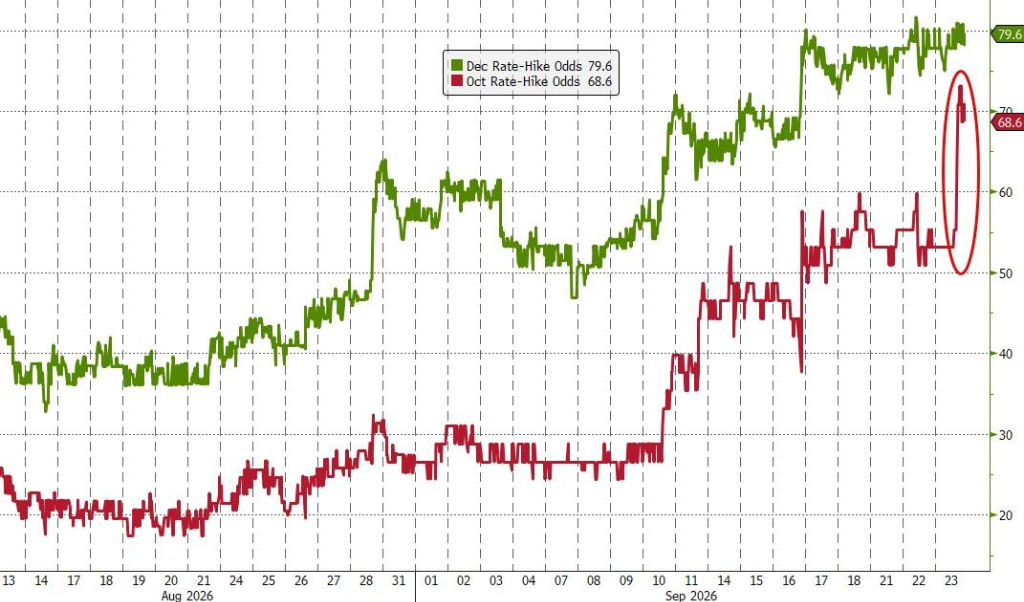
- Futures market pricing put the probability of an October rate hike at 68%, while the swaps market fully priced in three 25-basis-point rate hikes over the next year.
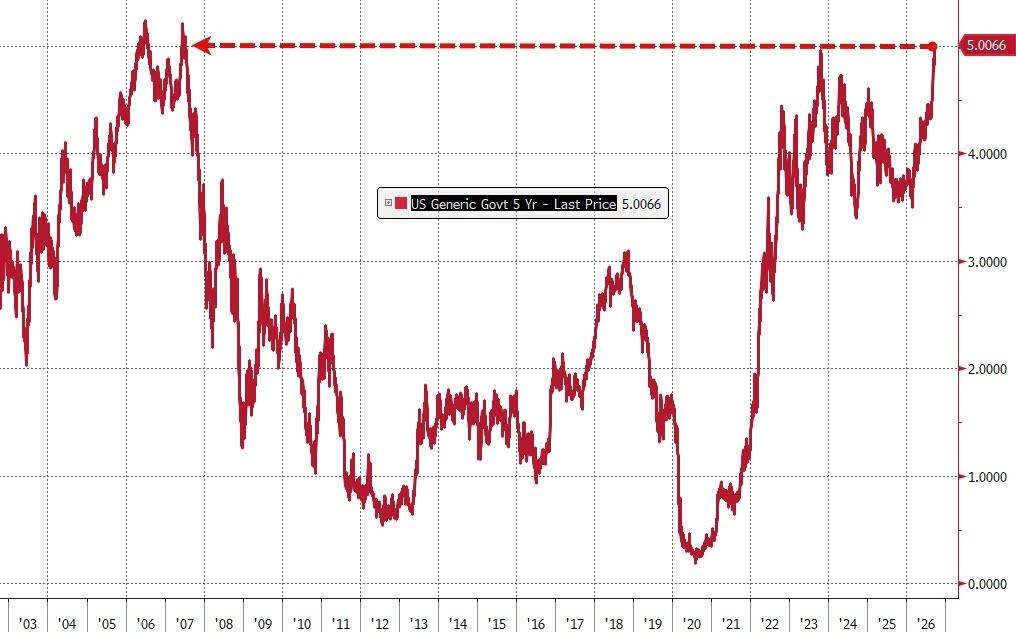
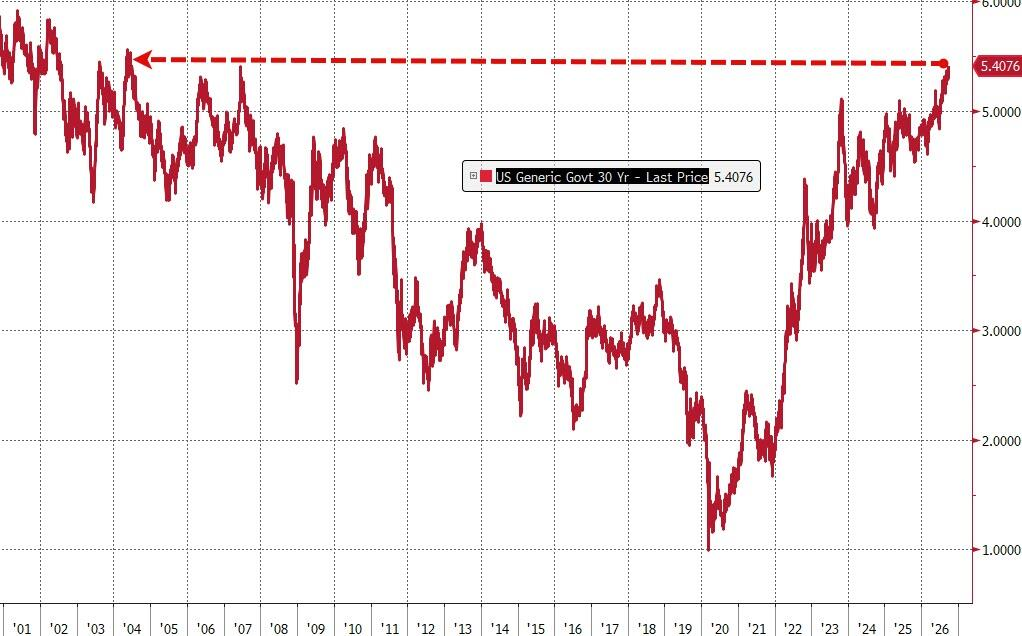
- The 10-year yield broke through 5%, the 5-year yield surged nearly 20 basis points in a single day, the 30-year yield rose to its highest since 2004, and volatility indicators jumped sharply.
- About 80%-85% of the selloff came from rising real rates, while the breakeven inflation rate rose only about 2 basis points, indicating this was not simply inflation panic.
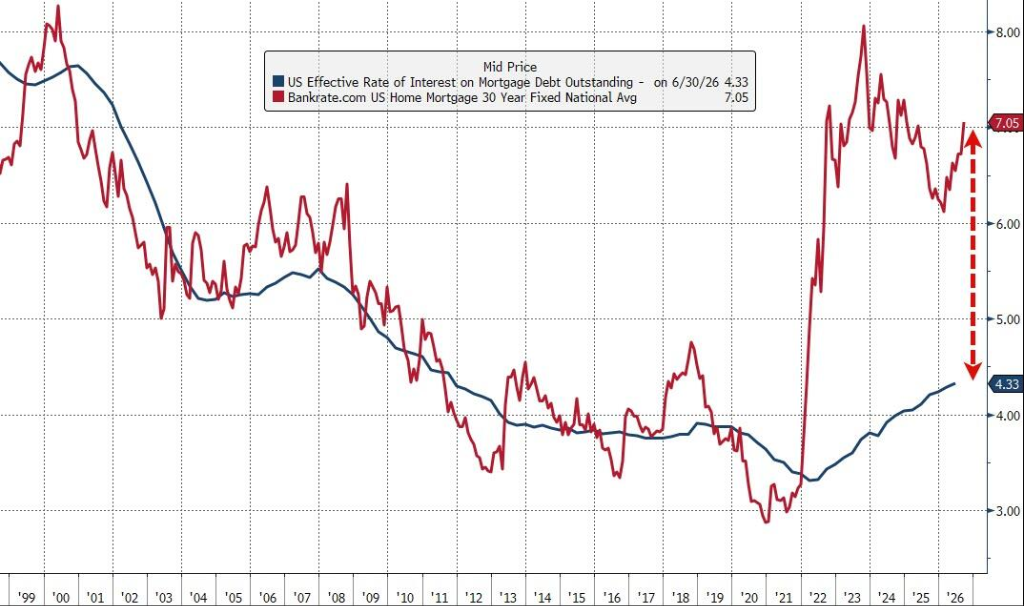
- The 30-year mortgage rate broke above 7%, debt financing areas such as private equity came under pressure, and transmission effects to the real economy began to appear.
- The scale of the Treasury's buyback plan disappointed the market and failed to curb the selloff momentum.
Author: Dong Jing
Source: Wallstreetcn
Multiple bearish factors detonated in a concentrated fashion on the same day, and the U.S. Treasury market suffered its most brutal single-day selloff in nearly 18 months.
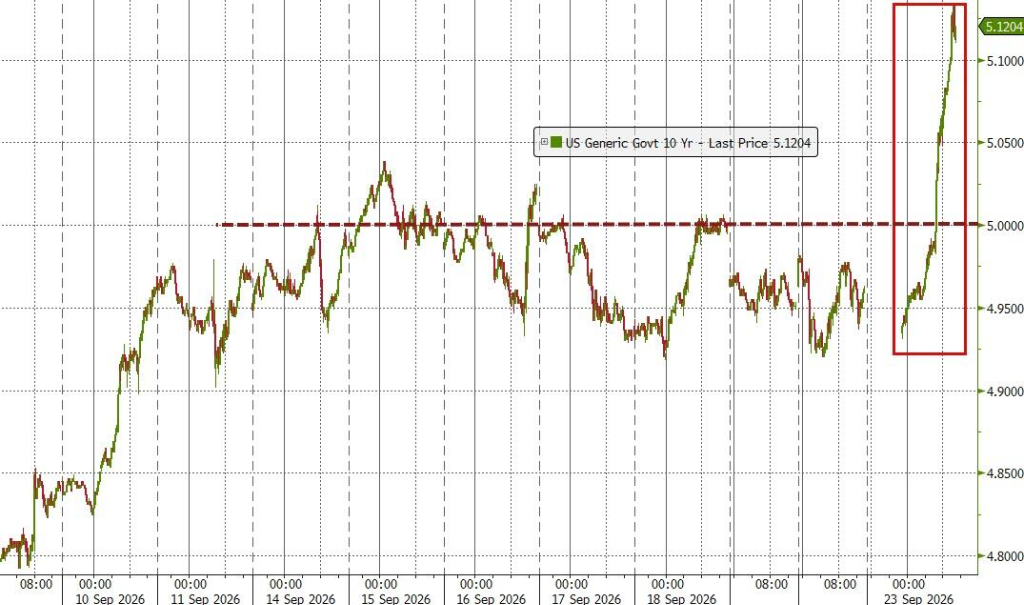
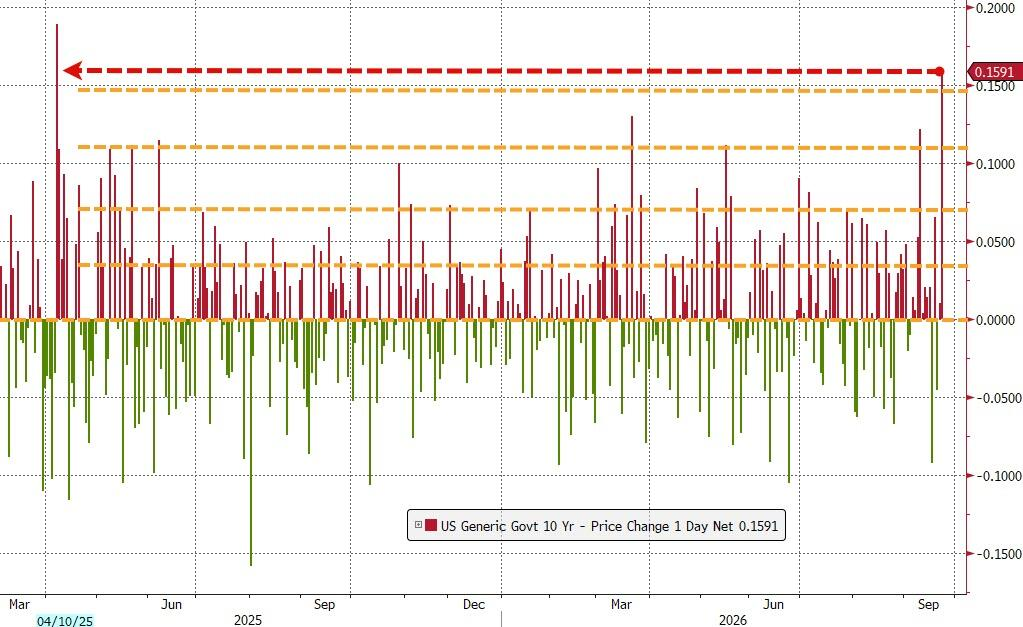
The 10-year Treasury yield surged about 14 basis points on Wednesday to close at 5.113%, the highest since 2007, the largest single-day increase since the shock of Trump's so-called "reciprocal tariff day" last April. Market participants described the move as a "perfect storm" — strong PMI data, escalating tensions in the Middle East, hawkish remarks from Federal Reserve officials, and a weak Treasury auction — four blows landing in succession on the same trading day.
The core signal of this shock is that bets on another Fed rate hike in October have heated up sharply. Futures market pricing now shows the probability of a rate hike by the end of October has risen to 68%, just days before the U.S. midterm elections. Meanwhile, the swaps market has fully priced in three 25-basis-point hikes over the next year and is significantly hedging against a fourth. If all materialize, the federal funds rate target range would rise to 4.75% to 5%.
At the same time, the continued climb in yields is transmitting into the real economy. The 30-year mortgage rate has broken above 7%, and sectors reliant on debt financing, such as private equity, are coming under mounting pressure. Treasury Secretary Bessent's Treasury buyback program has failed to effectively curb the selloff, with market confidence clearly lacking.
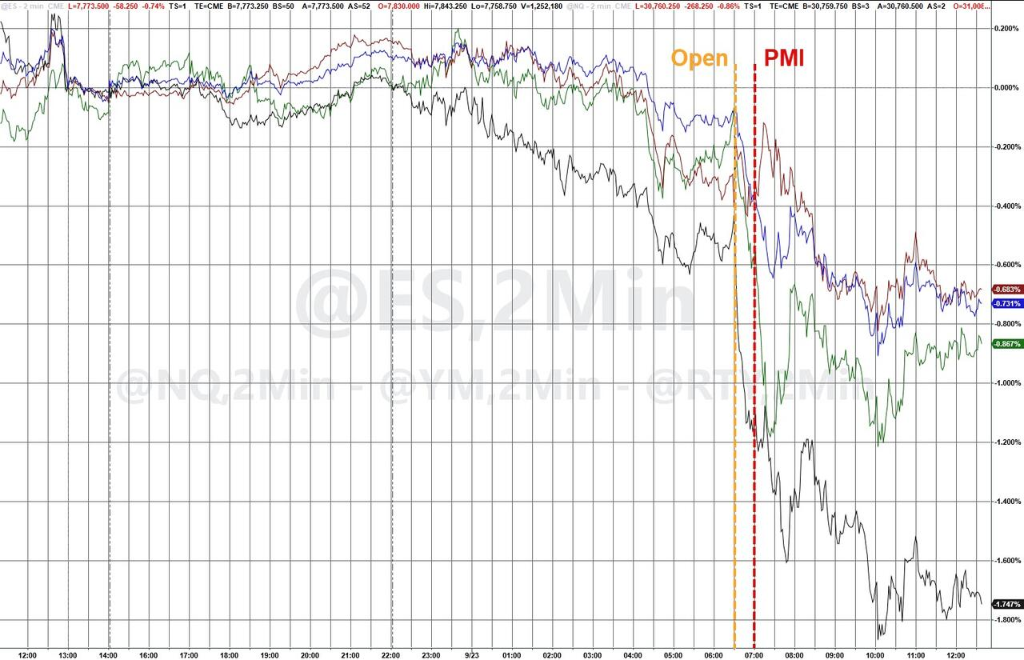
Stocks fell in tandem, but the declines were relatively modest — the S&P 500 closed down about 0.8%, the Nasdaq Composite fell 1.1%, and the Dow Jones Industrial Average dropped about 352 points.
Four Blows Land in Succession, a "Perfect Storm" Takes Shape
Wednesday's bond market rout did not stem from a single event, but from the convergence of multiple bearish factors on the same trading day.
First blow: Oil prices spike, Middle East diplomatic hopes dashed. In early trading that day, international oil prices surged during European hours. Markets had previously pinned hopes on the United Nations General Assembly underway in New York to help ease U.S.-Iran relations, but comments from Iranian President Masoud Pezeshkian dashed those expectations — he said Iran is willing to negotiate but will not accept Trump's "bullying," and warned that as long as sanctions persist, Iran will not fully open the Strait of Hormuz. Brent crude, the international oil benchmark, closed up nearly 4% that day. Because sustained oil price increases can feed into broader inflation, bond yields and oil prices have been highly correlated in recent months.
Second blow: PMI data blowout, fears of overheating economy intensify. S&P Global released its preliminary September U.S. composite PMI report, showing U.S. business activity expanding at the fastest pace in more than five years, with employment growth the fastest in over four years.
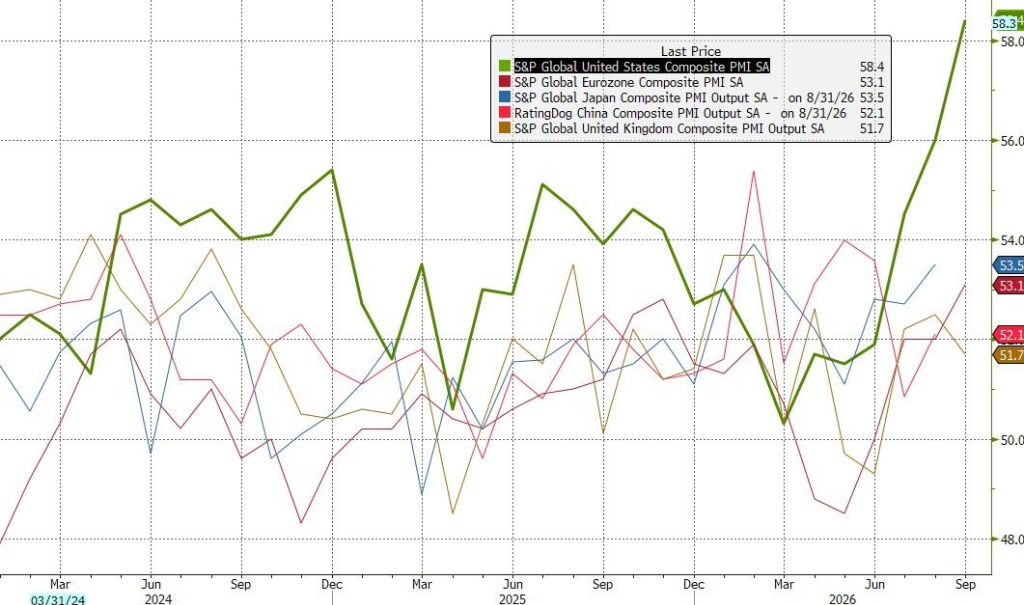
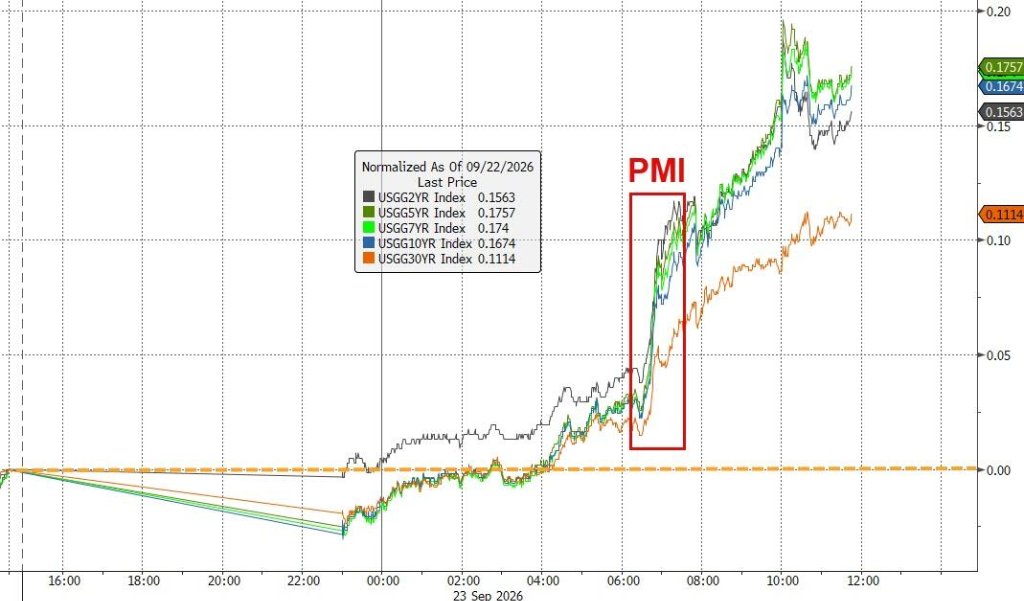
S&P Global Chief Business Economist Chris Williamson said, "Apart from the demand rebound after COVID lockdowns ended, this improvement in business activity is the largest since early 2015." After the data was released, both short-end and long-end Treasury yields jumped.
Third blow: Hawkish remarks from Fed officials. Federal Reserve Governor Michael Barr, speaking in Chicago, explicitly stated that "inflation is above the 2% target and shows no clear trend toward the target," and said "in my baseline scenario, further policy adjustments may be needed to ensure inflation returns to target in a timely manner." HSBC U.S. rates strategist Dhiraj Narula noted that the market's concern is that "the Fed is willing to keep raising rates despite the pressure from supply shocks, which means the hawkish stance may not soften at all."
Fourth blow: Weak 5-year Treasury auction, panic accelerates. The U.S. Treasury's $70 billion 5-year note auction drew a cold reception. The high yield was 5.033%, about 3 basis points above the pre-auction market trading level — a notable premium in this massive market that can typically absorb supply smoothly. Underwriters (primary dealers) were forced to take an unusually large share of the bonds, the highest since 2024, indicating scant interest from other potential buyers. After the auction results were released, yields moved even higher, and panic spread.
Yields Break Through Key Thresholds Across the Curve, Hitting Multi-Year Highs
The intensity of this selloff is evident in the data.
The 10-year Treasury yield closed at 5.113%, rising above 5% for the first time since 2007, with a single-day gain of about 14 basis points — the largest one-day increase since the shock of Trump's so-called "reciprocal tariff day" last April. It also constituted an extreme move of roughly 4 standard deviations — and just two weeks earlier, the market had experienced a 3-standard-deviation shock, putting VaR (value at risk) across risk books under pressure.
The 5-year yield surged nearly 20 basis points in a single day, breaking above 5% for the first time since 2007, with the failed auction further accelerating the move.
The 30-year yield rose to its highest level since 2004. The 2-year yield briefly climbed to its highest since 2024 before pulling back slightly to 4.90%, up 12 basis points from the previous day.
Bond volatility gauges also jumped sharply, indicating severely weakened confidence in the market's direction. Sean Simko, head of fixed income investment management at SEI Investments, summed up the day's situation as a "triple whammy":
"Stronger economic data, supply pressures pushing 5-year yields to levels not seen in years, and a judgment that global inflation is sticky."
The Essence of the Selloff: Real Rate Repricing, Not Simply Inflation Panic
It is worth noting that the driving logic behind this bond selloff is not simply rising inflation expectations.
According to Bloomberg analysis, about 80% to 85% of this selloff came from rising real rates: the nominal 10-year yield rose about 15 basis points, the 10-year TIPS yield rose about 12.5 basis points, and the breakeven inflation rate rose only about 2 basis points.
This means bond investors are repricing some combination of the following factors: a Fed path that keeps rates higher for longer, stronger real growth expectations, a higher neutral rate, higher real term premium or duration compensation, and greater supply pressure and tighter global financial conditions.
Goldman Sachs' Rich Privorotsky tends to interpret the move from a growth perspective:
"To me, this increasingly looks like a reflection of a strong growth assumption (a 6% fiscal deficit plus $1.5 trillion in spending means a lot of bond supply and a lot of nominal growth). For stocks, that is a relatively clear macro risk — not runaway inflation, but persistently elevated real cost of capital."
The Atlanta Fed's GDPNow model projects the U.S. economy will grow at an annualized 5.1% pace in the third quarter; if realized, that would be the fastest since the post-COVID recovery. JPMorgan Chase economists noted after last week's Fed meeting that Fed officials "may be seeing rising demand-led overheating risks, and policy may need to address that."
BNY Chief Investment Officer and Head of Credit Services Jason Granet raised a key question: "The Fed has started raising rates. The question now is... will it stay on this path for quite a while?"
Buyback Program's Effectiveness in Doubt, Treasury Under Pressure
Facing persistently rising yields, Treasury Secretary Bessent has tried to suppress yields by expanding long-term Treasury buybacks, but with limited effect.
On Wednesday, the Treasury announced it would buy back up to $6 billion of 20- to 30-year Treasuries on Thursday, the second operation since the expansion of the buyback program was announced in mid-August. However, the size disappointed the market. JPMorgan Asset Management Chief Investment Officer Bob Michele said bluntly:
"We thought the Treasury would see that the last $6 billion buyback was a failure and would go to nearly $10 billion this time. But they didn't."
After the news was released, 20-year and 30-year yields moved further higher, and bond volatility gauges jumped in tandem, indicating severely insufficient market confidence in the buyback program.
Christopher Sullivan, chief investment officer at United Nations Federal Credit Union, summed up the current plight of the bond market: "From the intractable conflict with Iran to the seemingly unbreakable U.S. economy, holding bonds right now 'just doesn't make sense' to a lot of people."
Stocks Relatively Resilient, but Rate Risk Cannot Be Ignored
Although the bond market was hit hard, U.S. stocks fell relatively modestly. Scott Kimball, chief investment officer of fixed income at Loop Capital Asset Management, said, "Risk markets have held up pretty well. This really looks like a rates market problem."
However, the continued rise in yields has triggered knock-on effects in the real economy — from mortgage rates and credit card rates to private equity firms' willingness to pursue leveraged buyouts. The 30-year mortgage rate has broken above 7%, putting direct pressure on the housing market.
Christophe Boucher, chief investment officer at ABN AMRO Investment Solutions, warned that "pressure is building in the short end of the yield curve," and today's economic data will allow the Fed to "double down" on its hawkish stance.
RBC Capital Markets strategist Brook acknowledged that the market has fallen into a frustrating cycle:
"You can look at these yield levels and say, this is really attractive. But we've been playing this game for the past six months, and every time we try to draw a line somewhere, it just keeps breaking through."