Gold "Short Squeeze" Enters Phase Two: Macro Signals and Technicals Align, $4,500 Becomes Key Resistance


- Core View: The gold market is evolving from a "short squeeze" into a sustained uptrend structure, with macro signals (Fed rate expectations and Japan's long-end yields) and technicals (bullish crossover) resonating in sync. $4,500 has become a key resistance level, with Chinese capital leading this rally while Western longs begin to return.
- Key Elements:
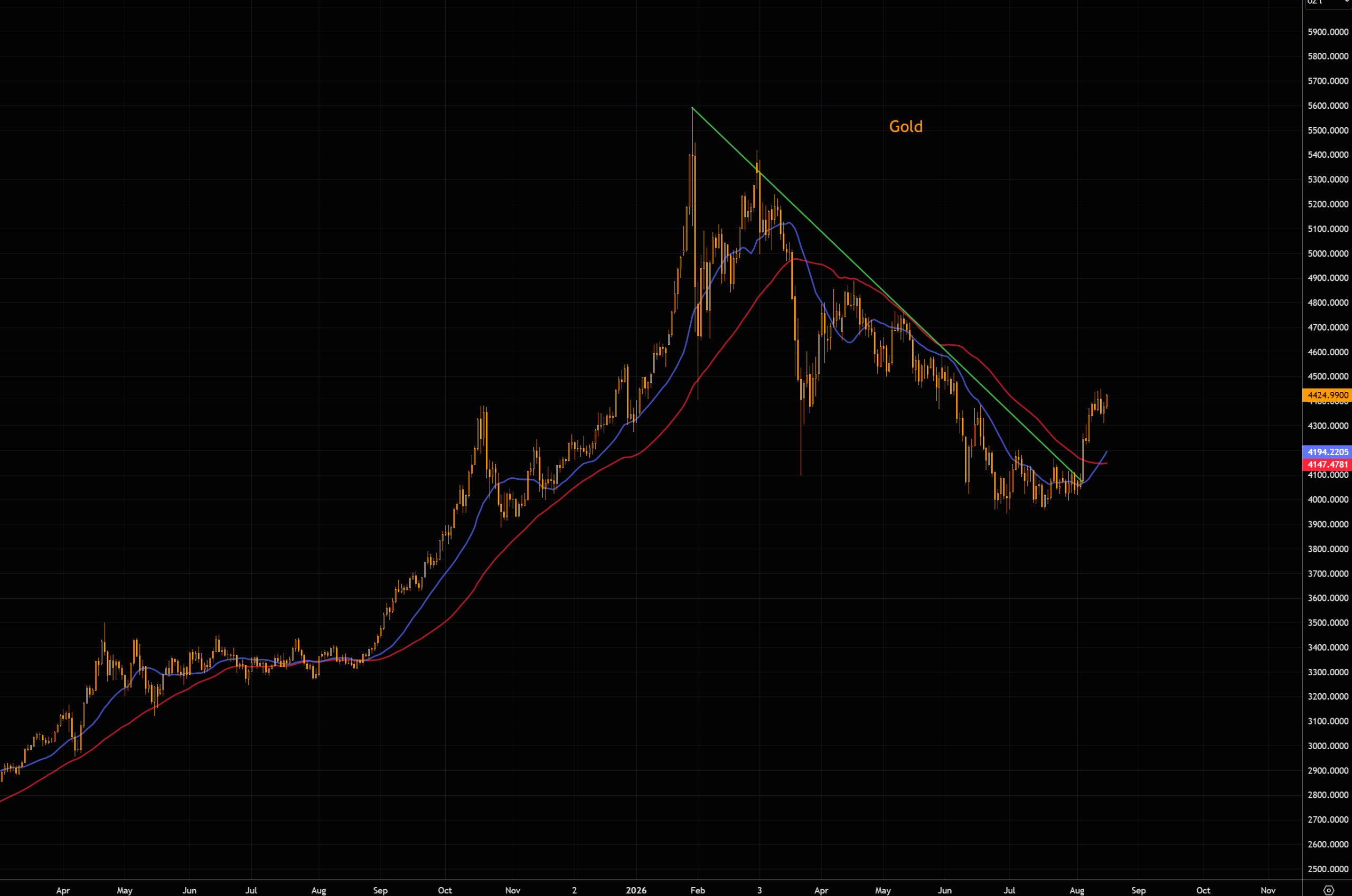
- Technicals: After completing a flag pattern, gold has printed a bullish candlestick, with the 21-day and 50-day moving averages forming a bullish crossover. A modest close higher could trigger another round of short covering.
- Macro Drivers: Gold's correlation with Fed rate pricing is nearly perfectly synchronized, and it has re-linked to Japan's long-end yields, positioning itself as a global macro risk hedge tool.
- Capital Structure: Goldman Sachs data shows Asian exchange participation has surged from single-digit percentiles to around 50%, driven by Chinese capital, forcing short covering and pushing gold prices upward in a near-vertical trajectory.
- Western Return: According to Bank of America data, gold inflows recorded their largest single-week total since January, with Western active longs re-entering the market, though positioning is not yet overcrowded.
- Key Resistance: Goldman Sachs has set $4,500 as a key resistance level, anticipating profit-taking pressure near this price point. Gold's implied volatility remains stable, making call spread options and binary knockout structures more cost-effective.
- Risk Warning: CTAs generally hold short positions in this cycle and face forced buying pressure if prices continue to rise, but the convexity effect is no longer one-directional.
Original author: Zhao Ying
Original source: Wallstreetcn
The "short squeeze" in the gold market is evolving into a more sustainable uptrend. The simultaneous convergence of macro signals and technical indicators is providing support for the next leg higher in gold prices, with $4,500 emerging as a key resistance level closely watched by the market.
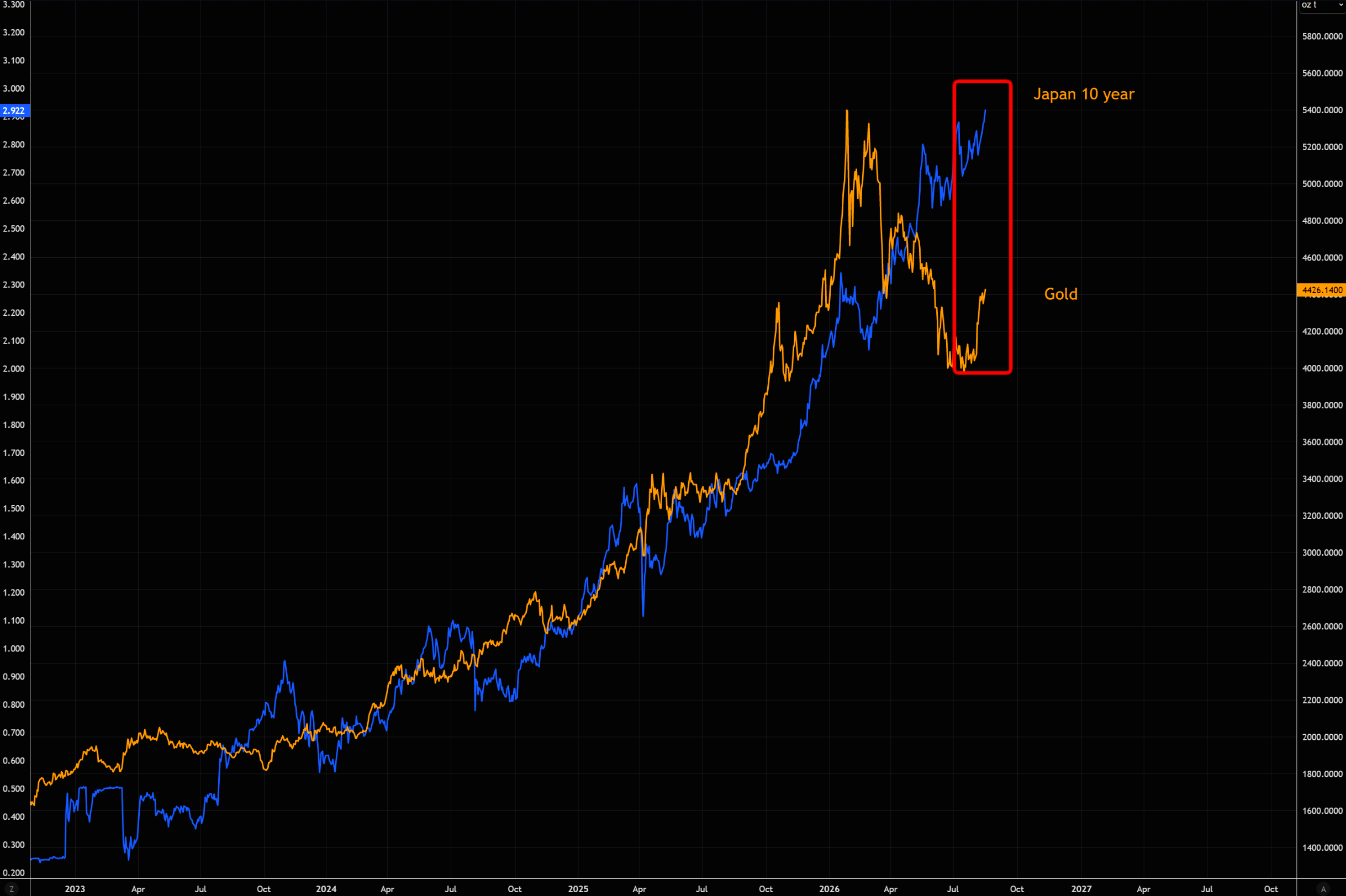
Tuesday, according to a comprehensive analysis by ZeroHedge, gold has recorded another strong bullish candlestick after a recent minor flag consolidation, with the 21-day and 50-day moving averages forming a bullish crossover, clarifying the technical outlook. Meanwhile, gold's trajectory is almost perfectly synchronized with Fed rate expectations, and it has begun tracking moves in Japan's super-long-end yields again, signaling the return of macro drivers.
Fund flows are also showing positive signals. According to Bank of America data, gold inflows posted their largest weekly figure since January this year, and Western active long-side investors are also returning to the market. Goldman Sachs analyst Ankush Gupta noted that this metals rally is clearly led by China, with participation on Asian exchanges jumping from single-digit percentiles to around 50%, forcing short covering and driving gold prices in a rare, nearly vertical ascent.
Macro Signals Return: Dual Convergence of JGBs and Fed Pricing
Gold is once again reacting to macro variables, a shift seen by the market as a key signal that the rally has entered a new phase.
Gold's price action is currently almost perfectly aligned with Fed rate pricing. According to Goldman Sachs data, the correlation between the two has reached near-perfect synchronization. At the same time, gold has also resumed tracking changes in Japan's super-long-end yields—a relationship that had decoupled during the previous gold frenzy. Its re-establishment suggests the market is repositioning gold as a core hedge against global macro risks.
The analysis describes gold as the only true "all-asset hedge." With global rate expectations remaining volatile and pressure in the Japanese bond market yet to subside, gold's renewed sensitivity to macro signals provides fundamental support for further upside.
Technical Picture Becomes Clearer: Bullish Pattern Established After Flag Consolidation
On the technical front, after several days of minor flag consolidation, gold has recorded another strong bullish candlestick, presenting the conditions for launching the next phase of the advance.
Notably, the 21-day moving average has crossed bullishly above the 50-day moving average, a medium-term technical signal typically seen as an important confirmation of trend continuation. According to LSEG Workspace data, if gold can close modestly higher above current levels, it could trigger a new round of short squeezing.
The analysis notes that the overall setup remains tilted to the upside, with macro and technical factors realigning—a logic consistent with the bullish gold stance from early August.
Chinese Capital Leads This Rally, Western Longs Begin to Return
The structural characteristics of this gold rally deserve attention. Goldman Sachs' Ankush Gupta pointed out that there is clear evidence this metals rally is driven by Chinese capital—participation on Asian exchanges has surged from single-digit percentiles to around 50%. This influx of funds has forced significant short covering and driven gold prices in an unusually smooth, near-linear advance.
Western active long-side investors are also beginning to return to the market, further improving fund flows. According to Bank of America data, gold inflows have posted their largest weekly figure since January this year, indicating that market sentiment is spreading to a broader set of participants.
Gupta also noted that current positioning has not yet reached excessively crowded levels, but the initial "spring compression" phase may have largely played out, and the market will face more two-way risk going forward.
$4,500 Becomes Key Resistance, Options Strategies Offer Better Value
As gold approaches a key technical level, the changing risk-reward profile is influencing how market participants engage.
Goldman Sachs' Ankush Gupta explicitly identifies $4,500 as a key resistance level, suggesting profit-taking pressure could emerge around that price area. For investors still looking to participate in the upside, Gupta favors expressing bullish views through call spreads and digital KO structures, arguing that these structures are more straightforward and efficient given the shifting risk-reward dynamics and the ongoing repricing of volatility skew.
Notably, despite the sharp recent rise in gold prices, implied volatility in gold has remained relatively subdued, keeping the cost of participating in potential upside moves via options reasonably affordable. Analysts believe that with volatility at current levels, call spreads still offer attractive value.
Furthermore, Commodity Trading Advisors (CTAs) have generally held short positions during this short squeeze. If gold continues to rise, these funds could still face pressure to buy back, but analysts caution that the convexity effect is no longer one-directional at this stage.