






Don’t chase 100x gems, just back “cash cows”: which projects are still worth dollar-cost averaging in a bear market?


- Key Takeaway: Against the backdrop of a sluggish crypto market, this article identifies four token-issuing projects—Pump.fun, Hyperliquid, Uniswap, and Chainlink—that demonstrate resilience through bear markets thanks to steady protocol revenue, offering more realistic benchmarks for long-term dollar-cost averaging.
- Key Factors:
- Pump.fun generated $41.53 million in revenue over the past 30 days, with a cumulative total of approximately $256 million over the first seven months. Its revenue depends on the heat of Meme trading on the Solana chain, but its monthly cash flow of tens of millions of dollars stands out.
- Hyperliquid accumulated approximately $352 million in revenue over the first seven months, surpassing Pump.fun, and hit a year-to-date high of $60 million in June, with revenue primarily coming from perpetual contract and spot trading fees.
- Hyperliquid uses approximately 99% of its protocol fees to buy back and burn HYPE tokens, forming a straightforward investment thesis of “high earnings plus continuous buybacks.”
- Uniswap generated $5.6 million in revenue over the past 30 days, making it the most profitable DEX, with a cumulative total of about $28.4 million over the first seven months, benefiting from the formal activation of protocol fees and the burning of UNI following the implementation of the UNIfication proposal.
- Chainlink generated $4.57 million in revenue over the past 30 days, with monthly revenue steadily ranging between $4.4 million and $5.8 million. Revenue comes from service fees for oracles, cross-chain solutions, and more, with cumulative transaction value facilitated reaching $32.18 trillion.
Original by Odaily Planet Daily (@OdailyChina)
Author: Asher (@Asher_ 0210)

Since the beginning of this year, the crypto market has remained sluggish. It's not that there are no hotspots on-chain — every so often, a few meme coins will surge. However, these rallies are often concentrated in newly launched tokens that leave the market almost no time for proper research. Once the narrative cools off, prices quickly fall back down, and most players who jumped in mid-way end up losing more than they gain.
Since blindly guessing the next 100x token isn't very meaningful, a more realistic investment logic is: If you're planning to slowly dollar-cost average through the bear market and wait for the next bull run, which projects are still worth buying right now?
Compared to simply looking at narratives, a more direct screening criterion is: Is the project itself still making money? If a platform can still steadily generate millions or even tens of millions of dollars in monthly revenue during a crypto bear market, it at least proves that users and demand still exist, and the project has a stronger ability to survive market cycles. These platform tokens may not necessarily be the most dramatically appreciating altcoins in the next bull run.
So, since the start of this year, which projects with tokens already issued are still consistently profitable? Odaily Planet Daily will walk you through them.
(Note: Project revenue data in this article comes from Tokenomist and DefiLlama, using a unified revenue metric — that is, the protocol's actual revenue after deducting allocations to supply-side participants like LPs.)
Pump.fun: The "Pickaxe Seller" of the Meme Track, Profiting from Wave After Wave of Token Launch Hype
Aside from the two major stablecoin issuers, Tether and Circle, Pump.fun is the most profitable crypto-native project over the past 30 days, with revenue reaching $41.53 million.
Looking at monthly data, Pump.fun's monthly revenue from January to July this year was $51 million, $40 million, $38.1 million, $32.4 million, $34.4 million, $26.6 million, and $33.7 million respectively, with cumulative revenue of approximately $256 million over the first seven months. Pump.fun's revenue peaked at the start of the year, then trended downward with notable dips in April and June, while May and July saw some recovery.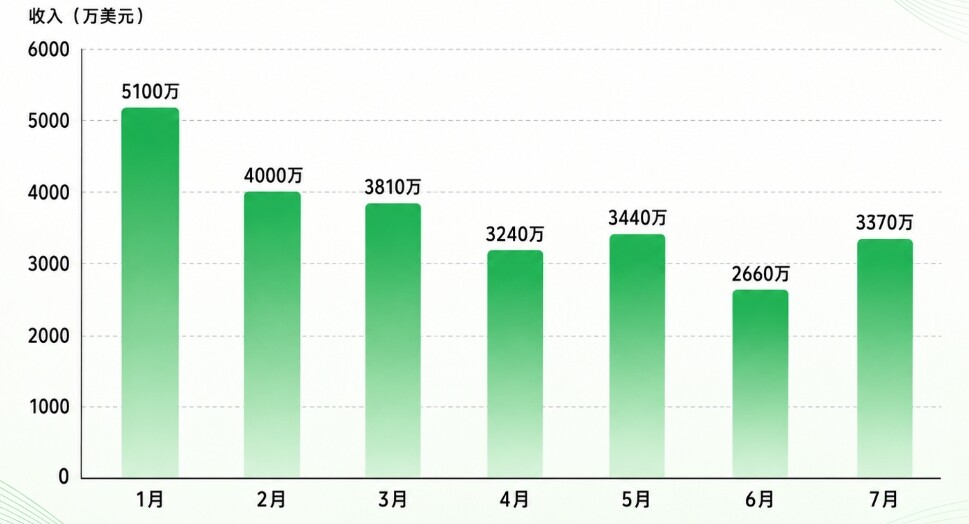
Pump.fun's revenue core comes from the continuous trading of newly launched tokens on the platform. Currently, token creation is free for users, but trading during the Bonding Curve phase incurs transaction fees. Under Pump.fun's latest fee structure, the total fee rate per trade on the Bonding Curve is 1.25%, with 0.95% going to the protocol and 0.30% allocated to the token creator. Additionally, when a token graduates from Pump.fun to PumpSwap, a graduation fee of 0.015 SOL is charged.
Pump.fun's revenue still relies heavily on Meme activity on the Solana chain. When on-chain market conditions are cold, revenue noticeably declines, but it quickly recovers when enthusiasm returns. However, from a bear market perspective, maintaining tens of millions in monthly revenue for seven consecutive months, with the past 30 days climbing back above $40 million, already proves it is one of the strongest "cash flow machines" in Web3 today.
If you believe the Meme track is here to stay, PUMP may be worth long-term attention more than betting on the next Meme token.
Hyperliquid: The "Bear Market Beacon" of the Perp DEX Track, Sustainably Generating Revenue Despite Low Trading Activity
When it comes to cumulative revenue this year exceeding even Pump.fun, the "bear market beacon" of the Perp DEX track — Hyperliquid — takes the crown.
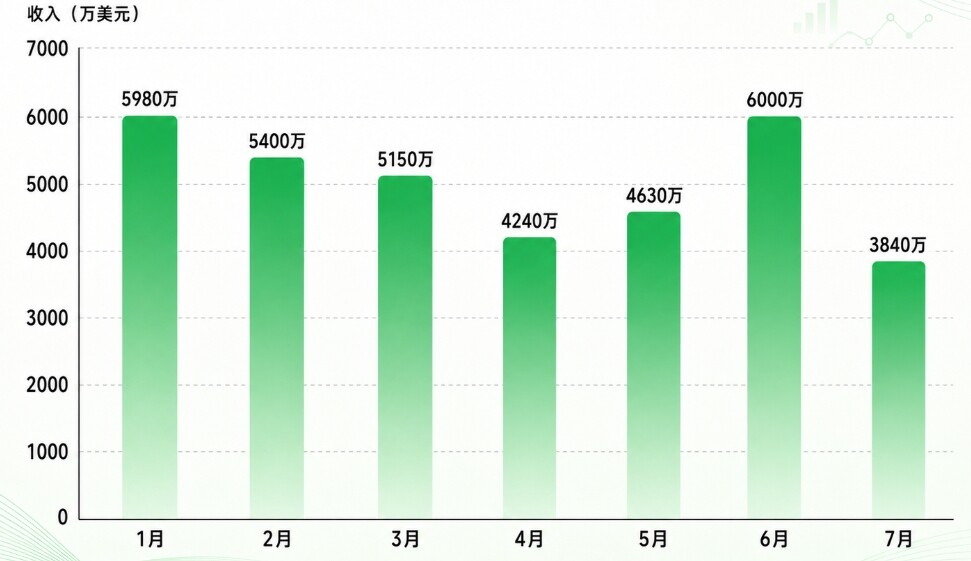
Looking at monthly data, Hyperliquid's revenue from January to July this year was $59.8 million, $54 million, $51.5 million, $42.4 million, $46.3 million, $60 million, and $38.4 million respectively, with cumulative revenue of approximately $352 million over the first seven months, surpassing Pump.fun. Unlike Pump.fun's overall downward trend since the start of the year, Hyperliquid's revenue has not shown a sustained unilateral decline. In June, it even hit a yearly high of $60 million. July saw revenue fall back to $38.4 million, with the past 30 days further dropping to $29.02 million.
Hyperliquid's revenue primarily comes from perpetual contract and spot trading fees. Currently, the platform uses a tiered fee structure. For regular users, the base Taker/Maker fees for perpetual contracts are 0.045% and 0.015% respectively, while spot fees are 0.07% and 0.04%. The higher the trading volume and HYPE staking amount, the lower the fees. Funding rates are paid directly between long and short positions and do not count as Hyperliquid's protocol revenue.
Nearly all of Hyperliquid's earnings are used to buy back and burn HYPE. Currently, approximately 99% of the protocol's generated fees go into the Assistance Fund (as disclosed in SEC filings, Hyperliquid increased the protocol fee percentage entering the Assistance Fund from 97% to 99% in August 2025), which is used to continuously purchase HYPE from the secondary market and permanently burn the acquired HYPE.
"Profitable, and continuously buying back" — that might be the simplest and most compelling investment thesis for HYPE in a bear market.
Uniswap: DEX Leader Flips the Fee Switch, UNI Finally Starts Capturing Protocol Revenue
Over the past 30 days, Uniswap ranked as the most profitable DEX with $5.6 million in revenue. While still trailing platforms like Pump.fun and Hyperliquid that generate tens of millions monthly, Uniswap's earning power has firmly returned to the top tier within the DEX sector.
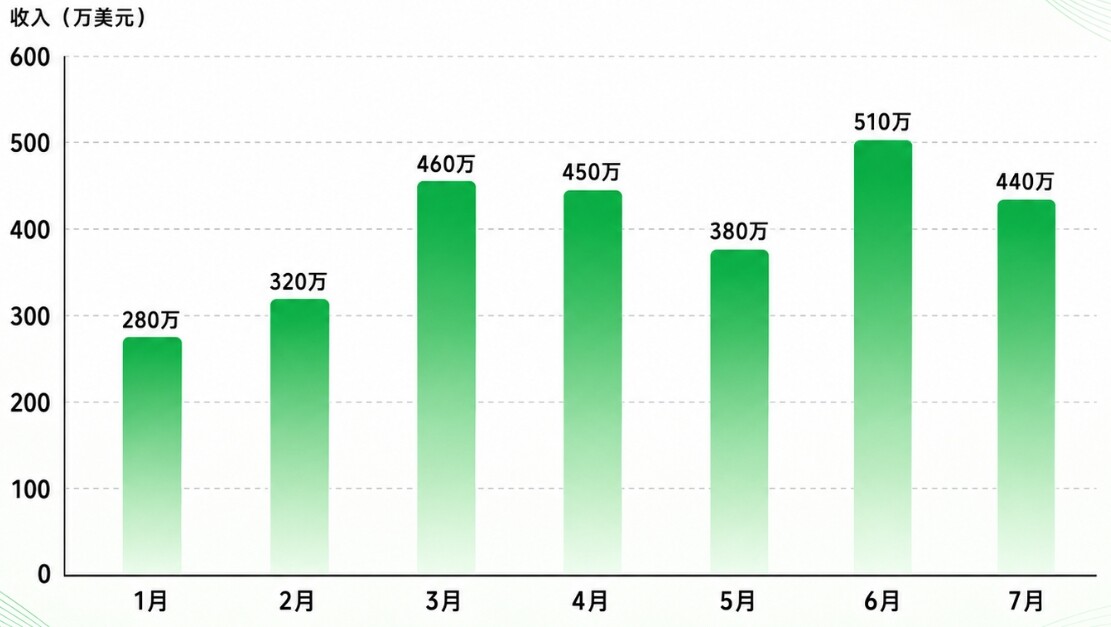
Looking at monthly data, Uniswap's revenue from January to July this year was $2.8 million, $3.2 million, $4.6 million, $4.5 million, $3.8 million, $5.1 million, and $4.4 million respectively, with cumulative revenue of approximately $28.4 million over the first seven months. The overall fluctuation has been modest, maintaining a range of roughly $3 million to $5 million per month, with June hitting a yearly high of $5.1 million.
Uniswap's revenue comes from the Protocol Fee charged during transactions. Currently, the protocol fee has been enabled across all Uniswap v2 pools and select v3 pools, gradually expanding from Ethereum to multiple chains including Arbitrum, Base, OP Mainnet, BNB Chain, and Polygon. Taking v2 as an example, users still pay a 0.30% trading fee per transaction, with 0.25% going to LPs and 0.05% entering the protocol; v3 charges corresponding protocol fees based on different fee tiers.
Since the UNIfication proposal was implemented in late 2025, Uniswap officially activated the Protocol Fee and directed the revenue toward UNI burns (for more details, read: After Uniswap's Fee Switch Goes Live: Is This DeFi Revolution's "Report Card" Good Enough?). Protocol fees flow into the TokenJar, and external participants who wish to withdraw accumulated assets must burn a corresponding amount of UNI.
The UNI token has transformed from a "pure governance asset" into an "asset explicitly tied to protocol fees and usage." If DEXs remain the most fundamental gateway for on-chain trading, dollar-cost averaging into UNI is now at least no longer just an investment in Uniswap's brand and standing.
Chainlink: Not Chasing Hot Trends, Operating as the "Toll Booth" of On-Chain Finance
Not relying on Meme hype or derivatives trading volume, Chainlink still generated $4.57 million in revenue over the past 30 days. Compared to platforms like Pump.fun and Hyperliquid whose revenue fluctuates with market trading activity, Chainlink operates a more infrastructure-oriented business — as long as DeFi, stablecoins, RWA, and other on-chain applications continue to run, the demand for oracles, cross-chain communication, and data services will not disappear.
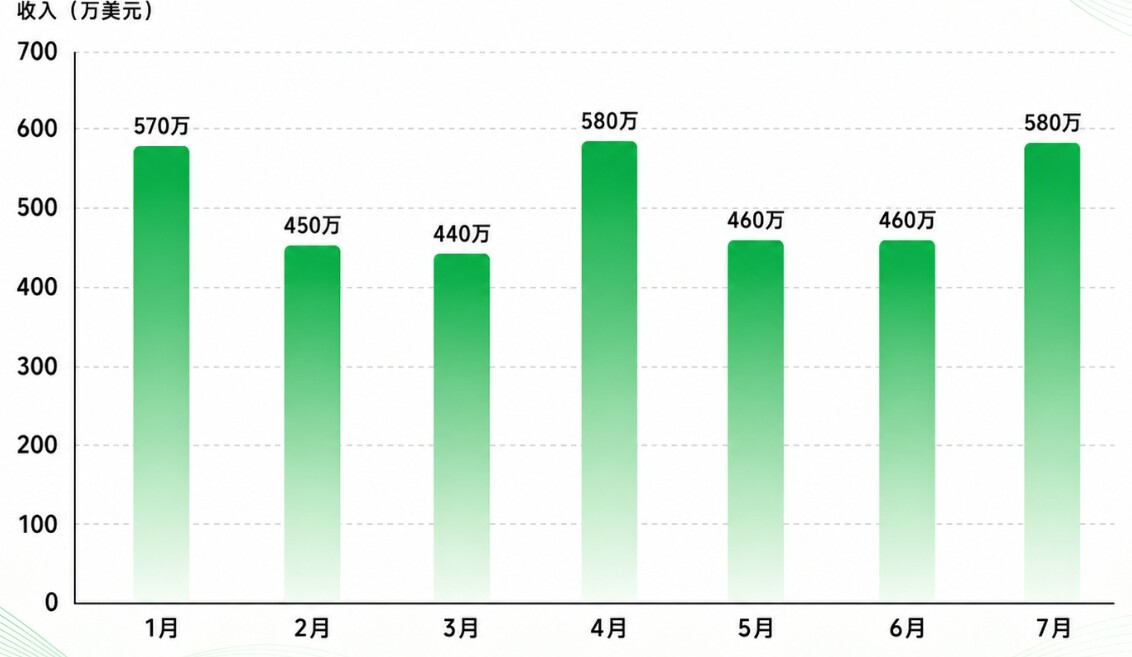
Looking at monthly data, Chainlink's revenue from January to July this year was $5.7 million, $4.5 million, $4.4 million, $5.8 million, $4.6 million, $4.6 million, and $5.8 million respectively, with cumulative revenue of approximately $35.4 million over the first seven months. Chainlink's monthly revenue has been relatively stable, maintaining a range of roughly $4.4 million to $5.8 million over the past seven months, reaching $5.8 million twice in April and July.
Chainlink's revenue comes from fees paid by developers, protocols, and institutions for using Chainlink services such as Data Feeds, CCIP, Automation, and VRF, covering fundamental on-chain needs like price data, cross-chain communication, and automated execution. Today, Chainlink's services extend beyond DeFi, increasingly entering stablecoin, RWA, and institutional asset tokenization scenarios. According to official data, as of July 2026, its cumulative Transaction Value Enabled (the transaction value facilitated by Chainlink) has reached $32.18 trillion.
Currently, Chainlink has launched Payment Abstraction and Chainlink Reserve, gradually converting Chainlink's business growth into sustained demand for LINK. Service revenue from on-chain and off-chain payments made by users and enterprises can be automatically converted into LINK through Payment Abstraction, which then accumulates in the Chainlink Reserve.
If more financial assets truly move on-chain in the future, Chainlink may not need to pick which public chain or DeFi project ultimately wins — as long as on-chain finance continues to expand, this "toll booth's" revenue will only keep growing.


