每周编辑精选 Weekly Editor's Picks(0808-0814)


- Core Takeaways: This week's selection covers macro trends in the crypto market, narratives around AI and the storage sector, regulatory policy tussles, and analyses of multiple trending projects. The core focus centers on expectations of dollar liquidity driven by yen appreciation, signals of Bitcoin's valuation bottom, and the uncertainty surrounding U.S. crypto regulation as it advances on dual tracks—legislative and administrative.
- Key Elements:
- Arthur Hayes is betting on yen appreciation against the dollar, anticipating that the Japanese government will repurchase financing through the FIMA mechanism to inject dollar liquidity. This would be bullish for Bitcoin and gold, and he predicts ENA could rise 5-10x over the coming months.
- Bitcoin network health has not deteriorated, and current valuations sit at the lower end of historical ranges. Long-term holders continue to accumulate, but with no clear positive catalyst in sight, risks have been partially priced into the market.
- The early activity on Robinhood Chain has been driven by meme coins rather than RWA, and its clearest monetization opportunity lies in the application layer. Its current impact on Robinhood's profits remains limited.
- Nvidia is teaming up with Wall Street to build a $500 billion AI computing financing platform, fueling market concerns that the AI sector narrative is shifting from "burning cash" to "demanding returns," echoing risks reminiscent of the subprime crisis.
- The U.S. Clarity Act has stalled amid bipartisan political gridlock, leaving a very narrow window for passage this year. Meanwhile, the SEC is advancing crypto regulation through administrative rulemaking under "Regulation Crypto," bypassing Congress and pursuing a dual-track approach.
- BIP-110, a proposal led by core Bitcoin developers, has evolved from a soft fork into a hard fork, with plans to replace the PoW algorithm, escalating governance conflicts within the Bitcoin community.
- Although Bitwise has shuttered 8 ETFs and cut 14% of its workforce, the CEO stated that the team remains the largest in its history, with strategic resources being redirected toward new products such as staking and tokenized funds.
The information flow moves too fast, and in-depth analysis articles are easily drowned out by hot topics. The "Weekly Editor's Picks" column sifts through the sea of information to surface content with real judgment value, helping you filter out the noise, retain insights, and spark inspiration.

Investment & Entrepreneurship
The yen is poised to appreciate against the U.S. dollar, with the most likely path being the Japanese government leveraging the FIMA mechanism to pledge its U.S. Treasury holdings to the Federal Reserve for repurchase financing, borrowing dollars, and then using those dollars to buy yen.
This will also lead to a surge in dollar liquidity, driving up prices of assets like Bitcoin and physical gold. Beyond Bitcoin and Ethereum being undervalued at this stage, ENA could also see a 5-10x increase in the coming months.
Exploring Bitcoin's Prospects: With the Market in Silence, What Will Be the Reversal Signal?
The degree of decentralization and overall health of the Bitcoin network has not diminished compared to the past.
Classic valuation frameworks and current market signals indicate that Bitcoin is already at the lower end of its historical valuation range, with long-term holders continuing to accumulate.
There is no clear positive catalyst at the moment, but the vast majority of risks have already been priced in by the market.
Even as Robinhood's overall business hits historic highs, its crypto business is in decline.
Robinhood Chain is the strongest L2 launch case in recent times. The driver of Robinhood Chain's early activity is not RWA, but Meme coins.
Robinhood's clearest monetization opportunity lies not in the infrastructure layer, but in the application layer. Currently, Robinhood Chain cannot significantly impact Robinhood's profits.
Crypto Bear Market: Which Crypto-Related Stocks Are Institutional Giants Accumulating?
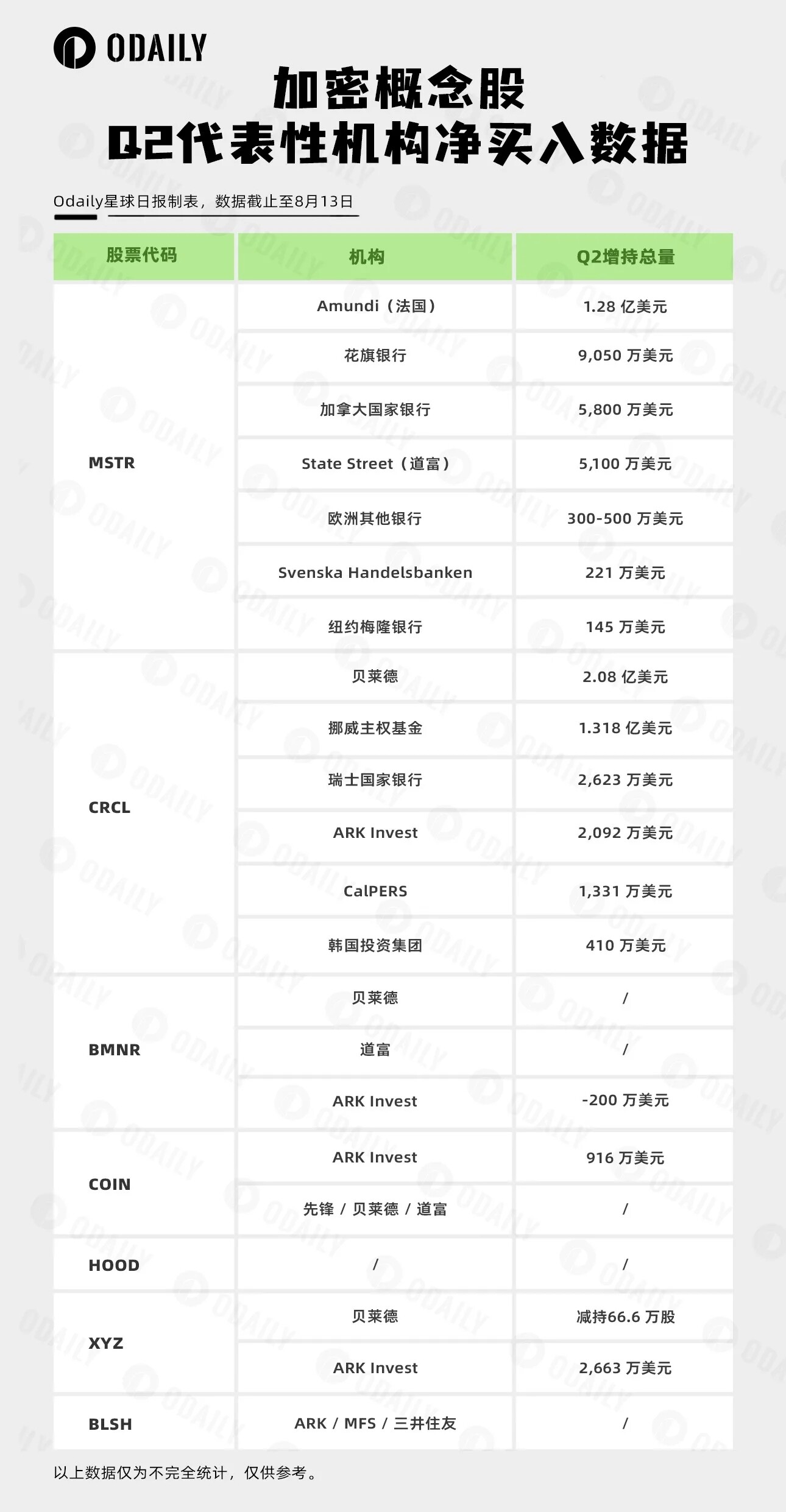
Also recommended: 《How Much Is Unitree Robotics, the "First Humanoid Robot Stock," Really Worth?》《Unitree Isn't Worth Its Current Price》《Securitize's First Post-IPO Earnings Miss: Is the "Compliant Tokenization" Narrative Stalling?》.
AI & Storage
Nvidia's collaboration with Wall Street institutions to build a $500 billion AI computing power financing platform, along with Intel's $15 billion fundraising, has triggered a market sell-off. This reflects the AI sector's narrative shifting from "burning cash on stories" to "investing for returns," with investors more concerned about "left hand trading with right hand" and whether spending can translate into real revenue.
Is "Optical Advances, Storage Retreats" Becoming the New U.S. Stock Trading Narrative?
As the narrative of AI chip valuations peaking gradually becomes market consensus, capital is searching everywhere for the next AI-linked story. "Optical advances, storage retreats" is precisely the new narrative born from this context—storage recedes, optical communications take over.
LITE delivered what can only be described as a flawless earnings report.
The risk is that the three major optical communication stocks have already risen 40-50% in August. Charging in now smells heavily of chasing highs. And earnings nights have always been volatile, so if COHR's report tomorrow misses expectations, the pullback from highs could be brutal. The awkwardness of this position—you like the narrative, but you don't want to be the bagholder at the peak.
In a market driven by narrative rotation, being first doesn't mean being right; the ones who survive are.
Also recommended: 《At This Investor Day, SanDisk's "Explosive Numbers" Shook the Market》.
Prediction Markets
During the Lull in Prediction Market Hype, Polymarket Prepares a Killer Move to Catch Up with Kaishi
Policy & Stablecoins
The Political War Between Trump and the Democrats Is Killing the Clarity Act
The Clarity Act has become a casualty of the U.S. two-party political tug-of-war. The divide between the two parties over the Clarity Act goes beyond mere technical debate on industry regulation, tying it instead to larger political interests.
This year, the most likely window for the Clarity Act to pass a vote is the "lame duck session" of Congress after the November midterm elections.
The consequences of "politics of obstruction" will be borne by the entire industry.
Legislation is at a standstill in Congress. Three sticking points remain unresolved: details on anti-money laundering and enforcement provisions, regulatory jurisdiction over stablecoin yields, and government ethics clauses involving presidential crypto holdings.
The SEC is not waiting for Congress; it's writing its own rules. The framework for Regulation Crypto comes from Atkins' public remarks in March, including three types of exemptions: startup exemption, fundraising exemption, and investment contract safe harbor.
There are now two parallel tracks advancing crypto regulation in Washington.
The CLARITY Act follows the legislative track. Its advantages are the highest authority (laws trump administrative rules), the broadest coverage (dividing jurisdiction between the SEC and CFTC simultaneously), and the strongest durability. But it needs 60 votes, needs cross-party support, needs to resolve three contentious points, and even if it passes the procedural vote on September 15, there are still debates, amendments, and final votes ahead. The window to complete the entire process within the year is extremely narrow.
Regulation Crypto follows the administrative rule track. It doesn't require a congressional vote; three Republican commissioners are enough to push it through. Once a final rule is passed, it's harder for the next SEC to easily overturn compared to staff statements, because overturning a final rule requires going through the same notice-comment-vote process. Its disadvantage is limited authority—it only covers SEC jurisdiction, doesn't involve the CFTC, and may face legal challenges.
Also recommended: 《PYUSD in One Hand, Open USD in the Other: PayPal's Stablecoin Risk "Hedge"》.
CeFi & DeFi
Shutting Down 8 ETFs and Cutting 14% of Staff—Why Is Bitwise Still Pushing New Products?
Bitwise CEO Hunter Horsley responded by stating that the adjusted team remains the largest in the company's eight-year history, and he expects the company to continue growing as crypto assets integrate into the global economy. The company remains bullish on long-term growth, but current staffing and product allocations have begun to tighten. Old products are exiting, and new resources are flowing toward staking and tokenization funds.
Hyperliquid to Support Crypto-Equity Dividends Too
Hyperliquid is adding a capability to HIP-1 that hasn't been common before—directly performing batch, programmatic adjustments to user assets at the "balance layer" of HyperCore.
Use cases include: dividends, stock splits and reverse splits, rebasing, and airdrops.
The real significance of this update is its potential to fill the gap in "corporate actions" capability for on-chain assets.
Airdrop Opportunities & Interaction Guides
Meme
Major coins are sluggish, but Meme hotspots remain, so platforms and wallets built around Meme creation and trading naturally continue to see usage.
Pump.fun and its ilk capture the first round of trading demand for new tokens. GMGN and its peers profit from "P-newbie" fees through efficient trading tools.
Also recommended: 《Interview with the fomo Founder: 1.3 Million Users, 30,000 Daily Growth, Driving Products Through Influence》.
Bitcoin
Bitcoin's Biggest Governance Conflict Escalates: BIP-110 Shifts from Soft Fork to Hard Fork
The BIP-100 soft fork led by Bitcoin core developer Luke Dashjr has failed. However, BIP-110 supporters led by Luke Dashjr refuse to accept defeat and are already planning to change the PoW algorithm. This means the BIP-110 chain will no longer use the SHA-256d algorithm, evolving from a Bitcoin soft fork into a Bitcoin hard fork.
Both sides are attacking each other over "centralization," but Bitcoin itself has once again proven that it hasn't been controlled by centralization.
Ethereum
Why Is EIP-8363 Causing an Uproar in the Ethereum Community?
EIP-8363, titled "Tapered Issuance Burn," proposes that as the proportion of staked ETH approaches half of the total supply, the new issuance rewards validators receive should be gradually burned until they reach zero.
The proponents' core concern is preventing "ETH from increasingly falling into the hands of centralized entities like exchanges, custodians, and ETF issuers, rather than individuals genuinely wanting to participate in network security." Opponents, however, argue that the centralization risk the proposal aims to prevent would actually be accelerated by this mechanism.
The short-term impact of the proposal controversy has hit the token prices of liquid staking protocols like Lido and ether.fi (LDO, ETHFI), but has not yet transmitted to the stock prices of treasury companies.
This proposal is still far from actual implementation.
Also recommended: 《Ethereum's Glamsterdam Upgrade: The Largest Bottom-Layer Restructuring, Mainnet Date Still Up in the Air》.
New Ecosystems
NFT Summer Returns: Which Robinhood Chain Projects Deserve Close Attention?
Security
The Year's Biggest Phishing Drama: Fake DeFi Hooks Real North Korean Lazarus Hackers
I Interviewed a North Korean Crypto Hacker: Loves Frozen, Can't Say a Bad Word About Kim Jong-un
Weekly Hot Topic Catch-Up
Policy & Macro Markets
Approaching historical warning lines: Long-dated U.S. Treasury funding costs surge, with 30-year auction yields hitting the highest since 2001;
SK Hynix's $38 billion expansion is driven largely by Nvidia;
SK Hynix labor conflict escalates: employees plan to form a new union that could impact memory expansion plans;
SK Hynix plans to increase NAND capacity in China by 50%;
Storage chip landscape shifts again: SK Hynix positions itself through Bain Capital to become Kioxia's potential largest shareholder;
Views & Voices
Zuckerberg's AI Open Source Manifesto: Distillation is legal; monopoly is the biggest risk;
Bitwise Executive: BTC Is Immune to Bad News, Bear Market May Be Nearing Its End;
Institutions, Major Companies & Leading Projects
Tether finally gets a Big Four audit, but USDT's transparency issues are far from over;
Strategy may be removed from the MSCI index, with proposed rules targeting non-operating companies;
Li Lin ventures again: UMX targets a "