Beyond Crypto: An Alternative Possibility for Financial Infrastructure


- Core Viewpoint: At the OKX NOW conference, OKX announced its evolution from a crypto exchange into a comprehensive global fintech platform, building a complete financial services system around fund custody, payments, investment, and wealth management, with compliance and localized operations serving as the trust foundation supporting its expansion.
- Key Elements:
- OKX CEO Star proposed that "the exchange is the starting point, not the destination," OKB rose over 6% on the day, and the company is moving beyond crypto boundaries to build financial infrastructure.
- OKX Money covers over 30 countries, with a live demonstration of a $100 transfer from Singapore to Venezuela settling in seconds, upgrading trading accounts into financial accounts.
- Approximately 95% of code merge requests from OKX's engineering team are completed by AI workflows, with last month's payment to large model service providers reaching $10 million.
- OKX has obtained licenses in the United States, Europe, the UAE, Singapore, and other regions, and has engaged Deloitte as its global auditor, launching proof of reserves and OKX Shield account protection.
- OKX completed fundraising at a $25 billion valuation, with participation from traditional financial institutions including Qube Research, Circle, Ripple, and SC Ventures under Standard Chartered.
- OKX and ICE plan to launch a tokenized securities trading venue under the SEC's innovation exemption mechanism, promoting round-the-clock trading of traditional assets.
Original | Odaily (@OdailyChina)
Author | Golem (@web3_golem)
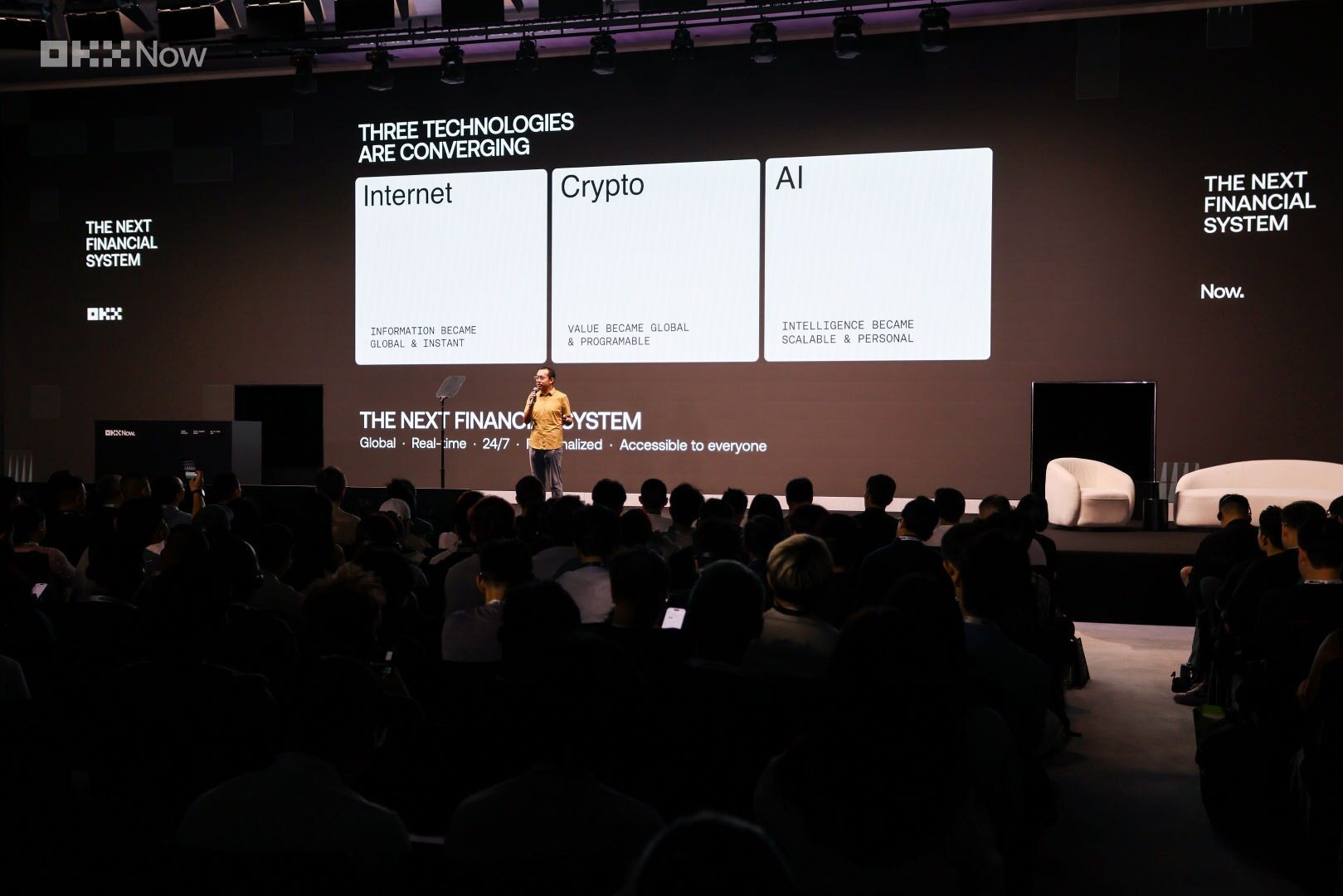
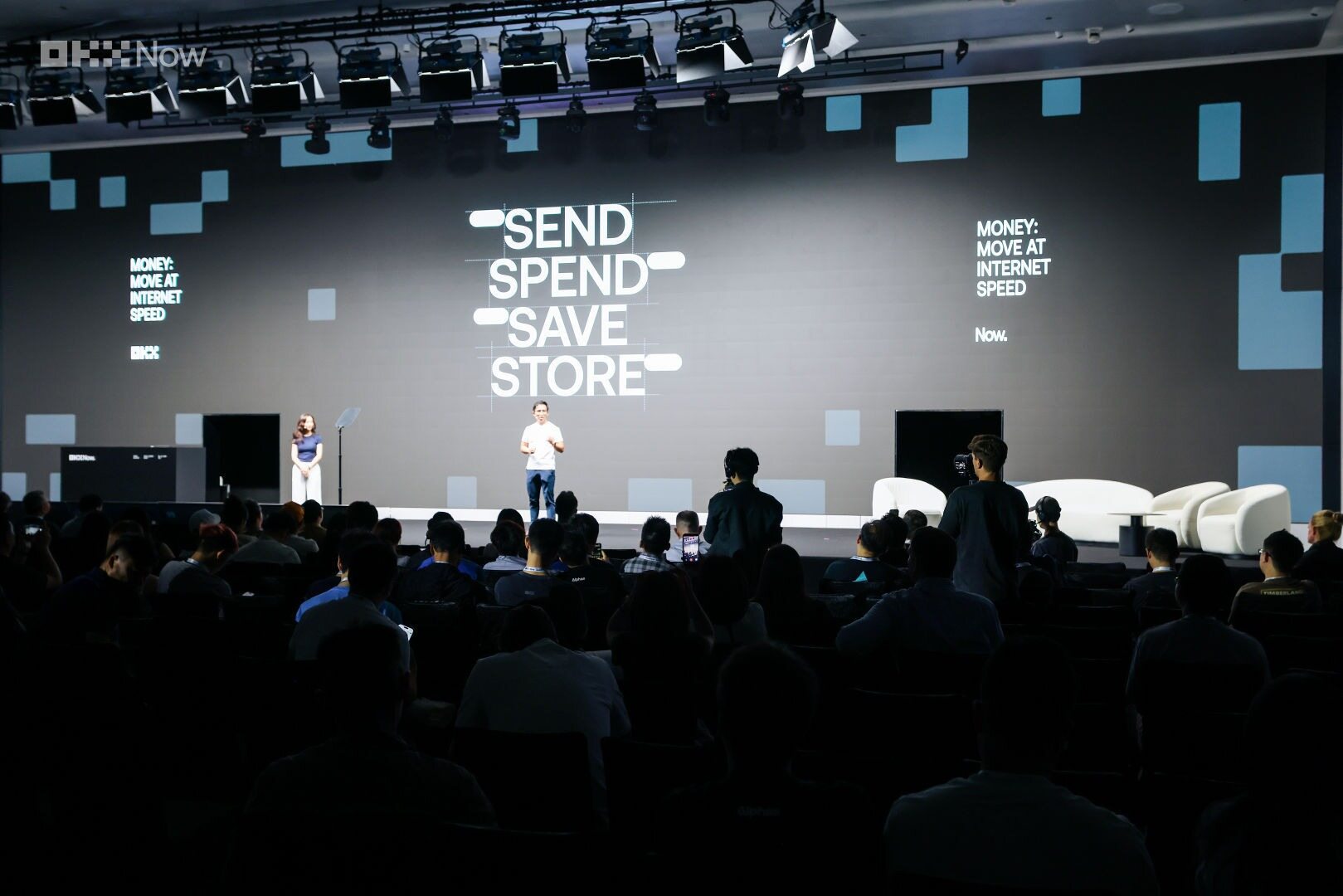
The term "crypto exchange" no longer seems adequate to describe today's OKX. What we witnessed was a company transcending the boundaries of crypto itself. This was the deepest impression left on all attendees at the OKX NOW Global Product and Ecosystem Conference on October 6.
OKX is building a comprehensive financial services system around four core directions—asset custody, payments, investment, and wealth management—with the goal of evolving from a crypto exchange into a full-fledged global fintech platform.
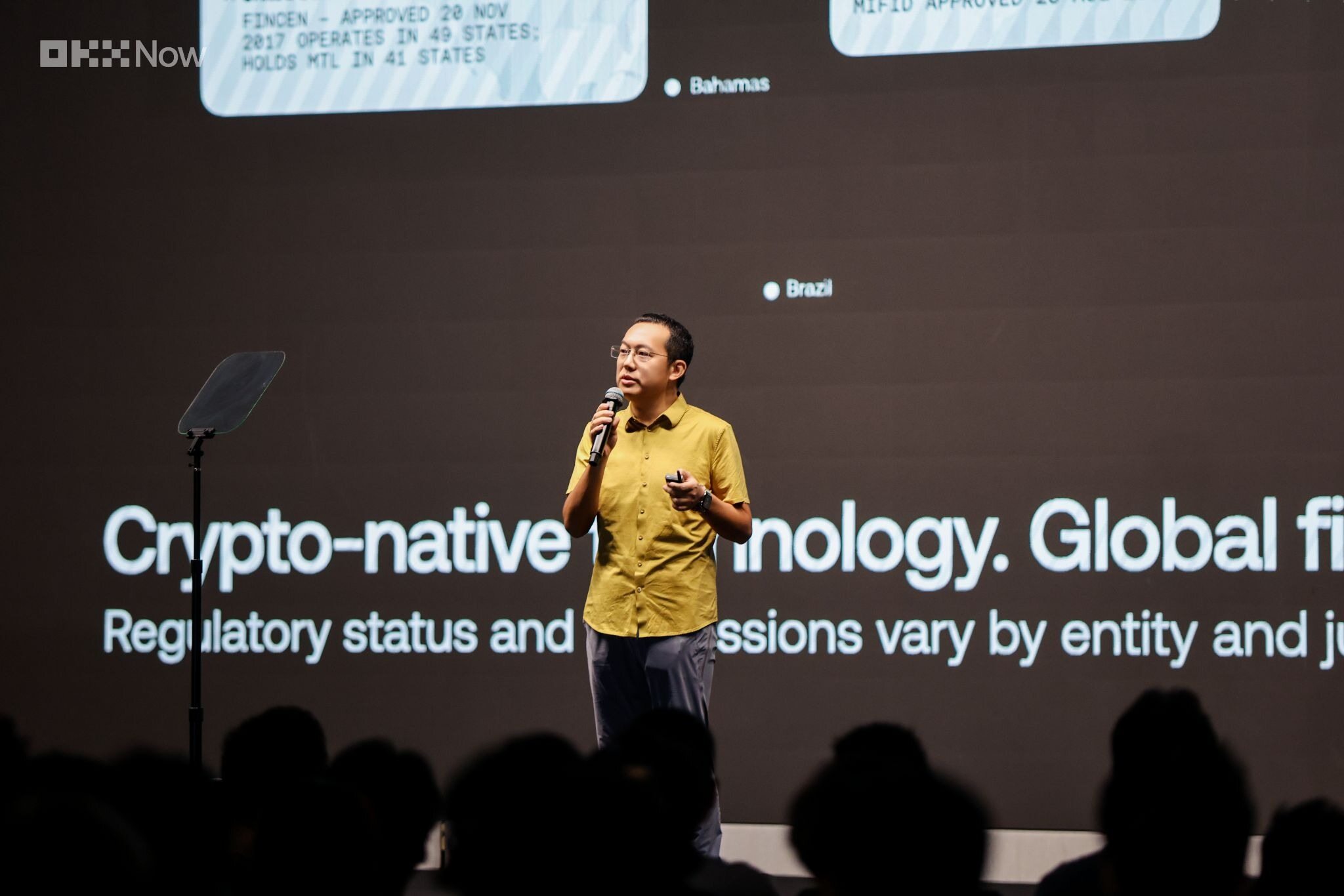
"The exchange is OKX's starting point, not its destination," said OKX CEO Star on stage. This statement not only ignited market sentiment—OKB rose over 6% that day—but also illuminated the vast horizon OKX is sailing toward: not to become a bigger exchange, but to participate in building a financial infrastructure that goes beyond crypto. The continued investment in global compliance and the deepening of localized operations serve as the trust foundation for this "alternative possibility."
Although the OKX NOW conference has concluded, the future product blueprint and its significance that OKX showcased are still worth analyzing.
From Trading and Payments to Wealth Management, OKX Is Completing Its Financial Services Blueprint
If we look at the products presented at the conference as a whole, OKX is not simply launching a few independent features—it is building a complete product system spanning investment, trading, and fund utilization.
On the crypto trading side, OKX continues to enhance the trading experience, having launched gold perpetual contracts, Pre-IPO perpetual contracts, and unified tokenized stock trading. It also plans to introduce TradFi options, forex-related products, and its own tokenized stock XRWA in the future. On the on-chain side, OKX is further lowering the barrier for users to enter the on-chain world. OKX is building an open Web3 product ecosystem that connects trading, wallets, and on-chain assets. X Layer ecosystem DeFi TVL grew approximately 11x this year and hit an all-time high in September.
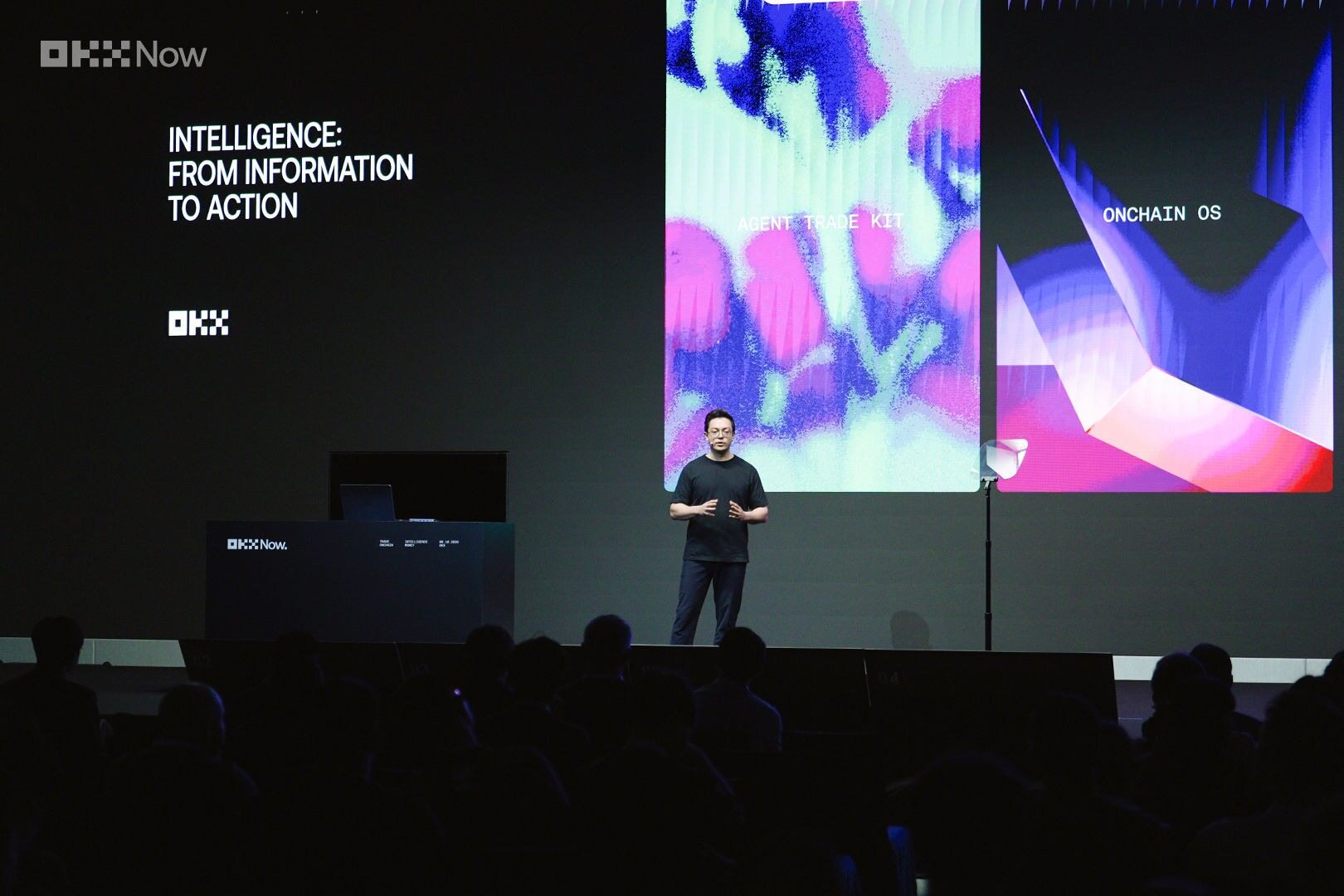
At the same time, OKX is attempting to move AI from "providing suggestions" to "execution." It demonstrated an upcoming AI Bot on stage that supports users in creating personalized trading strategies through natural language. AI is becoming core infrastructure for OKX. According to Star's on-stage remarks, approximately 95% of code merge requests (PRs) from OKX's engineering team are essentially completed through AI workflows. OKX paid $10 million to large model service providers last month.
The most notable highlight of this conference was OKX Money. At the event, Wenbin Wong, General Manager of OKX Pay, showcased OKX Money for the first time, demonstrating a live transfer of $100 from Singapore to a user in Caracas, Venezuela. The funds arrived within seconds, and the recipient then purchased a burrito locally.
OKX Money currently covers over 30 countries. Its launch signifies that OKX is attempting to transform users' "trading accounts" into more complete "financial accounts." OKX Money extends services to asset custody, cross-border transfers, everyday spending, and eligible yield scenarios, further expanding OKX's relationship with users beyond trading itself.
The significance behind this shift is that OKX is proactively reducing the prominence of "Crypto" itself.
For crypto-native users, trading, wallets, and on-chain interactions are nothing new. But for broader mainstream users, what they truly care about is how to transfer money, how to make payments, and how to manage assets—not which blockchain is being used underneath.
OKX Money's practice in the Brazilian market exemplifies this. According to Guilherme Sacamone, CEO of OKX Brazil, local commodity trading in Brazil faces issues with trading hours, liquidity, and spreads, while offshore accounts involve costs such as IOF. The OKX Brazil team designed products around Pix payments and users' practical needs for USD allocation and cross-border spending, presenting the relevant payment services independently as OKX Money. Users can more easily allocate USD-related assets and make cross-border purchases without needing to understand the full crypto trading system.
Products are only the first layer of OKX's future blueprint. What truly determines whether these product capabilities can scale is another matter entirely—trust.
Compliance Is Not the Destination, but the Foundation for OKX to Expand Financial Boundaries
When OKX was just a crypto exchange, the core metrics by which the market evaluated it might have been trading volume, liquidity, product count, and technical capability. But as OKX begins to enter payments, wealth management, securities, tokenized assets, and institutional financial services, the evaluation framework changes.
Why are users willing to put their funds into OKX? Why are banks willing to partner with OKX? Why are traditional financial institutions willing to connect their assets, clients, and liquidity into this system? These questions ultimately come down to one word: "trust."
Therefore, although this conference was dense with product information, there has always been a less conspicuous underlying theme—compliance—which is becoming the "trust infrastructure" supporting the long-term expansion of OKX's entire product matrix.
Star also mentioned on stage that building global financial services requires far more than technology. Over the past few years, OKX has continuously invested in building regulatory-compliant infrastructure globally. Currently, OKX has obtained licenses or is subject to regulation in major markets including the United States, Europe, the UAE, Singapore, Australia, Brazil, and Turkey, as well as in multiple other countries and regions.
But at the same time, licenses themselves are merely qualifications to enter a market—they do not automatically earn user trust. Long-term trust still requires transparent proof of reserves, stable and reliable products, and continuous customer protection.
OKX was one of the first major global crypto exchanges to introduce "Proof of Reserves" as a regular transparency mechanism, and is one of the very few international exchanges to engage a "Big Four" accounting firm (Deloitte) as its global auditor. OKX Shield, the account protection program, has already launched in Europe, further enhancing user asset security through security measures and eligible compensation for account theft losses.
Compliance is the prerequisite for OKX to enter more financial scenarios, but compliance alone is not enough. OKX now serves not only crypto users who trade frequently, but also a broader range of traditional financial investors and consumers.
For the latter, asset custody, trading conditions, product stability, and responsiveness outside business hours are the key concerns. Gracie Lin, CEO of Singapore and Australia regions, mentioned on stage that approximately 98% of adults in Singapore already have bank accounts, so for OKX to compete for users from the traditional financial system, it must offer sufficiently differentiated value.
Globalization Is Not About Replicating a Single Product Set
As OKX enters different countries and regions, compliance further extends into localized operations. This is another shift at the conference that was easily overshadowed by product announcements.
In Singapore, OKX integrates with Singpass and partners with DBS and Standard Chartered, enabling some users to complete account opening and deposits in a more familiar way. In Europe, while MiCA provides a unified regulatory framework, the 30 markets still have different payment channels, languages, KYC requirements, and user habits, so OKX has established separate teams locally to handle fiat channels, identity verification, customer service, and community respectively.
OKX's globalization is not simply replicating one set of products across different countries. A truly global financial platform must simultaneously possess two capabilities: a unified technology, risk control, and compliance framework, and localized execution capabilities tailored to different markets.
From this perspective, what OKX is doing is not fundamentally different from the globalization of traditional financial institutions—global infrastructure handles efficiency, local teams handle understanding users, and the compliance system handles defining boundaries.
And this is precisely one of the key factors determining whether a global fintech platform can truly reach the mass market.
OKX Is Building Financial Infrastructure Together with Traditional Financial Institutions
OKX is also strengthening its cooperation with traditional financial institutions. On the same day, OKX announced it had completed a funding round at a $25 billion valuation, with participation from traditional financial institutions including Qube Research & Technologies, Circle, Ripple, and SC Ventures, the venture arm of Standard Chartered.
OKX Star subsequently posted that OKX was not raising funds due to a shortage of capital, but rather out of the need to bring in strategic partners, jointly committed to the development of stablecoins, payments, institutional markets, and next-generation financial infrastructure.
OKX's ability to build financial infrastructure together with traditional financial institutions is also occurring against the backdrop of accelerating convergence between crypto finance and traditional finance. The shift in the relationship between banks and exchanges from competition to collaboration is one of the most notable changes in the industry in recent years.
Star's speech at the OKX NOW conference revealed the relationship between the two: "Crypto technology brings always-on infrastructure, programmable money, global settlement, and self-custody capabilities, while traditional finance brings liquidity, regulatory experience, and institutional trust."
OKX's cooperation with ICE (the parent company of the New York Stock Exchange) pushes the collaboration between crypto and traditional finance toward a deeper level of connection. According to on-stage disclosures, OKX and ICE have submitted a notice of intent to launch a tokenized securities trading venue under the SEC's innovation exemption mechanism.
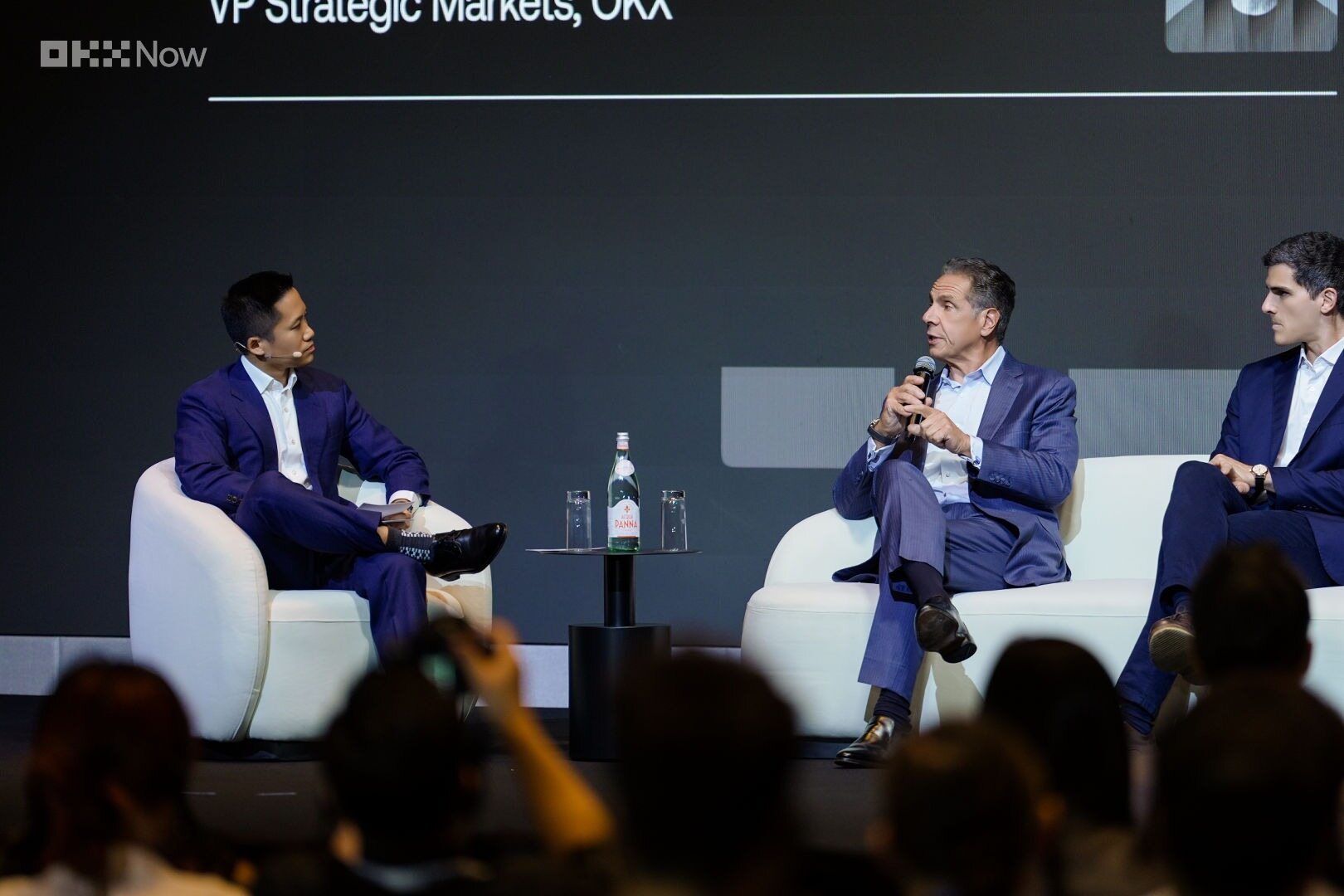
If traditional assets such as stocks can be traded for extended hours or even around the clock through tokenized securities exchanges in the future, then OKX will also become one of the financial infrastructures connecting traditional assets, on-chain assets, payment networks, and global users.
What Kind of Company Does OKX Want to Become?
So, returning to Star's statement that "the exchange is OKX's starting point, not its destination," what is truly worth paying attention to may not be how many more features OKX will launch, but rather the larger proposition it is trying to answer: when crypto technology moves beyond trading scenarios, can it become another possibility for global financial infrastructure?
From trading to payments, from Crypto to traditional assets, OKX is continuously expanding its financial services radius. But the larger the radius, the higher the demand for trust. This is why the conference did not only focus on technology and products, but placed compliance, localization, and collaboration with banks and traditional financial institutions on equal footing.
Beyond crypto does not mean abandoning crypto, but rather integrating crypto technology's programmability, always-on operation, and global settlement capabilities into a broader financial infrastructure. OKX's ambition is no longer to become a bigger exchange, but to become a truly global fintech platform—connecting traditional assets with on-chain assets, payment networks with global users, and building another possibility for financial infrastructure on a foundation of compliance and trust.
What is worth paying attention to at OKX NOW is not just which scenarios new products have entered, but also how the compliance, local services, and institutional collaboration that support the long-term operation of these products are taking shape together. And this, perhaps, is the true meaning of "beyond crypto."