






China's leading large model Kimi K3 quickly launches on BaiB.ai for one-stop experience of top global AI products


- Core Insight: The domestic large model Kimi K3 has officially launched and is among the first to offer API access through the BaiB.ai platform. Its comprehensive intelligence index ranks among the top three globally, with outstanding performance in agent task evaluations, marking a further narrowing of the gap between Chinese large models and global cutting-edge standards, and accelerating their entry into the global developer market.
- Key Elements:
- Kimi K3 scored 57 points in the Artificial Analysis comprehensive intelligence index, ranking among the top three globally, and achieved the top spot with a 53% score in the AutomationBench automated workflow evaluation.
- The model features a 1,048,576 Token context window, supporting text, image, and video inputs, focusing on long-range programming, complex knowledge work, and agent tool calling.
- Significant improvement in output efficiency: Token usage for completing nine comprehensive tests was reduced by approximately 21% compared to the previous generation Kimi K2.6, enhancing the execution efficiency of complex tasks.
- The BaiB.ai platform, through a unified API, account, and settlement system, enables developers to access Kimi K3 without separate registration and allows seamless switching with major domestic and international models.
- Accelerated global adoption of domestic large models: OpenRouter数据显示As of early June 2026, the Token usage share of Chinese models has surpassed that of US models, driven primarily by cost advantages and open strategies.
 Recently, Moon's Dark Side's latest flagship model, Kimi K3, hailed as a "beacon of domestic large language models" by the industry, officially launched on Bai.AI. Bai.AI became one of the first platforms to complete the Kimi K3 API integration, now available for developers to access.
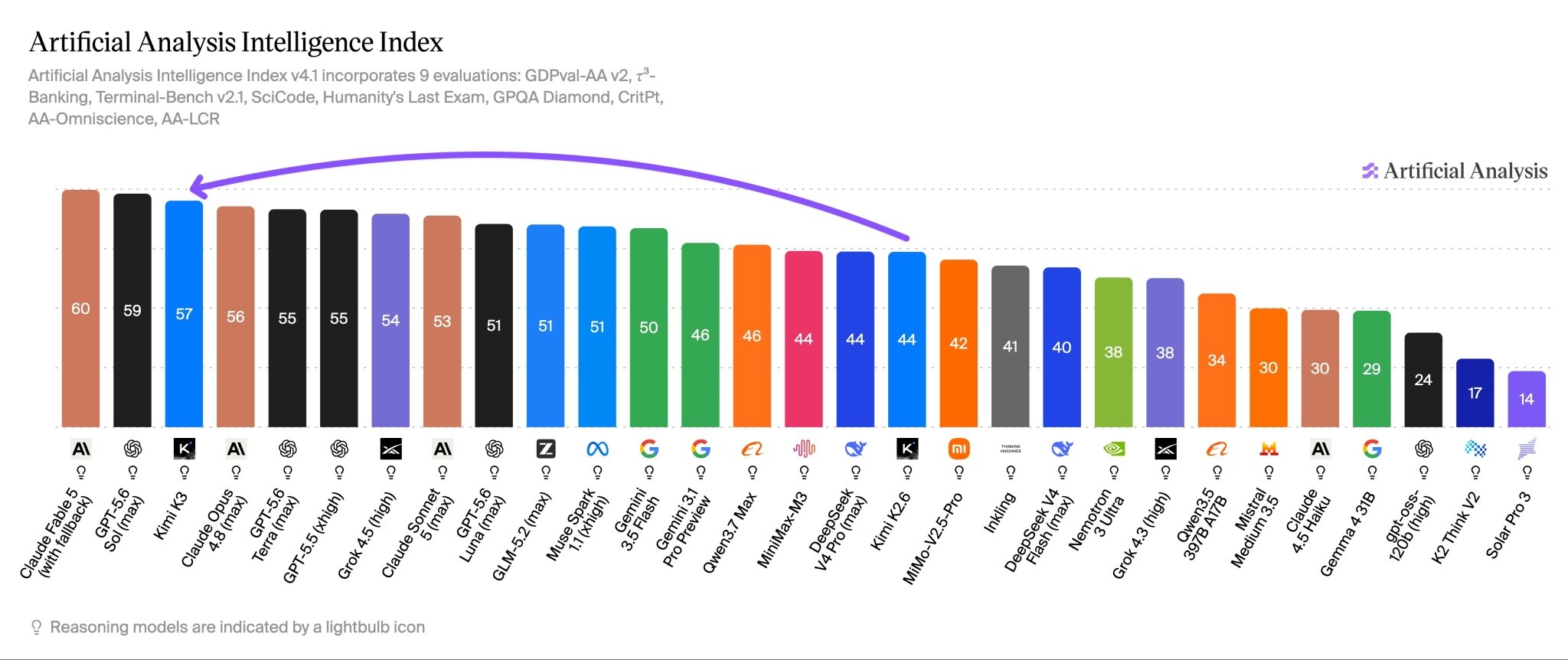
Since its release, Kimi K3 has quickly become a focal point of the global AI industry. Test results from Artificial Analysis, a globally renowned independent AI model evaluation platform, show that Kimi K3's comprehensive intelligence index ranks among the top three worldwide and has excelled in multiple Agent task evaluations. Elon Musk also commented "Impressive" under a related evaluation post. The Financial Times recently published an article focusing on Kimi K3, stating that it further narrows the gap between Chinese large language models and the global frontier.
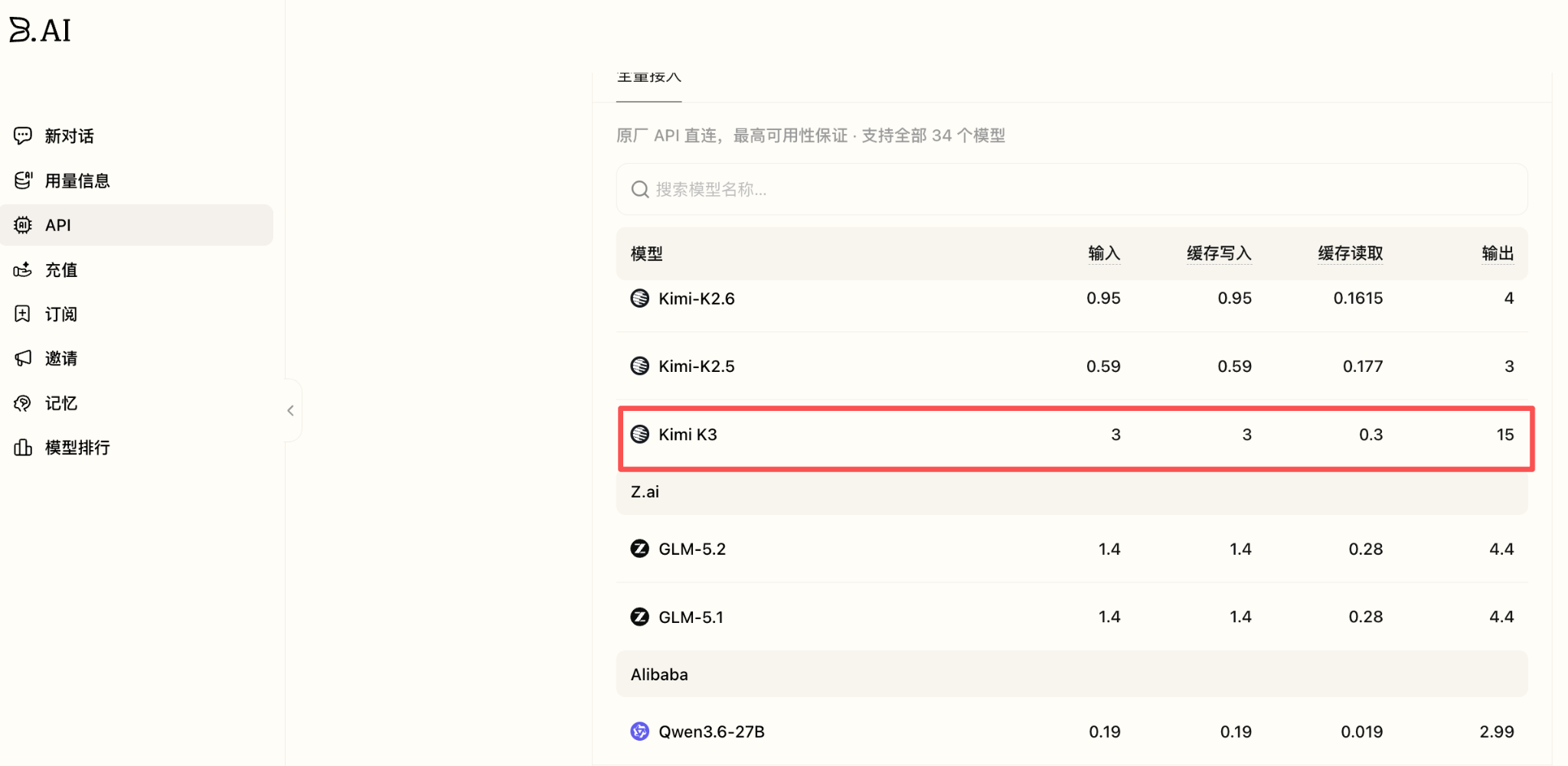
Through the unified Bai.AI API, existing developers can quickly call upon Kimi K3 without needing to register a separate account or maintain new keys, and can flexibly switch and combine it with other leading domestic and international models.
The Beacon of Domestic LLMs Launches Rapidly, Bai.AI Among First to Offer Access
As a representative domestic large language model that has recently garnered significant attention, Kimi K3 quickly entered the development and application testing phase after its launch. Following Bai.AI's initial integration, existing users can call the model directly through their current accounts and API systems without separate registration or interface reconfiguration, also facilitating unified management of keys and billing for different models.
Under Bai.AI's unified API framework, Kimi K3 can also be used alongside other leading domestic and international models. Development teams can flexibly switch models based on task complexity, response speed, and cost requirements, or assign different models to various stages within the same business process. Compared to integrating with each model individually, this approach is more convenient for conducting effectiveness tests, horizontal comparisons, and subsequent deployments.
According to Bai.AI's product documentation, Kimi K3 offers a 1,048,576 Token context window, supports text, image, and video inputs, and is primarily designed for long-context programming, complex knowledge work, and Agent tool invocation. Large code repositories, long documents, continuous research tasks, and workflows requiring multi-step execution and tool collaboration are its main application areas. Bai.AI's initial open access allows these capabilities to enter developers' practical testing and product development cycles more quickly.
Source: Artificial Analysis
In Artificial Analysis' tests, Kimi K3 achieved a comprehensive intelligence index score of 57; its GDPval-AA v2 Elo rating reached 1668, ranking first in the AutomationBench-AA automated workflow evaluation with a score of 53%. When completing nine comprehensive tests, Kimi K3's output token usage was approximately 21% lower than its predecessor, K2.6, improving task execution efficiency for complex tasks alongside capability enhancement.
These results indicate that market evaluations of large models are becoming more practical. Beyond leaderboard scores, developers are increasingly concerned with whether models can comprehend large amounts of material, invoke external tools, and successfully complete longer tasks. Kimi K3's performance in Agent and knowledge work evaluations is a key reason for its rapid traction post-launch.
Continuously Expanding the Domestic Model Matrix, Bai.AI Empowers Chinese LLMs to Go Global
Besides the Kimi series, Bai.AI currently supports several other domestic large models, including MiniMax, GLM, and DeepSeek, covering various application directions such as reasoning, programming, long context, and Agents. The addition of Kimi K3 further enriches the platform's domestic model service matrix, providing global developers with more directly callable and comparable options.
In recent years, the competitiveness of domestic large models is no longer limited to Chinese-language scenarios. Higher performance-to-price ratios, open-weight strategies, rapid iteration capabilities, and sustained investment in long-context and Agent tasks are attracting more overseas developers. A recent analysis by OpenRouter showed that in early June 2026, the token usage share of Chinese models on its platform surpassed that of US models, with domestic LLMs like DeepSeek being the main drivers of this growth.
The Financial Times also noted in a recent report that Chinese models, including DeepSeek and Moonshot AI, are being rapidly adopted by developers. Their openness and cost advantages are encouraging more global enterprises to try Chinese models. The sustained attention Kimi K3 has received from the international tech community post-launch also reflects that domestic large models are moving from domestic product competition into the global developer market.
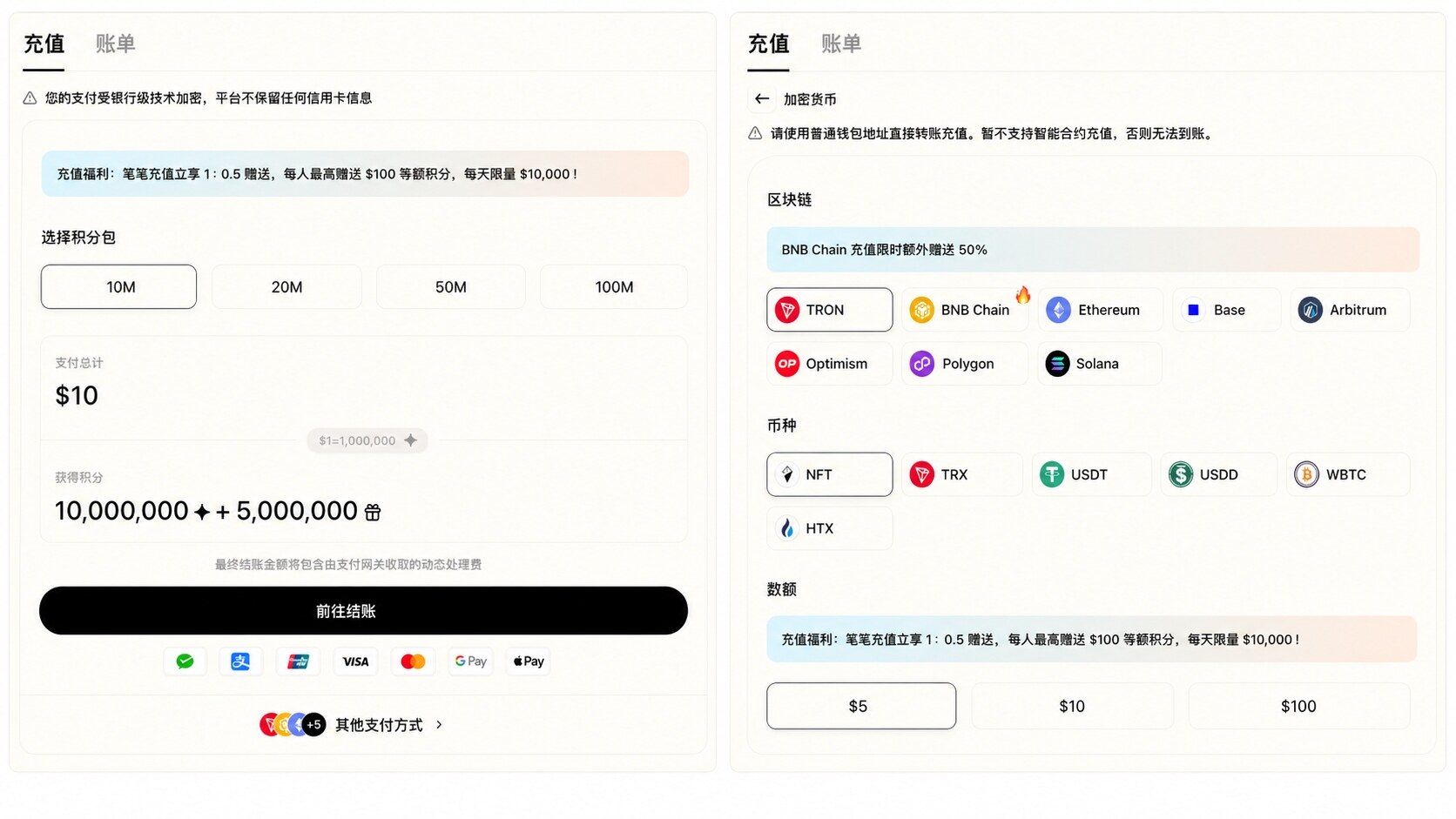
Bai.AI supports fiat and crypto asset payments
For domestic large models going global, the challenge is no longer just about model capability, but also whether global developers can easily find, access, and pay for them. Bai.AI provides a unified account, unified API, and unified settlement system. Developers do not need to repeatedly register, apply for keys, and manage balances across different model platforms; they can invoke Kimi K3, DeepSeek, GLM, MiniMax, and leading overseas models from a single entry point and flexibly switch based on different tasks. The platform also supports mainstream fiat currencies and multi-chain, multi-currency on-chain payments, offering developers from different countries and regions more flexible top-up and settlement options.
This clarifies Bai.AI's role in the overseas expansion of Chinese LLMs: connecting the rapidly iterating Chinese models on one end with global developers and real application needs on the other. Following the initial launch of Kimi K3, developers can test, compare, and invoke it directly on Bai.AI without having to build a separate system for integration and payment. As more overseas enterprises begin adopting more powerful and cost-competitive Chinese models, the ease of access, smoothness of payments, and stability of services will directly impact whether domestic large models can truly open up the global market.


