Gate Institutional Weekly Report: Crypto Market Cap Evaporates Over $300 Billion in a Week, Gate Institutional Spot Trading Volume Surges 92.16%


- Core View: Last week, the macro environment quickly shifted from "betting on easing" to "prolonged high interest rates" due to strong non-farm payroll data, triggering a significant correction in the crypto market. Bitcoin fell 15% and Ethereum dropped 22% weekly, with total market capitalization evaporating over $300 billion. The derivatives market showed a concentrated liquidation of leveraged long positions and a surge in risk-off demand.
- Key Factors:
- Macro Shock: May non-farm payrolls (172,000) significantly exceeded expectations, fueling expectations for a Federal Reserve rate hike. The S&P 500 slumped 2%, serving as the core external driver for the crypto market correction.
- ETF Outflows: Bitcoin spot ETFs saw net outflows for 13 consecutive days, with AUM falling over 22% from the cycle's start; Ethereum ETFs experienced even heavier outflows, recording net inflows only after 17 consecutive days of outflows.
- Derivatives Risk Signals: BTC price fell from $73K to $62K, with open interest (OI) declining over 15%; the 25D Skew fell to extremely negative values, and DVOL briefly rose to 52-54, indicating market risk-off demand reached the highest level of the current cycle.
- On-chain Trading & Ecosystem: DEX trading warmed up, with capital flowing to mainstream protocols; Aave's lending scale continued to decline, while new demand concentrated on emerging ecosystems like MegaETH; Hyperliquid's derivatives revenue grew strongly.
- Institutional Dynamics: Gate Institutional spot trading volume grew 92.16% week-over-week, CrossEx trading volume increased by 47.1%, and the institutional business's coverage of TradFi assets continued to expand.
Summary
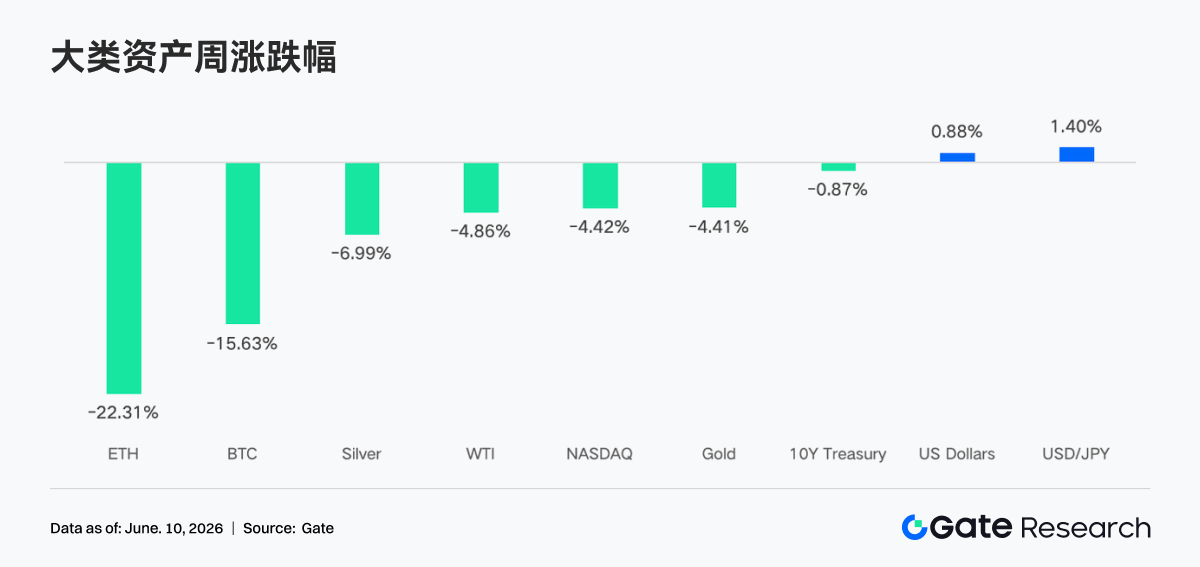
• Last week, the global macro market experienced a dramatic shift from "warming sentiment" to "rapid reversal." Bitcoin fell approximately 15% for the week, Ethereum dropped about 22%, and altcoins saw even deeper declines, with the total crypto market capitalization evaporating over $300 billion in a single week.
• Trading volume on TradFi Perp DEXs remained high, with the proportion of stock and ETF asset trading continuously increasing; the number of assets on Gate's US stock trading platform expanded rapidly since its launch, indicating that on-chain trading is accelerating its extension into traditional financial markets.
• DEX trading saw a clear recovery, with volumes increasing on major protocols like Uniswap, PancakeSwap, and Aerodrome; the total stablecoin supply experienced a slight decline; the LST sector broadly retreated, lending scale on Aave continued to decrease, and new demand primarily flowed to emerging ecosystems like MegaETH.
• BTC fell from around $73K to the vicinity of $62K, with OI decreasing by over 15%; the 25D Skew dropped to extremely negative values, and DVOL briefly rose to 52-54, indicating a surge in market demand for避险, with short-term put protection demand reaching cyclical highs.
• This week, the market will focus on macro data such as the May CPI; events like ETH Conf 2026, Crypto Convergence 2026, and the ETH Global New York Hackathon are expected to boost ecosystem attention.
• Gate's institutional spot trading volume increased by 92.16% week-over-week; CrossEx trading volume grew by 47.1% week-over-week. The Gate Institutional Circle Amsterdam event was successfully held, attracting over 100 global market makers, asset managers, and other clients.
1. Market Focus
Last week, the global macro market underwent a dramatic shift from "warming sentiment" to "rapid reversal." At the beginning of the week, there were signs of a phased de-escalation in the Middle East geopolitical situation, with US-Iran negotiations perceived by external observers as nearing the final stage. Coupled with the continued strength of AI-related tech stocks, major US stock indices rallied, with the S&P 500 hitting an all-time high during the week. Meanwhile, although Brent crude oil prices rose slightly due to geopolitical risk premiums, they failed to break through the psychological threshold of $100 per barrel, and inflation expectations remained relatively controllable, creating an overall optimistic market sentiment. Entering the latter half of the week, Iran's official stance hardened, causing new divergence in geopolitical signals. The market experienced brief pressure, but sentiment remained manageable.
The May non-farm payroll report released on Friday became the ultimate macro catalyst for the week. The economy added 172,000 new non-farm jobs, nearly double the market expectation of 88,000, and the previous month's figure was revised upwards. The unemployment rate held steady at 4.3%, indicating full employment. These strong figures completely shattered market expectations for a near-term Fed rate cut. Interest rate futures markets immediately repriced, with the implied probability of a 25-75 basis point rate hike before year-end soaring to approximately 72%. The S&P 500 plunged about 2% on the day, the Nasdaq fell by 3.4%, and the S&P implied volatility index soared 28% in a single day, marking its largest one-day drop in nearly 8 months. The 10-year US Treasury yield broke through from around 4.44% at the previous weekend to above 4.55%, returning to the critical 4.50% level – historically, this level often marks a valuation inflection point for high-duration tech and AI assets. In energy, Iran announced the end of its military operations against Israel over the weekend, causing oil prices to fall. Futures markets rebounded on Monday, with the geopolitical risk premium temporarily narrowing. Overall, this week's macro narrative shifted rapidly from "betting on easing" to "higher-for-longer interest rates," serving as the core external driver for the significant synchronized correction in the crypto market.
In the crypto market, Bitcoin fell approximately 15% for the week, Ethereum dropped about 22%, and altcoins experienced even deeper declines. The total crypto market cap evaporated over $300 billion in a single week. The Fear and Greed Index briefly dipped into the "extreme fear" zone, reflecting a rapid cooling of overall sentiment alongside macro risk appetite.
2. Liquidity Analysis
2.1 BTC and ETH ETFs Continue Net Outflow Pattern
This week, Bitcoin spot ETFs maintained an overall net outflow pattern, but a potential historical inflection point appeared on June 5th. Since the April CPI data release on May 12th, total net redemptions from BTC ETFs amounted to approximately $54 billion, including a 13-consecutive-day outflow streak, the longest since the product's launch. Under this pressure, the total assets under management (AUM) for all Bitcoin ETFs plummeted from approximately $104.29T at the start of the outflow cycle to around $80.4T, a decline of over 22%; total BTC holdings dropped to about 1,277,000 coins, roughly 7.2% lower than the historical peak in October 2025, and only slightly above the cycle low of about 1,274,000 coins on February 23rd. On the price front, BTC oscillated violently within the $59,000-$64,000 range this week, concurrently suppressing AUM and holdings.
From a broader perspective, the core driver of this round of BTC ETF net outflows is institutional reassessment of the Fed's policy path following the April inflation data release, rather than a fundamental change in sentiment towards Bitcoin itself. BlackRock's IBIT still boasts an AUM of approximately $67T, firmly holding the title of the world's largest crypto ETF, with major institutions showing clearer signs of "buying the dip." A true trend reversal in inflows may have to wait until the May CPI data is released on June 11th and the market forms a new consensus on the Fed's path for the second half of the year.
The liquidity situation for Ethereum spot ETFs was more severe than for Bitcoin this week: after 17 consecutive trading days of net outflows, only a meager net inflow was recorded on June 5th, marking the end of this prolonged outflow period. Since its listing in 2024, the cumulative net inflow into ETH ETF product categories is approximately $11.21T. However, sustained redemptions this year have pulled the overall AUM down by about $2T from its year-to-date peak to roughly $9.78T, representing about 4.57% of Ethereum's circulating market cap. Compared to Bitcoin ETFs' greater market penetration over the same period, Ethereum ETFs still lag behind their older sibling in institutional appeal. The sharper price decline further accelerated the AUM shrinkage rate beyond that of Bitcoin.
2.2 TradFi Liquidity
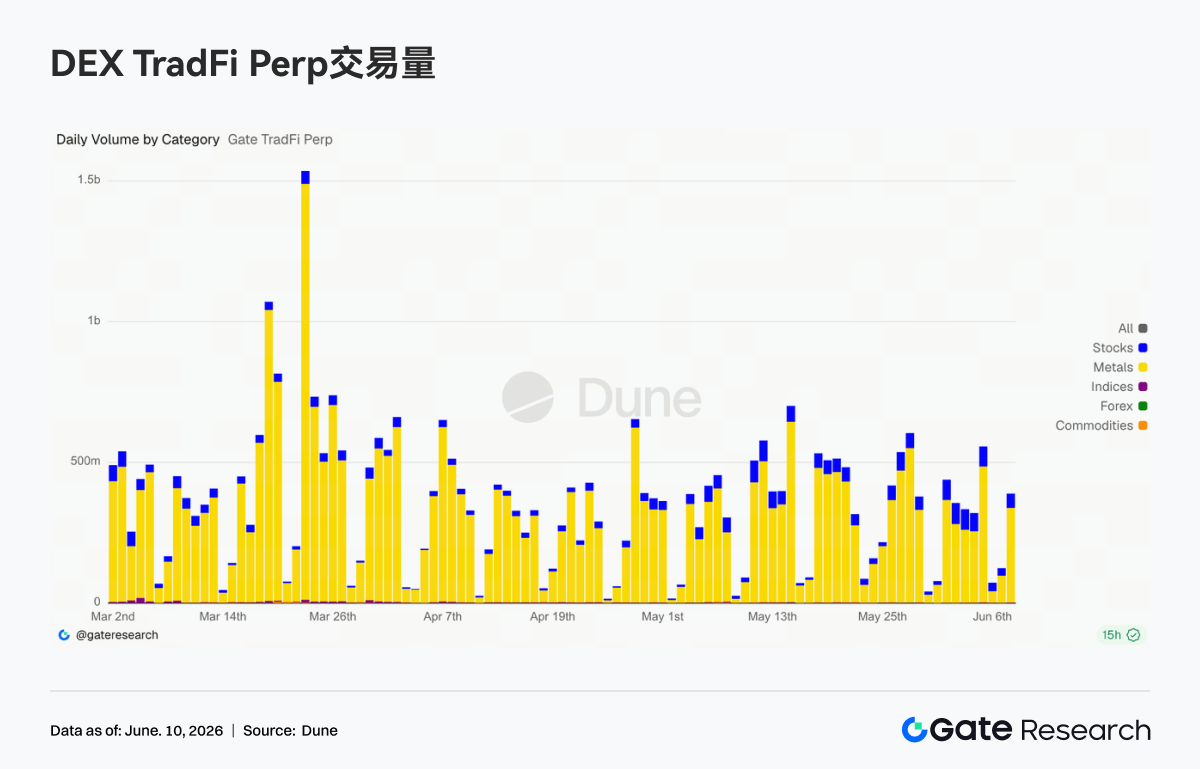
• TradFi Perp DEX: In the past week, overall trading volume in the TradFi Perp DEX market remained at high levels but has retreated from the peak seen in March. By asset class, commodities remain the dominant sector, accounting for the majority of volume, with precious metals like gold continuously attracting capital, reflecting strong market preference for safe-haven assets amid macro uncertainty. The equity segment showed steady growth, with its share continuously increasing, indicating growing demand from on-chain users for traditional equity assets like US stocks. Meanwhile, Indices/ETFs became the second-largest trading category, maintaining high trading volumes and providing users with more convenient index allocation tools.
• Gate TradFi Perp Volume: Last week, Gate TradFi Perp trading volume remained generally active. Influenced by gold price volatility and increased macro safe-haven demand, the precious metals sector mostly traded in the $300 million to $600 million range. Concurrently, equity contract trading volume further increased, with its share expanding significantly compared to April, showing users' continued growing participation in US stocks and related assets.
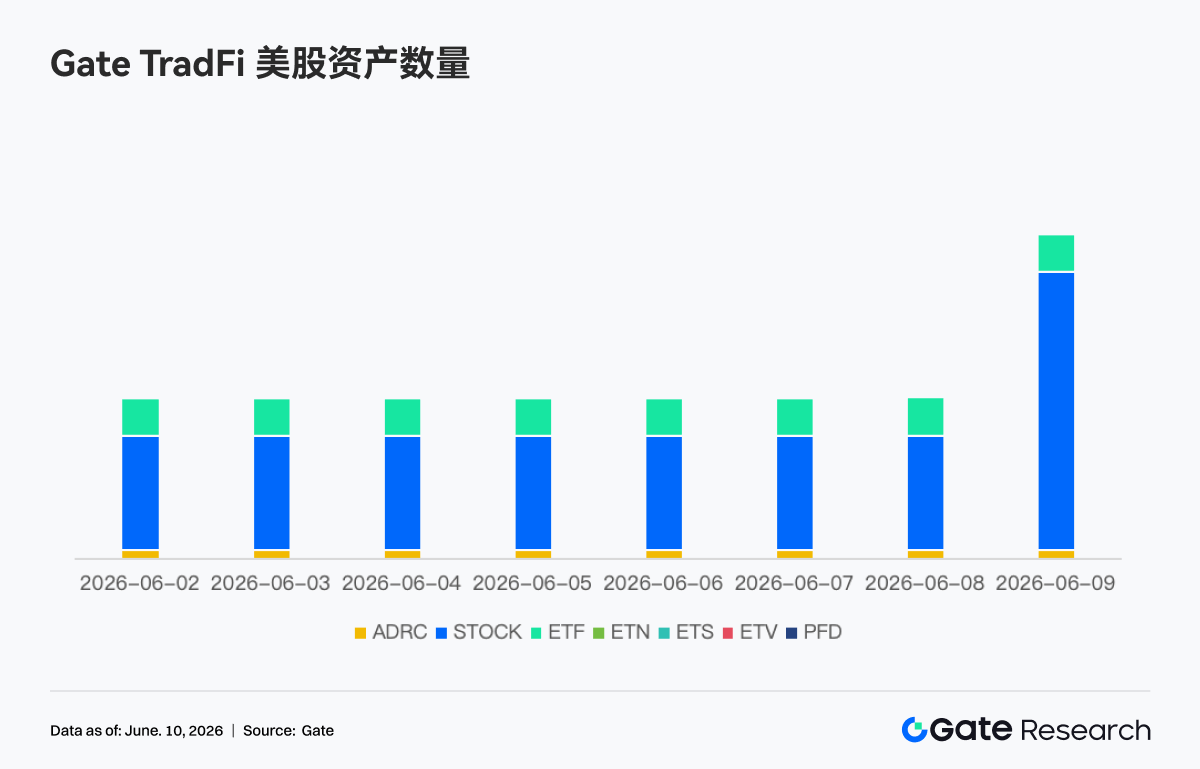
• Gate TradFi US Stock Quantity: Gate officially launched its US stock trading service on June 2nd. Leveraging advantages such as real underlying asset backing, direct trading with USDT, no overnight holding fees, and high liquidity, the service has continuously attracted market attention and achieved steady volume growth since its launch. Currently, Gate supports 7 major asset classes: ADRC, Stocks, ETFs, ETNs, ETS, ETVs, and PFDs, and is continuously expanding product coverage. In terms of asset count, the total number of tradable symbols has doubled since launch. Notably, the stock category has seen the most significant growth, with its share of all assets rising from about 70% at launch to 85%, further enriching user investment options. Going forward, Gate will continue to facilitate access to more markets, integrate global liquidity, and build cross-market trading capabilities, continuously expanding diversified asset coverage and further strengthening its strategic positioning as a global asset trading and market access platform.
• TradFi Order Book Depth: We selected XAUT, the highest volume TradFi asset, to analyze its order book depth (Delta). Observing the changes in XAUT's order book liquidity over the past week, the market overall showed a characteristic where sell-side depth was dominant, and buy-side support was occasionally strengthened but lacked persistence. Between May 28th and 29th, the order book saw a positive liquidity increase exceeding $1 million, pushing XAUT's price rapidly from around $4,380 to above $4,500, indicating active buying to supplement depth and support upward price movement. However, starting May 30th, the order book consistently showed negative liquidity changes. Particularly around June 2nd, sell-side depth increased by over $3 million within a single hour, representing the largest selling pressure area of this cycle, after which XAUT's price continuously retreated from around $4,500. Although there were several instances of buy-side liquidity replenishment exceeding $1 million after June 6th, the price rebound was limited, suggesting that new buying was more about absorbing selling pressure rather than driving a trend reversal. As of June 9th, the order book Delta remained predominantly negative, indicating that the pending order structure still leans bearish. In the short term, XAUT may maintain a weak oscillating pattern. Future attention should be on whether buy-side depth can recover and re-dominate the order book structure.
3. On-Chain Data Insights
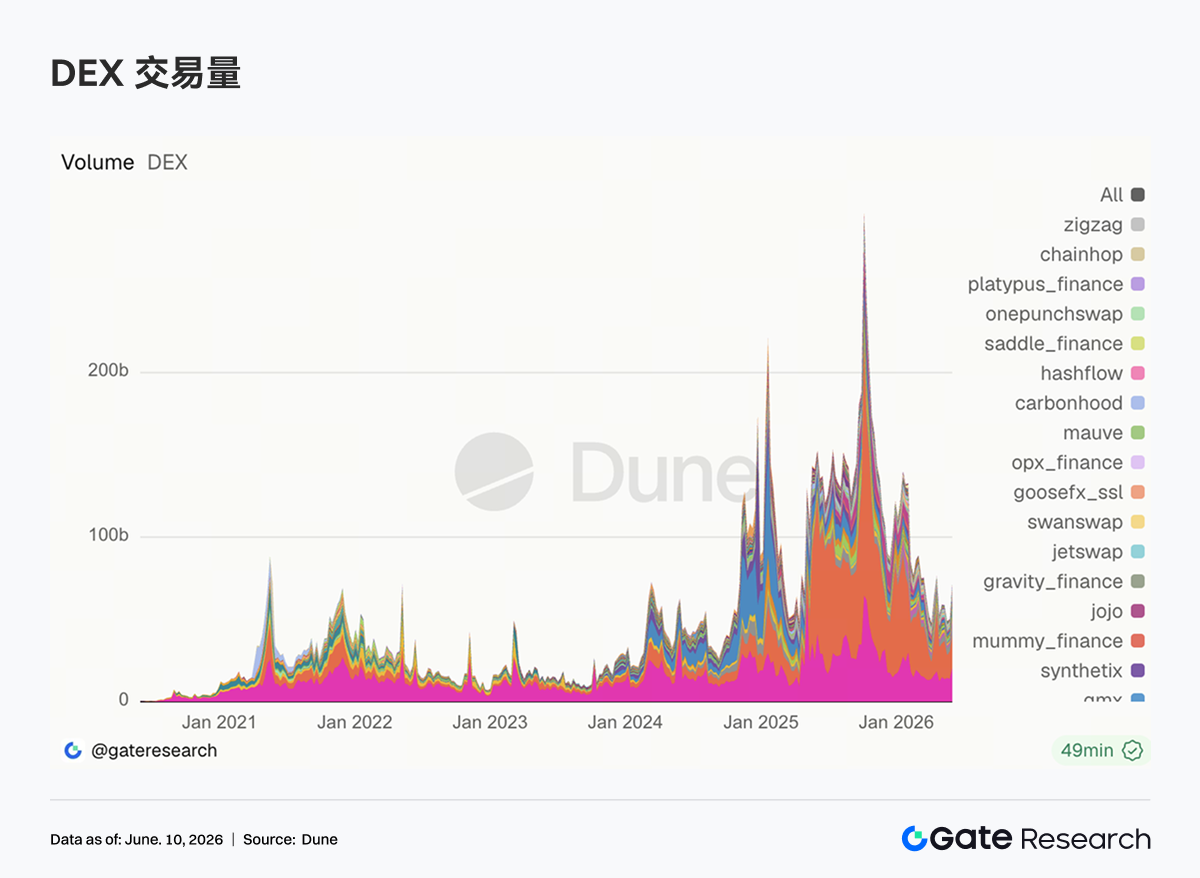
3.1 DEX Recovery, Capital Returns to Mainstream Trading Venues
DEX trading has noticeably recovered. Uniswap and PancakeSwap were the primary sources of volume growth. Platforms like Aerodrome, Bisonfi, Curve, and Fluid also saw synchronized volume increases, indicating capital is flowing back into mainstream liquidity pools and core trading scenarios. Within the Solana ecosystem, volumes on Meteora, Raydium, and Whirlpool saw some repair, but growth related to PumpSwap and pump.fun links was relatively limited, with Meme trading activity continuing to weaken.
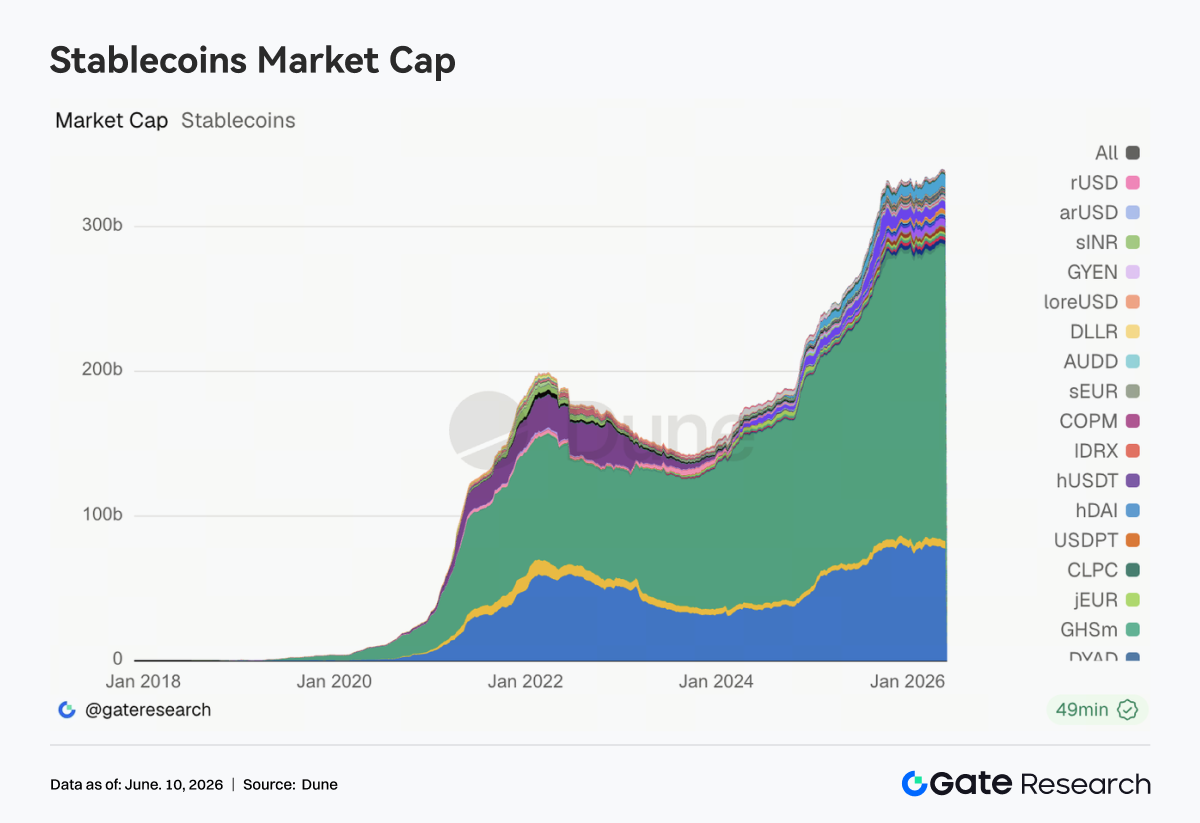
3.2 Stablecoin Supply Contracts Slightly, Competition Shifts to Payments and Cross-Chain Infrastructure
The total stablecoin supply saw a slight overall contraction. The market caps of major stablecoins like USDT, USDC, USDS, DAI, and PYUSD mostly declined, while GHO remained relatively stable. Compared to short-term market cap changes, the competitive focus in the stablecoin sector is shifting towards payment networks, cross-chain liquidity, and regulatory compliance capabilities. Discussions in the US regarding stablecoin yield mechanisms and market structure continue to heat up, with clear divergences between the banking system and crypto institutions on the development path for yield-bearing stablecoins. Meanwhile, Circle continues to advance CCTP V2, multi-chain settlement support, and developer ecosystem building, further solidifying USDC's infrastructure role in cross-chain transfers, transaction collateral, and institutional settlement scenarios. Competition in the stablecoin industry is gradually shifting from issuance scale expansion to building capabilities in the payment and settlement layers.
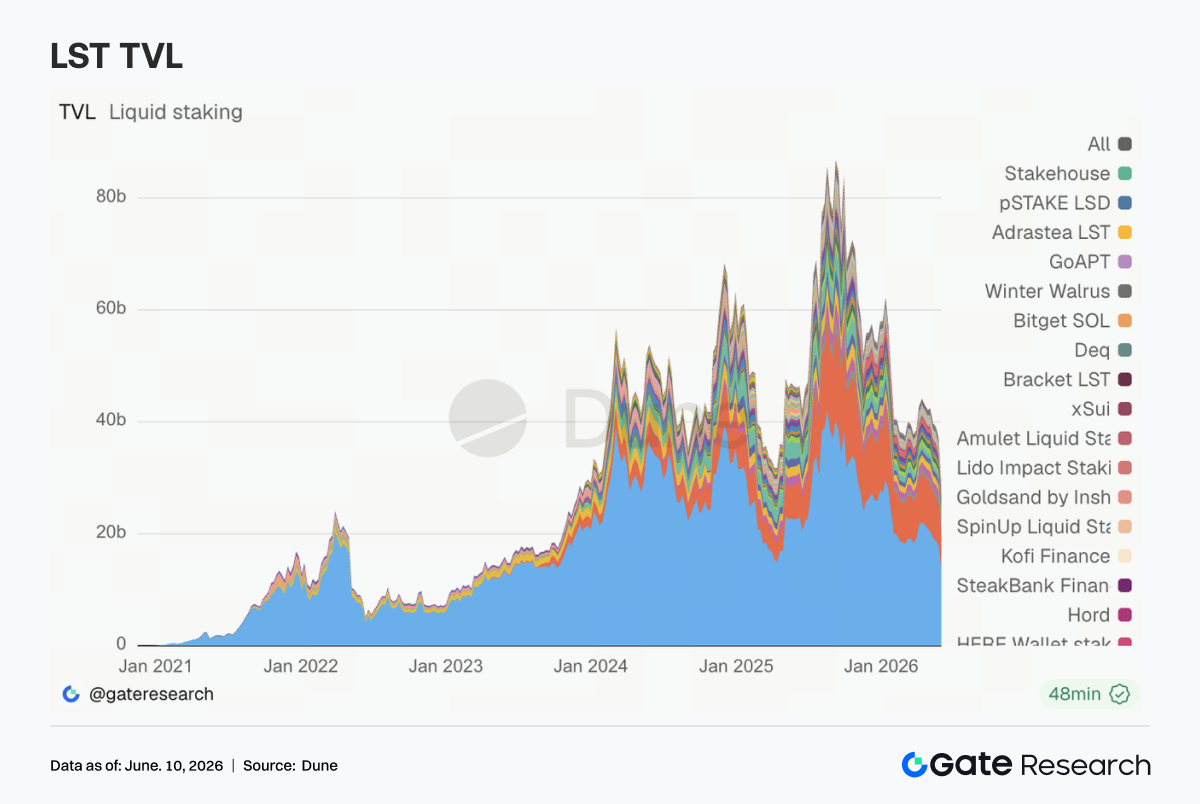
3.3 LST Sector Broadly Declines, Capital Continues Reducing Yield Asset Exposure
The LST sector broadly faced headwinds. Protocols within the ETH ecosystem like Lido, Rocket Pool, and StakeWise all saw declines, while SOL ecosystem protocols like Sanctum, Jito, and Jupiter Staked SOL also weakened synchronously. Unlike previous instances where capital rotated between different staking protocols, this week saw a sector-wide reduction in positions. Asset price adjustments, ETF outflows, and decreased risk appetite for yield-bearing assets collectively drove capital to reduce exposure to staked assets. Following the rsETH/KelpDAO incident, market risk assessment for wrapped staking assets has become noticeably more conservative. Institutional investors are paying increasing attention to cross-chain security, redemption mechanisms, and underlying asset transparency. Discussions within Lido recently regarding using Chainlink CCIP for wstETH cross-chain expansion also reflect this sector's gradual shift towards prioritizing security and liquidity management capabilities.
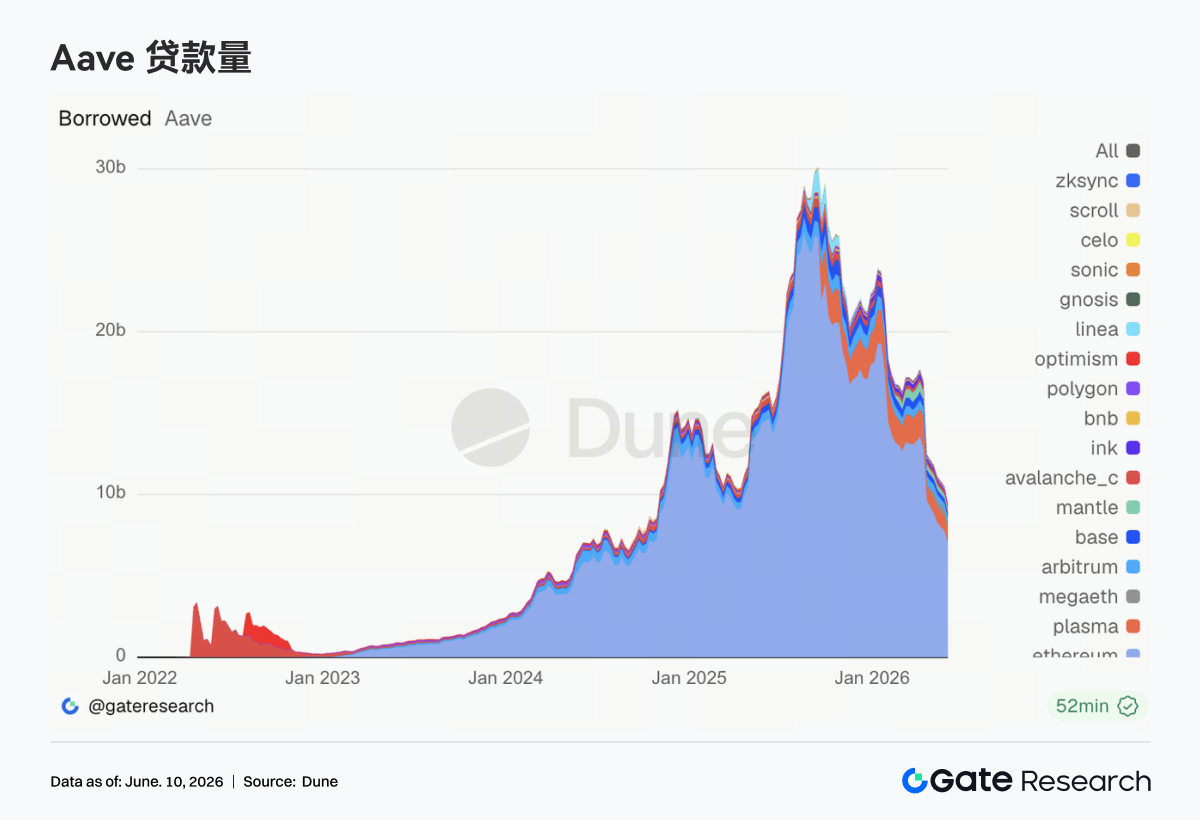
3.4 Aave Lending Scale Continues to Decline, New Demand Concentrates in Emerging Markets
Aave's total lending balance continued its downward trend. Major markets including Ethereum Main, Plasma, Arbitrum, Base, and Mantle all experienced declines compared to the previous week. Ethereum remains the largest lending market but was also a primary source of lending contraction this week. In contrast, MegaETH stood out as one of the few markets maintaining relative resilience, with new lending demand concentrating in emerging ecosystems offering stronger incentives and faster growth. However, this incremental growth was insufficient to offset the overall deleveraging impact in the primary markets. Overall, the risk repair process following the rsETH/KelpDAO event is still ongoing. Users have become more cautious in collateral selection, leverage levels, and cross-chain allocation. On the governance front, the Aave community continues progressing discussions around the Emergency Guardian, USDC liquidity buffer mechanisms, and V4 architecture upgrades, with risk management capability becoming a key component of protocol competitiveness.
3.5 Aave Core Lending Rates Stabilize, Liquidity Pressure Eases Significantly
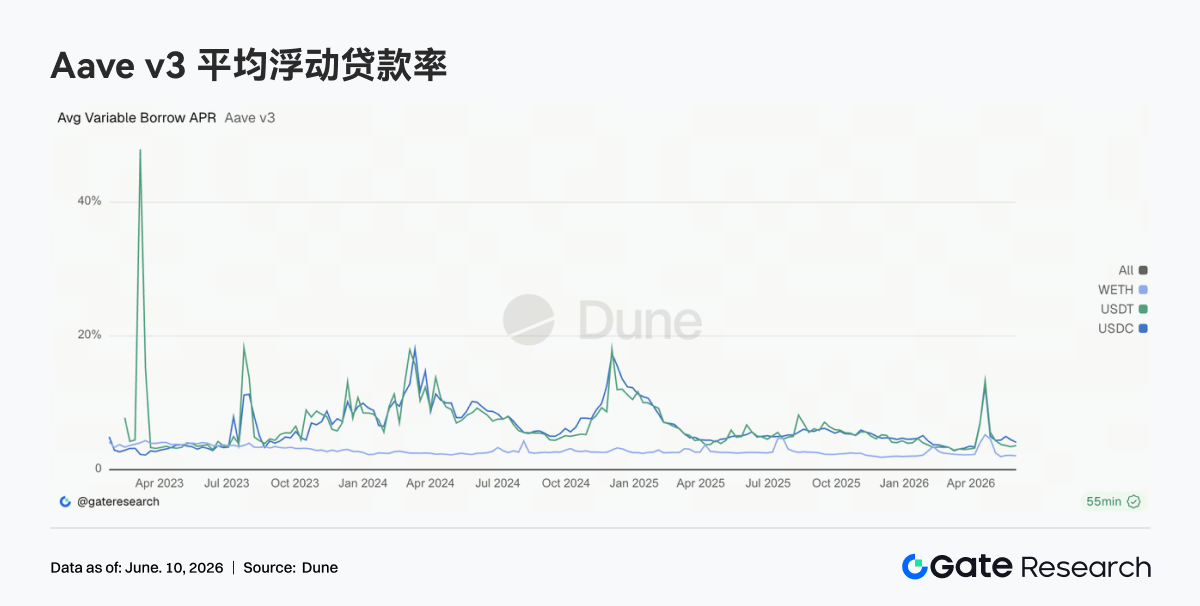
Lending rates for Aave's core assets remained largely stable. USDC borrowing rates have fallen from earlier highs, WETH continues to trade at low levels, and USDT saw only minor fluctuations. Compared to the liquidity shock period in April, the market environment has essentially normalized. Although USDC experienced brief rate increases during specific periods of high utilization, the overall volatility has significantly converged. Recent discussions within the Aave community regarding USDC liquidity buffers and interest rate model optimization also contribute to reducing severe cost fluctuations during extreme events. The current rate structure suggests the market prefers using stablecoins for short-term capital turnover rather than re-establishing large-scale directional leverage.
3.6 Hyperliquid Drives Revenue Growth, Derivatives Infrastructure Benefits
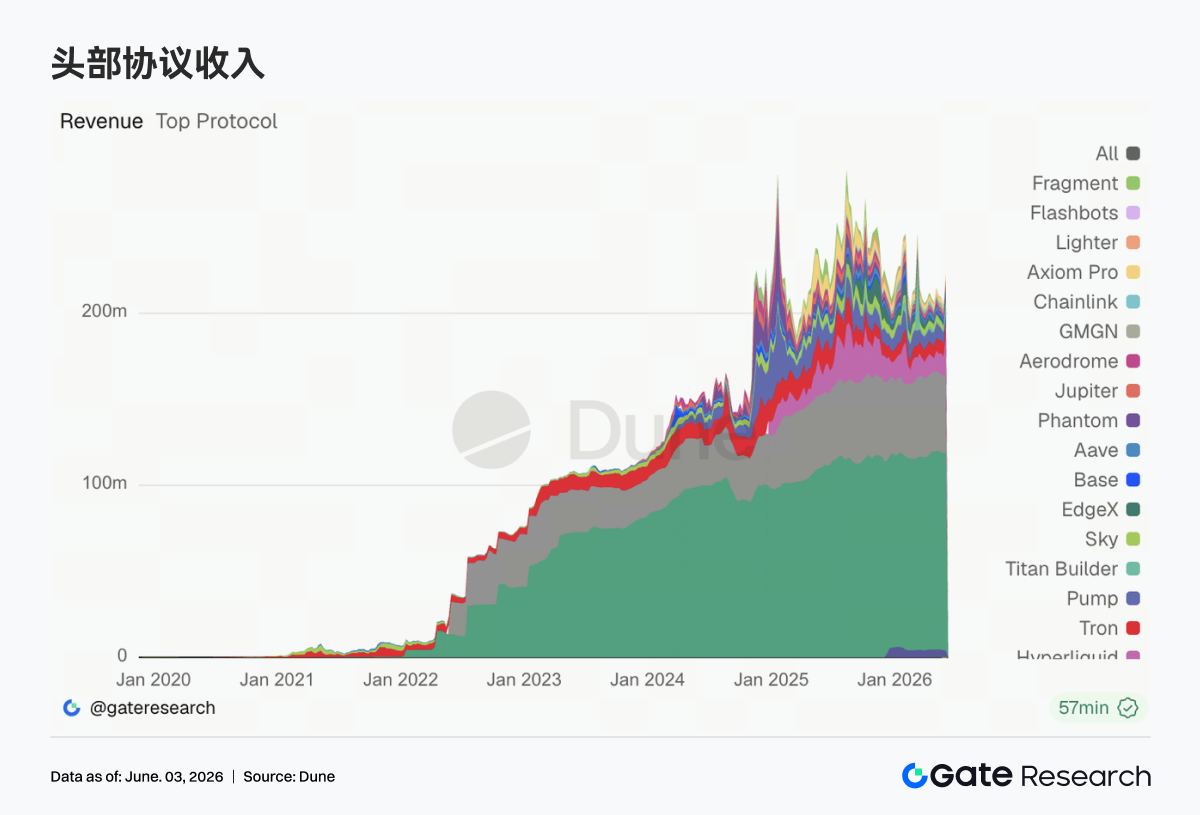
The biggest highlight in protocol revenue this week came from Hyperliquid. Revenue from its Perps business grew significantly, alongside increases in revenue from its spot order book and L1 operations, making it one of the strongest protocol revenue growers this week. This trend aligns closely with market attention. HYPE's market cap performance continued to strengthen in early June, with market discussion noticeably heating up around Hyperliquid's increasing global perpetual contract market share. Concurrently, new products like stock index perpetuals and pre-IPO perpetuals are gradually attracting trading activity, with capital beginning to expand from traditional crypto asset trading to a broader range of on-chain derivatives markets. Furthermore, Tether and Circle maintained stable revenue contributions but showed limited growth elasticity; Aave V3 revenue showed some repair, more from spread income after risk premiums normalized; platforms reliant on Meme trading activity like Pump and Axiom continued to decline. Looking at the revenue structure, long-tail speculative assets are being neglected by capital, while core trading infrastructure possessing matching, clearing, and settlement capabilities is gaining favor. Hyperliquid's sustained growth further strengthens the capital attractiveness of derivatives protocols in the current market cycle.
4. Derivatives Tracking
4.1 BTC Funding Rate Stays Positive While Price Falls Sharply, Leveraged Longs Concentratedly Wiped Out
From June 1st to June 7th, 2026, the BTC price experienced a significant decline, rapidly falling from around $73K at the start of the week to approximately $62K before only slightly recovering to near $63K over the weekend. Meanwhile, the funding rate remained positive throughout the week