"Lobster" on the Table: From Geek's Toy to a Feast for All


- Core Viewpoint: The article points out that the AI industry is rapidly evolving from the early stage of "raising lobsters" (referring to deploying and using complex large models) towards building mature product forms like "AI assistants/employees" that are barrier-free and cater to the masses. This marks the beginning of AI technology truly integrating into daily life and will trigger a new round of competition among upstream and downstream manufacturers.
- Key Elements:
- Emergence of New Trends: Perplexity's Personal Computer and Base44's Superagents showcase new forms of AI assistants. The former is a localized, cross-application operation assistant, while the latter connects to various application accounts via a browser to provide services.
- Market Validation and Pain Points: While "lobster" has brought substantial revenue to upstream large model providers (e.g., Moonshot AI, Minimax seeing surging valuations and revenue), its high barrier to entry hinders mass adoption, spurring demand for more user-friendly products.
- Domestic Manufacturers Following Suit: Major domestic companies have recognized the trend and are integrating AI assistant capabilities into high-frequency application ecosystems like WeChat and Lark, lowering the barrier for user adoption.
- Narrative Upgrade: The industry's focus is shifting from "how to own AI" to "how to use AI." The user experience is upgrading from "asking AI when needed" to "giving tasks to AI to do," marking AI's transition from a tool to an employee role.
- Future Outlook: AI assistants will permeate various devices such as cars and smart homes, becoming part of daily life. The standard for technological maturity lies in being used habitually and taken for granted by the general public.
"What truly brought crabs to the tables of thousands of households wasn't the first person to eat a crab, but the chefs dedicated to making crabs taste better."
This phrase perfectly describes the rapid development sparked by OpenClaw. The novel AI species "Lobster" created an entirely new narrative of AI assistants/employees, elevating people's expectations and outlook for AI to a new level. However, due to its explosive popularity, a significant portion of those newly exposed to "Lobster" lack a deep understanding of it, leading to news like this:
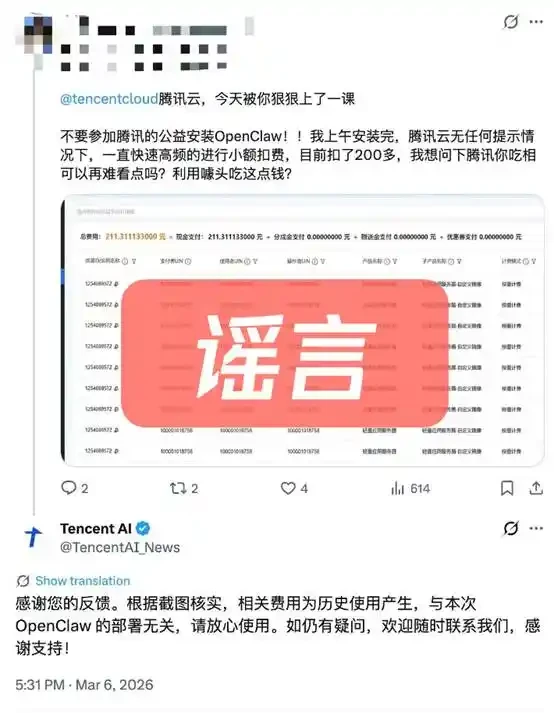
Yesterday, two new developments that garnered widespread attention—Perplexity's Personal Computer and Base44's Superagents—revealed a new trend rapidly brewing: the narrative is swiftly evolving from "Lobster" to "AI Assistant." People may soon stop obsessing over "raising lobsters," as the wave of mass-market, barrier-free AI assistants is arriving faster than we imagined.
Personal Computer
According to Perplexity, Personal Computer is an AI assistant that combines Perplexity Computer and runs locally 24/7 on a Mac Mini. It can access local files, apps, and sessions on the Mac Mini, enabling a mode where a user gives a command on the device, and the AI completes the task by working across files and apps, utilizing all local data.
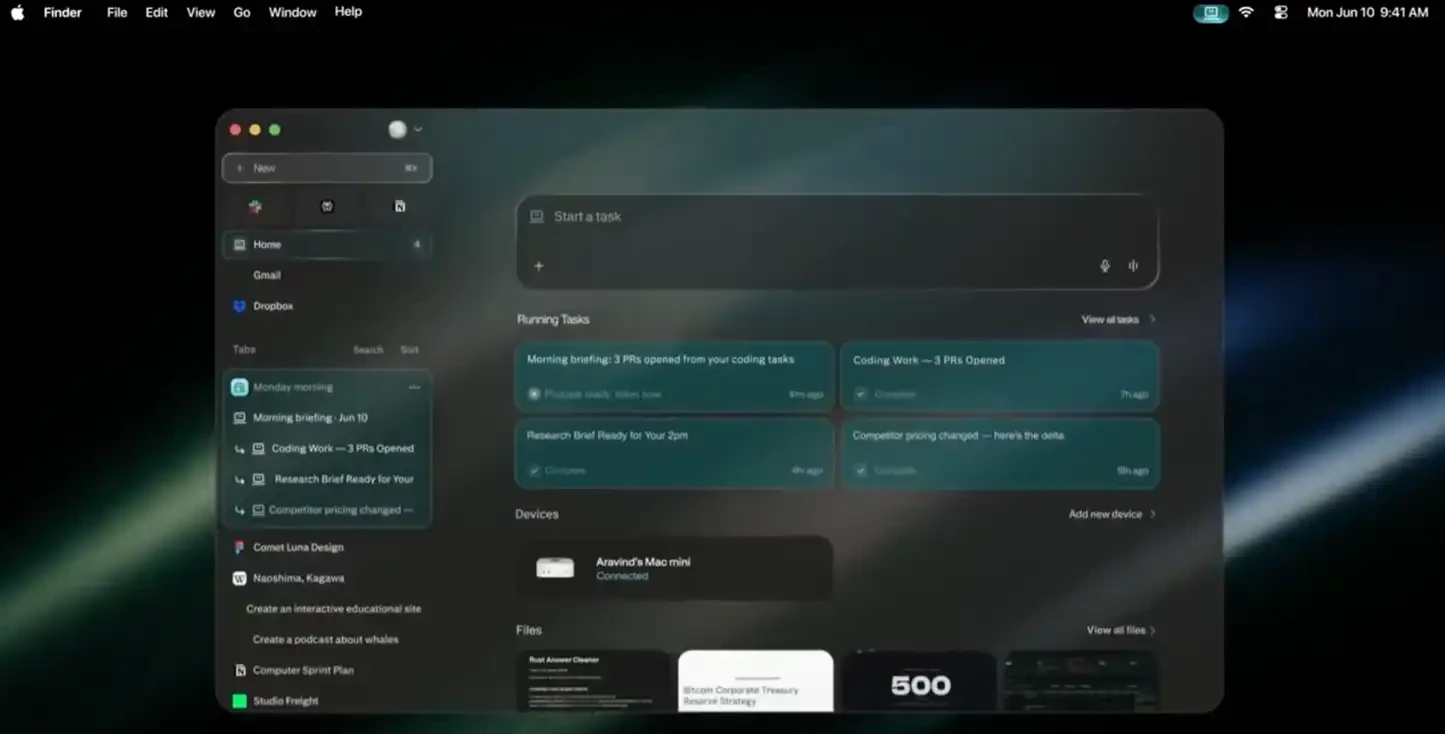
In terms of security, each sensitive operation requires user approval, all actions are logged, and there is a forced shutdown mechanism. Users can also control the Personal Computer from any device at any time, much like a real-life boss directing employees' work anytime, anywhere.
Perplexity previously focused on AI-driven search and research tools. It doesn't have its own large language model (LLM); instead, it combines search engines with AI to generate responses, routing search queries to multiple models for in-depth research.
As a downstream application, while "Lobster" brought a flood of revenue to upstream model providers, Perplexity—an AI search unicorn with a valuation exceeding $20 billion and 2025 annual revenue estimated by multiple sources to be over $100 million—found it difficult to find its angle.
However, they astutely identified the pain points of "raising lobsters" and took the lead in the "using lobsters" track with Personal Computer, which presents a more mature product form.
Superagents
If using Personal Computer requires spending money on a Mac Mini, then Base44's Superagents offers a cheaper alternative—no need to spend "Apple money" for local service usage; achieve the same effect directly through a browser.
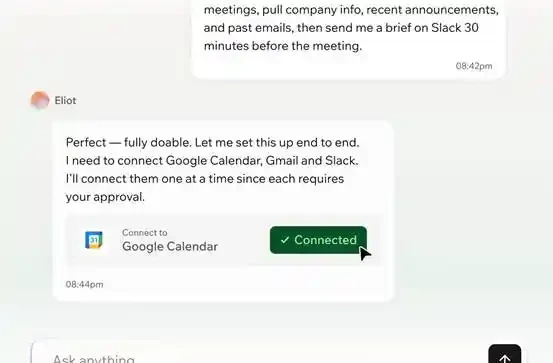
By using Superagents through a browser and connecting the app accounts that need processing (such as the Google suite, WhatsApp, Telegram, Slack, etc.), Superagents can autonomously work according to the user's task schedule.
Using AI assistants directly via web pages and apps is undoubtedly a major future trend.
Base44's annual recurring revenue (ARR) has already exceeded $100 million, yet the company was acquired by Wix for $80 million last June. Such a masterstroke seems hardly surprising or unexpected in this AI era.
Domestic Tech Giants Have Also Taken Action
Before Perplexity and Base44, "Lobster" had already ushered in a "golden age" for upstream LLM providers:
- Moonshot AI (Kimi) saw cumulative revenue over 20 days exceed its total revenue for all of 2025. Its post-investment valuation, which was $4.3 billion after completing a $500 million Series C round on December 31, 2025, broke through $10 billion with a new round of over $700 million in funding.
- Minimax had total revenue of approximately $79 million for 2025, with annual losses as high as $1.872 billion. However, its ARR for February this year alone broke through $150 million, with monthly subscriptions surpassing its total revenue for all of 2025. Since its Hong Kong stock market listing in January, its stock price has more than tripled, and its market cap has surpassed that of Baidu.
- Zhipu AI also listed on the Hong Kong stock market in January. Similarly in a money-burning, loss-making state, its stock price at its peak was up 5 times compared to its listing price, and its market cap once surpassed Baidu's as well.
However, the barriers to deployment, usage, and maintenance of "Lobster" itself significantly hinder the general public from converting their novelty and enthusiasm for "raising lobsters" into practical use. It's not easy to become a mature, mass-market product form. Just like Google's Nexus phones had the most native Android system, but most people aren't ROM flashing enthusiasts; they'd simply find native Android too primitive compared to the customized Android versions from major phone manufacturers.
Whether it's the domestic LLM giants with hot token performance or other domestic tech giants less prominent in the "Lobster" fever, everyone clearly realizes this—the greatest significance of "Lobster" is actually opening the "AI Assistant" track at the level of user cognition. The various devices around the general public, from large ones like cars (in-car systems) to small ones like a smart desk lamp, will see AI integrated into our lives not just as a more advanced, efficient search-and-answer tool, but as something that plays a role in all aspects of work and life.
This reminds me of when Wi-Fi wasn't yet widespread; people thought it didn't matter much if a phone had Wi-Fi capability because even if it did, there might not be a hotspot nearby to connect to. However, the development of eras and technology doesn't wait for any single company. What seems "not that important" now could become irrecoverable market share later.
Therefore, it's not just foreign players like Perplexity and Base44. While the English-speaking world gets excited about these two projects, domestic布局 has long begun. Major manufacturers are integrating "Lobster" into their own ecosystems:
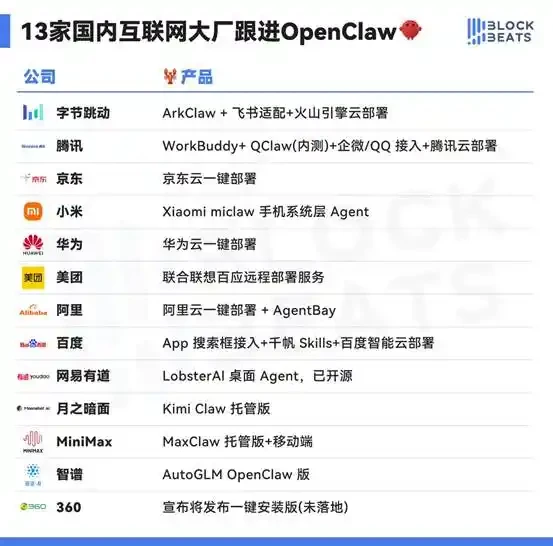
Users only need to have and use a handy AI assistant/employee through a daily, high-frequency contact channel (like WeChat, QQ, Feishu, Baidu Search, etc.). Whether this employee is called "Lobster" or not is unimportant.
Conclusion
The general public are not AI experts, and it's difficult to have everyone understand the pros and cons of large models. They might not even understand concepts like cross-application functionality or context. But the upgrade and evolution of technology can only be said to have matured into a product form when it enters everyone's life and becomes something they take for granted.
Just like in the 3G era, we might have thought faster mobile internet wasn't that useful anymore, but now we're accustomed to watching various HD, even 4K, live streams on our phones.
The era where everyone can be a boss, directing AI as their employee, is already underway. The massive shift in user experience—from asking AI questions to giving AI tasks—was initiated by "Lobster" and will be meticulously packaged by major market players into a true "delicacy"面向 users.
The era where AI becomes a part of everyone's life has already begun. Upstream and downstream AI companies are also about to start battling fiercely for this transformative era.