


Another traditional giant has entered the game, "Southeast Asia's Didi" Grab launches Web3 wallet.


Original author: Joy, PANews
Following Starbucks and Reddit, another traditional giant, Grab, is venturing into Web3 business based on the Polygon blockchain.
Grab is hailed as the Southeast Asian version of Didi and Meituan, headquartered in Singapore. As of the third quarter of 2023, Grab has over 34.9 million monthly active users. The company operates in over 500 cities in Southeast Asia, providing services such as ride-hailing, food delivery, package delivery, and online payment.
According to the official website, Grab recently added Web3 wallet functionality to its "Finance" page in its app, allowing users to store and manage digital assets, including SG Pitstop Pack coupons and NFTs (non-fungible tokens). With Grab Web3 wallet, users can perform blockchain transactions, access educational articles about blockchain, view transaction history, and interact with their digital assets. However, it is not mentioned whether the Web3 wallet supports payment for ride-hailing and other services.
The wallet currently supports only the Polygon blockchain. For a limited time, Grab sponsors the network gas fees related to sending and receiving transactions for its users, eliminating the need for users to pay any additional network fees for sending and receiving assets.
Grab stated that it is working to introduce more features for the Grab Web3 wallet in the future and is also exploring the expansion of the types of digital assets that can be stored in the Web3 wallet. The official also reminds users not to send any other digital assets to the Web3 wallet as they will not be able to access those assets. However, users can send eligible digital assets from the Grab Web3 wallet to other wallets.

PANews found that currently, the Grab Web3 wallet is only available to users in Singapore who have completed identity verification. Users are eligible to open the Web3 wallet after completing GrabPay wallet verification in the latest version of the app. Click the Web3 tile to continue setting up the Web3 wallet. Once users leave Singapore, they will no longer be able to access their Web3 wallet. Additionally, currently, each Grab account can only have one Web3 wallet. Each Grab account is associated with one Web3 wallet.
It is worth mentioning that, unlike traditional Web3 wallet users who need to keep their private keys, Grab's Web3 wallet uses a PIN code. Users will be guided to create a unique Web3 PIN, which serves as the secure access code to their digital assets. This Web3 PIN is different from the user's Grab PIN and is not interchangeable. Grab states that for security reasons, Grab does not store the user's Web3 PIN, so users need to save the PIN in their memory. The system will prompt users to set up a PIN recovery method. This includes 2 security questions that can help users recover their Web3 PIN if they forget it.
As a primary digital asset supported by Grab's Web3 wallet, the SG Pitstop Pack coupon is also a new type of coupon that utilizes blockchain technology, and ownership of these coupons will be recorded on the blockchain. This NFT coupon, sponsored by Temasek and tested by Grab and payment infrastructure platform StraitsX during the Singapore FinTech Festival in 2022, is an example of its proprietary currency, allowing issuers to specify conditions such as validity period and merchant type when conducting cryptocurrency transfers.
Meanwhile, the digital collectibles (NFTs) of SG Pitstop can be redeemed at four different shops in Singapore. For example, users can visit Jumbo Seafood at Clarke Quay to taste the famous chili crab. When a transaction with the SG Pitstop coupon on the blockchain is successfully completed, the corresponding unique NFT will be added to the user's Grab Web3 wallet. Simply by using the coupon to make a purchase, users can obtain the corresponding NFT.
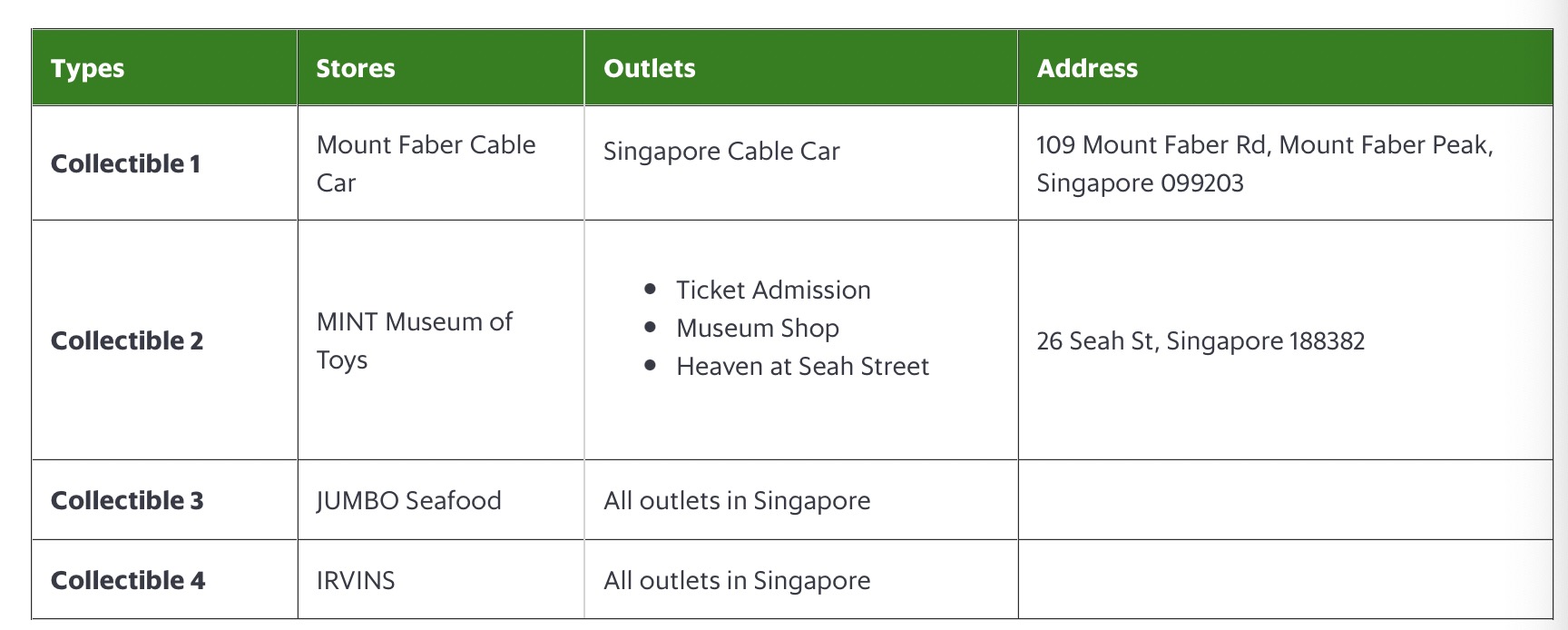
Since last year, Grab has been exploring Web3 applications. In addition to the aforementioned SG Pitstop Pack coupon, last year GrabPay also collaborated with StraitsX and TripleA, a cryptocurrency payment gateway, to display the Singapore dollar stablecoin XSGD issued on the Polygon chain in GrabPay accounts at partner merchants, and use it as SGD for consumption.
This June, Grab signed a pilot study with the Monetary Authority of Singapore on the use of three digital assets: central bank digital currency, tokenized bank deposits, and stablecoins. Grab also collaborated with Amazon and Fazz, a Southeast Asian financial services company, to test a custodial digital asset-based payment system called Purpose Bound Money.
The integration between internet companies and Web3 is happening, so friends heading to Singapore for Token 2049 in September may want to try out this service.
Related link: Guide to participating: TOKEN 2049 2023 peripheral activities overview (continuously updating)





