


What kind of experience is it for a lawyer to switch to becoming an investor in cryptocurrency funds?


This article was written by Sullivan, a senior consultant at the Mannkun Law Firm.
Editor of this article: Chen Jingyi

Opening Statement
"Mannkun Friday afternoon tea" is a weekly offline communication activity at Mannkun Law Firm. This article is a sharing of Sullivan, a senior consultant at Mannkun Law Firm, during the event. He gave wonderful sharing on personal stories, legal practice advice, and project financing, hoping to bring inspiration to readers.
Q1: It is rare for a lawyer from a prestigious law firm to transition to a cryptocurrency fund investor. Can you share your story and give any advice to legal professionals who want to enter the Web3 field?
Sullivan:
I'm glad to participate in Mannkun's afternoon tea event. I used to follow a relatively conventional non-litigation lawyer path. During my undergraduate studies in law in China, I went on an exchange program to the UK and graduated with a Master of Laws degree from a T14 program in the United States. After returning to China, I started my career in the finance group of a prestigious law firm. The change happened when I got involved in the Web3 industry and coincidentally joined a Web3 fund to invest in gaming, DeFi, and NFT projects while also managing legal affairs.
Actually, I personally feel that it is quite common for lawyers to transition to the investment side abroad. Well-known examples include Joseph Tsai, who joined Alibaba after working at a law firm and then went on to Rosecliff and Investor AB. Charlie Munger also had a background as a lawyer. I have classmates who moved to investment firms as legal professionals and then switched to the front office. I think a legal education provides certain professional barriers. Whether it's the bar exam or working at a law firm, it offers plenty of opportunities for mental exercise, which serves as a good foundation and starting point for becoming a lawyer or pursuing other careers. Even now, sometimes when I receive project contracts from Cooley, I still feel familiar.
Perhaps due to interest, I subconsciously pay attention to the investment industry while working as a lawyer at King & Wood. For example, the price of soybean meal futures rose in the early stages of the pandemic. I observed and opened positions earlier because the same thing happened during the SARS pandemic in 2003. A few years ago, when I was looking at financial products in the market, I noticed the blockchain field. After studying it like many predecessors in the industry, I found it very interesting. Also, I happened to have some family members who are lawyers in Shanghai. After consulting them and benefiting from the DeFi wave at that time, I decided to enter the investment industry.
At the beginning, when I transitioned from the legal industry to the Web3 industry, I found it difficult to understand many things. For example, why can tokens in DeFi decentralized finance be used for lending, leverage, liquidity mining, and so on? But understanding this part may require a process of reading related materials and trying various products before gradually grasping it. For example, Uniswap, Compound, Curve, or the new public chains like Base, Sui, Arb, ZKsync, etc., which are the leading projects in DeFi. When using them, you will encounter various questions, and solving these questions will be a good learning process.
If lawyers want to join the Web3 industry, here are a few suggestions I have.
Firstly, I think timing is very important. There are more opportunities to enter the market at the late stage of a bear market or when the market conditions are better. Currently, the period from the end of 2023 to 2025 seems to be a good time. Secondly, engage in more communication with industry professionals. If there are job vacancies, you may be invited to join. Furthermore, spend time understanding the industry and building basic knowledge. Develop an understanding of different market tracks and projects. If we roughly divide the crypto market into five tracks: DeFi, GameFi, SocialFi, Infra, and NFT, different tracks have different focal points, market cap ranges, time cycles, and tokenomics. To gain trust and initiate business collaboration, you need to keep up with the pace of project teams or funds.
In terms of learning Web3.0, I recommend some tools and websites that I personally use. For on-chain data analysis, you can check out Nansen, Dune Analytics, Footprint, and Glassnode. For the NFT market, you can use NFTGo, Blur, Opensea, although the NFT market has experienced a significant downturn recently. For news websites, you can go to Foresight News, Deep Tide, and Rhythm. They also have convenient mobile apps for download. In terms of research reports, I think the IOSG WeChat official account and Paradigm Insights are quite good. However, it's important to note that the opinions in online articles from VCs may not always be objective and may have some bias. If you solely rely on articles for investment decisions, you may encounter issues. Other commonly used tools include CoinMarketCap, Dexscreener, DefiLlama, Debank, Zerion, and Twitter, which are all very practical.
It's important to engage in conversations with people in the industry because the narratives for each cycle are different. Those who have experience in the industry have a better chance of understanding the market's development direction. For example, the mining machine market in 2013, ICOs in 2017, and Defi, Gamefi, and NFTs in 2021 were all previously untapped opportunities. In the next cycle, there will be new opportunities that will bring significant traffic. Those who can correctly identify these opportunities and have a deeper understanding of the market will have a better first-mover advantage.
All-chain games, RWA, and new public chains including Layer 2 are sectors worth paying attention to in the next cycle. For example, the recent industry trend of RWA (Real World Asset) has gained popularity. The reason is that people have found that the annualized return of stablecoin financial products on platforms like Binance, OKX, or other DeFi platforms is only slightly over one percent. Meanwhile, the short-term US bond yields have risen to over five percent, resulting in a significant interest rate differential. In addition, higher-yield US bonds offer better security compared to stablecoins, naturally attracting a large amount of crypto funds. This is also what Tether, Circle, MakerDAO, and many RWA entrepreneurs are doing - facilitating the seamless connection between holding stablecoins and earning US bond profits. This direction also requires legal assistance in dealing with compliance matters off the blockchain.
Q2, which is more important, a legal professional or a web3 business perspective? How do you view the industry importance of web3 lawyers?
Sullivan:
"Being a lawyer requires not only legal awareness but also business acumen." This is particularly evident in the Web3 market. Many lawyers understand the legal aspects and can use legal knowledge to build contract frameworks. However, they lack knowledge of the industry's internal workings and the market's development and changes. But often, lawyers cannot ask their clients to spend time educating them about the industry. If web3 lawyers have deviations in their understanding of basic business knowledge, it could result in clients questioning their professionalism. It could even affect client fund security or future profits. Therefore, having a web3 business perspective is crucial.
The following are some possible misconceptions about web3 business understanding among traditional lawyer friends:
Token issuance
Not all Web3 projects need to issue tokens. Projects like Metamask, Opensea, and Coinbase are highly popular Web3 projects but they do not issue tokens. However, if there is a plan to issue tokens, it is necessary to communicate and arrange with the project team regarding the timing of token issuance, choice of public chains, token unlocking and release, and the financing structure of token rights (whether it is a separate token or token mapped to equity).
Token Unlocking Agreement
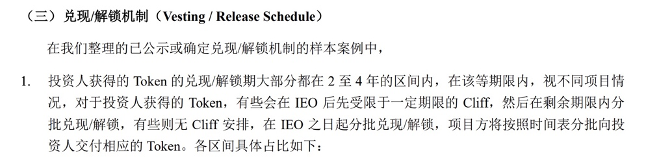
Some law firms only discuss the lock-up period of tokens in relation to IEO, without including IDO or airdrops. However, IEO is just one of the ways for a project to issue tokens, such as Binance's Launchpad. If the contract defines the issuance of tokens by the project through IEO, then if the project decides to conduct IDO or distribute tokens through airdrops, investors may not receive a share of these tokens. They would have to wait for exchanges like PancakeSwap to list the tokens before acquiring their share from the project. Generally, the contract can use the definition of "Token Generation Event" to specify the token issuance matters, which can cover various token issuance methods currently used by projects and potential methods that may emerge in the future. After all, many token issuance methods have emerged only in recent years, and it is foreseeable that different methods will continue to emerge as the market rapidly develops.
Interpretation of a Web3 Investment and Financing Article
Equity/Token Financing Structure
Other friends from the fund asked me about their investment in equity-mapped Tokens, but the project sent them a SAFT and they were unsure if it was acceptable. However, the full name of SAFT is Simple Agreements for Future Tokens, which only includes the protocol for Tokens and does not include shares. Signing such an agreement may lead to many issues later on. The correct framework should be an equity agreement plus a Token supplemental agreement.
Industry Framework
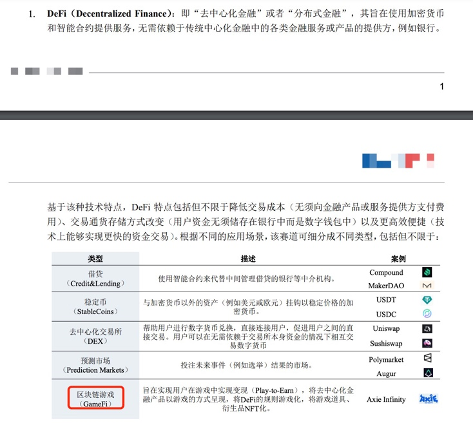
Some law firms classify blockchain games (GameFi) as a subcategory of DeFi when discussing the categorization of the Web3 industry. Although the categorization itself is not essential, both Eastern and Western Web3 funds consider games as important as DeFi. A good mapping framework can be helpful in defining contract details. For example, if it is a financing project for a cross-chain bridge, it is possible to define in detail the responsibilities and risks related to hacking or technical incidents (as cross-chain bridges have become frequent targets of hacking attacks in recent years).
An interpretation article on Web3 investment and financing
Safe custody platform for funds
A Web3 industry lawyer should not only understand legal provisions but also have knowledge of the industry, such as where funds can be stored to ensure maximum security. Such questions can arise from offline conversations, where a lawyer friend mentioned placing funds in a "reputable" exchange. However, industry insiders are aware of the risks associated with using that particular exchange and would not choose it as a fund storage option. Such information may not be readily available publicly and requires industry communications to identify the issues.
In addition to the importance of the Web3 legal industry, I think in the bull market cycle of 2017, many investors would directly invest without signing or signing a preliminary agreement to grab market share, but this phenomenon will be less common in 2021. As the industry expands, compliance is gradually being given more attention. In the future, there will be a growing demand for Web3 lawyers in the market, which should be good news for many lawyer friends.
Q3, can you introduce the common ways of blockchain project financing? Why do Web3 companies choose token financing instead of equity financing?
Sullivan:
There are four common transaction structures for blockchain project financing:
(1) Separate equity financing. This type of financing structure is similar to traditional equity financing. In the early stages of the project, use the SAFE[1] agreement directly, and in the later stages, use SPA, SHA, MAA, and other components to form a complete equity investment structure. Although this type is Web3 project financing, the financing structure is similar to traditional capital market financing.
(2) Separate token financing. The main forms are SAFT and TPA. Similar to SAFE, the reason for signing SAFT is its convenience and the ability to quickly reach cooperation. Details can be negotiated later.
(3) Equity-mapped token. This financing structure is favored by North American projects. It basically includes Stock Purchase Agreement, Investors' Rights Agreement, Right of First Refusal and Co-Sale Agreement, Voting Agreement, and a Token mapping agreement Warrant to Purchase Tokens. This structure is sometimes more convenient from a compliance perspective because investors are actually investing in equity, but the project party gives investors the right to "purchase" Tokens at a later stage at a very low price. In other words, if an investor no longer holds equity, their future right to "purchase" Tokens will also be transferred. For projects in the early stages, a combination of SAFE and Token mapping agreements can be used directly.
(4) Parallel financing of equity and currency rights. In the same round of financing, the project party conducts both equity financing and currency rights financing. Different from the token "purchasing" rights tied to equity mapping Token architecture, in the parallel financing structure of equity and currency rights, even if the equity portion is sold, the token rights portion is still retained. A small number of project parties may also choose the SAFTE architecture, which is a flexible combination of SAFE and SAFT. The project party will flexibly adjust the allocation of equity or currency rights to investors based on the development situation.
In addition, recently there have been many cases where project parties have previously conducted a round of equity financing and now want to add a round of currency rights financing, or previously conducted a round of currency rights financing and now want to add a round of equity financing. If multiple rounds of currency rights financing or equity financing are conducted separately, it will affect the rights of the previous round of investors. The better approach is to convert the current round into a financing structure that combines both equity and currency, regardless of whether the previous round was solely equity or currency rights financing. If the previous round was equity financing, the new round will grant token shares to the previous round of investors for free; if the previous round was currency rights financing, the new round will grant equity shares to the previous round of investors for free. This is a better way to balance the interests of the project party and the investors in each round.
As for why Web3 companies choose token financing instead of equity financing, different project parties or investors have different preferences. Generally, native Web3 funds tend to lean towards token financing, while traditional USD funds tend to lean towards equity financing. Web3 investors prefer tokens because they are easier to exit with liquidity, without the need for cumbersome stock market listing procedures. The project party only needs to issue tokens on an exchange or in other ways to allow early-stage investors to easily sell tokens and make a profit. Some traditional USD funds prefer equity because it is easier for them to explain and disclose in terms of compliance and financial reporting. After all, once the investment funds are disbursed, they correspond to registered equity, which is easier for LPs to understand.
Q4, What are the main focus points of token investment and financing contracts?
Sullivan:
I have handled investment and financing contracts for dozens of Web3 projects, and I can feel the difference between the funding agreements for good projects like EigenLayer and the funding agreement details sent by less reliable project teams. Even though some project teams are confident in their projects verbally, if the details in the contract are prepared for a "soft rug" situation, the reliability of the project will be questionable. Conversely, if the project team is reliable, the agreements in many parts of the contract can be felt to balance the interests between the project team and the investors. I have encountered overseas project teams that had good communication but had issues with the contract agreements. They were initially unwilling to make changes but contacted us about modifying the contract after about six months. However, this project team has already rug pulled. Due to the complex environment of the Web3 market itself, more attention should be paid to these contractual issues.
In addition to the usual Web3 investment and financing agreement framework, here are some points that are worth paying more attention to by Web3 funds or project teams in the agreement:
Valuation
In addition to the project valuation specified in the agreement itself, the mapping ratio when mapping equity to tokens should also be carefully considered, as there may be parts that are unfavorable to investors. For example, the project team claims a 1:1 mapping, but when you actually look at the agreed upon terms in the contract, investing 10% of the equity stake only results in a mapping of 5% of the token stake. If not careful, the mapping ratio can be lowered in the agreement, resulting in an artificially increased project valuation.
Unlocking Mechanism and Lock-up Period
In Token financing agreements, attention should be paid to the unlocking mechanism, allocation ratio, lock-up period, and more. For VCs, a shorter lock-up period is advantageous for obtaining tokens earlier. However, some project teams may have very long lock-up periods for their tokens, even up to five years. If not negotiated, this is a very unfavorable term for the investors and needs to be taken into consideration.
Risk Allocation and Mitigation
Some project contracts may explicitly mention the compliance issues, tax issues, hacker theft risks, technical issues, personnel issues, force majeure, etc. of the local regulatory authorities for token investors, and all of them are exempt. Even the terms and conditions may delicately state the risks that the project may not be able to continue at any time, and it is best for investors to consider these issues in their investment decision-making in advance. On the contrary, I have also encountered cases where the project party states in the terms and conditions the possible issues that may occur in the future and agrees to deduct some necessary expenses, such as operating costs and salaries, when the project becomes difficult to continue, with the excess amount being returned to the investors.
Dispute over coin issuance method and timing - Long-stop date
Some project parties do not actually determine whether to issue coins in the future or the timing of issuance during financing, and investors who want to invest in tokens will negotiate this point repeatedly. In fact, one way to coordinate is to write a Long-stop date clause, which determines a latest coin issuance date, for example, two years, so that if the project party does not issue coins after two years, the investors have two options: they can choose to sign a supplementary agreement to continue confirming the timing of coin issuance, or they can have their previous investment amount returned after deducting necessary costs. This flexible clause design is beneficial for both the project party and the investors.
Most favored nation clause
Many SAFT agreements do not include this clause, and some project parties are unwilling to add it even after it's proposed by investors. For investors, the project party's failure to include this clause may mean that in this round of financing, other investors have obtained more favorable investment conditions. However, if it is a follow-on investment, it is normal for the investment conditions to be less favorable than the lead investor.
Dispute resolution
The dispute resolution part is usually stipulated in the agreement to be resolved through litigation or arbitration in places such as California, Hong Kong, and Singapore. With the improvement of the Web3 system in Hong Kong, more disputes may be resolved through arbitration in the future. If the investor is from Asia, it is advisable to choose a dispute resolution location that is closer. In addition, some project parties openly raise funds and maliciously deceive investors to use the money for high consumption. Through criminal investigation, some investors are able to recover some amount.
[ 1 ] SAFE is conducive to addressing the valuation difference between the project party and the investment party. For example, the project party believes the valuation is 20 million US dollars, while the investment party believes a valuation of 10 million US dollars is more appropriate. Through the SAFE framework, a valuation cap of 15 million US dollars is set. If the project successfully raises financing at a valuation of 20 million US dollars, the investment party can enter at the agreed valuation of 15 million US dollars, increasing their share. Similarly, if the project party only manages to raise financing at a valuation of 10 million US dollars in subsequent rounds, the investment party can also obtain a corresponding share at a valuation of 10 million US dollars. SAFE helps determine the cooperation model between the two parties at an early stage. SAFT and SAFE have similar objectives but differ in terms of content and focus.
Disclaimer:
This article is an original piece by Shanghai Mankun Law Firm and represents the personal views of the author. It does not constitute legal advice or opinions on specific matters. For reprinting of this article, please contact Mankun Law Firm staff: MankunLawFirm





