






Coinbase founder: These ten crypto tracks are worth paying attention to


Author: Brian Armstrong,Coinbase
Original Compilation: Cookies, ChainCatcher
Recently, Coinbase co-founder and CEOBrian ArmstrongShared his 10 most interesting ideas in the crypto field. to cope with"If you were to start a cryptocurrency company today, what would you choose?"this problem. Covering areas ranging from finance, markets, labor, privacy, and virtual worlds, these ideas explore how innovation and improvement can be achieved in the blockchain and cryptoeconomy. ChainCatcher translates the full text as follows:
long story short
Coinbase aims to update the financial system established more than 100 years ago to create more economic freedom and opportunity around the world by supporting diverse cryptocurrency use cases.
In addition to its internally developed products and services, Coinbase has launched a call for entrepreneurs with 10 exciting ideas.
In October this year, Coinbase Ventures will host its first summit in Los Angeles to bring together outstanding builders to discuss promoting the development of this field.
Sometimes I get asked, if you were to start another cryptocurrency company today, what would you choose? The field of cryptocurrencies is in its infancy. Five years from now, many entrepreneurs will look back and wish they had started a cryptocurrency company in 2023. Bear markets are made for building, so why not start today?
I decided to share 10 of the most competitive ideas in the hope that someone would step up and make them happen. Easier said than done, the effort and determination to build these ideas will be challenging. Coinbase has the resources to build a lot in the crypto space, but we dont have the time to build everything and want to help enable the ecosystem around us. Weve invested in and worked with some great teams on some of these ideas. Most of these ideas have not been explored yet, and we need more people to get involved.
For now, here are my main thoughts, in no particular order.
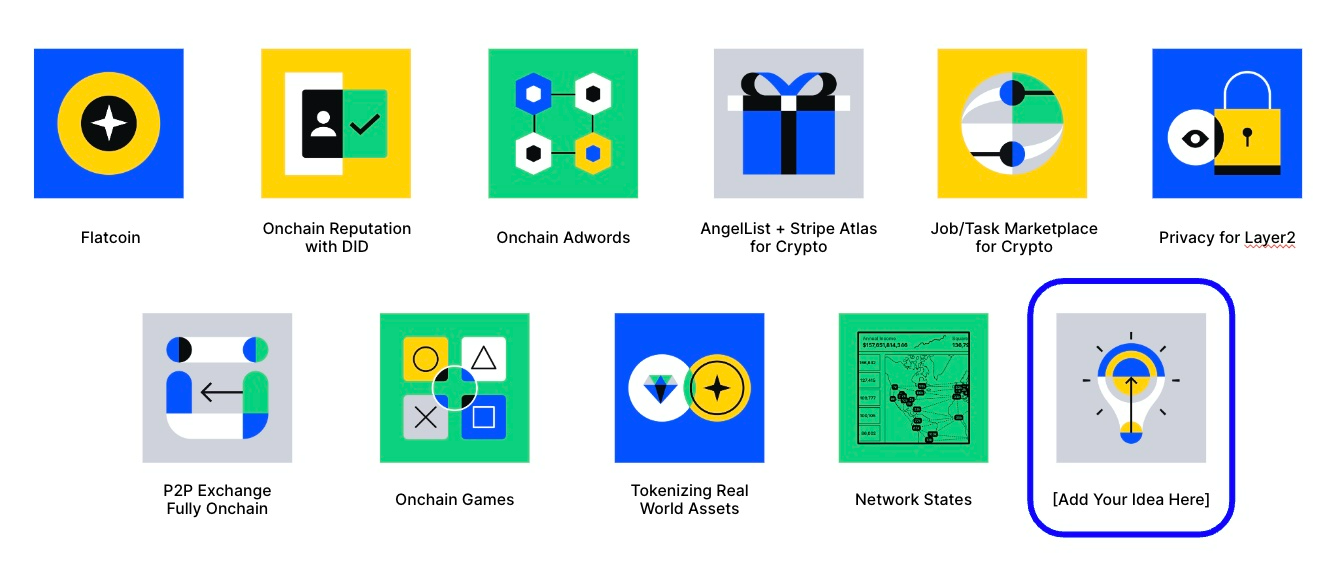
*Note: Coinbase Ventures has and will continue to invest in startups covering many of these themes, some of which are referenced below (non-exhaustive).
Flatcoin
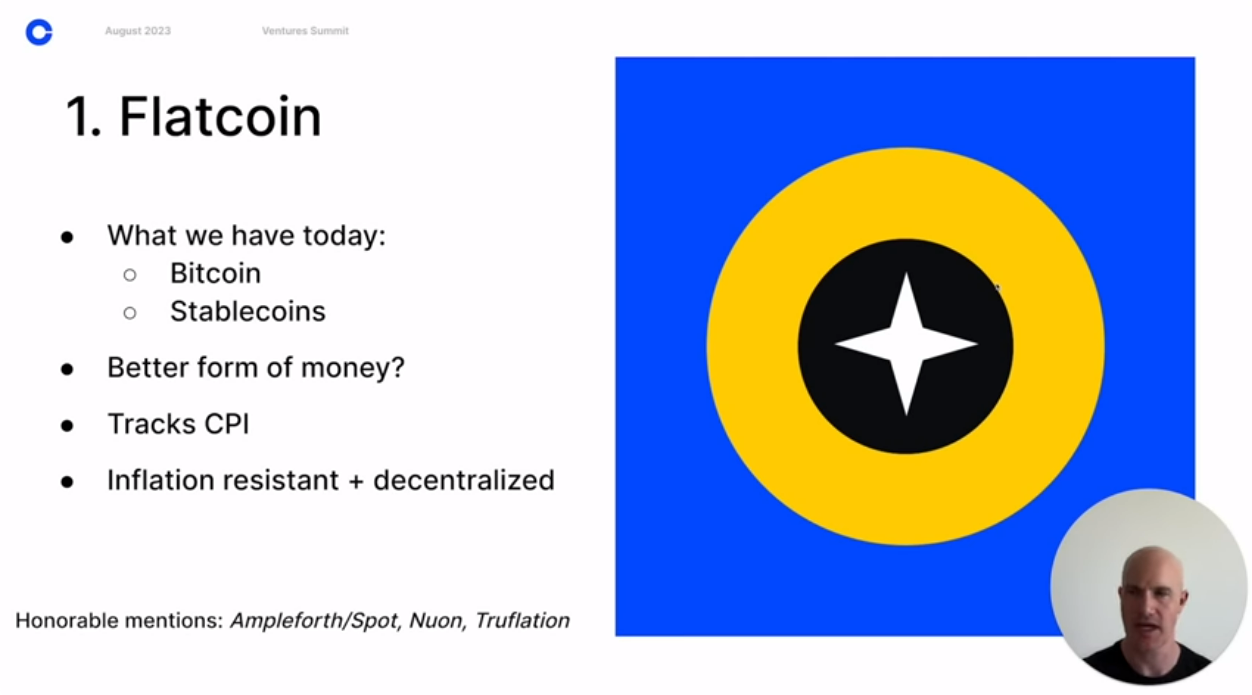
Bitcoin is considered the gold standard of the internet, and the concept of it as a currency is great. However, due to its huge appreciation potential, many people are now reluctant to use it as an actual currency. It also needs further development. Stablecoins backed by fiat currencies are a good intermediate step, but they are still subject to issues such as inflation and seizure. So, if a better form of money were created through cryptocurrency, what would it look like?
Such a currency could be fully decentralized (censorship-resistant) and track a consumer price index (such as the CPI in the United States) to maintain purchasing power or close to it. It might need to be backed by a basket of assets, track the CPI, or take an algorithmic approach. There are even services like Truflation that offer the possibility to track inflation on-chain today to further decentralize. A company or protocol that can build a better form of cryptocurrency will have a huge impact.
On-chain reputation
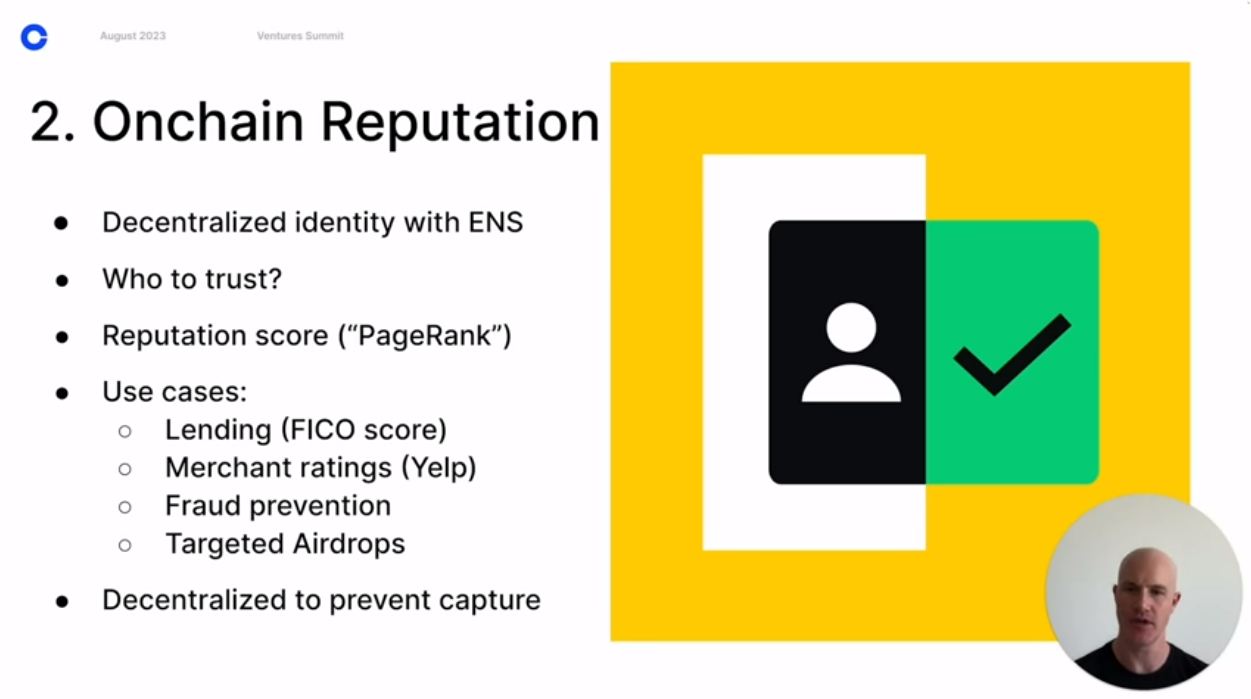
Even though we already have a decentralized identity system like ENS, how do we know who is trustworthy? How do we know if a merchant is trustworthy? Or are we sending funds to real artists?
To do this, we can build a decentralized protocol that assigns a reputation score to each address or ENS name based on an on-chain data graph. This is similar to how PageRank scores each website based on a graph of incoming links and associated metadata. This can be used for lending (decentralized FICO scoring), merchant ratings (similar to Yelp), fraud prevention (wallets can issue warnings before sending funds to risky addresses), VIP airdrops, and more. This needs to be a decentralized protocol to prevent monopolization or abuse.
On-chain advertising
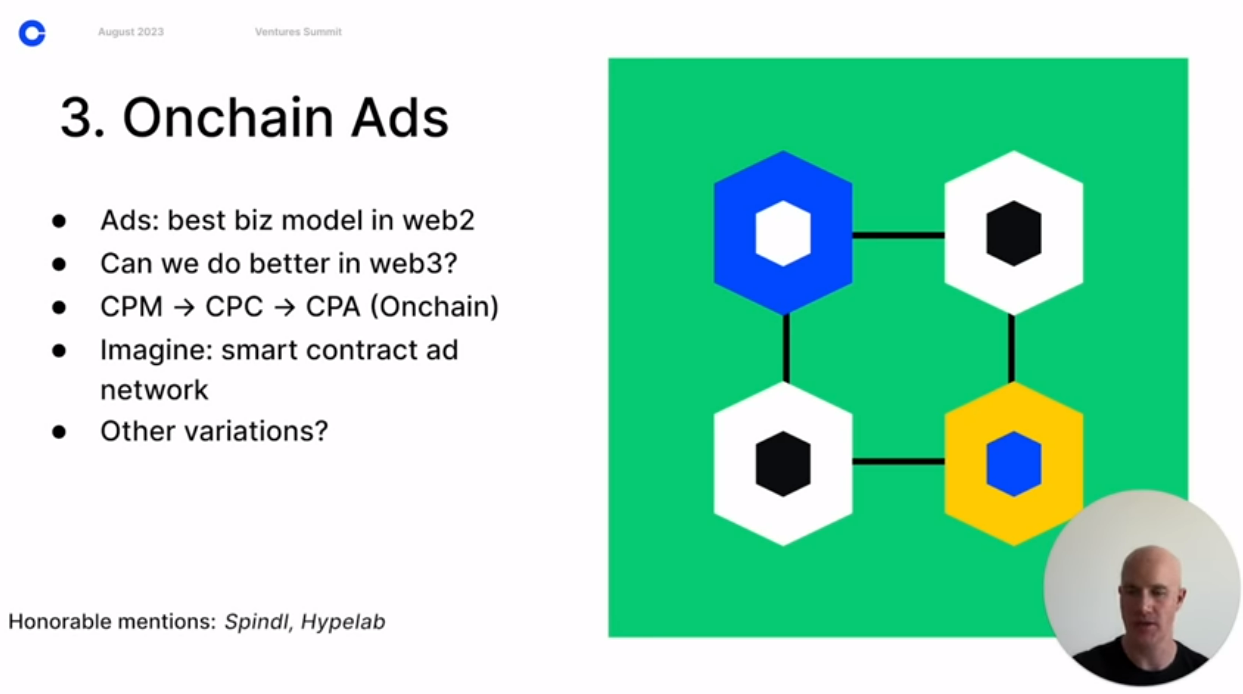
In Web 2, one of the most successful business models is advertising. It is reasonable to predict that some form of advertising will also feature prominently in Web 3. While developers and startups in Web3 are willing to pay for distribution, can we do better than traditional advertising models? In Web 2, the biggest innovation was the move from pay-per-thousand-impressions (CPM) to paying only when a user clicks on an ad (CPC).
In Web 3, maybe we explore paying only when the user buys or takes action on-chain (CPA). Imagine if any smart contract could expose some metadata about its willingness to pay a fee to direct a user to execute a function call. This function call can accept the referrers address and pay the set commission. Indexing all smart contracts that support this ad standard will create ad inventory.
Wallets and applications with large numbers of users can now choose which ads or referral links to route requests to and share in the revenue when delivered to users. A real-time auction mechanism will help find the best price. Of course, there may be other changes to advertising in Web 3, but the above is just one example.
On-chain capital
While there are many challenges shaping the ICO craze, including fraud and unregistered securities, there’s a reason for the frenzy: frictions in global capital formation remain considerable and unevenly distributed. If youre an entrepreneur living in Budapest or Bangalore, your chances of getting funding are probably less than those in Silicon Valley or Cleveland. If it were easier to raise money, then wed have more startups (and this doesnt just apply to startups, but to real people, like raising money for apartment complexes, etc.).
So what will the next generation of ICOs look like when legal and trustworthy? Just imagine, in Web 3, some combination of Stripe Atlas and AngelList could not only help you register a company or idea (in each country, by submitting documents, or as a DAO, using a pseudonym), but also Help you raise funds for your ideas. Every idea can have promotional materials or videos, discussions and ratings, reputations of participants, and a transparent flow of funds on-chain. Democratizing fundraising could unlock enormous entrepreneurial potential worldwide.
Cryptocurrency jobs/tasks
Market A limited population of the world is able to invest in cryptocurrencies, but almost everyone needs to make a living and manage income for basic living needs. A major obstacle in a globalized job market is the difficulty of making cross-border payments to individuals. Why not create a more global and free labor market by allowing jobs and assignments to be posted in cryptocurrency and helping employees and contractors find those jobs?
Second layer of privacy
Although second-layer solutions have begun to help cryptocurrencies scale, most transactions still occur on public blockchains. While transparency is a beneficial trait in many situations, one does not want most transactions in an economy to be public. So, what is the right way to introduce privacy in layer 2 solutions? Is it possible to build a business in this area?
P2P exchange completely based on the chain
P2P exchanges for cryptocurrencies provide important ingress and egress to emerging and underdeveloped markets. But these P2P exchanges are run by centralized entities that could be forced to shut down, compromising individual freedoms. Is there a way to build a decentralized P2P exchange that runs entirely on-chain, with escrow, reputation, and arbitration?
On-chain games
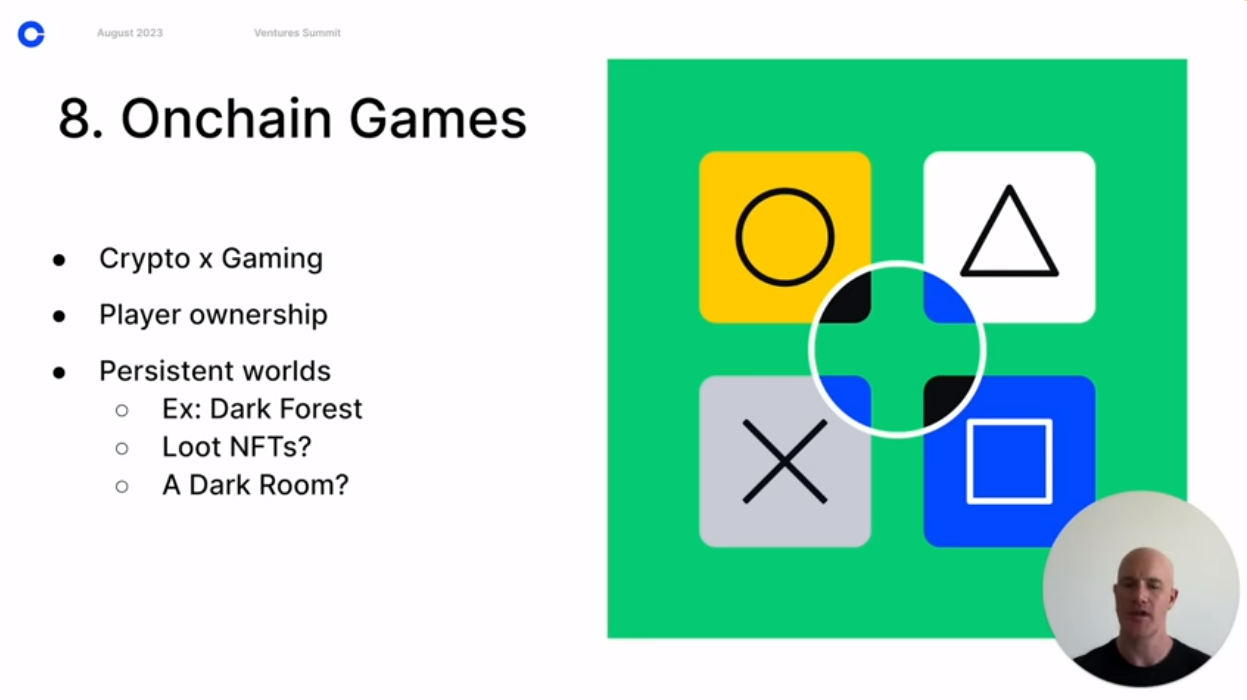
Although I am not an expert in the field of games, I think we have only scratched the surface of how cryptocurrencies and games can be combined. How do players actually own the items they collect and use in the game? How do these items work in the persistent world (or dare I say"Metaverse"), creating more complex interactions and economies?
Early examples like Dark Forest are exciting. Maybe more games like Loot could be used. These games dont have to be massive hits, even simple ones like"A Dark Room", can also be adapted to use NFT game items that players can own in a persistent virtual world that coexists with other players.
Tokenizing real-world assets
A 1:1 backed fiat currency stablecoin like USDC was the first to be implemented on-chain"real world assets". We believe that over time, many forms of assets can and will be implemented on open, permissionless blockchain networks, creating new worlds with programmability, composability, global 24/7 liquidity and Trust the financial infrastructure that minimizes settlement and other features. A number of projects (including some companies in our portfolio) are working on ways to explore this space, ranging from bonds, treasury bills, commodities, accounts receivable, and even high-end luxury goods.
Network status startup and management software
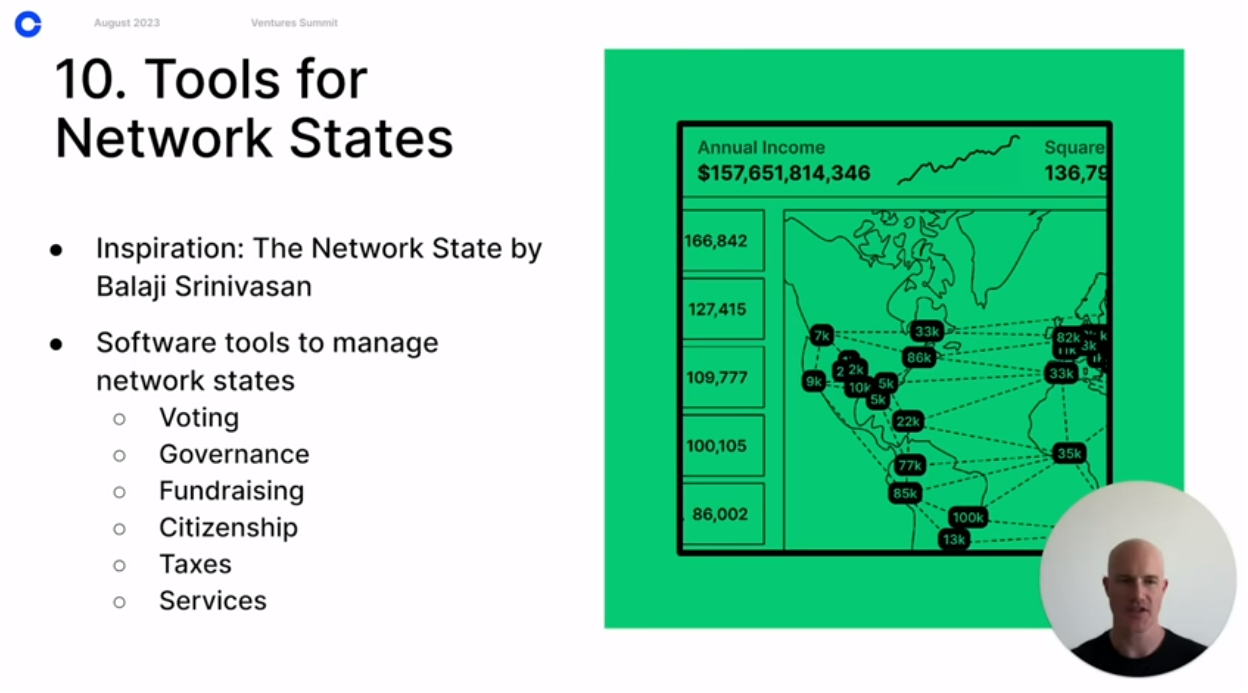
"network status"This concept is derived fromBalaji Srinivasanproposed, accelerating the development towards start-up cities and network states. More network states will be launched in the future that will require tools to manage voting, governance, fundraising, citizenship, tax collection, service delivery, and more. Recall that this kind of software would also be useful for many different types of startup cities and communities.





