


veDAO Research Institute: Analysis of deposit and withdrawal types and compliance security


Looking back at the key events that have occurred in the currency circle in the past year, last year’s FTX thunderbolt brought about the tightening of encryption supervision, Hong Kong hotspots emphasized the importance of deposit and withdrawal compliance licenses, and the SEC sued the centralized exchange giants Binance and Coinbase. The government is constantly paying more attention to the legal currency deposit and withdrawal market and implementing strict supervision.
Purchasing cryptocurrency with legal tender is the first stop for most users to enter the Web3 world. Regardless of the type of deposit method, the users funds and accounts should be safe, and the transaction method and platform need to be legal and compliant. The project The party needs to obtain a local remittance license and verify the users identity before it can provide financial services such as deposits and withdrawals.
This article will focus on the types of projects for deposit and withdrawal in the encrypted market, regional legal regulatory requirements, and the acquisition of regulatory licenses for large exchanges.
Item types of deposit and withdrawal
Generally, there are two channels for users to buy and sell cryptocurrencies: over-the-counter trading and on-exchange trading.
The first difference is the difference in location. There is usually a centralized exchange as a venue for trading, such as a traditional stock exchange. Off-site means that transactions are not completed in a centralized and fixed place, and transactions are completed in various places, such as through face-to-face transactions, WeChat, etc.
The second difference is the difference between deposit and withdrawal objects. For exchanges where deposits and withdrawals are made during on-site trading, the user transfers fiat currency to the exchange, which is called a deposit, and the user withdraws fiat currency from the exchange, which is called a withdrawal. In OTC trading, deposits and withdrawals are made by other users. User A transfers legal currency to another user B as a deposit; User A withdraws cash from another user C as a withdrawal.
1. OTC trading
The over-the-counter (OTC) legal currency deposit and withdrawal project allows buyers and sellers to trade directly without intermediaries. It is also a high-incidence area for fraud. There are two modes:
OTC counters, such as Kraken OTC. In the OTC counter model, the two parties to the transaction are the customer who needs trading services and the OTC counter as the counterparty. This model of deposit and withdrawal has three main advantages:
No trading slippage. By providing fixed quotes for large transactions to avoid losses caused by slippage, we take risks for customers in exchange for the possibility of making profits by completing transactions that are better than the quoted price.
More liquidity. OTC counters can trade at the best price on multiple liquidity platforms.
High privacy. By trading directly with OTC counters, customers can protect their privacy and avoid transaction information appearing in the public order book.
Customer-to-customer is C 2C, such as OKX C 2C Tranding. This refers to direct transactions between individuals for deposits and withdrawals of legal currency without the need for a middleman or third party. OKX will hold the buyer/seller’s digital currency assets until receipt/payment confirmation is received from the other party. The platform will recommend users to transact with certified merchants, as all certified merchants have been carefully vetted by OKX. The advantages of C2C are as follows:
Supports multiple payment methods. Buyers and sellers can define any payment method by themselves, and the transaction only needs to be confirmed by the user after the transaction has actually occurred.
Low trust cost. Both parties to the transaction must first pass the identity verification of the platform, and even stricter merchant certification review. The platform will also disclose the users transaction information to provide credit reference, but it cannot avoid the risk of some counterparties delaying or canceling orders.
High privacy. Banks in many countries (such as India) ban users from cryptocurrency transactions to avoid potential policy risks in the future. In C2C transactions, users can conceal the purpose of the transfer from the bank, thus avoiding bank restrictions.
However, in addition to the introduction of third-party platforms, this type of transaction is completely privately matched to avoid high intermediate fees. This type of private transaction between users will have high risks due to the imperfect trust mechanism and frequent occurrence of information unequal.
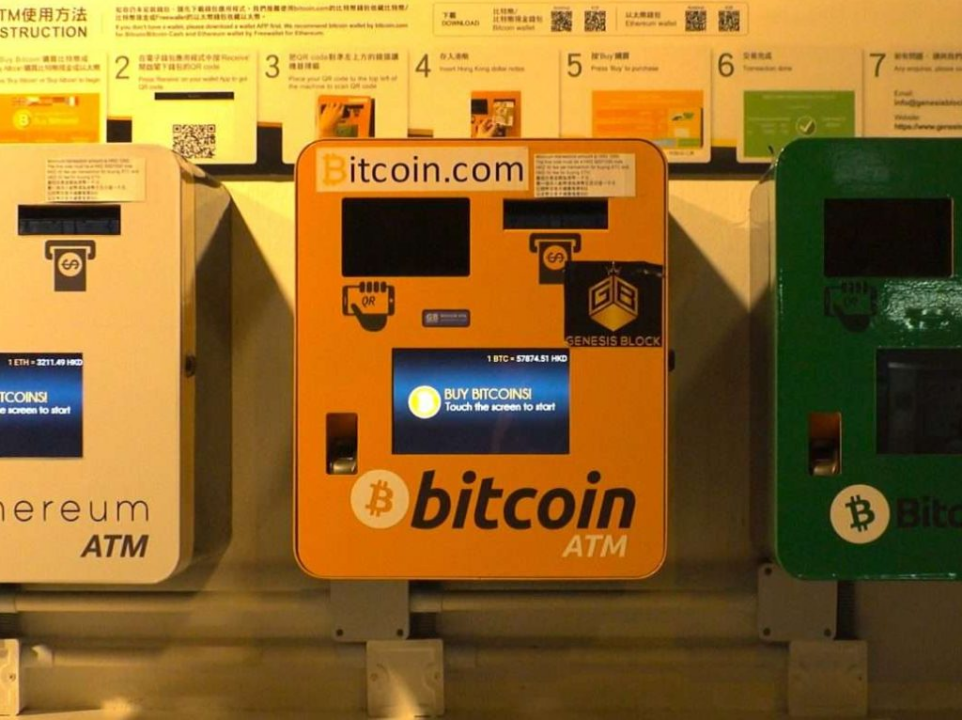
2. Encrypted ATMs
As a physical machine, the operation and maintenance costs are higher, so the exchange fee is also high, some can even reach 20%. Cryptocurrency ATM merchants buy liquidity from third-party providers and transfer it to users self-hosted wallets, so they require a remittance license.
The biggest advantage of cryptocurrency ATMs is anonymity and privacy, because users can buy cryptocurrency with cash, and there is no KYC link. Sometimes identity documents are required, but proof of residence and facial recognition are not required.
However, it supports few types of cryptocurrencies, and basically only supports BTC and ETH. Most ATMs do not provide withdrawal services. With high handling fees, it is often called the most stupid way to buy cryptocurrencies.
3. Centralized exchange CEX
The centralized exchange is the most commonly used fiat currency deposit and withdrawal platform. The exchange naturally has the advantage of a license, the fee rate is low, and it supports a variety of currencies. It is also the largest liquidity provider in the ecosystem. Retail investors can freely use it through hosting wallets To make deposits and withdrawals, merchants mostly deploy APIs and SDKs to implement transactions and transfers. As a liquidity intermediary, centralized exchanges make profits through the spread of buying and selling liquidity and user fees.
When a merchant and its customers use the same exchange-hosted wallet, the transaction does not incur any rates because the money is simply transferred between different accounts within the same escrow wallet. However, if you use a self-hosted wallet to transfer funds, corresponding blockchain network fees will be charged.
4. Independent deposit and withdrawal items
Independent deposit and withdrawal projects, such as Moonpay, operate like small exchanges, but most of them only provide legal currency deposit and withdrawal services, and also need to register for a remittance license in each operating region. However, due to the relatively small scale and limited legal and technical resources of this type of project, the business is more vertical, and most of them only provide legal currency deposits and withdrawals, focusing on a single field of use.
However, due to differences in liquidity sources, and most customers need to provide self-custodial wallet addresses, the rate of this type of project is higher than that of centralized exchanges, because intermediary fees and network fees are superimposed. Although independent deposit and withdrawal projects are smaller than centralized exchanges and generally have higher fees, they also have their advantages:
Simple and easy-to-use interactive interface. Its minimalist interactive page will directly mark the amount of legal currency and the corresponding amount of cryptocurrency. Users only need identity verification for large-amount transactions, and are very friendly to users with small-amount deposits and withdrawals.
High privacy. Most projects only support self-hosted wallets, thus eliminating the step of transferring crypto assets from a hosted wallet and allowing users to use as little additional wallet information as possible.
Most projects allow cooperative distributors to use the SDK to set distribution bonuses, so distributors can freely control profits, while the profit sharing of centralized exchanges will not be so clear.
5. Deposit and withdrawal gold aggregator
Deposit and withdrawal aggregators, such as MetaMask’s fiat currency deposit service, guide users to purchase and earn commissions by providing multiple independent deposit and withdrawal projects and quotations from centralized exchanges. This category is essentially an information intermediary, achieving liquidity sharing by aggregating multiple exchanges and matching transactions with independent deposit and withdrawal projects. Deposit and withdrawal aggregators have three main features:
We only act as an intermediary to provide quotations, and all transactions are conducted through third-party suppliers.
No money transfer license is required as users are authenticated through a third-party provider.
In addition to legal currency deposits and withdrawals, it also provides functions such as DEX aggregator, liquidity staking and NFT market. Deposit and withdrawal aggregators are mainly for retail investors and do not provide payment solutions to merchants.
6. Cryptocurrency bank card
The main advantage of cryptocurrency bank cards is that they allow the use of cryptocurrencies for everyday purchases. In traditional consumption scenarios, it would be difficult to do this unless merchants accept cryptocurrencies directly. Cryptocurrency bank cards are more and more accepted by currency circle users, who can directly spend cryptocurrencies, or conveniently convert cryptocurrencies into legal currency in the card, and enjoy global payment and consumption.
The encrypted currency bank card is equivalent to the secondary account distributed by the centralized exchange. As one of the customer services of the centralized exchange, the link involving encryption in the deposit and withdrawal link is taken care of by the centralized exchange (no additional remittance license is required) , the payment processing of fiat currency is the responsibility of the payment network provider. Cryptocurrency bank cards tend to have higher rates than centralized exchanges because users need to pay additional exchange fees to payment network providers. Users use cryptocurrency to pay merchants for goods and services denominated in legal currency through encrypted debit cards, so encrypted debit cards can only be used as a channel for withdrawing funds in legal currency. It should be noted that payment with encrypted debit cards will incur capital gains tax, and the card needs to be pre-deposited with cryptocurrency before use.
Using a cryptocurrency bank card also has the following advantages:
Fund security: Fund recharging to the card is operated by the bank, so there is no need to worry about the source of funds or freezing the card. The physical card supports ATM withdrawals. In the actual consumption process, legal currency is also directly consumed, not encrypted assets.
Cross-border payment: Most cryptocurrency bank cards are Visa cards or MasterCards, which support cross-border payments and can be used in tens of millions of online and offline outlets around the world.
Consumption rebates: Most cryptocurrency bank cards support consumption rebates, and the rebates are returned to users in the form of cryptocurrency.
Security Compliance Issues
Knowing several common deposit and withdrawal methods, which one do you usually use? Different types of deposit and withdrawal methods have their own advantages, but we are more concerned about the legal security of funds and transactions. Due to the differentiated regulations among major countries, there is still room for non-compliant deposits and withdrawals in the market, where various methods such as money laundering, tax evasion, and fraud are common. Users’ property has been cheated and stolen, capital chains and bank cards have been frozen, and relevant units have directly visited them. Such encounters make ordinary users very distressed and anxious.
To solve this kind of problem and minimize the risk of deposit and withdrawal, in addition to users themselves need to strengthen security awareness, learn more blockchain knowledge, pay attention to the custody of property private key passwords, try to use large-scale platforms with license certification for transactions, etc. Large institutions such as exchanges should also strengthen their own compliance management, cooperate with supervision, obtain the compliance licenses required for services, and provide protection for users transactions. Next, let’s take a look at the legal requirements for various financial licenses in different regions.
Legal requirements in different regions
The unique and innovative nature of cryptocurrency makes it difficult to define its attributes. Most regions do not yet have a comprehensive regulatory framework. The current legal licenses related to deposits and withdrawals are divided into the following two categories:
Focus on payment and currency circulation licenses, such as the remittance license in the United States and the VASP in the European Union;
Professional virtual asset service provider license, this category will be the trend in the future.
The scope of subjects that can apply for a remittance license (MTL) in the United States includes international remittance, foreign exchange exchange, currency transaction/transfer, ICO issuance, provision of prepaid items, issuance of travelers checks, etc. It can be considered that institutions related to money services are covered.
To apply for this license, the deposit and withdrawal project needs to register as a money service provider with the Financial Crimes Enforcement Network (FinCEN), and then apply for a remittance license in the operating state, apply for a registration license system, and need to re-examine every two years. Due to the vague nature of cryptocurrencies, deposit and withdrawal projects are more or less regulated by the U.S. Securities and Exchange Commission (SEC) or the Commodity Futures Commission (CFTC).
Compared with the United States, the European Union and the United Kingdom have more complete encryption regulatory systems. The deposit and withdrawal projects need to register for a virtual asset service provider license (VASP). In addition, all exchanges, mining pools, wallet providers, custody service providers and Centralized applications require this license. Register a virtual asset service provider license in one of the EU countries to conduct business in the entire EU. The EU country Lithuania has the most relaxed cryptocurrency regulatory policy in the EU. A license can be obtained as soon as one month, and the license has no expiration date. The minimum authorized capital is only 2,500 euros, and there are no requirements for local personnel structure. Many centralized service providers hold their licenses, such as Binance, BIT, Huobi, HyperBC, etc.
In Hong Kong, China, cryptocurrency is divided into security tokens and non-security tokens, so it is necessary to apply for dual licenses to legally operate virtual currencies in Hong Kong. According to different regulatory authorizations, the Hong Kong Securities and Futures Commission regulates security token transactions (No. 1 + No. 7 license) on virtual asset exchanges in accordance with the Securities and Futures Ordinance; it will also supervise the Anti-Money Laundering Ordinance in accordance with the , which regulates non-security token transactions on virtual asset exchanges (VASP license). On August 3, HashKey and OSL were approved by the Hong Kong Securities Regulatory Commission to upgrade their No. 1 (securities trading) and No. 7 (providing automated trading services) licenses and were allowed to engage in Hong Kong cryptocurrency retail business, becoming a new regulation for retail digital asset transactions in Hong Kong. The requirements will come into effect on June 1, 2023 for the first batch of institutions to obtain licenses.

Obtaining relevant compliance licenses for deposits and withdrawals
In countries or regions that have clearly introduced exchange regulatory policies, the license obtained by an institution means that it is under the supervision of the local government and can legally operate cryptocurrency businesses. Users can use legal currency payment methods to deposit funds, and asset and information security are subject to greater High security. At the same time, the quantity and quality of licenses also reflect the confidence and determination of institutional exchanges that are willing to invest in the future. The current comprehensive strength of institutions and exchanges plays an important role in expanding their publicity effects and consolidating user confidence. Judging from the current industry structure, the quality and quantity of the licenses of the following four major exchanges belong to the first echelon:
Binance
As the worlds largest exchange, although it has not specified the location of its headquarters, it has been working hard on security and compliance to fill in the gray areas and actively embrace supervision and compliance. In 2022, Binance achieved fruitful results in promoting compliance in the European Union, the Middle East, and North America, and obtained cooperation agreements with 3 G7 countries (the United States, France, and Italy) and 3 regions in the Middle East (Dubai, Abu Dhabi, and Bahrain). licenses and permits. However, in general, Binance focuses more on small and medium-sized countries in relatively remote areas, setting up local legal currency exchanges and establishing good relations with local regulatory authorities.
What deserves attention in 2023 is that, first, Binance has obtained a digital asset operator license in Thailand, which is Binance’s first license in Southeast Asia. This also means that Binance’s legalization layout in Southeast Asia is unfolding; second, SEC The regulatory prosecution of Binance US has brought great turmoil to the currency circle. The SEC has greatly strengthened its supervision of U.S. cryptocurrency compliance and security. Thirdly, Binance’s global compliance is not as good as expected. It has not yet obtained a Hong Kong crypto business license and the process is unclear. Europe originally After the FTX incident, the multi-layout was also tightened by supervision, and problems occurred frequently in various places.
OKX
It is reported that OKX, a well-established crypto exchange, has obtained the U.S. MBS, Philippine government virtual currency exchange operating license, Japanese digital currency trading platform license, Dubai VARA’s MVP preliminary license, and the UAE’s temporary virtual asset license. It is also legal in France and the Bahamas. Operating license.
OKX is headquartered in Seychelles and its operating entity is in Hong Kong. Its team has started preparing to apply for a legal operating license in Hong Kong a year ago and has established a dedicated team of more than 20 people to be responsible for Hong Kong compliance procedures. OKX Global Chief Commercial Officer Lennix said that OKX is expected to submit the audit results in September, but the specific approval time and the time to obtain the license will have to wait for the Hong Kong Securities Regulatory Commission’s response at that time, but it will not affect the smooth operation of OKX’s business in Hong Kong until it is approved. carry out.
Coinbase
Coinbase, the leading exchange born in the United States, is the first licensed Bitcoin exchange in the United States. Its team attaches great importance to compliance work and insists on close contact with the government. It has a New York State BitLicense license and a trust license in various states in the United States. MTL license, and also holds electronic money service licenses from the British FCA and the Central Bank of Ireland. The company itself has not issued any platform tokens due to the need for compliance listing, nor has it carried out higher-risk derivatives business. Until April 14 this year, Coinbase was successfully listed on Nasdaq, which became a milestone in the development of Bitcoin and other digital assets, and also allowed other exchanges to see the dividends of paying attention to compliance.
But even Coinbase, which is born in the United States and is famous for its emphasis on compliance, was sued by the SEC following Binance, accusing Coinbase of illegally failing to register as a national exchange, broker or clearing agency. Six months ago, Coinbase was fined $50 million by the New York State Department of Financial Services (NYDFS) for violating New York banking laws and the New York State Department’s compliance program.
Huobi
Also as an old exchange, Huobi has been strengthening its compliance process since 2018. It has a US MSB license, a Gibraltar distributed ledger technology (DLT) license, a digital asset trading license issued by the Thai Ministry of Finance, and its holdings of BitTrade It has legal licenses in Japan, a virtual asset service provider license (VASP) in Lithuania, and has also implemented exchange operations in Dubai and Australia. Generally speaking, the licenses are mainly concentrated in tax avoidance areas, which are small but sophisticated.
Huobi has been preparing for the Hong Kong license application and launched a new exchange Huobi Hong Kong in May. Sun Yuchen, a member of the Huobi Global Advisory Board, said that Huobi submitted a VASP application at the end of May, including an 18-month grace period. , regulators can approve or reject the application, but Huobi could obtain a cryptocurrency trading license in Hong Kong as soon as the end of this year.
Conclusion
As the size of the encryption market continues to grow, and thanks to the impact of last years FTX incident, global market supervision has greatly increased, and legal compliance has been introduced to our eyes more and more frequently. The acquisition of legal business licenses by major exchanges not only allows crypto economic activities to legally enter the public eye, but also demonstrates the exchanges comprehensive strength and determination and confidence in the future. However, the most important thing is to provide users with Transaction protection has become a solid cornerstone of confidence in the crypto market. We also hope to see that as the crypto market becomes compliant, good coins can drive out bad coins, allowing us to go further and longer together.
Follow us
veDAO is a decentralized investment and financing platform led by DAO. It will be committed to discovering the most valuable information in the industry, and is keen to explore the underlying logic and cutting-edge tracks in the field of digital encryption, allowing every role in the organization to fulfill their responsibilities and Get rewarded.
Website:http://www.vedao.com/
🔴Investment is risky, the project is for reference only, please bear the risk by yourself🔴





